| SNEAK PEEK |
— Who really controls Kaliningrad? Dario takes a look at how the Russian exclave became a hotbed of illicit activity, while retaining a surprising amount of German influence.
— What’s the difference between an investment zone and a special economic zone? Dario ponders the sovereignty implications.
Good morning subscribers!
I’m afraid this week’s newsletter is a short one, with Dario doing much of the heavy lifting. But we will be back with normal service next week (that’s if we survive the combination of Monday’s solar eclipse, Cern’s Large Hadron Collider reactivation and Nasa’s decision to fire rockets at the eclipse, which the fringes of the IntERNet think might somehow trigger end of the world.)
In the meantime, I’ve dropped the subscription tier on last month’s “yellow rain” spotlight, which is now available to basic subscribers.
Send tips to [email protected] and [email protected]
| THE BIG BLIND SPOT THIS WEEK |
NATO VS RUSSIA ESCALATION: US Secretary of State Anthony Blinken reaffirmed this week at the alliance’s 75th birthday party, that Ukraine should be allowed to join NATO. The sentiment was echoed by NATO Secretary-General Jens Stoltenberg who told reporters: “As we prepare for our Washington Summit, we’re working together to cement Ukraine’s path towards NATO membership. This matters for Ukraine’s security and for our security.”
Automatic trigger? Concerns are rife, however, that Ukrainian NATO membership would immediately escalate the conflict, obliging NATO countries to intervene directly in the war and bring the war to Western Europe.
Temporary reassurance: “We don’t have any plans of having any NATO combat troops inside Ukraine,” Stoltenberg said. “The Ukrainians are asking for equipment, for ammunition, for weapons, and we are providing that to Ukraine. That doesn’t make NATO allies party to the conflict, but we support Ukraine in upholding the right for self-defence.”
Preparedness: The talk of Ukrainian NATO membership comes the week Germany revealed sweeping reforms of its military, including the possible revival of mandatory national service.
If not through NATO membership then how? As fears abound that the conflict is set to spread to Western Europe, it’s worth considering how exactly that might happen. For now, the most likely pathway involves the Russian Baltic exclave of Kaliningrad and attempts by Russia to connect it to the mainland via a land bridge through Poland. Though, even this seems a tall order for Russia to sell domestically. Dario’s comment below looks at the moving parts below.
What’s the blind spot? Does the real risk of escalation come from us?
Its best claim to fame is that it gave birth to Immanuel Kant, who never left the vicinity of Konigsberg.
Nonetheless, in recent years, Kaliningrad has enjoyed an unlikely rise to dubious fame with the so-called Suwalki Gap, a 65km strip the Russians use to move goods to and from Kaliningrad into Belarus, during the Russian invasion of Ukraine.
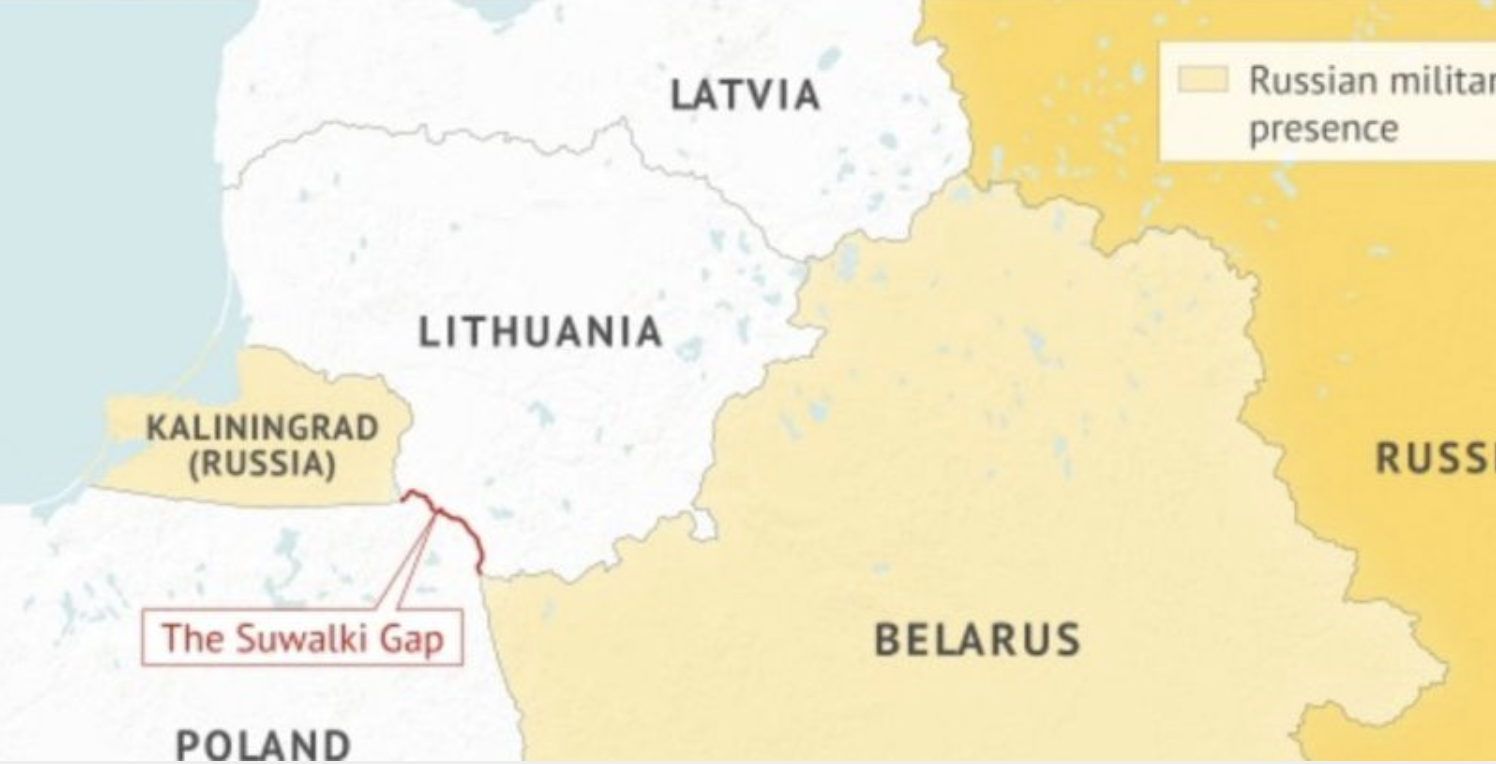
This led to a blockade of sanctioned goods by the EU and Lithuania on Kaliningrad, further isolating the territory.
But there’s more to Kaliningrad than just that, and it’s related to its former Germanic routes.
Indeed, just as they say that an intelligence agent never really retires, the same might be considered true of former German territories. At least, in the minds of some Germans.
The fact there was never much Russian love for Kaliningrad itself, adds to the complexity. Yes, the Kaliningrad port was always critical to the Soviet Union and Russia because it remained one of two ports that didn’t freeze over in Winter — the other being the Russian naval bases in Crimea.
But while the area was forcefully resettled by Soviet authorities, with the native German population mostly driven out, it never became a territory with emotional ties to Russian elites.
That was why its status as a Russian territory started to be questioned with the fall of the Soviet Union by both the Russians and the Germans. And indeed, there have been persistent rumours ever since of under-the-table deals to sell it according to several news reports since the 1990s, albeit rumours which have always been refuted.
The first, in 1990, related to a story that Soviet General Geli Batenin offered to return Kaliningrad, but apparently the offer was never really considered by Bonn and supposedly debunked by Gorbachev.
Later in 2001, when Russia was trying to find a way out of repaying its £22 billion debt to Berlin, it supposedly considered granting Germans some influence in the territory. Yet another resurfaced when it was alleged that Putin and former German President of the Bundesraat Edmund Stoiber tried to settle the debt on similar terms. Once more, the story was vigorously and officially denied.
The geographical oddity wedged between Poland and Russia, has nonetheless also attracted a lot of the attention from far-right extremists. More curiously still, the newly reunified German government even provided financial incentives for the so-called Volksdeutsche (native Germans) to resettle in the territory.
Indeed, by the mid-90s it seemed an irrevocable movement was turning Kaliningrad from uttering Da’s to Ja’s, with the inimitable telltale signs of an Anchluss cropping up.
Deutsche Bank branch offices started appearing out of nowhere. Street signs were changed from Russian to their original German. Sauerkraut and schnitzel began replacing borscht and blini in high street eateries.
Infamous specimens of the 20th century’s most grandstanding
Indeed, Kaliningrad, according to Roeder would “become the cradle of a new historical alliance between Russians and Germans”. It would be the counterpart to modernist, “Maastricht Europe”, “which is intended to deprive the German people of the last remnants of self-determination.”
It was one of the many examples in which neo-Nazi machinations seemed totally in sync with the agenda of powerful mainstream German politicians, described Martin A. Lee in The Beast Reawakens. German authorities tried to Pontius Pilate their way out of it later, dubbing the official support to Roeder as a “striking mistake.”
The resettlement plays by such extremists died out by the early 2000s, notably, after a significant media spotlight in Germany rendered the state’s official support untenable.
Nonetheless, more serious German elites, such as German business leaders, recognised the opportunity for a demilitarised and neutral Kaliningrad, with which a free trade zone could be established as a vital goods transfer area for the Baltic Sea. And in many ways that’s exactly what happened.
The so-called “Yantar Economic Zone” is a Free Trade Zone created by the Russian Federation in the Kaliningrad territory, which provides a customs-free zone as well as low-tax provisions for corporate profit and property tax up to 2030.
Its major business partner was Germany, with German enterprises forming the majority of consumer goods imports and investment until around the 2000s, when Russian debt levels to Germany became so untenable that other Europeans were forced to step in, notably Lithuanians.
As an FT report by Jemima Kelly on Kaliningrad’s lucrative world of illegal amber mining suggests, the territory’s free-trade provisions came with excellent opportunities for illicit profit-making.
Its ports’ lax supervision enables the largest European importing routes for illegal drugs, cars, guns and people.
A Western intelligence officer even told The Guardian that Kaliningrad was the biggest hotspot for organised crime in all of Russia — bigger even than Moscow.
Its sandwiching between EU territories tells the other half of the story: Kaliningrad became a vital roll-on, roll-off hotspot for Western criminality that both the EU and Russia could safely turn a blind eye to.
So where does the current blockade on Kaliningrad leave the territory?
The first point to note is there isn’t much of a blockade. While sanctioned goods are prohibited from entering Kaliningrad, they are only prohibited by road transit and not by rail.
Other goods are allowed to come and go as normal. What this speaks to is that Europe may still need its oddest territory (now a hub for cryptocurrency mining too). And in a time of sanctions avoidance and difficult flights to Russia, it may have become even more important than for the lucrative trade of illicit goods.
| SpecIAL ECONOMIC ZONES |
FREEPORT BRITAIN: The UK Government confirmed that eight new investment zones will commence operation in the 2024-25 financial year, with a further five planned in the years ahead.
The zones, dubbed “investment zones” will offer tax relief to attract businesses to them, focused on skills, research and innovation, and infrastructure. The move comes despite the government being forced to answer questions about possible corruption involving the Tees Valley freeport project on the site of the former Redcar Steelworks.
Well — not exactly. There will be eight zones in England, two in Scotland, one in Wales and one in Northern Ireland. Often described with the innocent title of free trade zones, their existence points to far more significant developments which have the capacity to erode the sovereignty of the nation-state. (Although, not all of the British ones will be focused on encouraging active free trade or finance in the Canary Wharf or City of London sense. Most will be geared instead towards rebalancing investment across the country as part of the government’s levelling-up strategy, by encouraging the development of IP, biotech, tech and green business on UK shores.)
The current flurry of SEZ creation was started by the short-lived Lizzo premiership, who announced the creation of an unlimited number of SEZs over the country. They have since remained a key element of UK government policy, each set to benefit from £160 million in funding packages over 10 years, comprised of flexible grant funding and optional tax incentives like business rate relief, enhanced structures and buildings allowances.
But before we dig into how these are being carried out, it’s worth considering the broader implications of Special Economic Zones in their purest form.
Ostensibly, SEZs are just what they mean. Zones within which the normal regulatory modes for businesses are lifted and special rules apply. The most notable example is the Dubai Financial International Financial Center. This area is controlled by its own regulator, the Dubai Financial Services Authority, and hosts its own legal system, the DFIC courts which follow the common law framework. These are separate from the Emirate of Dubai’s and the UAE’s federal government legal system.
But is that all they are? What free trade zones and their proponents often leave out is the extent to which they challenge the notion of a state. According to Max Weber, the state is that authority which has recourse to the legitimate use of violence inside a delineated perimeter. But what is violence? In today’s world, where the dollar has mostly replaced the sword, it is the regulator’s axe which wields the effective power to make fortunes and destroy them. The power to attract, benefit from, and regulate capital renders a self-governing area de-facto independent. Seen from this angle, free trade zones are far more than they claim: they are nascent statelets. Ones with the potential for just as much violence as true states.
This is something that mainstream media’s favourite laughing stock — libertarian idealists — understand perfectly well. Pronomos is a Venture Capital startup backed by luminaries like Peter Thiel, which fund a variety of free-trade-zone ventures around the world. These libertarian groups understand the establishment of so-called free trade zones is a byword for the creation of a functioning state in all but name. Crucially, one free from central rule and subject instead to a corporation or group of private individuals.
And perhaps the countries and peoples hosting these projects understand the threatening undertones to their sovereignty just as well. One example is the city of Prospera, a libertarian development in an SEZ in Honduras which is backed by Pronomos. It promises tax rates in the low single digits, runs on Bitcoin as legal tender and hosts a private arbitration centre rather than a state-run court system.
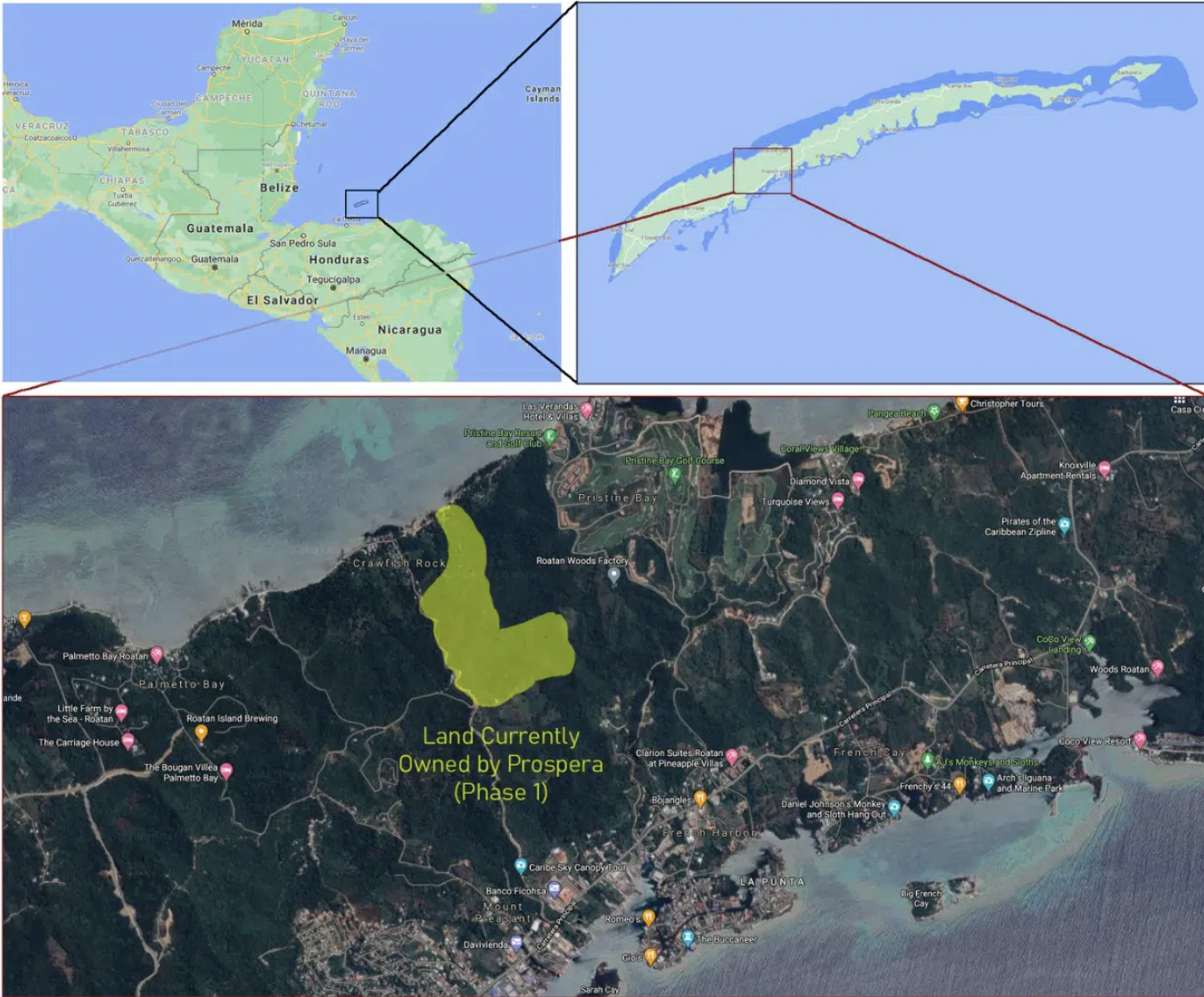
But things quickly turned sour after the project broke ground in 2019. Local residents complained to The Guardian that developers had claimed to be a charitable foundation seeking to open a community centre rather than a free trade zone. Once they awoke to the consequences of essentially being administered via private corporations they began protesting to international media and their government. At the height of tensions in 2021, it got so bad that Prospera cut off the water supplies to the town.
While the situation seems to have calmed down of late, the legal rights of Prospera hang delicately in the air of Honduran legal courts despite having attracted more than $100 million in overseas investments.
But more recent initiatives take the notion of Special Economic Zones a step further. An example is PraxisCity, recently renamed PraxisNation, founded by Dryden Brown — which aims to build a city somewhere from scratch in the Mediterranean. Despite several years in the making and attracting almost $30m in funding, the company has announced little besides pretty images and edgy videos. Developed to bring back the ideals of beauty into the heart of a city’s design, this obsession with aesthetics has spawned some interesting artistry:
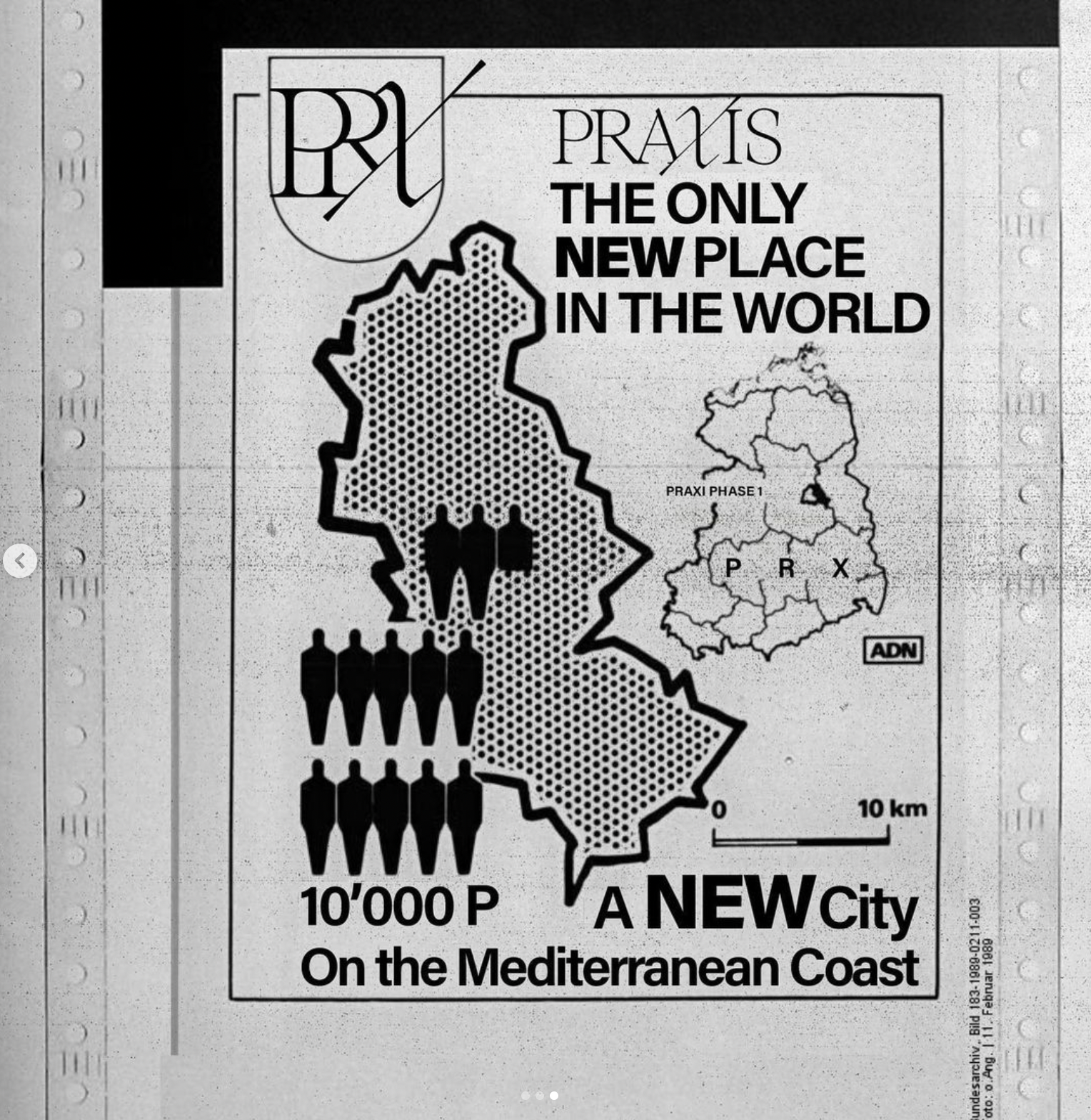
It may plan to build new cities, but Praxis’ visual aesthetics certainly sport a tried-and-tested… Teutonic character.
But while most online media mocks the character of Praxis, its objectives drive to the darkest heart of our point. Unlike other free trade zone projects that pursued a libertarian ideal, Praxis is anything but — despite what it claims.
With promises to rekindle beauty, aesthetics and a more natural order of things, the city’s organisers are extending the sovereignty of their planned city to encompass the human body too. An internal Praxis branding guide extolled “traditional, European/Western beauty standards on which the civilized world, at its best points, has always found success.”
These are anything but libertarian ideals — rather, they are totalitarian. It’s easy to forget that Hitler’s eradication of Jews and other minorities was arguably not pursued by simple racial hatred. Racial hatred was a secondary force which flowed from the stated Nazi ideals of purifying and cleansing German territory: Albert Speer’s grandiose architecture and a land filled only with Aryans to let Germany lead the world into a new, supposedly beautiful humanity in harmony with nature. In many ways, Nazism’s barbarism counterintuitively resulted from this extension of sovereignty to the aesthetics of the human body.
But let’s not exaggerate. Praxis will likely go nowhere. [All the more likely now that even Saudi Arabia has had to scale back its vision for its outsized Neom project.] And it’s dubious that any such project would ever reach such terrifying proportions.
The interesting note is the extent to which such a friendly notion as free trade zones can — at least theoretically — find parallels with the most horrifying historical outcomes. We’re not anti free trade zones. But we should remember the corporation’s linguistic origins. The “corporacion” of old Middle English, the forming into a body, an “organisation into a body politic.” Therefore, when libertarian organisations fund the promotion of crypto-cities in SEZs, we should remember what they are effectively driving at: the creation of future states.
What could be the consequences of divvying up sovereign British territory away to private corporations? The first and most immediate issue is how the private nature of these ordeals negates a citizen’s representation. For instance, SEZ zones were applied to areas whose individuals didn’t have a say in the matter. For example, in the Plymouth and South Devon freeport, public consultation was scant and requests for information were refused due to commercial sensitivity.
All of this sovereign risk sits alongside the ability of corporations and entrepreneurial individuals to set up shops in these areas and attract finance and talent. It only takes a quick look at Dubai to see how a free trade zone can spawn a living, wealthy society in only a few decades.
Thus, what the rise of investment zones in the United Kingdom fundamentally represents is a recognised admission of the incapacity of the British state to effectively administer its resources, albeit with the outstanding hope that it can still have its cake and eat it by deploying a light touch version of the concept.
But if the best it can do is sit outside of its own territory and hope to harvest whatever marginal gains come from it (akin to the centuries-long relationship between the British monarchy and the City of London, initiated by William the Conquerer when he failed to absorb London completely) the chances that investment zones don’t run away with themselves on a sovereign level becomes all the lower.
| GEOPOLITICAL HOT SPOTS |
WHITHER EMBASSY IMMUNITY? The Associated Press reported that Mexico’s government has severed diplomatic ties with Ecuador after Ecuadorian police broke into the Mexican Embassy to arrest former Ecuadorian vice president, Jorge Glas. This was judged an extraordinary use of force that shocked and mystified regional leaders and diplomats, according to the AP.
The details? Jorge Glas, who had been residing there since December, had sought political asylum at the embassy after his jail sentence, related to 2017 corruption charges, was cut short. He fled to the embassy, according to the FT, “after prosecutors published chat messages suggesting that he had been released early from his lengthy jail terms in 2022 because a leading Ecuadorean drug trafficker had bribed a judge.”
Glas was the highest-ranking official in Ecuador to be investigated for allegedly taking bribes from a Brazilian construction company.
No more shelter: The government of Lenin Moreno, in power from 2017 to 2021, famously booted Julian Assange out of its own embassy in London in 2019. Ecuador’s new president, businessman Daniel Noboa, meanwhile, came to power in October 2023, after the country’s previous president Guillermo Lasso called a snap election to avoid a possible impeachment over alleged embezzlement.
Gang rebellion: In January, Ecuador faced a militant uprising by the country’s criminal gangs, which Noboa pledged to crush with the use of the army, declaring a national emergency.