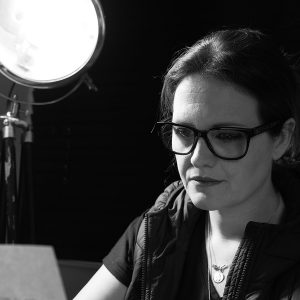
WASHINGTON — Ireland’s central bank governor pushed back strongly against colleagues looking to lock in a sequence of interest rate cuts in the second half of the year, stressing that the uncertainties around the economy are still far too great.
“It is speculating a bit too far to say ‘I feel confident enough about the path of policy to tell you now how many rate cuts there may be, or what the deposit facility rate may be at the end of the year’,” Gabriel Makhlouf told POLITICO in an interview.
Talking on the sidelines of the International Monetary Fund and World Bank spring meetings, Makhlouf said the recent flare-up of the Middle East conflict, along with other ongoing uncertainties, made it unwise to guide so far ahead.
While he said he was comfortable with European Central Bank President Christine Lagarde’s guidance last week for a first rate cut in June, he said that the outlook for policy thereafter was still unclear.
“I’m not in the business of saying there are going to be x number of cuts by year-end or by the summer or whatever. I’m not there at all,” Makhlouf said, adding that “in this uncertain world, the policy of being data-dependent — of looking at things meeting by meeting, of keeping your options open — is the right one.”
His comments contrast starkly with those of his Lithuanian and Greek colleagues, who since last Thursday have voiced support for three or more rate cuts this year to support an economy that is still struggling to get over the shocks of the pandemic and the war in Ukraine.
They are much more in line with those of Lagarde and other top officials at the ECB, who have stressed the need for certainty that its record-high interest rates have successfully squeezed inflation out of the system.
Lagarde had said a “small minority” of the ECB’s 26-strong Governing Council had pushed unsuccessfully for a rate cut already at last week’s meeting. The ECB doesn’t publish the voting records of individual council members.
The three-year surge
While it has come down sharply over the last year, it is now nearly three years since inflation was last in line with the ECB’s medium-term definition of price stability.
That raises the risk of it becoming entrenched, driving households to seek bigger pay rises and businesses to push through yet more price hikes. Ireland’s economy is one of many in the eurozone where the labor market has remained tight throughout the downturn of the last two years, highlighting what seems to be a structural shift in the bargaining power of workers since the pandemic.
One particular near-term risk, Makhlouf pointed out, is from the simmering conflict in the Middle East, which has flared into the first direct conflict between Iran and Israel. Makhlouf accepted that the immediate market reaction to Iran’s mass drone strike on Israel last weekend had been “subdued”: oil prices, in particular, had risen only modestly, kept in check by a statement from Teheran that it had made its point.
“At a political level it does look as if there are a lot of efforts being made to not let everything escalate,” he said, “but it’s clearly something that we’ll have to keep a close eye on before we get to our June meeting.”
By contrast, Makhlouf was relaxed about the impact of excessive budget deficits on the outlook for the eurozone. France and Italy, the eurozone’s second and third-largest economies, are both struggling to avoid EU action against them for failing to bring their borrowing back into line with newly restored guidelines.
Makhlouf noted that eurozone governments appeared committed to budget consolidation, and downplayed suggestions that ongoing deficits could thwart further progress in bringing inflation down.
“It’s one thing to announce stuff, it’s another thing to see it happen, but at least people are responding,” he said. “Does it give me concern in terms of the monetary policy decisions and stance that we’ve signaled? It doesn’t.”
That, he noted, was one of the key differences between the current situations in the eurozone and in the U.S. In its World Economic Outlook, released on Tuesday, the IMF had warned that the U.S.’s current borrowing, pumped up by subsidy programs to encourage the reshoring of U.S. industrial capacity from China, was unsustainable and helping to fuel inflation.
“Fiscal policy has not played a similar role to what it has played in the U.S.,” Makhlouf said, suggesting this is one reason why the ECB should have the freedom to start cutting rates before the Federal Reserve. “I think we’re just in two very different places right now and policy, understandably, is not the same.”