
| SNEAK PEEK |
— Izzy sprinkles a few insights gleaned from her Saudi-state-funded trip to Riyadh.
— Are capital controls about to make a comeback? Evidence is mounting that the answer is yes.
— Dario reports from Buenos Aires on how ordinary Argentines are handling Milei’s reforms.
Good evening subscribers!
Greetings from Riyadh. By the time this newsletter arrives in your inbox, I should be back in rainy and sunshine-deprived London. But right this very minute I’m sitting in the media center at the GAIN artificial intelligence conference in Riyadh, Saudi Arabia, typing away while a multitude of young Saudi Arabians flow through the marbled corridors of the King Abdulaziz International Conference Center, where all the finishings are golden but there are only six loos per sex. For context, there are 20,000 people attending.
I’m here courtesy of the Saudi Data and Artificial Intelligence Authority (SDAIA), which paid for my trip (economy class on Saudia with three nights at the Marriott Courtyard hotel in the Diplomatic Center, breakfast included ), albeit with zero conditionality about what I choose to write about (or even that I write anything at all).
Politico, quite rightly, has strict rules about how to cover conferences you are paid to attend (whether as an observer participant or a speaker). In short, you can’t write about them. For readers curious about the event I attended, I recommend this piece from Will Lloyd at the Sunday Times — which seemingly has no similar restrictions. The account does a very good job of capturing the conference’s overall mood, and Will and I spent a good chunk of time together sharing observations and engaging with locals, foreign entrepreneurs, fellow media bods and what might be best described as “consultants at large”.
I have many thoughts about my experience there, but they’re going to take a little more time to put together. We’ll dispatch them soon enough in a spotlight report. Suffice it to say, it’s the broader economic story and the internal contradictions of the cultural changes afoot that gripped me most. That, plus the outsized ambition of the world’s most powerful crown prince to transform the country into a modern-day state, which many believe is floundering. Check this week’s WSJ exposé of the conditions at NEOM as an example.
There’s no denying that Saudi Arabia is experiencing something of a frontier territory vibe right now. Anyone with any nouse is out there looking to benefit from the trickle-down effect dispensed by MBS’ Vision 2030 agenda. All this amid climactic conditions — 45-degree heat and desert – that make the country the ultimate testing ground for the viability of colonies on Mars.
The week I was there both Sergey Lavrov and Chinese Premier Li Qiang stopped by for an audience with MBS. Correspondents affiliated with the BBC, meanwhile, were cordially disinvited from the Summit due to the airing of this documentary about the Crown Prince in August. The outfit definitely not disinvited was Semafor, whose reporters were all over the shop, including founder (and former Politico and Buzzfeed man) Ben Smith, best known for publishing *that* dossier — and later having no regret about it. Semafor’s excuse for the intensive coverage was the launch of its Gulf specialist operation, which Smith quipped — jokingly, but probably not jokingly — would be focusing among other things on the “consultant” industry in the area. If you’re wondering what constitutes a consultant in such regions, we’d urge you to check out the works of Tom Clancy for a clue.
As usual, the newsletter is brought to you by me, Izabella Kaminska, and Dario Garcia Giner.
Apologies for typos. We blame jet lag.
Send tips to [email protected] and [email protected].
| THE BIG BLIND SPOT THIS WEEK |
HELLO CAPITAL CONTROLS? The Telegraph (still seeking a buyer, despite the Spectator now having been lifted by Paul Marshall) reported that the left-wing economic think tank Resolution Foundation was urging British Chancellor Rachel Reeves to consider imposing an “exit tax” on wealthy investors. Such a move would mimic policies already imposed by Australia, Canada and the U.S.
The exodus has begun: The policy suggestion comes on news that the great U.K. wealth exodus may have already begun, with as many as 9,500 millionaires expected to leave the country this year, according to the Henley Private Wealth Migration Report. It comes ahead of an October budget that is likely to hit the rich with a suite of wealth taxes.
These are the sort of hot money flows that aren’t going to work well with plans to promote industrial policy domestically. The bigger question is how exit taxes, if taken up, combine with ever stricter and selective FDI investment screening norms (especially as dictated by the new National Wealth Fund environment), expanding sanctions, Know-your-customer and anti-money-laundering frictions and the dawn of potentially geo-fenced central bank digital currencies.
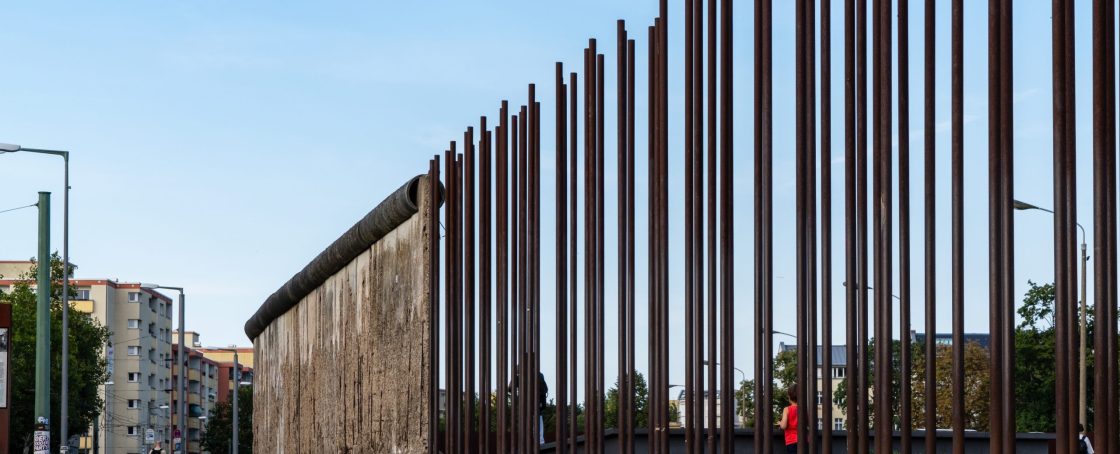
In short, it could well be that we are edging towards the return of de facto capital controls and invisible Berlin Walls.
| REFORM OR DIE |
KEIR SAYS REFORM THE NHS OR DIE: A damning independent report by Lord Darzi into the state of the NHS commissioned by U.K. Prime Minister Keir Starmer has laid bare the shocking state of the NHS, which includes crumbling buildings, outdated machines and thousands of patients unnecessarily dying because of long waits. In response, Starmer has said the NHS “must reform or die”. Nigel Farage’s Reform party, we presume, will have been delighted with the free publicity.
The impact of Covid: Darzi identified four heavily inter-related factors as having contributed to the current dire state of the NHS. Those related to funding austerity, lack of patient voice and poor management were well covered in the press coverage. Very few accounts of the report homed in on the effects of Covid-19 and its aftermath.
Here’s the key chart: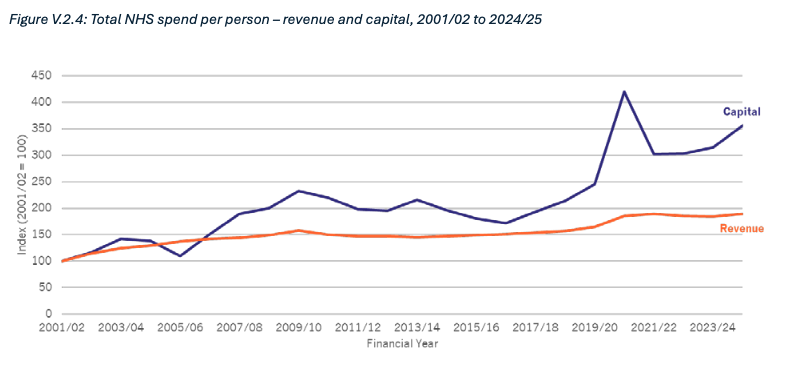
THAT SEISMIC DRAGHI REPORT: Back in June, we warned readers the Western system would soon be entering its restructuring phase and later in July that ailing productivity would once again become the key economic issue at hand. The publication of Draghi’s much-awaited report last Monday has now added absolute substance to those claims.
During the press conference, Draghi emphatically admitted that the situation in Europe was “really worrisome” and that while growth had been slowing for a long time, the continent had too willfully been ignoring the signs. External factors over the last two years, such as a declining birth rate, meant that “we cannot ignore it any longer” while making what they were trying to do “existential” and requiring “radical changes” that were “urgent and concrete.” When asked if this was a “do this or die” moment for Europe, Draghi quipped “No, it’s do this or it’s a slow agony.”
Assessing the report: The media’s lack of access to Draghi leading up to the report’s publication deserves a mention. Few journalists were given insights into the content, creating an atmosphere of secrecy akin to a Brussels-based Manhattan Project. Post facto, however, even fewer really grasped its significance. Despite the streams and streams of coverage, that’s probably because less than 2 percent of reporters covering the topic likely read the report back-to-back. Luckily for readers, the Blind Spot was stuck on a seven-hour plane trip to Riyadh, which meant we had the mental space to do the reading.
Media myopia: At the press conference, the questions posed by the media were telling. Rather than addressing the more pressing question of how the EU might risk becoming a closed economy under the proposed reforms, most journalists — as they often do — seemed more inclined to dwell on their niche interests. Henry Foy from the Financial Times was a case in point, opting to dwell on how the implementation of the report would impact internal competition (almost as if he had not really understood what the “competitiveness” at heart of the report was really referring to).
Had I been there I would have wanted to know: 1) how much of this was an admission of total failure of the EU economic model? 2) How much would the EU have to become like China? And 3) where would all this leave Germany and how would Draghi expect Germany to react?
A Common Manufacturing Policy? The answer to the last point came pretty quickly. German Finance Minister Christian Lindner, leader of the pro-business liberal FDP, immediately quipped on X that “joint EU borrowing will not solve structural problems: companies do not lack subsidies. They are tied down by bureaucracy and a planned economy. And they have difficulty accessing private capital. We have to work on that.”
Those in favor: This appraisal contrasted starkly with that of Vice Chancellor Robert Habeck of the Greens, who described Draghi’s report as “a call to action for the new European Commission and the EU as a whole.” Habeck, who also serves as the country’s Minister for Economic Affairs, stated, “I am happy to pledge my support [for the report’s proposals]. Innovation, better framework conditions and the mobilization of public and private investment are the order of the day.”
The ECB view: ECB boss girl Christine Lagarde strongly endorsed Draghi’s multibillion-euro plan to fix Europe’s stagnant economy, but emphasized that “structural reforms are not the responsibility of the central bank — they are the responsibility of governments.” At the same time, she echoed Draghi’s call for greater centralization and a clear industrial policy, which would require around €800 billion annually to spur growth.
The view, however, clashed with the reality of the ECB’s ongoing mission creep into green finance, which looks set to make very subjective and very much industry-specific decisions about what sort of Eurobonds it may or may not support.
About those common bonds: The debate over how to finance this ambitious plan has already ignited fierce discussions in Brussels, especially since the necessary funding is nearly triple that of the postwar Marshall Plan, all while interest rates remain high. Lagarde preemptively countered any assumptions that the ECB would ease the burden by lowering rates, insisting that the best course of action is to maintain price stability. “I’m really certain monetary policy will do what it has to do, which is to provide price stability and deliver on its mandate,” she asserted.
Laissez-faire capitulation: If you’re wondering how it has come to be that years of commonly held wisdom about the downsides of industrial policy and planning have been cast aside, you need to check out Reka Juhasz’s, Nathan Lane’s and Dani Rodrik’s New Economics of Industrial Policy paper from 2023, which Draghi name-checked as the key literature that made him change his mind.
Spoiler alert: The key insight from the paper that might shift a free-market advocate toward supporting industrial policy is supposed evidence that targeted, well-designed industrial policies — particularly those involving iterative public-private collaboration — can address market failures more effectively than market forces alone. The paper highlights successful examples, like the ARPA model in the U.S. and sectoral roundtables in Peru, where collaboration between governments and firms produced significant productivity gains without the inefficiencies traditionally associated with central planning. This supposedly suggests that industrial policy, when carefully implemented, can enhance economic outcomes by overcoming coordination failures and fostering innovation.
Unappreciated factoid: Draghi’s advice is centered on being very selective on which sectors to support and which to abandon outright. The emphasis is likely to be on the service and high-tech sector, but there may be some dispensations for heavy industry, including steel manufacturing needed for strategic parts. Draghi noted key transformer components were lost
To conclude: Draghi’s approach is ultimately a balancing act; he aims to maintain open economic dynamics while advocating for greater centralization, notably through the issuance of common debt. This paradox raises significant concerns about the future structure of the EU economy. The broader implications of Draghi’s report are clear: a substantial overhaul of the EU’s economic framework is necessary. He rightly highlighted critical issues, such as the barriers faced by small and medium-sized enterprises in accessing funding. These companies are often burdened by compliance costs that they simply cannot bear, stifling their growth potential. In summary, the Draghi report serves as a wake-up call for the EU.
THE BEST BITS (Our emphasis throughout):
“Raising the EU’s competitiveness is necessary to reignite productivity and sustain growth in this changing world. The core focus of a competitiveness agenda should be to raise productivity growth, which is the most important driver of long-term growth and leads to rising standards of living over time.”
“Promoting competitiveness should not be seen in a narrow sense of a zero-sum game focused on conquering global market shares and raising trade surpluses. It should also not lead to policies of defending “national champions” that can stifle competition and innovation, or using wage repression to lower relative costs.”
“Competitiveness today is less about relative labor costs and more about knowledge and skills embodied in the labor force. Beyond this broad objective, a focus on sectoral or industrial competitiveness can be particularly useful in situations where otherwise productive companies are disadvantaged by an unlevel global playing field, be it asymmetries in regulation or large subsidies abroad.”
“In such scenarios, leveling the playing field may be necessary for continued productivity growth. Finally, a modern competitiveness agenda must also encompass security. Security is a precondition for sustainable growth, as rising geopolitical risks can increase uncertainty and dampen investment, while major geopolitical shocks or sudden stops in trade can be extremely disruptive.”
“On the other side, Europe’s position in the advanced technologies that will drive future growth is declining. Only four of the world’s top 50 tech companies are European and the EU’s global position in tech is deteriorating: from 2013 to 2023, its share of global tech revenues dropped from 22% to 18%, while the US share rose from 30% to 38%.“EU industries that use energy intensively face higher investment costs than their competitors to meet decarbonization targets. At the same time, Chinese competition is becoming particularly acute in the key industries that will drive decarbonization – such as clean tech and electric vehicles – driven by a powerful combination of massive industrial policy, rapid innovation, control of raw materials and the ability to produce at continent-wide scale. For the EU to succeed, it will therefore need to engineer a coherent strategy for all aspects of decarbonization, from energy to industry.”
“EU countries are already responding to this new environment with more assertive policies, but they are doing so in a fragmented way that undermines collective effectiveness.”
“First, there is a lack of coordination between Member States. Uncoordinated national policies often lead to considerable duplication, incompatible standards and failure to consider externalities. One particularly damaging externality in the EU context is its adverse impact on the Single Market when the largest.”“Second, there is a lack of coordination among financing instruments. While the EU collectively spends a large amount on its industrial goals, financing instruments are split along national lines and between Member States and the EU. This fragmentation hampers scale, preventing the creation of large capital pools in particular for investments in breakthrough innovation. It also hampers innovation by creating unnecessary complexity and bureaucracy for the private sector. “
“In the EU context, linking policies in this way requires a high degree of coordination between national and EU policies. However, owing to its complex governance structure and slow and disaggregated policymaking process, the EU is less able to produce such a response.”
“the EU will need to develop a genuine “foreign economic policy” that coordinates preferential trade agreements and direct investment with resource-rich nations, the building up of stockpiles in selected critical areas, and the creation of industrial partnerships to secure the supply chain of key technologies. Europe will also need to develop a strong and independent defense industrial capacity that allows it to meet the increasing demand for military assets and equipment and remain at the forefront of defense technology. “
“Evidence that industrial policies can be effective under certain circumstances is growing. But to avoid the pitfalls of the past – such as defending incumbent companies or picking winners – these policies must be organized according to a set of key principles which embed best practices.
JAVIER MILEI’S PENSION BUMP SUCCESS. Milei defied the odds in the Argentine congress this week by lobbying sufficient opposition politicians to not override his veto against attempts to increase pension spending.
DARIO COMMENT: Mario Draghi’s much-awaited competitiveness report may be a move to save Europe’s economy by having it become more like China to beat China.
But not every country is going that way. Case in point: Milei’s Argentina. Last year, the chainsaw-wielding libertarian’s election took the world by storm, pledging to restore free-market order to Argentina, which had long suffered from the grip of state intervention and government planning.
 In stark contrast to European worries about increasing competitiveness and energy security to maintain European prosperity and social welfare, Milei’s shock therapy is now putting Europe’s post-GFC attempts at austerity to shame.
Over $2.7 billion in energy subsidies have been cut over the first seven months of Milei’s premiership, leading electricity bills for middle and lower-income families to jump by 155 percent. This rise in bills has been compounded by cuts to other utilities like public transport. The peso’s devaluation by over 50 percent in December made inflation skyrocket even further. Annual food price inflation came in at 236 percent in August, while the month-on-month change stood at 4.2 percent, above analyst expectations. As over 57 percent of the Argentine population lives below the poverty line, this has hit many Argentines’ already precarious living standards.

The high prices aren’t just painful to the poor, however. My own visit to Buenos Aires left me just as price-shocked. Expecting a cheap getaway from Europe, I was stunned by >$3 flat whites and cappuccinos in Buenos Aires’ hip Palermo district. And that’s after exchanging at the unofficial exchange rate of $1=AR$1,260 rather than the official $1=AR$960. “Welcome to Argentina. First world prices and third world salaries,” I overheard a grumpy old man utter nearby. That Milei’s approval rating is only dropping slowly despite this imposed hardship says much about Argentina’s precarious financial situation.

Unlike European concerns over safeguarding the future of our manufacturing and defense industries by increasing the power of state-run conglomerates and increasing state-led procurement — thus shielding these from Chinese influence — Milei seems intent on dismantling Argentina’s state-aligned and state-owned enterprises. According to the Ley de Bases — a type of holding law until legislation is probably enacted — passed by Milei on June 13, only a handful of public companies aren’t slated for partial or full privatization. That includes Argentina’s oil company, Yacimientos Petroliferos Fiscales (YPF), Aerolineas Argentinas, Argentina’s carrier, and public media (Radio y Television Argentina).
And unlike American or European governments’ hard-fought attempts to foster exclusively domestic investments for strategic sectors, Argentina’s so-called Regimen de Incentivo a las Grandes Inversiones or “RIGI” legal framework seems custom-built to attract foreign investment into critical sectors, allowing projects of over $200mn to benefit from special import, customs, and exchange rates for over 30 years, particularly in oil and gas, mining and technology.
The longevity of these deals is the key vulnerability.
Catherine the Great had many plans to improve Russia, freeing the serfs among them. To foster this, she invited many great philosophers to journey to Russia, the greatest to accept the invitation being Denis Diderot. But to Catherine’s dismay, Diderot focused on one issue above any reform: succession. Why bother reforming anything when, without the certainty of an allied successor, it could all be undone after your reign?
As with Diderot, the concern with succession underscores everything currently happening in Argentina.
Traveling through Buenos Aires and a small town outside the Andes called San Rafael, a shockingly high number of young people expressed approval of Milei and his reforms. That approval, however, was always buttressed with the concern that he might not survive — both politically or literally — to see them through. “If Milei doesn’t get killed, he will change this country,” one young Argentine noted.
While the Kirchnerist opposition is currently in shambles, partially owing to accusations of domestic abuse leveled against the former Kirchnerist PM, Alberto Fernandez, the specter of Peronism is never far from the Argentinian mind — or Milei’s.
This concern is typified by Milei’s promise to dollarize the Argentinian economy — a wide-ranging reform that is now on the backburner. But the sentiment behind this drive outlines our point regardless. Dollarizing an economy mitigates exchange rate risks and protects private sector access to credit. But above all, it enforces fiscal discipline by disempowering any successive government from printing or devaluing the currency.
Hence the idea behind the 30-year concessions of the RIGI: to protect foreign investors from upcoming Peronists. Commenting on the RIGI concessions’ relevance for Argentina’s Vaca Muerta reservoir — Argentina’s largest oilfield – lawyer Enrique Viale told The Guardian that “we are facing the pinnacle of extractivism, the final adjustment of the screw so that Argentina is no longer a sovereign country over its territory”. But this may be precisely the hidden goal behind Milei’s liberalization reforms: to put a straitjacket on the Argentinian state and impede its freedom of movement. Or, in other words, to bind Argentina by the hip to Western conglomerates, and Western states by proxy, and mar the socialist influence of Peronism.
Milei is thus more of a pro-Western neo-conservative in disguise rather than a true libertarian. Significant budgetary increases for the Argentinian armed forces and intelligence services, increases in income tax, his drive to re-criminalize marijuana, along with his strong positioning in favor of American and Israeli foreign policy, strengthen this perspective.
While Western countries are concerned with facing off Chinese influence and competition that enters Western shores via the marketplace, leading to its restrictive, statist moves, Chinese influence in Argentina is more likely to come from any future Peronist government. Thus, its pivot in today’s geopolitical contest towards the West ironically takes the opposite form from most Western countries: towards markets, and away from the state.
| CBANKING |
SPAIN’S NEW CENTRAL BANK CHIEF. The appointment of Jose Luis Escriva, the former Minister for Digital Affairs in Spain, as Spain’s new cbank cheif has raised concerns among the right-wing opposition that such an appointment imperils the central bank’s independence. Escriva is set to succeed former Economy Minister Carlos Cuerpo, imminently. But while Spanish law grants the government the right to appoint the central bank governor, Spanish political tradition meant this decision was usually taken in tandem with the main opposition party — and typically went to leading economists or technocrats rather than active politicians. Thus, while Escriva is an economist by training and banker by profession, his long-running stint in Sanchez’s government and the failure to consult the right-wing opposition on his appointment has led the PP party to accuse Sanchez of “hijacking” the central bank to his party’s own interests.
| BUSINESS, ECON, FINANCE ETC.. |
SPAIN AND GERMANY SOUR ON CHINA EV TARIFFS. The U-Turn from Spanish PM Pedro Sanchez came after China promised a $1 billion investment in a Spanish electrolyser plant, the South China Morning Post reported. German Premier Olof Scholz, a staunch opponent of the China EV tariffs due to the German carmaking industry’s vulnerability to Chinese sanctions on its vehicular exports, also expressed concerns. As it stands, the EU is looking to impose tariffs as high as 35.3 percent on Chinese automakers — which come on top of the EU’s standard 10 percent car import duty. Spain is more exposed to Chinese reprisals than other EU states due to its position as the prime exporter of pork to the Asian country.
| STRANGE BUT TRUE |
ORBAN WILL BE BACK: Arnold Schwarzenegger, aka The Terminator, met with Viktor Orban this week.
