
By Dario Garcia Giner
The Berkshire Hathaway Annual Meeting is (or, was, until Charlie Munger’s death in late 2023) an event so widely reported that it practically transcends the financial sector. Though less anticipated than an Nvidia earnings release and delivered without any of the razzle-dazzle one experiences at an Apple launch event, for those wanting to understand Warren Buffett’s latest moves and musings it is no less important.
2011 was standard fare for attendees. The oracle of Omaha updated, pondered and reflected. By contrast, Munger provided his usual, no-shits-given, cut-through-the-crap take on all things financial and life-related.
If the stars of this show were actors instead of owners/investors, Warren Buffett would be John Goodman and Charlie Munger would be Alan Arkin — specifically, for their roles in Argo, an Oscar-winning thriller based on the Iranian hostage crisis and the CIA’s Tony Mendez, whose ambitious attempt to free six US State Department employees by disguising them as members of a (fake) Canadian film crew somehow proves successful.
Buffett would have been perfect as the intelligent, affable make-up and prosthetics expert John Chambers (Goodman), with Munger equally suited to his role as the shrewd, cynical producer Lester Siegel (Arkin), who delivers the most famous line of the entire film: “Argo f**k yourself.”
And, in 2011, Charlie practically went full Lester with the spirit of his message to the financial sector: Algo, f**k yourself.
”The one place that I feel we’re making a huge mistake is not learning enough from the big mess that came from wretched excess in our financial system. I don’t think we throttled the sin and folly out of the economy nearly enough. And I think — if you look at all the panics and depressions in the United States, they all came from financial collapses, usually preceded by perfectly asinine and greedy behaviour.”
“(There’s) a lot to be said for taking an axe to our financial sector and whittling it down to a more constructive size. I would have the tax system discourage trading. I would have various kinds of Tobin taxes. I would have securities trading more with the frequency of real estate than the trading by computer algorithms, where one person’s computers outwit another person’s computers in what amounts to a sort of legalised front running. I don’t think we need any of that stuff. And I think making heroes out of the people who succeed at it is not good for the fibre of the country, either. I hate the idea that 25 percent of our best engineers are going into the financial sector.”
Despite his message, Munger received enthusiastic applause from the crowd… because he was right.
And what about Berkshire Hathaway’s brilliant Vice Chairman? Would Charlie have been an engineer himself, in another era?
Cloning for comparison
Let’s say there are two Charlie Mungers, with one born in the 19th century and the other a young man today. Let’s also assume the 19th century incarnation would have been no less intelligent and equally dedicated to his field of expertise.
In the 1800s, such a man would have aspired to the pinnacles of a society offering different rewards and glories — becoming an industrialist, a global merchant, or leading a mining or agricultural conglomerate.
In today’s economy, Charlie works in finance.
In both worlds, Charlie is highly successful, but only in the former does society as a whole benefit directly from his genius.
Trading like it’s 1939
Recent geopolitical conflict has exposed the flaws of a system that prioritises price ahead of value.
Trade wars are costly. Tariffs create supply shocks, so they are inflationary, which results in both internal and further external tensions, thus, additional geopolitical conflict.
Couple all that with skills shortages in industries lacking the engineers referenced by Munger in 2011, and we face the stark realisation that financial services are not the core of developed economies after all. Britain’s new ‘securonomics’ and other developments on the European continent, as well as the United States, point to the re-prioritisation of manufacturing and bringing supply chains closer to home (or ‘friendshoring’).
Today, any manufacturer is faced with obvious issues. Significant capital investment sums required for a manufacturing process where high salaries, high cost of goods, and a necessity to import most critical components from China destroy margins. If we want the next Charlie to be 19th century Charlie, something needs to change.
However, not all hope is gone. In fact, a 21st century solution may be forthcoming.
3D or not 3D? That is the question
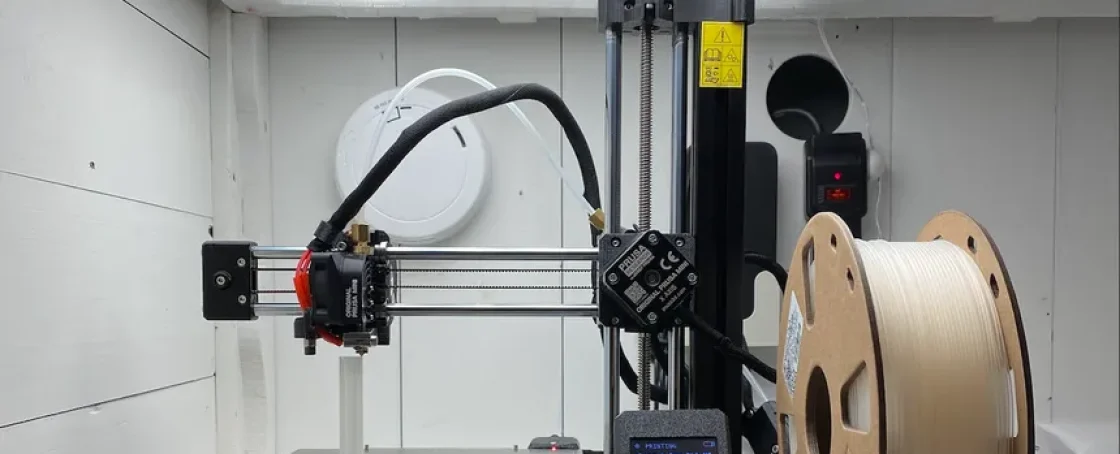
Most of you will be familiar with the concept of additive manufacturing – also known as 3D printing. Traditional manufacturing is, for the most part, subtractive. Just like Michelangelo’s David, the end product is typically carved away from a larger block of material. Additive manufacturing is the opposite – building the product by injecting millimetre-thick product layer after layer. A top-of-the-line consumer level 3D printer, costing only $1,500, can use an insane variety of plastics – from the incredibly flexible Thermoplastic Polyurethane (TPU) to rugged carbon-fibre laced Polylactic Acids (PLA) that can already form critical components for motor engines.
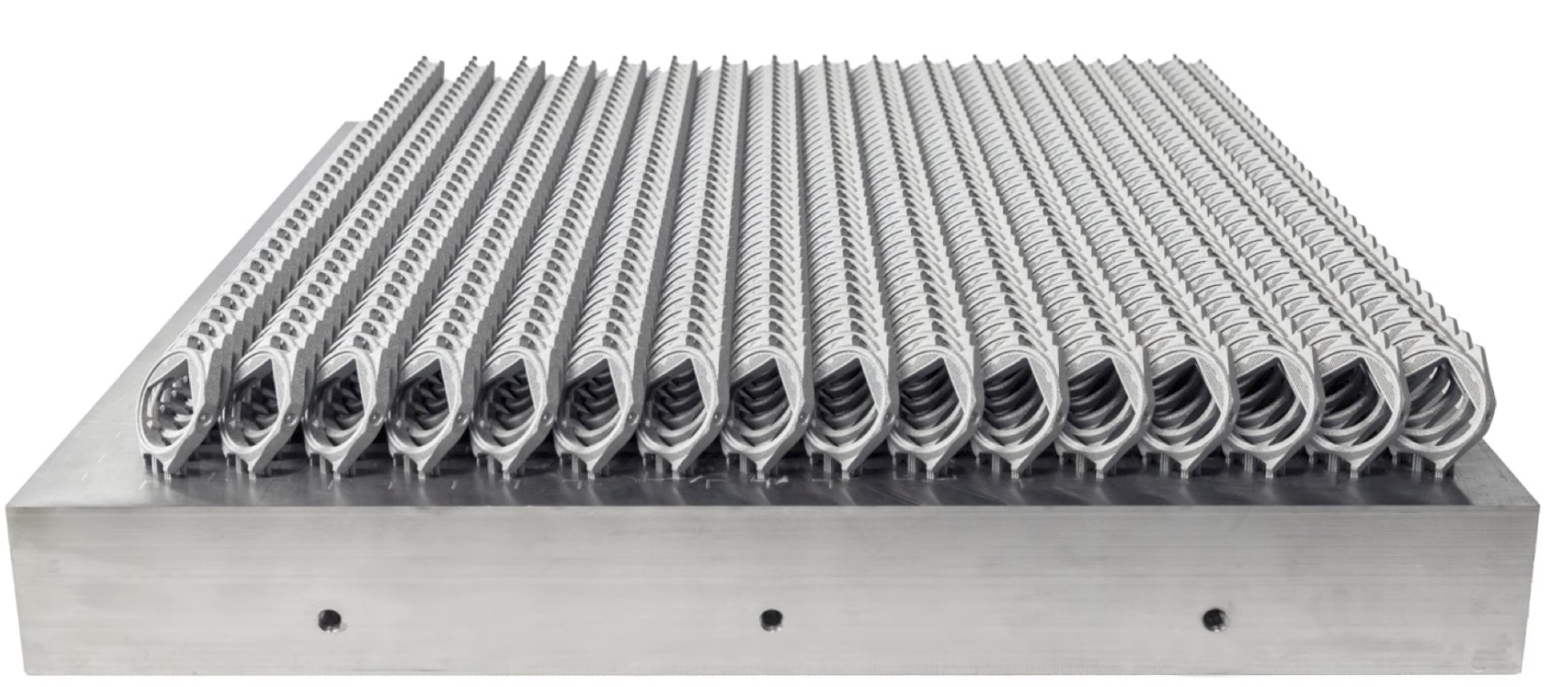
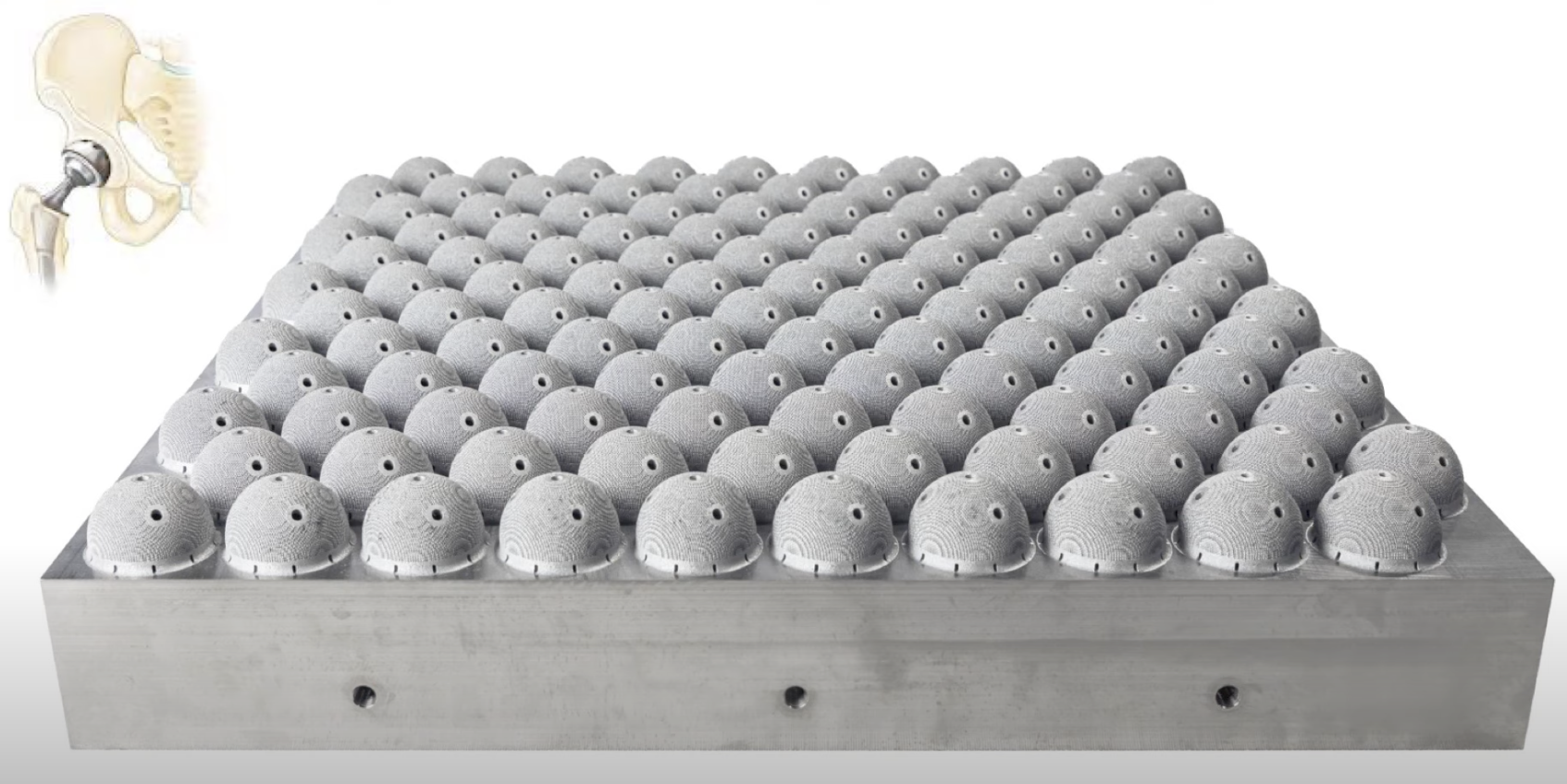
Industrial 3D printers can go even further – using lasers to ‘firm up’ millimetric layers of metal from a metallic dust, they are capable of creating anything from aircraft engines or hip-joint components from a single part. While still prohibitively expensive for the average consumer, professional manufacturers can reduce an industrial production line of tens of machines that would take up a large warehouse to a few machines that only take up around half your living room. And while these large production lines specialise in the creation of only one product or part, these new machines could print a jet engine today, luxury watch faces the next, and hip joints the week after. All from the same line of machines. And imagine the shortening of supply chains when a simple production line can produce 80-95 percent of an entire aircraft engine from a single part. This not only increases the efficiency of production, but also the part’s resilience.
But additive manufacturing is just one of the many revolutions coming to this world. One example is CNC machines – machines that you can program to drill away bits of a structure to result in a finished product. These are used for a variety of reasons. Key among them is the manufacturing of moulds that can then be used in injection moulding – the principal way of creating plastic products. These were typically the reserve of large manufacturing corporations until only recently, when their cost began nosediving. You can now purchase a smart CNC machine from Carvera for under $6,000, which automatically switches out its tools to mill your wood, epoxy, aluminium, copper, brass, or carbon fibre blocks with minimal manual input. A steel-capable CNC machine like the PCNC 440 mill starts at only $7,000. With them, you can carve anything from a circuit board to a steel bust of David.
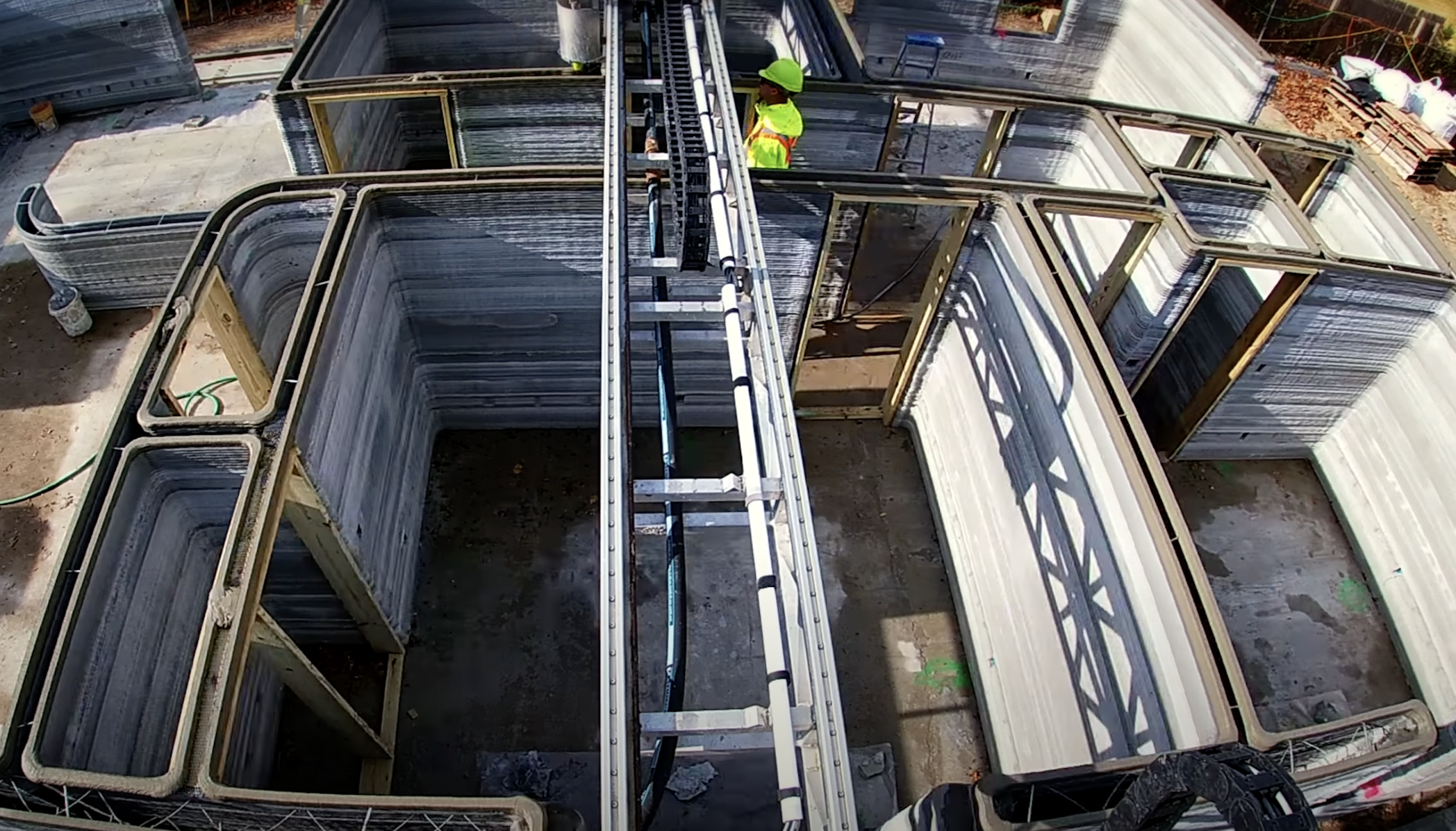
Another is 3D printed homes, which use a giant-sized 3D printer extruding concrete to build homes like the one pictured below. This 150 square foot home took 80 print hours over a few weeks and cost $20,000, whereas the conventional approach to such a home would have cost over $150,000 according to 3D construction printer company SQ4D. It’s worth noting the layered walls can be painted over – below, they were left as such to emphasise the house’s unique construction style.

So why haven’t we heard about these production processes more? The obvious answer is that they are not yet fully cost-competitive with traditional industrial processes that use cheap labour, like in China. But I’m here to tell you that isn’t the full truth. In many ways, this industrial revolution has already happened – it’s simply flying under our noses in the age of software and AI.
Let’s posit a real-life example. Imagine you want to build an accessories company in Ubrique, Spain — the world’s capital for manufacturing luxury leather goods, where everyone bar Hermes (Kenzo, Loewe, Louis Vuitton, to name a few) produces their highest quality accessories. You’d soon find the hardest part isn’t selling – it’s starting. Significant cost obstacles face the would-be producer of even the most bog-standard products. The first challenge is prototyping. Established Ubrique manufacturers will charge a standard rate of €1,000 for a single prototype. And another €1,000 for any modifications, with some slight discounting for further modifications. It sounds cheap, but prototyping is anything but. Getting a product from the drawing room to the consumer is a fine line between designed perfection and a realistic cost basis, meaning it takes almost a dozen iterations to prototype any product. And that’s just for one product.
After that, you’re faced with significant manufacturing costs. Suppose you need a curved face on a product, for instance. In that case, you have two choices: Manufacturing an injection mould to manufacture a flexible plastic carcass, or carving a heat-treatment capable steel part to mould the leather. Both are costly – particularly an injection mould, which may cost upwards of €50,000 for a single mould. And you better hope to have caught all the issues with your prototype by then – any slight modification likely requires the purchase of another mould.
So you buy a 3D printer. Now a flexible TPU plastic can print out carcasses that give shape to your leather goods. And forget prototyping costs – you can print out different versions for the same price: less than a euro. The only true cost is the time you take to learn 3D modelling – and the 3D printer. But you can buy a top-range Bambu Labs X1-Carbon with an Automated Materials System (AMS) that can switch out colour filaments on the fly and prints at 500mm/s with a precision of 0.2mm for only €1,500.
Not only can you do prototyping at home: the costs are practically eliminated. You can also use the printer to produce elements of the consumer goods until a certain level of demand makes an injection mould economically logical. This all but eliminates your product risk. The same goes for other corollaries, like business cards and packaging. Rather than waiting for the perfect design to pay up-front for a large order, you can iteratively improve the designs while printing and test them out in your business.
As a result, at least for small to medium-sized producers, the revolution is already here. And its value is unquestionable. The ‘win’ is not in the cost-per-good or the goods quality, but in the dramatically reduced up-front costs of production – particularly in prototyping. That’s not to say it can’t scale. YouTuber Slant3D, the operators of a massive 3D print farm, claim a 3D printed good is more cost-competitive than an industrial good until the scale reaches 100,000 units.
But this incredible capability brings serious complications. “How can we make anything when we can make everything” is the leading issue. In traditional manufacturing, an entire production line follows defined production rules and processes to create a perfect product. If the product has an issue, the rules and processes can be worked back to easily fix it. But when you’re making an engine one day and a dragon-shaped lamp the next, these rules don’t exist.
This means the ability to produce a wide range of products turns into a great headache – since production kinks unique to each product have to be discovered and fixed. Furthermore, the postprocessing of parts – removing the plastic ‘support’ mechanisms that support the structure as it is being built for instance – is still entirely manual. And how could you automate this task of scraping, sanding, painting, and cleaning when every other product looks different?
These kinks – and the continued (and unquestionable) cost advantage of traditional industry at scale is what led political scientist and manufacturing expert Suzanne Berger to tell the Financial Times a few months ago that, “we are far away from the day when 3D printing (…) is going to be a significant factor (in manufacturing).”
It’s not that I disagree with this statement – it’s just that the revolution won’t necessarily affect traditional manufacturing as we expect it to. The real cost revolution is already upon us – in how additive manufacturing (and other ‘smart’ drilling machines, for instance) revolutionises low-scale production and prototyping. This change effectively adds rungs on the bottom of the manufacturing ladder, allowing far more individuals to climb onto it. And it’s already strategically sound. If your accessories company had a 3D production line before Covid and the Houthi crisis, you wouldn’t necessarily have been left stock-less while waiting for your goods to be shipped from China. The time from creation to production to delivery – and the supply chain’s geographic footprint – has already been dramatically shortened.
In short, this revolution doesn’t currently empower industry giants as much as small-scale doers: designers, inventors and creatives. Those individuals at the beating heart of the industrial revolutions that made of the West the world’s development fulcrum. While this revolution is accessible around the world, the West continues to have a crucial advantage: a true middle class (however thinning it may be), and a relatively large proportions of SMEs – precisely the economic sectors this revolution can benefit. While our political elites are yearning for an increase in large-scale manufacturing amidst mounting geopolitical tensions, this revolution in small-scale manufacturing cannot be overlooked.
Perhaps 19th century Charlie will return sooner than we think.
