I’ve been noting for a while that investors can’t afford to get swept up by the propaganda wars. To stay afloat in such choppy market waters one has to maintain a cool and relatively dispassionate head.
And if you think that’s unpatriotic in a war effort, I would argue, think again.
As I keep saying to those accusing me of treachery, bad capital allocation loses wars too. Imagine believing your own disinfo or “hype” so much that you start funding leisure stocks instead of defence contractors because you’re convinced the war is going to be over soon? But then it’s not. And that’s because you were misled about how well yous side was doing?
That could leave your own side short of weapons just when they need them most.
You don’t think this has happened before?

You’d be wrong.
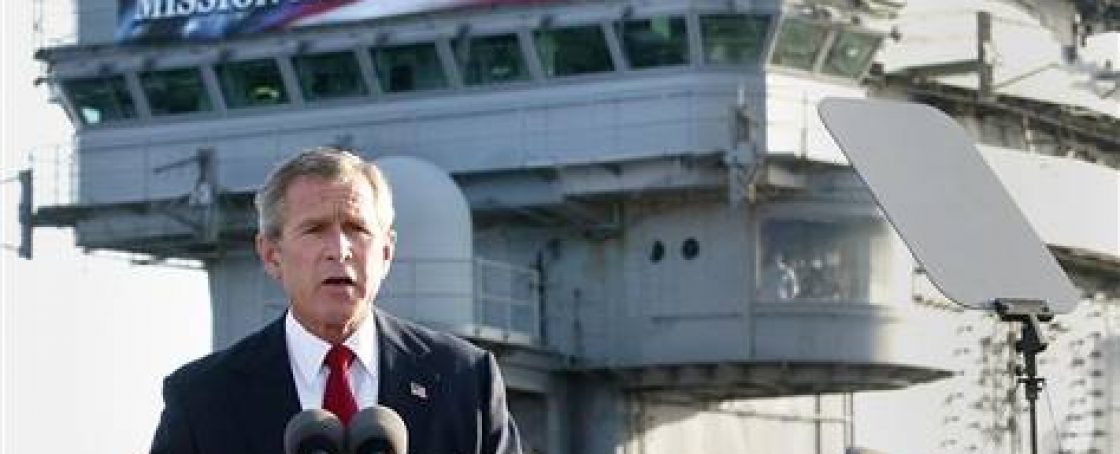
The younger generation might not remember George Bush’s infamous “mission accomplished speech” on May 1, 2003, which was presented to the public as a formal bookend to Operation Iraqi Freedom — a US-led intervention sold to the public on the grounds that Iraq’s despotic leader Saddam Hussein had access to illegal chemical and biological weapons of mass destruction and had the capacity to use them within 45 minutes.
But it was an excellent example of allied hubris in action.
“My fellow Americans, major combat operations in Iraq have ended. In the battle of Iraq, the United States and our allies have prevailed,” said Bush, in front of a big shiny “mission accomplished” banner.
“Operation Iraqi Freedom was carried out with a combination of precision and speed and boldness the enemy did not expect and the world had not seen before.”
In some ways Bush was not wrong. The scope, nature and scale of the assault on Iraq was indeed unprecedented. Saddam Hussein, meanwhile, had genuinely been forced to abandon control of the country and flee. Statues were indeed being toppled. And many Iraqis were happy about his displacement.
But the packaging of the story. The presentation of events as a fait accompli as well as the overall impression portrayed to the public was disingenuous and far from representative of facts on the ground.
According to Western news outlets, American and allied troops had been greeted as liberators in towns and provinces across Iraq. According to Western news outlets the whole country would be open to development and investment in a mere jiffy. None of this was true. The removal of Saddam Hussein instead created a power vacuum whicih reopened previously suppressed power claims from all sorts of factions in the country.
Imagine how much better placed any investor would have been if they had not gone for the war propaganda rhetoric being dispatched then? Imagine how much better they would have done in reading the geopolitical realities?
As recently as December 2021, up to 2,500 US troops were still formally engaged in combat missions in Iraq. The region continues on in a destabilised state and nobody in their right mind would suggest American intervention liberated anyone.
Strangely, unlike with Afghanistan, almost nobody noticed the news that the US mission was formally transitioned into an advisory role to Iraqi forces still battling remaining Islamic State insurgents at the end of 2021. (Possibly because the actual number of US troops in Iraq remains the same.) The situation on the ground remains complex and far from stable.
The fog of war
But I want to revert to how things were in 2003 and the propaganda fog that existed then.
I remember this period well because at the time of the allied invasion of Iraq I was working in Baku, Azerbaijan for an english-language newspaper called Caspian Business News. I was in my early 20s and, as it happens, involved with a British army officer who had been dispatched on the Operation Telic assault (the British support element in Operation Iraqi Freedom).
As a result I followed every single development, every twist and turn, like a hawk — gobbling up all the news I could find.
At the time there was no social media. The only way to communicate with soldiers on the front line or in operation was via the electronic post or “e-bluey” system (which I was convinced at the time was rigorously censored — even though it later transpired that all the anti-war diatribes I had penned as well as the Tony Blair and George Bush bashing got through quite unheeded).
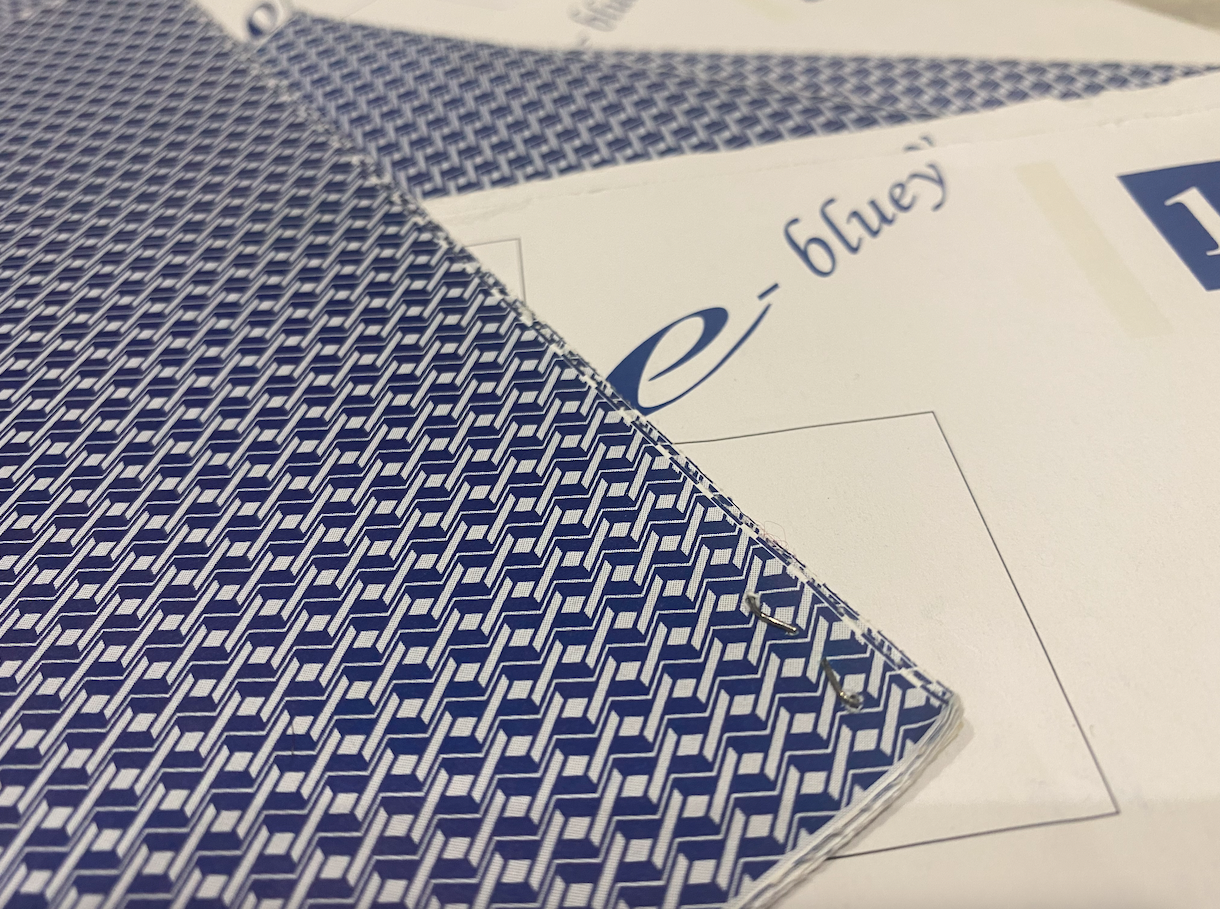
As an aspiring journalist, I felt compelled to include mini news digests in these correspondences from more diverse sources than I expected were available on the ground.
Reading these back today is very interesting. Hindsight is an incredibly sobering force. And it’s fair to say that intensive analysis of all news sources had by April 2003, led me to conclude quite independently that resistance was much greater than was formally being made out. This was far from the opinion in the mainstream.
Also, among some of the sources I was screening were somewhat accounts from Iraqwar.ru, a mysterious new outlet that claimed to be an “analytical center” that was “created recently by a group of journalists and military experts from Russia to provide accurate and up-to-date news and analysis of the war against Iraq. The following is the English translation of the IRAQWAR.RU report based on the Russian military intelligence reports.”
The only internet hits for these sources these days are reposts on other independent media and blogs, such as this , this and this. Though I also stumbled across this intriguing assessment — seemingly by the group — about how it came to be, its sourcing and why it was forced to disband after April 8. Was it all Russian counter-propaganda intended to lower troop morale? Very likely. But was it all disinfo – much harder to say. With declassification and hindsight, someone could probably do a worthwhile assessment of just how accurate those reports were. They certainly don’t seem inaccurate.
The reason I mention any of this is that, just like back in 2003, I am now experiencing a similar state of bewilderment about what really is the truth on the ground. Just as I was then, I am very sceptical about believing overly bullish assessments about the strength of the Ukrainian side from their own social media as well as accounts in the Western media. Many of the claims are impossible to verify independently. The sheer volume, meanwhile, of positive reports flooding social media are impossible for any one human to properly keep track of. The end result is an echo chamber of positive news that strategically omits or buries bad news stories. The intention of this social media bombardment is to create a beneficial impression by osmosis.
A lot of this positivity is, of course, driven by a desire to maintain troop morale (and who can blame them for that). But while it’s not necessarily always untruthful, in many circumstances, such as the Ghost of Kyiv, Snake Island etc it has proven to be. That means it pays to not just repeat reports circulated online or take them as a given.
On the flip side the continous talk about the weakness of the Russian side, the aged weaponary, the poor discipline — is equally over the top. And even if there are elements of it that are true, it seems quite likely to me the situation is being over-egged.
This is why I noted with great interest this story put out by my former colleague Sam Jones and John Paul Rathbone on Sunday.
It’s a tactfully written narrative shift by two reporters that I trust very much. Of particular note is the following paragraph (my emphasis):
Ukraine’s information dominance has masked its losses: thousands of open-source images of exploded Russian armour have been taken by Ukrainian civilians, who are unlikely to post similar pictures of their own side’s losses. This has led to a natural bias in the online content being scrutinised by many analysts.
Russian troops, meanwhile, have had their mobile phones confiscated by commanders — a lesson from its covert invasion of Crimea in 2014, and intended to give Russia greater control over information. Instead, it left a vacuum that was filled by Ukrainian content.
But also this:
Perhaps Ukraine’s biggest tactical vulnerability is its Joint Forces Operation (JFO), where the bulk of Ukraine’s military assets are deployed just west of Donetsk and Luhansk. Russia was seeking to encircle Ukraine’s troops, western officials said, cutting them off from Kyiv and drawing them into open combined-arms combat, which plays to its battle groups’ superiority.
Crushing Ukraine’s forces in such a way would be as much of a victory as capturing Kyiv, some analysts said, invoking Carl von Clausewitz, the military theorist who saw the destruction of armies rather than the capture of cities as the fastest route to victory.
Regardless, few believe the fight in Ukraine will end soon.
“Even under the best case assumptions, this will be a war with many operational pauses,” said Rusi’s Kaushal. “A war of fits and starts that will probably drag on for a long time.”
All of which sounds far more realistic and fair than any coverage I have seen.
Of course, as someone formerly from the inside I can also spot the necessary caveats and appeasements that reporters have to sprinkle in just to get the truth out. These include 1) the fact that the story starts by “safely” referencing a historic equivalent where the West equally under-estimated the Russian side (the winter war against Finland), 2) the obligatory hedge that the outcome of the war “is still far from certain” 3) the token patriotic signal to acknowledge the consensus narrative and not freak people out (also known as a shit-sandwich) by including the phrases that “while Ukrainian successes have stalled Russia’s advance..” and “although Russia’s military has fared poorly..)
Reading the news is becoming more and more like kremlinology or an Aesopian fable. It increasingly pays to read between the lines.
Sadly, the Twitterverse can’t handle this sort of truth. But hopefully discerning investors and Blind Spot readers can.