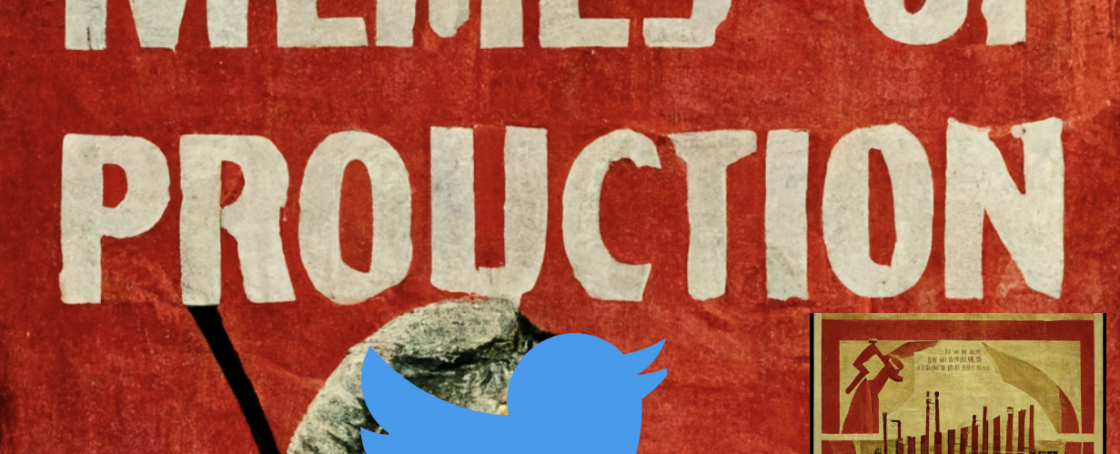
For a long time, I’ve viewed the internet data-driven economy as analogous to the communistic Gosplan system under the Soviet Union. I recently applied that thinking in a Twitter thread to Elon’s restructuring of Twitter. I compared his move to charge $8 for verification to a perestroika moment for the social media platform.
I’d like to expand on that thinking in long form here.
The basis of the analogy is the two-sided de facto-subsidised nature of the internet, which for years has given us a false perception about how cheap these services really are.
It was no different during communism. People became used to all sorts of basic services, products and utilities being an entitlement rather than something they had to actually work for, invest in or produce. The true cost of these services was obscured by an increasingly unhinged and chaotic planning system. A tragedy of the commons followed.
Here’s me in 2016 giving a presentation about the similarities I saw between the two systems:
Here’s how I pitched the presentation at the time:
The sharing economy isn’t what you think it is. Nor is the platform economy. Furthermore, we’ve been here before. Last time it was under the guise of ‘red plenty’. Could we be sleep walking our way into a technocratic dictatorship? The first signs to suggest we are are already bubbling over: from safe harbour disagreements to Uber boycots. In this presentation I will explain why the most important factor the techies in Silicon Valley are forgetting is that there is no such thing as free, that cross subsidisation doesn’t create an ecosystem, and that things are always relative and subject to diminishing returns.
The digital business models of today are simply obscuring fixed costs vs marginal costs, whilst encouraging predation. Which wouldn’t be so bad if they weren’t also encouraging underinvestment in the real economy, precarious systemic interconnectedness and many other vulnerabilities. They’re also kicking the problem of the tragedy of the commons down the road. Once the world wakes up to the costs of the digital liberty illusion, the hangover could be considerable.
Ultimately this all comes down to the theory of Anacyclosis, best summed up as what has before will happen again, and that real innovation is really, really hard. Most of the time what passes off as innovation today amounts to nothing more than redrawing the lines in the sand and a zero-sum game. The underlying sandbox hasn’t arguably been busted through since the industrial revolution itself.
So how does that apply to Twitter?
Unlike most of the data-led platforms from Amazon, Google to Apple — Twitter’s two-sided technocratic mechanics are arguably even more malevolent. At least with the former, you’re transparently the product, the advertisers are the client and the platforms handing over the product are the sovereign. The founder sovereign values you, meanwhile, because without you they would have no product and no power or influence. And the advertisers don’t have disproportionate control on the sovereign because the product is so valuable they have to compete with each other for a piece of it.
But Twitter’s profitability struggle meant there was no obvious upside for the platform sovereign. The whole arrangement was actually much more opaque and sinister. The platform provided the service seemingly benevolently — at the goodwill of equity investors — because nobody could tolerate too much advertising on the platform.
Whatever advertising the platform did pull in, in that sense, was never enough to make the sovereign truly independent or powerful enough to dictate terms. That meant over time the Twitter sovereign (i.e. Jack Dorsey) became a mere puppet of the advertisers and equity investors who dictated terms to him. His power was in appearance only. The true control was in the hands of the bureaucratic increasingly woke nomenklatura who were happy to pander to the advertisers and other powers for internal advancement.
This might explain Dorsey’s increasingly despondent demeanour and contradictory stance on matters of free speech. Dorsey was not the king of his platform at all. He was beholden to his funders, administrators as well as the secret services KGB-types who had infiltrated the system for their own ends. He had a de facto gun to his head.
That’s why, for a long time Dorsey seemed like a man communicating in encrypted doublespeak. On one hand he was confirming Twitter’s commitment to tackling disinformation and hate speech, at the same time he was promoting the antithesis of everything he was saying publicly by going all in on censorship-resistant bitcoin.
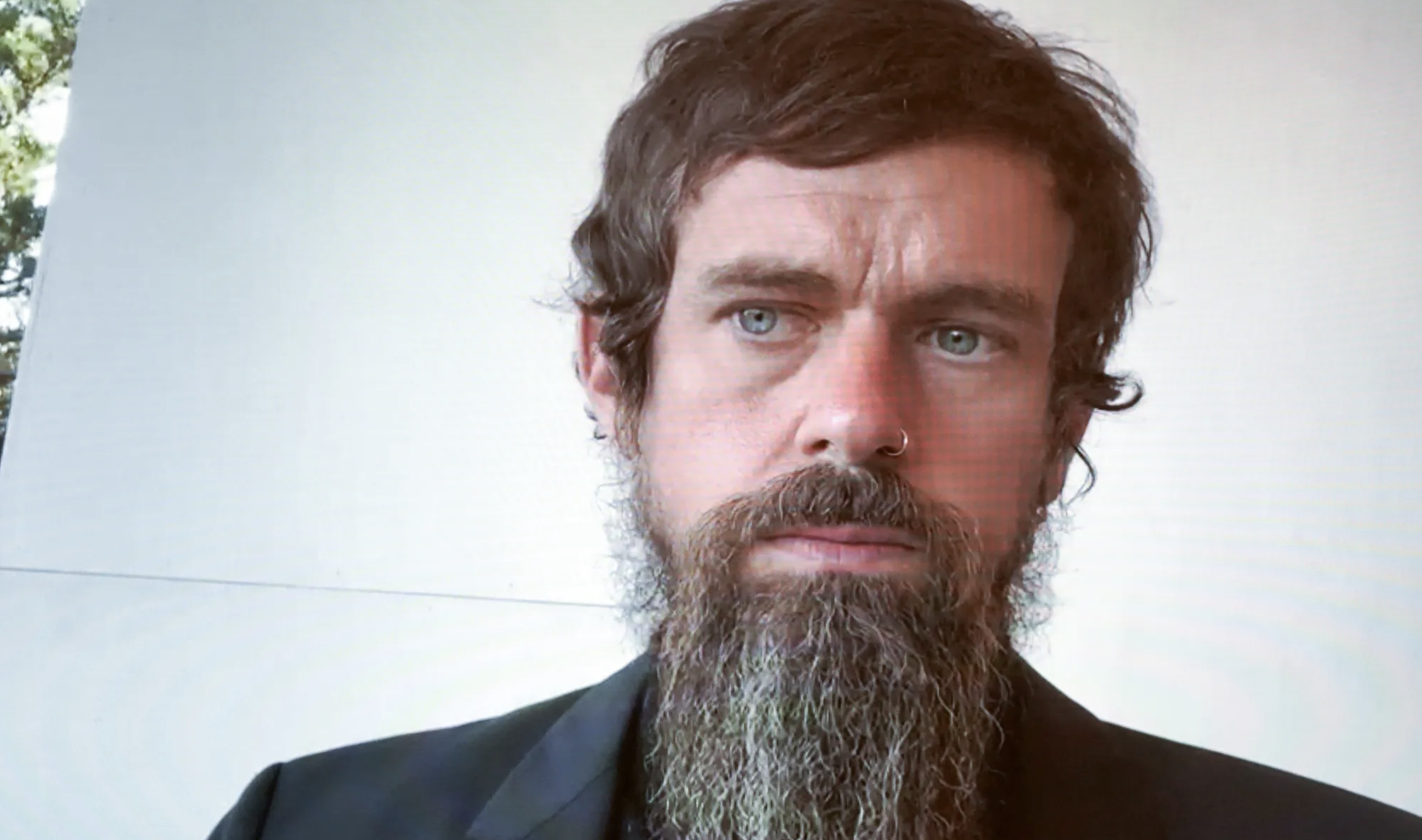
When Dorsey eventually resigned in November 2021 to pursue his crypto and decentralised interests it was the strongest signal yet that Twitter’s technocracy was beyond reform. It had been, arguably, totally corrupted. And since actions speak louder than words, the world should have been wise to this. But since most of the world’s media pundits were beneficiaries of the blue-tick influence corruption, they had (mostly unwittingly) aligned themselves with the nomenklatura “intelligentsia” behind the scenes. They were blind to the doublespeak or the TwitterKremlinology in play.
That’s why nobody saw Elon’s bid for Twitter in April coming. Or how closely it connected to Dorsey’s later resignation from the board in May 2022. And the degree to which it represented a type of political coup.
As one of the platform’s biggest influencers, Elon still believed in the system. Cynics may disagree. But I cast Elon as a Gorbachev figure who thought to himself that with the right incentives the platform could be reformed and saved. After all, Elon’s entire world view is based around a technocratic utopian vision, which is often naive to the realities of hierarchal socio-economic forces and physical limitations. That’s why in Elon’s mind, an egalitarian and totally open public square can still flourish under the right guardianship. People just need the right vision to believe in.
Communism was no different. Its society too was held together by the advancement and promotion of a bold technological society that could command space, physics and transport — while endowing everyone with wealth. Elonism is not that different. It too is founded on Stakhanovite principles. For as long as people believed in the mission, they were united in the goal of achieving shared wealth advancement.
One thing Elon – a master propagandist in his own right — can definitely do is inspire belief in bold technological visions. So perhaps we should be hopeful.
But reform was always going to have to be painful. For one thing, the influence of the nomenklatura, the advertisers and the investors was clearly going to have to be diminished. That obviously meant a purge of the non-believers and a restructuring of the revenue model. One might wonder in that context what the whole “pulling out of the bid” debacle was all about. But to some degree this established the narrative that allowed for the purges. The debacle helped to establish the narrative that the system was corrupted most obviously by the penetration of underhanded (and often politically motivated) black market bot accounts.
What the legal process, however, exposed was the degree to which the bull market itself had disguised the total disarray at the administrative layer of Twitter.
It’s increasingly clear that for as long as investors were being paid out by capital appreciation, the entire shambolic arrangement was tolerable. The true power arrangements behind the scene were being disguised. Collapsing fundamentals however make it impossible to disguise the chaos.
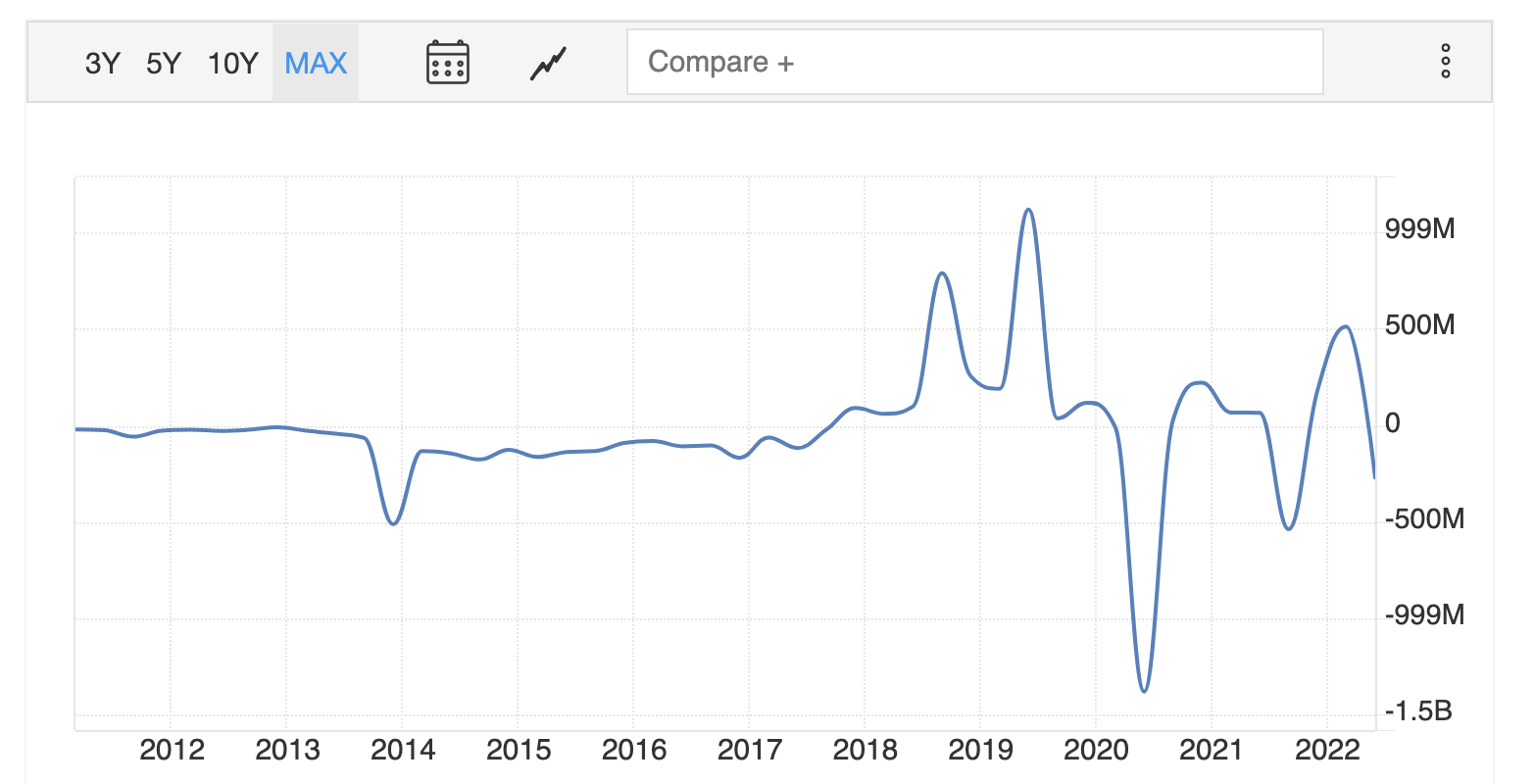
Here for context is Twitter’s net income over the years:
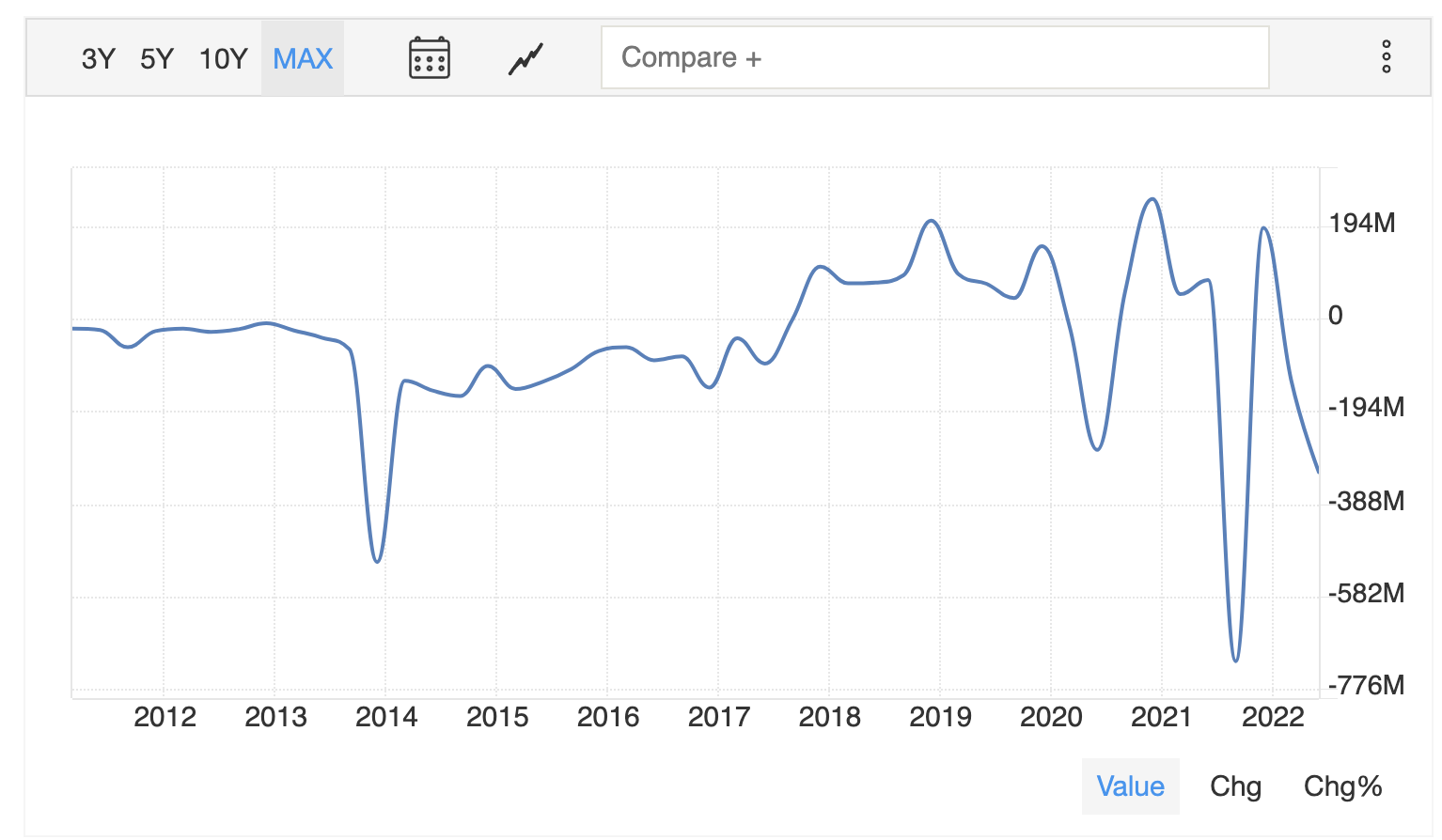
Here’s the operating profit:
And here is its cost of sales:
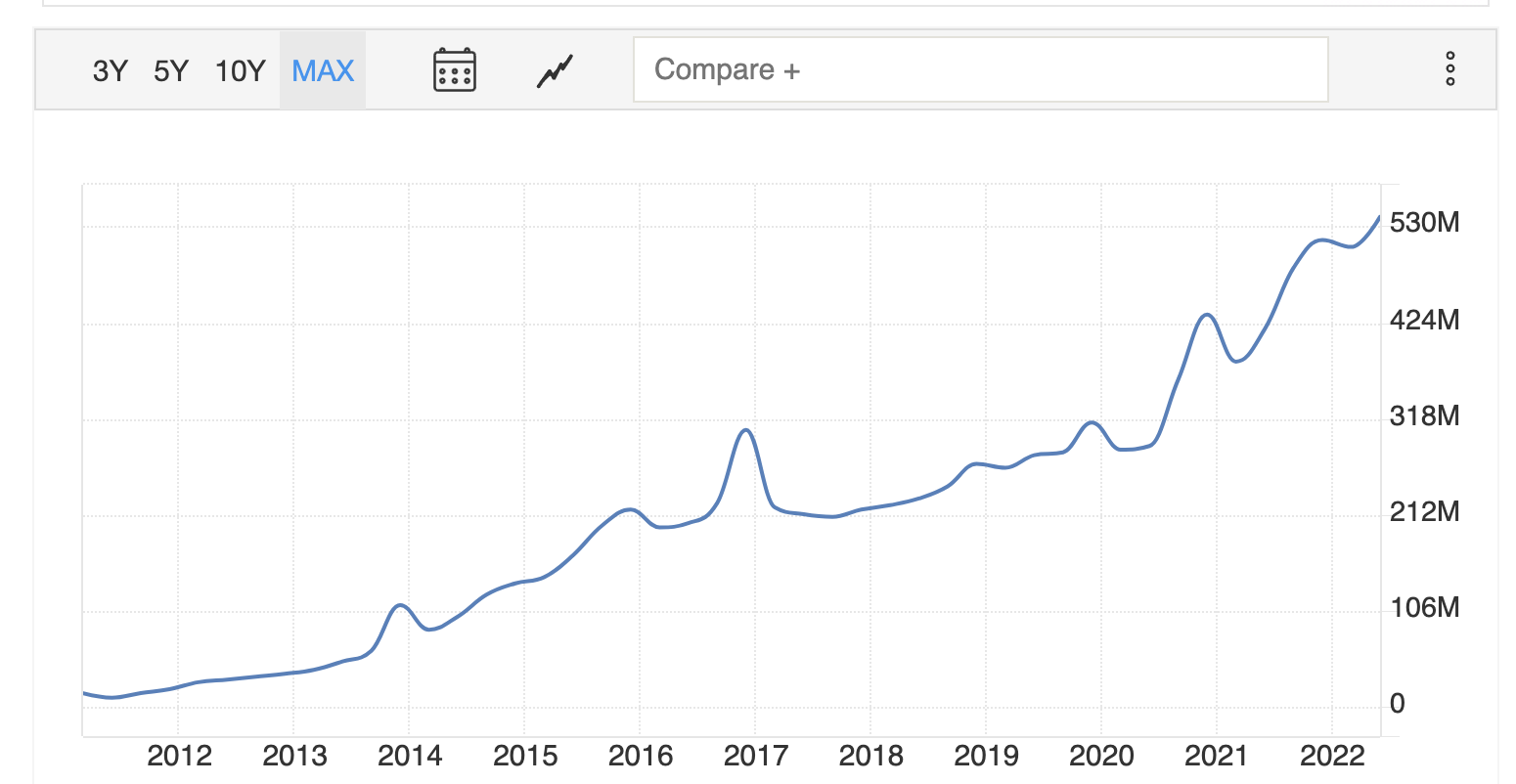
Now that the data-based internet market is in free fall in the context of rising interest rates, non-profitability is no longer tolerable to shareholders. That is true not just of Twitter but the entire unicorn monopoly economy. It is also true of the established data-based mega corps.
If the true cost of data and content generation has to be priced in to these services and models, then it’s not just the future of Twitter that’s on the line. It’s the future of all the key “state-like” internet providers.
People who are hard up, after all, have less disposable income to spend on discretionary items. They are inclined to make smarter choices. This makes them less susceptible to advertising or influence that tries to imply their reality is better than it really is. That is bad for the data-based business as a whole. But hard up people also don’t have the spare cash to spend on the services directly either. That leaves them too costly to service, and increasingly likely to be excluded.
Data market privatisation
Where we are now is at the point of the great data market unbundling. It is analogous to the post Perestroika period in the story of the Soviet Union’s collapse. Shock therapy is knocking loudly on the door. And it wants us all to own our own data in an open market so that we can make informed decisions about what services we do or do not pay for.
If it’s done right we will pay the fair market price for internet services and transparency will be restored. This in turn will encourage investment in exactly the sort of services people really want and need rather than ones they are merely being lured into by those who seek to grab their democratic rights and suppress their voices.
If done right, the liberalisation could revive a true meritocracy on the web, where quality content producers are rewarded and spammers and inauthentic voices are relegated to the dustbin.
If done wrong, however, it could unleash even more chaos. It might even create the circumstances by which the public — shocked by the reality and expense of a free-market system — openly gives up on democratic freedoms in exchange for the ongoing provision of cheap internet services by those who are prepared to give it to us on the condition that we do what they say.
On one hand government regulation like GDPR has of course already nipped the corporate data free-for-all in the bud and opened the door to the establishment of these sorts of new absolutist structures.
It is happening because just like with the privatisation of state industry in the post communism era, most people don’t understand the value of the liberated data they have just been handed. They are far too happy to sell it back on the cheap to new opportunistic oligarchs who better understand how to repackage it to empower themselves.
What has happened here is indicative therefore of what might happen under a new Twitter $8 verification regime.
If it proves too expensive or absurd to most, Twitter will fail to maintain traction. It might even end up becoming an irrelevance.
The new separatist republics of Truth Social, Parler, Gab and others could conceivably come together to sign their own equivalent of the Belovezh Accords. This would de facto declare that the Twitter public square was being replaced by a commonwealth of independent former Twitter networks now operating as a collaborating commonwealth.
This could de facto make Elon, like Gorbachev, Chief Twit of nothing. In that arrangement Truth Social would likely become the new “independent Russia” power player equivalent.
And yet, it’s probably far too early to conclude Elon will fail.
It’s also not clear — in the event he does fail — what sort of funding models any of these new emerging social media platform states would orientate to. Would they go for loans from those who see them as growth inclined investment opportunities? Would they sell off their real-estate to the highest bidding advertisers? Or would they go for total community funded autarky?
What’s worth thinking about at this point is not necessarily how corruption, instability and autocracy might infiltrate states and undermine them, but rather how the emergence of Jack Dorsey’s “fully decentralised” BlueSky project could fit into the broader picture.
It could just be that BlueSky offers Twitter’s reforms a backup that the original USSR never had. And that, I think, is probably a good thing. It’s certainly the one element that seems potentially different this time around.