
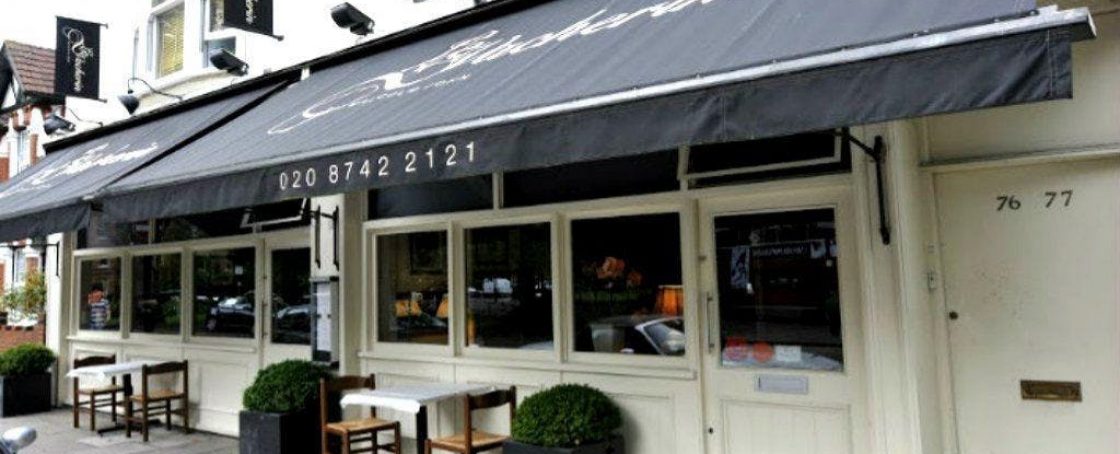
In this Leaked Lunch episode Izabella Kaminska meets with James Aitken, of Aitken Advisors, at French restaurant La Vacherin in Chiswick. James is one of the UK’s top financial liquidity and plumbing experts, advising up to one hundred of the most influential capital pools in the world. James gained his experience working for UBS and AIG Trading. The episode was recorded on October 14, the day Kwasi Kwarteng loses his job as UK chancellor.
Brought to you in association with Haya, the pseudonymous whistleblowing app.
2:16 – Introduction to James Aitken. How James Aitken came to be a financial liquidity and plumbing expert. From Australia, he disembarked in London with Chase Manhattan in 1999.
4:40 – Started working at AIG Trading, commodities and currencies. How meeting Bernard Connolly, author of Rotten Heart of Europe, and Sir Allen Walton, Margaret Thatcher’s economic advisor, showed James he knew little of financial markets.
7:00 – Ordering food.
James’ Background
9:10 – How James fits a healthy reading schedule into his diary. How being self-employed helps him keep it up. How his reading schedule and ability to distil information helps his time-constrained investor clients better understand the market.
11:30 – How understanding markets is more about asking the right questions than having the right answers. Going from the ‘so what’ to the ‘now what’ in economic analysis and the three possible answers; ‘buy that’, ‘sell that’, or ‘it doesn’t really matter’. How the latter is usually the most important.
18:10 – Wine selection. James has insider information on Izzy’s preferences.
20:00 – Continuing his story about working at AIG Trading.
24:30 – How James realised there was a problem with regard to the liquidity at AIG once they were downgraded. A colleague told him “there is not enough collateral on earth to make this work if we’re downgraded again”.
26:00 – On how he was made redundant by AIG in 2006 – the same year as early payment defaults happened in the subprime mortgage market.
27:30 – On how UBS picked him up in August 2006 – and how once he joined UBS, he requested permission to put out research about shorting the subprime housing market, and the resultant impact on the entire economy if American house prices stopped going up. And how he didn’t know UBS was loaded up on subprime credit at the time itself.
33:00 – Why he knew by September 2006 that the subprime housing market would go bust. He’s saying the same reason why the subprime crisis was ignored or refuted for a long time is the same problem as now; ‘price discovery is a bitch’.
35:00 – How the impact of subprime mortgages and CDOs was connected to bad financial plumbing. When subprime CDOs started being downgraded – and how this led to pension funds and other investors started looking for a bid and failed to find it.
How James Thinks About Risk and Valuation
37:10 – Impact of volatility arbitrage: blending strategies with no mark-to-market with public market exposures that are mark-to-market every day. How the volatility of that strategy is much lower as long as there’s no public event that forces one to mark their private exposure to the market.
39:00 – How the situation around James’ role at UBS in outlining risks to subprime mortgages to stakeholders developed throughout the buildup to the subprime crash in ’08.
41:40 – Where did these stakeholders sit in the puzzle of the subprime mortgage crash?
44:00 – On how the subprime crash was the result of being at the high point of model-driven views of how the world works. How viewing economic problems through the prism of a financial model means Cbankers will see the problem late, but will adjust accordingly as the model comes around.
Groupthink in Markets
46:00 – On the similarities between the groupthink dictating subprime contagion wouldn’t spread far and the recent failure to acknowledge inflation as persistent.
48:00 – On Thomas Sowell’s ‘Vision of the Anointed’ and on public perceptions of this American economist.
51:00 – On Adam Curtis’ new documentary on hypercapitalism in Russia, and the similar forces potentially buffeting the West.
52:15 – On the financial consequences of groupthink, and the detrimental, addictive effects of mobile phones and social media.
55:10 – On the Fed’s recent reaction to the underestimated persistence of inflation.
56:00 – On how inflation moved from goods inflation to services inflation, which is far stickier.
58:50 – On Cathie Wood and her online presence, on how she’s a manifestation of the historically high liquidity cycle.
59:40 – How being a public figure as an investor means it’s difficult to backtrack – and how this fact can be extrapolated to wider society. On how policy is being led by a small cadre of influencers on Twitter.
The Mini-Budge Fiasco
1:03:30 – On the difference in the market reaction to Liz Truss and Kwasi Kwarteng’s policies vs. the French budgets.
1:05:50 – The critical mistakes made by Truss and Kwarteng in the release of their mini-budget.
1:08:00 – On what our politicians currently believe – what do they stand on – and how the current political environment shows there’s little they seem to believe or stand on. All James sees is blatant opportunism.
1:11:20 – On the British economy and outlook.
1:13:52 – On why the LDI issue would have come along anyway – Truss and Kwarteng just accelerated the reckoning.
1:17:25 – We’re running a 21st century economy with 20th century models. On the huge chunks of the financial system those with the models can’t see.
1:20:15 – On the de-risking of pension fund portfolios, where they will load up on cash by selling risks to re-buy safer assets like gilts – the UK will be alright.
Collateral Side-Effects
1:24:00 – On the collateral calls of pension funds.
1:25:25 – On the difference between pooled and non-pooled LDIs.
1:26:40 – On the opportunities presented by the worldwide selloff to the long-term investor, as everyone focuses on the short-term.
1:29:30 – On what this crisis should teach us about policymaking.
ESG
1:32:00 – On the energy transition, and on the conflicting advice on ESG policy.
1:34:20 – On the state-directed nature of the ESG transition, and how we may no longer be in a capitalistic system. If ESG offers a comparative advantage to traditional energy mechanisms, why does it need such heavy mechanism?
1:37:30 – On Mario Draghi’s reform creating a deliberate scarcity of collateral in Europe – because it creates a multiplier effect on the ECB’s asset purchases.
Collateral Shortages
1:40:30 – On how the collateral deficit that plagues Britain and Europe is deliberate, and how this affects the investor.
1:42:20 – On why there is no collateral shortage, but there is collateral scarcity; shortage of unencumbered collateral. Essentially, the free float is gone.
1:43:10 – On James Aitken’s worries regarding the unwinding of collateral chains.
1:45:50 – On the missing gap in the ECB’s data sheets regarding collateral v collateral transactions in Europe.
Central Bankers Behaving Badly
1:48:15 – On the leadership and communications of the Bank of England being hopeless.
1:54:10 – What happens to housing under current interest rate conditions, are we facing repossessions? And what’s the big blindspot everyone’s missing. James believes the blindspot we have is that we’re going to be able to muddle through.
Blind Spots
1:57:00 – How James worries about bad financial plumbing, and the lack of financial liquidity in the system.
1:57:45 – Who’s the most exposed? Domestically, James believes someone with an overleveraged buy-to-let portfolio.
1:59:15 – On the housing situation following the period of historically low-interest rates. James thinks the unavoidable problem in this country is that the bank rate has to go up, mortgage rates will go up, and no Western country can cope unless they force a recession.
2:03:10 – Why is the system not trusted? James thinks it’s because its run by self-indulgent group-thinking clowns.
2:04:30 – How paradigm shifting is the Russo-Ukrainian war? James believes it’s paradigm-shifting for Putin.
Slowbalisation
2:06:00 – James explains the idea of ‘Slowbalisation’, vs. the idea of de-globalisation – slow onshoring on the supply side, such as the slow return of manufacturing to the United States.
2:09:40 – James isn’t sure about CBDCs. Thinks the issue may be unimportant – though admits he could be wrong. He believes it’s a distraction.
2:11:00 – How James believes we’re in the awkward price discovery phase because of the rise in inflation – which was going to come regardless.
20:12:10 – James believes we’re back to a world where you value an asset on its merits, you buy it, and you wait – rather than building a portfolio predicated on what the central bank is going to do.
20:13:10 – James’ well-deserved message of appreciation to Izabella Kaminska.
