
| SNEAK PEEK |
— Why the two most salient agreements that could emerge from talks between Germany’s CDU and SPD do not mean what you think.
— Were massive structures really found under the Giza Plateau?
Dear subscribers:
Dario here.
We’re a lot more geopolitics-focused this week, with a fun detour in the Giza plateau.
We won’t be addressing the Signal leaks, because everyone else is already. But we did find a good meme:

I’d also like to remind our readers that I’m always learning, ergo, I appreciate your feedback, documents and anything that can fill my blindspots.
Lastly, I’m trying to take Xitter more seriously. I primarily use that informal page for the most fun type of politics — exopolitics. Give me a follow if you find that stuff interesting too.
As always, send tips to [email protected] and [email protected].
Without further ado:
| THE GEOPOLITICS BLIND SPOTS |
GERMAN COALITION TALKS ARE UNDERWAY with energy and climate as the key ‘crunch points’ between the CDU and the SPD. Despite both camps sharing key targets, such as climate neutrality by 2045, the CDU has campaigned for a laxer series of policies to reach climate goals that would allow German industry to get back on its feet.
DARIO’S COMMENT: There are two salient points of potential disagreement in the negotiations:
- Nuclear
- Nord Stream II
And the most obvious outcome is not what you think, for obvious reasons.
While both the SPD and the CDU nixed nuclear energy in a previous “Grand Coalition” under Merkel, the CDU’s Friedrich Merz has U-turned his party’s policy.
The CDU is a staunch nuclear backer. But this doesn’t just mean switching on the old nuclear plants. Most have already been permanently decommissioned. The CDU’s pro-nuclear stance is more forward-looking and aimed at new nuclear tech, like small modular reactors or SMRs, to power German industry cleanly and cheaply.
The second is Nord Stream II. We have long argued that the CDU being back in government would lead to a new agreement with Russia. Google ‘Nord Stream II’. The media landscape has changed. Now, it’s full of positive tunes from CDU politicians and soon-to-be ministers.
Jan Heinisch, member of the CDU’s energy working group in the coalition talks with the SPD, told Politico: “If a just and secure peace is found one day, then we must be allowed to talk again about buying Russian gas.”
This agreement would have a dual upside. On the one hand, it would put political skin in the game for the new German coalition and Russia to maintain peace in Europe. On the other hand, it would allow German industry to recover from the self-defeating anti-Russia sanctions.
But do you see the catch yet?
The investment in nuclear is a medium to long term investment to gain cheap, clean energy for German industry. Restarting Nord Stream is a shorter term solution for achieving the same goal.
While Nord Stream would guarantee peace, it would seem short-lived if combined with restarting nuclear power. Merkel’s coalition attempted to impose a lasting peace by getting rid of nuclear power and choosing to rely on Russian gas. This calculation was not inherently wrong. But it was defeated due to a combination of Russian inflexibility and military aggression, and American interventionism.
What we’re seeing now is different. It’s a short-term return to peace, with a medium-term opt-out.
Think of the Nazi-Soviet pact of 1939 — only with worse uniforms.
MYSTERY BUILDUP ON DIEGO GARCIA CONTINUES with United States B-2 bombers, suggesting it’s not about Yemen’s Houthis. While Yemen’s Houthis are a formidable target, Iran’s proximity suggests otherwise.
DARIO’S COMMENT: No, it’s not a buildup on “Dario Garcia” but “Diego Garcia”.
Another moment of mistaken identity may have taken place with much of the online commentariat estimating this buildup means two things:
- A huge concentration of forces to take out Yemen’s Houthis.
- An incoming attack on Iran.
Neither strikes me as the likeliest outcome. Yemen’s Houthi militia, while a powerful militia, is dispersed.
After decades of aerial bombardments by various actors, the Houthi have learned to never concentrate their assets. Any news of ‘massive’ bombing of Houthi targets is more for show than anything else.
This means the payload offered by 20 B-2 bombers makes little sense as strike vehicles for Houthi targets.
On the other hand, an incoming attack on Iran wouldn’t be advertised in this way. The bombers wouldn’t be visibly concentrated. And their buildup wouldn’t be leaked to the press. Because remember, there are no journalists in Diego Garcia.
Instead, the B-20 buildup is a typically Trumpian show of force in ongoing negotiations with Iran over its controversial nuclear program.
We’ll keep our eyes peeled.
PUTIN EYES ARCTIC COOPERATION despite the increase in global geopolitical tensions in the region. The Russian President has outlined that Trump’s stated intention to acquire Greenland was “serious”, representing America’s continued push to promote its Arctic interests.
Distancing himself from Trump’s Greenland plans, Moscow outlined its concern at “NATO countries’ (…) increasingly designating the far north as a springboard for possible conflicts” in a reference to NATO’s newest member states: Finland and Sweden.
As we’ve outlined on The Blind Spot before, a continuing increase in sea temperatures could make Russia’s Northern Sea Route (NSR) the most profitable inter-Arctic route in the world. It would also be significantly faster than most traditional shipping routes.
For instance, a ship travelling from Dalian, China to Rotterdam, Netherlands will arrive at port in 33 days using the NSR, versus 48 days with the Suez Canal.
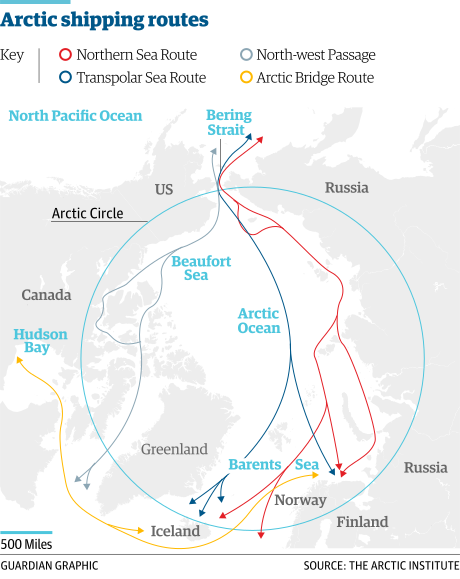
Trade volumes increased by 755 percent from 2014 to 2022 on the NSR. However, abundant sea fog, poor mapping, and being under ice most of the year mean the Arctic trade is still negligible.
But perhaps not for long. Especially because Russia has used the International Arctic Forum in Murmansk to announce the commissioning of next-generation icebreakers. We note Russia has the world’s largest icebreaker fleet, and the only nuclear-powered icebreakers.
SUDANESE ARMY RECLAIMS KHARTOUM and expelled the Rapid Support Force militia from the embattled country’s capital city. After years of intense fighting between the RSF and the Sudanese Army, momentum definitely seems to be on the Sudanese Army’s side.
It’s a significant victory for the Army, which had been forced to leave the capital city after fighting started two years ago. The Sudanese Army, led by Abdel Fattah al-Burhan, had been operating in Port Sudan, in the country’s north-east since then.
We had already noted the Sudanese victory in seizing the critical supply nexus of Wad Madani surrounding Khartoum last month. This seizure was critical in the final push to take Sudan’s capital.
But while this could mean a return to normality for central and north-eastern Sudan, the RSF still maintains a stranglehold over Darfur in the country’s south-east. A resolution could still be years away.
TURKEY PROTESTS ERUPT as Erdogan arrested his most prominent rival, Istanbul Mayor Ekrem Imamoglu, ahead of his naming as the presidential candidate of the secular opposition party.
Opposition figures to Erdogan claimed the arrest was a clear “coup attempt” and called for mass protests against him, with thousands of urbanites taking to the streets in agreement.
DARIO’S COMMENT: Large city-wide protests mean little to nothing for Erdogan. His voter base has always been rural and based in the conservative east of the country.
It’s not the first time he’s faced these types of protests without flinching. They mean a great deal to the West, since Istanbul is home to the most westernised and developed Turks.
But I suspect they don’t mean a lot to Erdogan — or his conservative voters. I could be wrong — I’ll keep my eyes peeled.
BOLSONARO TO FACE ANOTHER TRIAL over an alleged coup d’etat he tried to launch to overturn his defeat during the 2022 presidential election, together with seven other right-wing political figures and military personnel.
These allegations come from the Brazilian Supreme Court, which unanimously voted to accept charges lodged against the former Brazilian President on five counts, including trying to murder a Supreme Court judge.
ISRAEL ATTACKS GAZA AND LEBANON amid increasingly bitter infighting at the top of Israeli institutions. Netanyahu’s war cabinet claimed that Hamas had broken the already fragile ceasefire, while CNN reported that Israel claimed two rockets had been launched at its northern region.
But Hamas’ response to Israel’s renewed offensive has appeared timid, while Hezbollah has denied launching rockets into Israel.
And Tel Aviv’s young Israelis don’t buy this casus belli either, as Israel’s capital has erupted in street protests once more.
Even the cautious Financial Times has asked: are Israel’s recent offensives in Gaza and Lebanon a domestic political power ploy?
The play: Rumours of tensions between Ronen Bar, the head of the Shin Bet, Israel’s domestic intelligence service, and Netanyahu’s cabinet have abounded for weeks. Reports allege the Shin Bet had been conducting a high-level investigation into the extent of Qatari influence in the Israeli cabinet under Bar’s leadership.
And just over 24 hours after Israeli tanks rolled back into Gaza on Tuesday, Israeli sources confirmed Netanyahu had fired Ronen Bar. This is an unprecedented move since no Israeli president has ever sacked the head of the Shin Bet. The firing has led to the mobilization of widespread protests across the Israeli capital, as opponents to Netanyahu’s rule claimed this was another example of this cabinet’s war against Israel’s judicial and legal authorities.
Yair Lapid, head of Israel’s Labour Party claimed, “The soldiers on the front lines and the hostages in Gaza are just cards in Netanyahu’s game of survival”. Netanyahu dismissed these accusations, calling them “lies”.
But is it working? The Israeli Supreme Court late on Friday froze Netanyahu’s dismissal of Ronen Bar and moved the dismissal back until a hearing could take place on April 8.
And recriminations have only increased since then. Benjamin Netanyahu now claims that Ronen Bar knew Hamas’ attack was imminent, but did nothing to inform him.
Bibi’s statement comes after an earlier acknowledgment that his intelligence officer had already received information about suspicious Hamas movements, but which wasn’t passed on “due to the document’s non-urgent framing.”
DARIO’S COMMENT: This echoes our argument on Israel’s reliance on the state of exception, though narrowly applied to the survival of Netanyahu’s cabinet:
Israel’s interest in vanquishing its enemies is only skin deep. In practice, the state relies on there being a permanent enemy at the door, because without one Israel could lose its raison d’etre.
Looking past the noise, I’m not convinced this indicates an imminent flareup in the Middle East once more. Israeli society is exhausted from war. Hamas’ response has been timid. Assad’s collapse has significantly weakened Hezbollah’s supply lines.
Trump’s America is focused on pulling back from new conflicts, not getting into new ones. His recent strikes on Houthis and the Diego Garcia buildup strike me as negotiation ploys to weaken Iran’s hand into a forced peace, rather than the inauguration of new conflict.
Without clutching my conspiracy pearls too closely, this feels more like an ‘in power or prison’ dynamic. One where Netanyahu feels the need to drive his cabinet back into war to maintain the momentum and stay on top of the Israeli government – and avoid prison time.
Outside of Netanyahu, the other incentives appear aligned towards peace, despite recent news suggesting otherwise.
For the sake of the Middle East, hopefully I’m not mistaken.
EUROPEAN UNION PLEDGES BILLIONS TO SYRIA for the country’s reconstruction, in a groundbreaking deal with the country’s new President al-Sharaa. The European Union cited ‘hope’ in Syria concerning an agreement to integrate the Kurdish-led and U.S.-backed Syrian Democratic Forces in the country’s northeast into state institutions.

DARIO’S COMMENT: Two weeks ago, we outlined that Serbia’s protests appeared to be primarily domestic. We stand by that analysis, particularly after a brilliant article shared with us by one of our sharp readers.
Nevertheless, we speculated that the protests may be aligned with international intrigue. Events since then have suggested this may be true.
It so happens that a military alliance was signed on March 18 between Kosovo, Albania and Croatia on March 18. Ostensibly, it aims to “enhance defence cooperation”. And while the Kosovar Minister claimed the alliance was a “message of unity” and not a provocation, the Serbian President has demanded explanations from Albania and Croatia for dealing with what they call Kosovo: “The illegitimate representative of the temporary institutions of self-government in Pristina”.
But that’s not all. Kenya has become the latest country to recognise Kosovo on March 26, after Israel did so in September 2020. While most European countries and the United States have recognised Kosovo, strong Serbian, Russian and Chinese opposition have stopped Kosovar recognition from passing the United Nations.
Putting my speculation hat on, Kenya’s recognition is likely due to its dire financial straits. Remember how protests erupted in violent street clashes last summer? That’s because of harsh economic measures by President Ruto imposed to satisfy the conditions from the IMF. And on March 24, Kenya’s ninth and final review under its IMF Extended Fund Facility and Extended Credit Facility programs had just been cancelled, likely “due to Kenya’s failure to meet revenue and budget deficit targets under the two facilities.”
With headlines outlining that Kenya, particularly its embattled health sector, is suffering from the United States’ USAID cuts, I wouldn’t be surprised if a bargain has been hatched behind the scenes. The question is, did another state’s (or group of states’) money pay for Kenya’s recognition of Kosovo?
SRPSKAN AFFAIRS: Moving to another Serbian region, Bosnian courts have filed an international warrant with Interpol to arrest the President of Republika Srpska, Milorad Dodik, who had defied a previous domestic arrest warrant by crossing into Serbia and travelling to Israel.
| THE EXOPOLITICS BLIND SPOT |
HUGE STRUCTURES UNDER THE GIZA PLATEAU were supposedly unveiled by the study mainly comprising two academics, Filippo Biondi and Corrado Malanga during a press conference on March 15 Castel San Pietro Terme in Bologna, Italy, causing quite a storm on the internet.
The study detailed massive spiral pathways revolving around eight vertical cylindrical wells extending almost 650 metres under the Giza plateau, specifically under the Khafre pyramid.
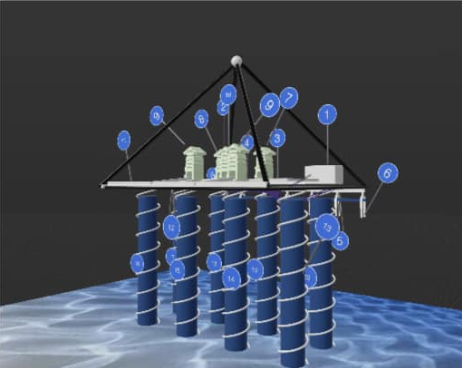
DARIO’S COMMENT: The results of the “Khafre project” were publicly aired in a press memo, which has now been AI-dubbed and published online.
What concerned me was how viral it went, just as the internet received the JFK files. This immediately tingled my spidey senses.
Especially because there are off-putting footprints all over this project. To skeptical eyes just the presentation’s thumbnail would be enough to turn them off from taking the claims seriously:

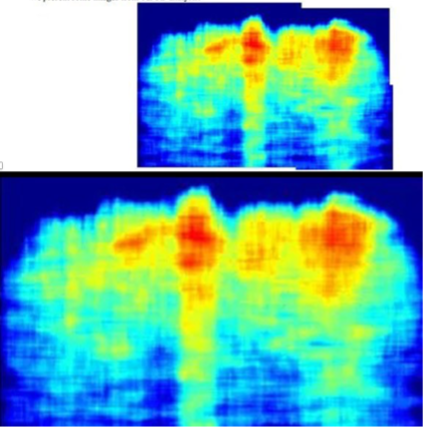
And the images depicting the structures that have gone viral (right) appear to have exaggerated the original findings (left):
Furthermore, other sharp-eyed X accounts have already noted, the timing of these revelations drew attention away from the JFK files.
But this doesn’t mean the findings aren’t fake. On the contrary.
They are simply the last in a long string of researchers, because there’s plenty of ancient and contemporary testimony about subterranean structures underneath or connected to the Giza plateau.
Two examples spring to mind.
The Greek writer Herodotus spoke of a labyrinth hidden underground that contained 12 large chambers, which were connected to the Giza plateau by a series of tunnels. Despite currently being submerged, similar SAR research did find evidence of enormous underground structures at Hawara that appeared to correlate with Herodotus’ writings.
The famous occultist and researcher Manly P. Hall also used testimony from ancient texts to reason that there must have been subterranean galleries under the Giza plateau whose existence and entrance are currently unknown.
This accumulation of speculation and ancient evidence was enough for the Stanford Research Institute to use remote sensing equipment to analyse the bedrock under the Sphinx in a failed search for hidden entries to subterranean passages in 1977.
So whether these specific findings are accurate or exaggerated, a lot is yet to be discovered underneath the Egyptian sands.
And these Italian investigators’ scans have certainly found some interesting shapes:

From this perspective, perhaps the investigators’ weirdness and ambiguous credibility are a green flag. After all, innovations tend to occur at the fringes of the establishment. And fringes tend to be dishevelled, disorganised, and chaotic.
The real doubt: It’s less about the investigators’ lack of talent for graphic design or potential penchant for exaggeration. Rather, it’s the doubt we must exert whenever we’re bombarded by a narrative that seeks to evoke a distinct emotional reaction, whether positive or negative.
Especially when the ensuing fascination drowns out other events which compete for the same audience’s attention (like the JFK files).
Adding fuel to the suspicion fire, most of the mainstream press has been noticeably silent. Only Zahi Hawass, the notoriously incorrect gatekeeper of Egyptian archaeology, has unsurprisingly pronounced himself against the findings.
Glory to Spain,
Dario
