

Even now that consumer prices in the UK have officially risen by 6.2 per cent in the 12 months to February – the fastest for 30 years — many of those in the commentariat space who have taken the “transitory” line on inflation are refusing to back down.
I find the whole debate increasingly tedious and unconstructive. I also find it mostly a battle over irrelevant semantics.
The sweet transitory camp, of course, is entitled to think what they want to think.
But here’s why I don’t agree.
Sometimes you can be technically right but practically wrong. So even if you have all the right intellectual arguments for why “in theory” inflation should be kept in check by demand destruction or responsive investment, none of that matters if far broader and panicked animal spirits takeover the market and that the perception on the ground is one of an inflationary crisis. There is a reflexive dimension to the situation.
Nor can the transitory argument address the fundamental reality that supply side constraints can’t easily be money printed out of or invested into (especially when the fundamental restriction is loss of access). Sometimes the only way out of an inflationary crisis is via a demonstrable loss of power and/or a temporary bailout from a third party. The problem in our current situation is that in all frameworks there is no clear cut pathway to a bailout.
To the contrary every imaginable geopolitical configuration from where we are now leads to some sort of inflationary crisis and reduction in the quality of life. Consider the three most likely scenarios:
- The return of peaceful globalised cooperation – inflation manifests anyway because the climate crisis — and responses to it — will deprive us of the cheap energy input we need to maintain growth or even living standards as they are. Aka Greenflation + Covid catch up strike everyone equally hard.
- WW3 multipolar power breakdown – inflation manifests because even if the climate crisis is put on hold access to key resources is blocked off in a power struggle. War/devastation induce inflation further.
- Transition to a new global power – inflation manifests regardless due to the fact that we become the lesser power, with less relative purchasing power in the world.
Even if a fourth “have your cake and eat it” option exists — maybe some sort of peace-based system where the climate panic is deprioritised, or where innovation saves the day — the fact is, nobody can currently envisage it. That lack of vision sadly doesn’t bode well for intellectual arguments that everything will be ok and only transitory. If there is no big idea out there for us all to fight for and sacrifice for in peaceful and constructive ways, chances are we will panic ourselves into all sorts of value destroying negative feedback loops.
That is where we are now. Textbook inflation or no textbook inflation.
A living standard collapse does not win the argument!
It’s worth noting there is a fairly reasonable theory out there that the reason the Roman Empire suffered an inflationary collapse in the first place was because it failed to make the innovation leap to a fossil-fueled economy — and hence overstretched itself in terms of continuing access to cheap food and fuel. This induced military campaigns (and military spending) for ever more fertile territories. In the end, however, distance got in the way of effective management and control allowing corruption to flourish and animal spirits to run away with themselves.
Roman hyperinflation was ultimately put back in its box by a reduction in the living standards of all citizens as well as the collapse of the centralised polis system itself. But the costs were significant. The decentralised feudal system that followed also reduced the rights, privileges and freedoms of the broader citizen class. It was not a step forward.
In theory, inflation could be proved transitory if central bankers turned to similar measures. One obvious pathway is the roll out of some sort of CBDC-based rationing system to regulate consumption in a quota-based way. But such a move would be equivalent to changing the rules of the game simply to win the argument. (Notably by demonetising most of the system.) This is hardly a win for anyone, especially if it reduced everyone’s rights, privileges and freedoms along with it.
This is why I find all this transitory talk frustrating. It is too focused on technical correctness than material reality. And it is too ignorant of the man-made — policy driven — component of the inflation shock being induced (i.e. lockdown and net zero policy).
What matters in the inflation debate isn’t textbook theory. It’s what the common individual perceives on the ground.
The collective power of people — irrespective of whether they are right or wrong in their thinking — has the power to change economic reality whether we like it or not. If that power is directed at panicked consumption due to growing fears about supply of basic goods, inflation will manifest regardless of any demand destruction.
Commenters with no skin in the game
Good traders understand that sometimes you have to leave your own personal feelings or logic aside. If the crowd is going mad you need to go with the crowd or else you lose your shirt.
The commentariat space often fails to get this because they tend to lack skin in the game — aside from their own reputations. But even then, that check isn’t worth very much because so much of what’s said goes into an immediate memory hole.
On which note, in October 2021, economic historian Adam Tooze publicly lambasted me on Twitter for giving a platform to energy expert Philip Lambert on Alphaville as follows:
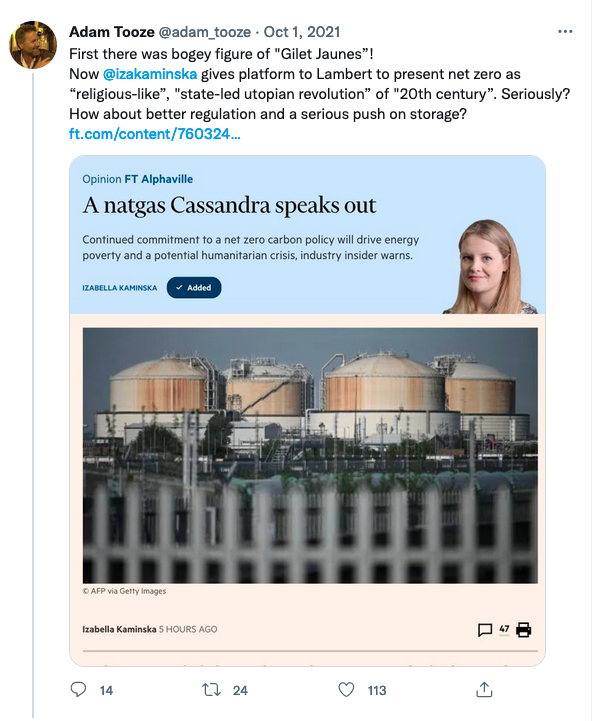
Lambert, an energy transition realist but certainly not a climate change denier, had argued that mass climate hysteria (fuelled by fear-based propaganda) had pushed the government into self-harming net zero policy which would in the long run backfire on climate goals.
By underinvesting in natural gas and energy security, he added, the policy would expose all of us to major supply-side fragility which would — in a crisis — force the development of dirtier (quicker to market) fossil fuels like coal, leading to more pollution not less. In the interim an inevitable supply-side crisis would destablise the economy, inducing shortages, inflation and poverty, which would in the end create a popular backlash against climate action.
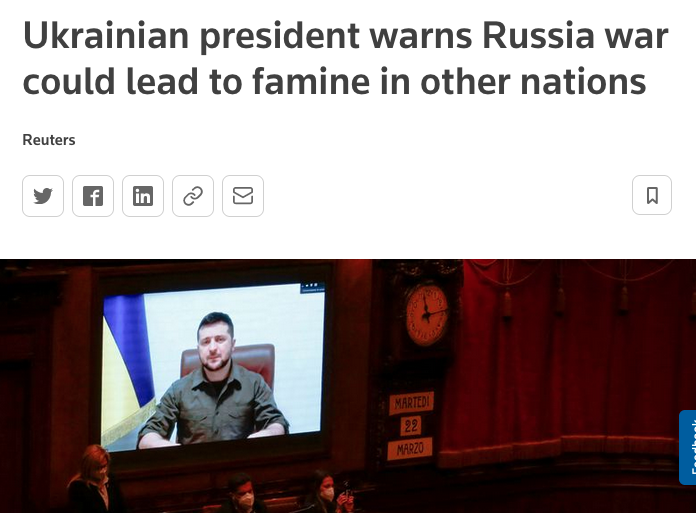
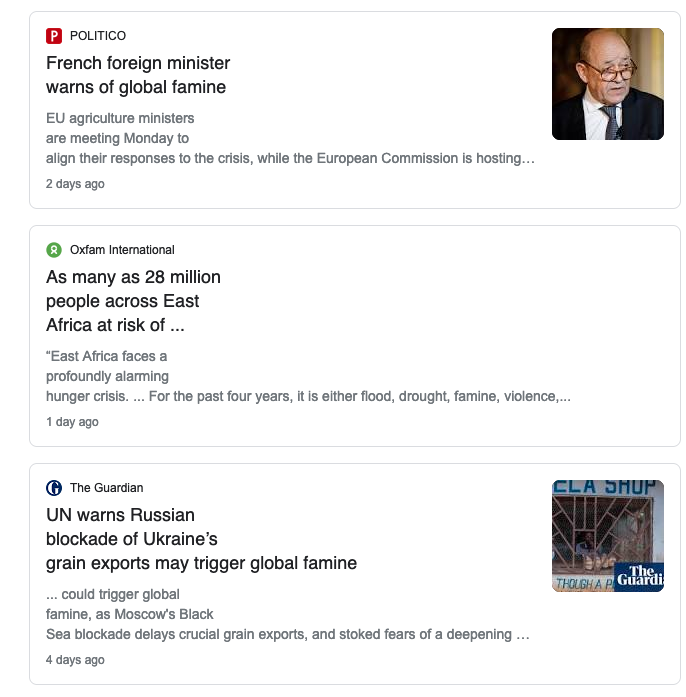
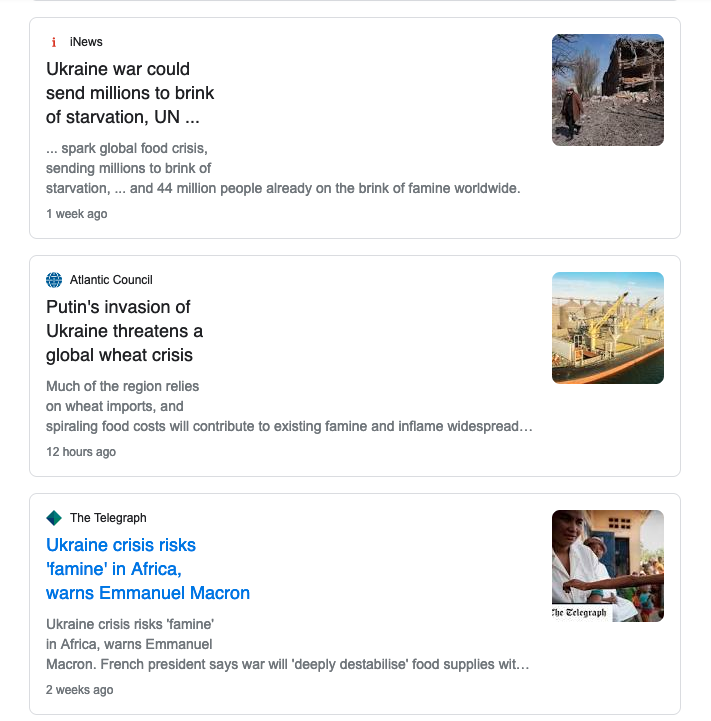
Last of all Lambert warned of unforeseen consequences for the fragile global geopolitical system. With hindsight this obviously included the risk that energy-rich states like Russia could use a net-zero policy induced energy squeeze to further their own goals — knowing that any significant action against would only escalate the risk of global supply shortages and famine.
I replied to Tooze’s (hard to rationalise in my mind) suggestion that better regulation and investment in storage could solve the problem, as follows:
…who wants to invest in storage in an ESG climate that taints any fossil fuel investments? Nobody is disputing the urgency of climate change action. The issue is following a path that doesn’t inadvertently cause a Ukrainian-style Holodomor in the process.
But I got told off for daring to suggest that net zero policy had in it the makings of similarly “man-made” food crisis.

Yes, nobody accounted for Putin. (Well actually some of us did, but that’s another story). But I think the connection between energy security and global famine risk can no longer be denied. I suspect the transitory inflation debate will go the same way soon as well.

One Response
Both the climate change and the recent COVID-19 responses are good examples of what Barry Buzan and Ole Wæver talked about years ago when they described the process of securitization. Whenever matters become succesfully securitized (or even just “politicized”, in a more specific scholarly sense), they can escape the boundaries imposed by standard morals, laws, democratic processes, economic cost-benefit analysis, etc. While some of the proponents of “action now” obviously welcome the broad permission space offered by securitization, it should be concerning to all, including those who do agree that both climate change and the threat of pandemic are serious and real. The rules of the game that securitization destroys are time-tested defenses against random follies, abuse, waste and human misery. This is precisely why whenever they are declared “suspended” in the face of a declared emergency, one should fight even harder to defend them.