
| SNEAK PEEK |
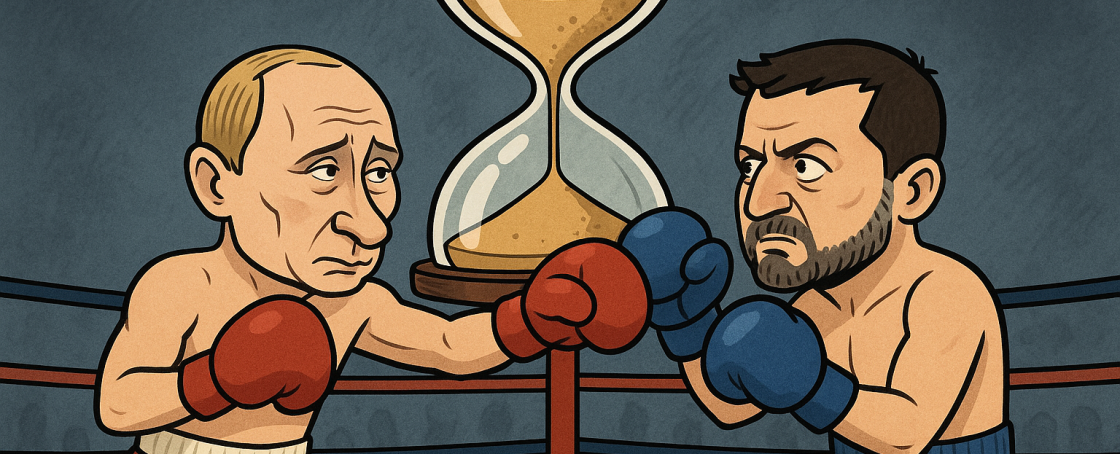
— Developments in Ukraine and Europe suggest the Russo-Ukraine war, despite abundant signals pointing to the conflict’s long-term continuation, may be on the verge of a pause.
— A very Trumpian plan to end the Caucasus conflict is all but confirmed, pending Armenian approval.
Good morning, subscribers!
It was a pleasure to meet so many of you during our Blind Spot event in Teufelsberg.
It was also highly encouraging to run into people who appreciated my geopolitical analysis. From my end, trying to gather together geopolitical news and package it uniquely, as is The Blind Spot’s prerogative, can be a confusing enterprise. Because, among other things, I don’t really know what’s going on. Nobody does. I’m just trying my best to make sense of the signals. Therefore, it was lovely to find out that our readers understand these limitations and appreciate our coverage nevertheless.
We apologise for the seeming lack of newsletters over the last few weeks. This was not on purpose. It was Mailchimp that opted to misbehave (as usual.) We had published a newsletter, but it failed to be sent out to subscribers. Mailchimp instead chose to send out an old newsletter in its stead. Ho hum. As a result, we’re bundling many elements of the previous newsletter into this one, under the assumption that most of you didn’t get the chance to read it.
As always, send tips to [email protected] and [email protected]
| THE BIG BLIND SPOTS THIS WEEK |
QUESTIONS RISE ABOUT ZELENSKY’S LEADERSHIP. This comes as the largest anti-government protests erupted across Ukrainian cities since the start of the Russian invasion.
Protesters opposed Zelensky’s proposed measures to curb the powers of two anti-corruption bodies in Ukraine.
Zelensky has now backtracked on these provisions, prompting the European Commission to welcome the Ukrainian government’s decision to withdraw the bill.
Not an isolated incident: Shortly after Zelensky backtracked on the anti-corruption law, an extensive and well-researched piece on the rising power of Ukraine’s shadow behind the throne, Andriy Yermak, was published by the Financial Times and even recommended in Roula Khalaf’s Editor’s Digest.
This piece highlights how Yermak has been quietly consolidating power and appears to single-handedly mold Ukrainian domestic and foreign policy.
Coming in hot: Most interesting of all, Zelensky’s controversial anti-corruption body provisions appeared only two days after reports surfaced that the United States was seeking to replace Zelensky with Valery Zaluzhny, currently the Ukrainian Ambassador to the UK.
As Lenin said, there are decades where nothing happens, and there are weeks where decades happen. And the past few weeks since our comments on The Grand Bargain on the back of the Trump-mediated ceasefire between Iran and Israel have felt like an eternity.
Just days after our analysis, when indications of this conspiracy-turned-theory seemed to be bearing fruit, a twist appeared to emerge: if the Grand Bargain was happening, it certainly wasn’t going to happen in Ukraine.
This increased U.S. support came alongside a Trumpian deadline of 50 days, ending on September 2, for the fighting to stop, after which secondary sanctions on Russia’s remaining trade partners would be imposed.
And this 50-day deadline seemed dead on arrival, as a raft of news reports on the stalled status of the peace negotiations between Ukraine and Russia demonstrate that both sides are still diametrically opposed to any peaceful resolution of the conflict.
And our sources were no more optimistic.
Evan’s perspective holds that the most influential Western power bloc is comprised of two major interlocking powers: the Financial Industrial Complex (FIC) and the Military Industrial Complex (MIC). He calls this group the “Transatlantic Private Sector” or TPS.
Evan claims that these powers have little to gain from taking the initiative in solving the conflict. For one, a continued Ukrainian conflict will continue feeding Europe’s appetite for more weapon systems. Secondly, a heavily indebted Ukraine and Europe will continue to feed the coffers of the FIC.
Conversely, Russia’s deep investment in the conflict means it won’t leave without concrete victories: continued control of seized territory, a Ukrainian disarmament, and a prohibition on Ukraine joining NATO.
Another source informed us of secret pressure being brought to bear on all pro-peaceful actors in the conflict, with Trump’s children being targeted to push him into a pro-Ukraine stance in the Russia-Ukraine conflict.
Both of these sources, which have in the past provided accurate intelligence to The Blind Spot, evidently believe these factors mean the Russo-Ukrainian war is set to continue for the long run.
But I’m not sure I agree.
Not because these sources’ comments are baseless conspiracy theories, as most mainstream commentators would believe. Quite the opposite. The world’s power players have always engaged in underhanded and self-interested moves to the detriment of the general population. Most of these actions, fruit of their horrid nature, are kept off the record.
But I suspect there’s still a strong chance towards the early end of this war for two main reasons.
The second is Ukraine’s increasingly complex internal situation, as the wobble in Zelensky’s government above shows. Not just because Zelensky continues to dramatically lose support as the war appears increasingly unwinnable.
More basic factors are at play: Ukrainian manpower reserves are dangerously depleted. This means that every month of conflict, and every grinding Russian offensive, continues to inflict greater-than-sustainable losses on the Ukrainian side, which it cannot restore as easily as its larger opponent.
Ongoing conflict from this perspective will invariably lead to a loss of leverage by Western negotiators, as Ukrainian political actors like Zelensky will have to increasingly grapple with not just an increasingly hostile and war-weary electorate, but a growing difficulty in carrying out basic functions of war.
As Ukrainian forces become increasingly exhausted, unless the conflict escalates into a Europe-wide conflagration, where other partners carry the manpower burden, there is a ticking clock pushing the Western side towards peace before Russia.
How long this clock can keep on ticking, however, is anyone’s guess.
RUMORS OF A “TRUMP BRIDGE” THROUGH ARMENIA gain ground after an obscure Spanish outlet outlined Trump’s plan to pacify the Southern Caucasus region by way of a transport corridor.

“Pashinyan agrees to cede a region of Armenia to the United States to the detriment of France”, read the report by Periodista Digital, a relatively unknown Spanish daily. The outlet claimed that both Nikol Pashinyan and Ilhan Aliyev, the Armenian and Azerbaijani leaders, had agreed to a memorandum for a 42km-long “Trump Bridge” that would connect Azerbaijan with its landlocked Nakhchivan enclave through Armenia’s southern Syunik region.
The Spanish report, loudly denied by Armenian sources but supported by Azerbaijan-aligned media, provided interesting details about the supposed deal. For one, the territory ceded by Armenia for the transport corridor would be leased for a minimum of 99 years. Secondly, profits from the corridor’s operation would benefit the American private entity in charge, with around 40% of the corridor’s income as opposed to Armenia’s 30% cut. Most interestingly of all, the corridor would be manned by an as-yet unnamed American mercenary group of around 1,000 fighters responsible for the corridor’s security.
A stabilizing corridor: The Zangezur corridor has been seen as a potential solution to numerous tensions that continue to threaten the Southern Caucasus with a third war in less than half a decade.
After two successful Azeri strikes to regain territory seized by Armenian forces after the collapse of the Soviet Union in 2020 and 2023, Azerbaijan’s negotiating hand has become incredibly strong. As such, a resolution to historic demands by Baku for a re-connection to its exclave of Nakhchivan through Armenia’s Syunik province has become essential to avoiding a third conflict.
While the notion of ceding Armenian sovereignty over a part of their strategic region of Syunik is highly problematic in Armenia, Pashinyan knows his country is facing greater problems. Russia, Armenia’s traditional ally, stayed on the sidelines of the conflict in 2020 and 2023 despite ostensibly being responsible for Armenia’s security, for example. If Azerbaijan attacks again, Armenia would probably have to face them alone once more.
This has created a vacuum of power in the region that numerous states have sought to fill. These notably include Turkey, Iran, the United States and France.
Shifting power nodes: This report, if true, would solidify notions that Turkey and the United States have been gaining an upper hand in the region as opposed to Iranian, French and Russian interests.
For one, the United States would gain a leasehold on strategically crucial territory that would cut off Iran from north-south transport links to and from Russia.
But the greatest winner of this exchange is Turkey, as it would finally establish a land bridge to Azerbaijan and, through it, direct access to most of Central Asia’s Turkic countries and regions. This would be a major coup for Turkish soft power, which enjoys a position of leadership amongst the global Turkic community of states, and would entrench its status as one of the major Eurasian and Middle Eastern powers.
Iran and Russia, who have traditionally enjoyed an alliance with Armenia and utilised the Christian democratic country as a land bridge between them, seem to be the greatest losers. France, which attempted unsuccessfully to establish itself as a mediator between Western powers and Azerbaijan, will see its influence wane as two more powerful Western influences sit in its place.
High economic stakes: But as a previous Forbes report on the rumored U.S.-backed Zangezur deal explained, the relevance of the corridor goes far beyond pacifying relations between Armenia and Azerbaijan.
The 43-kilometre passage is estimated by the World Bank to unlock around $50-100bn in annual trade value by 2027, cutting Europe-Asia transit times by 12-15 days compared to existing land-based routes. As Forbes outlined:
“The return on investment appears compelling. The Caspian Policy Center estimates infrastructure costs of $3-5 billion over 5-10 years, while Oxford Economics models project $20-30 billion in annual logistics savings. For Azerbaijan, the Center for Economic Reforms Analysis and Communication projects the corridor would increase total exports by over $700 million and boost non-oil GDP by 2 percent annually.
Energy flows underscore the urgency. Azerbaijan’s Southern Gas Corridor delivered 12 billion cubic meters to Europe in 2023, targeting 20 billion by 2027 under a 2022 EU memorandum. Kazakhstan plans to transit increasing oil volumes through Azerbaijan, with actual flows reaching 1.2 million tons between January and October 2024, despite technical challenges limiting capacity.”
A win-win? Azeri sources have been quick to dispel notions that the Zangezur deal is one-sided in favour of Azerbaijan, Turkey and the United States.
Azernews has signalled that the corridor’s inauguration of a concrete peace deal between Azerbaijan and Armenia means the corridor could be used to concretise further logistics deals and investments by Russia and Iran in future.
Iranian and Russian soft defeat: But that hasn’t stopped most analysts from seeing the writing on the wall. The Zangezur deal would represent a clear geopolitical defeat of Iranian and Russian geoeconomic ambitions.
The Persian country would be forced to rely on American, Azeri or Turkish powers, all traditional rivals, to participate in geoeconomic deals beyond its north.
The inauguration of this corridor would also efface any hopes of Iran participating in China-backed East-West transport solutions.
On the other hand, media reports have outlined a similar defeat to Russia’s traditional influence over the Southern Caucasus.
Ukraine-aligned dailies have signalled this clearly: the Zangezur deal “would effectively eliminate Moscow’s influence in the region,” according to the New Voice of Ukraine.
Turkish cornucopia: And Turkey’s gains go far beyond soft power.
Chinese gains in the efficiency of its Belt and Road programs, thanks to the Zangezur deal, would position Turkey as the region’s critical energy hub, potentially capturing $150-15bn in annual transit revenues by 2030.
This massive shift in Turkish economic power is seen from a shift in its domestic politics as well.
The PKK’s planned disarmament, fruit of the imprisoned Ocalan’s pleas for peace, founder of the PKK, would coincide with massive investments into Turkey’s traditionally Kurdish east and south-east, which lies on the border with Iran, Armenia, and Azeri Nakhchivan.
Uncertainty prevails, as analysts assign a relatively low probability to the talks on the Zangezur corridor succeeding.
Regional observers assigned a 60 percent probability to the talks stalling, and potentially delaying implementation by 12-18 months, whereas estimates by the Center for Strategic and International Studies assign a 40-50 percent success probability.
The problem? Armenia’s internal situation.
A heated election: Armenia watchers have been focused on the punishment of Pashinyan by an increasingly distanced electorate in the upcoming 2026 elections, as his polling margin continues to narrow.
Despite leading the most popular party in Armenia, Pashinyan has suffered several reversals. Chief among them were the losses of territory before Azerbaijani offensives in 2020 and 2023. Whether Pashinyan can rally his backers into accepting this Zangezur deal as the method for peace with Azerbaijan, which is increasingly seen as a necessity by Armenians, is up for question.
A very Armenian coup: It started with Church-organized mass protests against the government’s perceived lack of action during Azerbaijan’s successful offensive in 2023. This led to harsh denunciations against the Church by Pashinyan in response.
2025 saw the conflict intensify, particularly with the arrest of Russian-Armenian oligarch Samvel Karapetyan on June 19. Karapetyan was arrested on charges of publicly calling for a coup after implying the Church could be in a strong position to overthrow the government in some public comments.
It was a few days after that, on June 25, that the real bombshell dropped: the Armenian Investigative Committee (AIC), a public investigative body in Armenia, announced it had found evidence that a plot had been planned to overthrow PM Nikol Pashinyan and seize power by force in the country.
The coup plotters allegedly included two senior clerics in the Armenian Apostolic Church: Archbishops Bagrat Galstanyan and Mikael Ajapahyan.
The AIC disclosed that police raids had uncovered a significant cache of weapons supposedly held by the plotters, and claimed they planned to incite mass civil unrest in the country through numerous planned terrorist attacks. This assertion was based on leaked audio and a drafted ‘to-do’ list for a planned coup d’etat.
These accusations notably led to the arrest of Archbishop Ajapahyan on 27 June, amid scuffles between police and members of the Armenian clergy at their headquarters in Etchmiadzin, among other arrests of senior figures in the Armenian clergy.
But was it really going to happen? CivilNet, a respected pro-Western Armenian daily, expressed skepticism over the plotting claims.
The outlet claimed the plotters “couldn’t even plan a wedding, much less an insurrection” and that it was led by “second-rate, disliked” figures by the wider Armenian public.
Furthermore, the Armenian Church has traditionally served as the conduit for Russian influence in the country. This still holds true today, and it’s easy to see why: both are aligned against normalisation with Azerbaijan and Turkey and their perceived Western backers.
Could Pashinyan have brought this conflict to a head to forcibly reduce internal Russia-aligned opposition to an upcoming proposition to engage with the Turkey-U.S. peace feeler?
We’ll never know for sure.
What we do know is that the attack on the Church has soured Pashinyan’s polling numbers even further: there was a 10 percent rise in the Armenian population’s positive perceptions of the Church in July 2025 versus 2024, alongside an 8 percent slide in positive perceptions of Pashinyan.
This outlines something that Western media is missing: a significant portion of Armenian society (over 60 percent), which is highly conservative and aligned with its Church, continues to view Russia in a favourable light.
Pan-turkism’s consequences: This conclusion is strengthened by the consequences of any Zangezur corridor deal, as it would be the last remaining obstacle to a physical land and sea bridge between all Turkic territories:

While ethnicity isn’t the most significant delineator of geopolitical conflict lines, the close cultural ties it fosters among leaders and their business and diplomatic communities mean they should always be considered meaningful.
This is especially true when we consider the dynamics of Armenian elections, which will always pivot around its highly conservative and Christian society.
It’s not difficult to see how rising Islamic, Turkic powers encircling the small country may not weaken, but instead dramatically strengthen its population’s inclination towards a powerful northern, Christian neighbour.
FRANCE TO RECOGNISE PALESTINIAN STATE in a surprise move by Emmanuel Macron, who announced on X that the French Government is set to accept the legitimacy of the Palestinian State by September.
This is a watershed moment among the core nations of the Western bloc, being the first G7 and Western member of the UN Security Council to do so.
| OTHER BLIND SPOTS |
ANOTHER LUXURY SCANDAL hits LMVH-owned Loro Piana, as workers of the famously expensive Italian luxury brand were shown to be paid as little as $4 an hour for jackets then sold on for over $3000.
Italian judges have placed the brand under a 12-month court administration following these findings, stemming from a 2023 investigation into Loro Piana’s dubious use of Chinese subcontractors in their supply chain.
Loro Piana, like Hermes, form part of an exclusive range of top-tier luxury brands, affordable only to the top 1 or .1%, which rarely sell to ‘aspirational’ luxury buyers, as opposed to brands like Gucci or Louis Vuitton. And Loro Piana, fruit of its popularization by Syrian influencer GstaadGuy and the TV show Succession, had been enjoying years of free publicity at the hands of this ‘quiet luxury’ trend. All good things come to an end.
Those who believe this news will dent the luxury industry are mistaken, however.
| OTHER WEEK-OLD BLIND SPOTS |
PKK STARTS DISARMING IN IRAQ on July 10, in a significant sign of continuing tectonic shifts in the region towards peace.
The Kurdish separatist militant group is primarily based in Turkey but also has significant outposts in the Kurdistan region of Iraq and northern Syria.
We had previously covered the news that PKK leader Abdullah Ocalan, imprisoned by Turkey since 1999, urged his militia to convene a congress and formally disband.
And now, the process has begun — at least on the surface. The initial group of PKK fighters that handed in their weapons is merely symbolic, with only 30 disbanding fighters present before representatives of the Iraqi Kurdistan Regional Government and the Turkish intelligence services.
While there’s still a long way to go for the peace process to continue, this is already a huge step forward.
TOP CEOs ASK COMMISSION: STOP AI ACT for at least two years. The AI Act was passed in early 2024 and will enter into force in August 2025.
The European CEOs’ concerns follow widespread worries that the landmark AI Act will enmesh European AI efforts into “unclear, overlapping and increasingly complex” regulations.
This isn’t without grounds: reinforcement-trained AIs have adapted to our psychology and can shamelessly tell you what you want to hear. So it should come as no surprise that they can worsen someone already inclined towards mental imbalances.
Some have asked if there is a deeper layer to it. What if the commencement of this third industrial revolution, which promises to outstrip the revolutionary impact of the first two, and perhaps spawn a new form of synthetic life (if it hasn’t already), means ChatGPT and other AI Chatbots let humans peer into some underlying reality our brains may be incapable of processing?
There’s something shady behind these stories, however. As Izzy asked, who benefits from mass stories about AI-induced psychoses?
TUCKER CARLSON’S SPEECH at Turning Point USA shows the man at his best, speaking on his disappointments with the Trump Administration, particularly as it regards the Epstein files.
Tucker also tackles traditionally left-wing perspectives from a conservative standpoint, urging the American right to take the issue of home ownership seriously, citing the idea that a country’s youth without something to lose is a dangerously unstable one.
DARIO’S COMMENT: My opinion, which follows, could be fairly dismissed as stating the obvious. But it’s important to make it nonetheless.
There is no housing crisis among young people. Not exactly. There is an urban housing crisis, masquerading as a general housing crisis.
The same goes for my cousins in the northern city of León, in the oft-derided deserted central plains of Spain. Unlike most of my highly educated, urbanite friends in prestigious corporate jobs (none of whom own a home), all of my cousins are homeowners. And they have normal jobs: one sells Adidas clothes and the other is a nurse. But they have ample disposable income, even after paying their cheap mortgages. And their cars get them anywhere they need to be, even if their homes are out of the way. Their quality of life is decidedly higher at less than 1/5 the income of my London-based friends.
Glory to Spain,
Dario
