

| COMMENTARY SNEAK PEEK |
— US weapons do have their advantages after all. They might be costly to run and replace but they’re also much better at protecting lives.
— Dario outlines how the Middle East has been swamped by a highly addictive amphetamine-type drug called Captagon, produced out of Syria.
— Izzy remembers the time she discussed oil markets with economist Ken Rogoff.
Good morning subscribers! I had the pleasure of chatting with a bunch of financial PR professionals this week. It was a great conversation focused on how media has changed the past few decades. One thing I realised is how different the modern newsroom is to the one I was trained in. Gone is the continuous buzz and chatter. Gone is the editor who has no qualms about yelling at you unashamedly because you’ve missed your deadline. And gone, obviously, is the cigarette break.
The modern newsroom is mostly silent. Calls are conducted in meeting rooms or booths (if at all). And there’s little to no communal banter, because let’s face it having a laugh in a quiet office just feels awkward. Is any of this conducive to good journalism? I don’t think so. Younger reporters don’t get to learn from senior colleagues about how to conduct themselves with sources, PR’s or lawyers. Nor do they get over their phone anxiety. I also think it’s so much easier to be pushed around in a one-to-one private booth setting than in front of an office. Not to mention to cover and mask one’s own communication failings.
Fundamentally, it’s just massively inefficient to keep running into a private room to do calls.
But there was another fascinating thing I learned from the PRs this week. Apparently, when it comes to corporate comms, the big new thing is teaching executives how to be effective communicators internally as well as externally — because mitigating internal rebellions and employee-led pressure campaigns is just as important as external reputation management.
On a different note, readers may have noticed that last week’s newsletter was devoid of any mentions of the digital pound despite HMT and the BoE having finally reviewed its consultation feedback. That’s largely because I still haven’t had a chance to finish reading through the full technical report. As soon as I’ve done that I will report back with any missed findings. So far the biggest takeaway, as far as I can see, is that the BoE does not envisage applying any constraints on the geographic reach of a digital pound. Anyone in the world will be able to use it, unless, perhaps, they’ve been sanctioned.
The other revelation from the report is its reference to a little known pact which was signed in 2021 by G7 states promising that any future CBDCs will be designed “in such a way that would avoid the risk of currency substitution in other countries.” Who knew such a thing existed? (Certainly not me).
As usual, this week’s newsletter was compiled by me, Izabella Kaminska and Dario Garcia Giner. Please do circulate and spread the word about our product if you enjoy it.
Send tips to [email protected] and [email protected]
| THE BIG BLIND SPOT THIS WEEK |
KEN ROGOFF WARNED ABOUT THE SCALE OF THE OIL SHOCK: “Oil and gas prices are stuck on a roller coaster caused by the ‘mother of all shocks,’ as the supply-demand imbalance from the pandemic is still roiling energy markets, says Kenneth Rogoff, a top economist,” Business Insider reported this week.
To be clear, I have absolutely nothing against the man. He was always perfectly hospitable, friendly and charming whenever I met him, which — as it happens — was mostly while I was working as a lowly producer for CNBC. (Though I suspect his friendliness was closely connected to how much sway I had at the time over who would or would not be appearing on the flagship show on any given day).
It was in the context of that CNBC booker relationship that Ken invited me for a drink at his hotel one day. All good. Except when I told my then partner — who had studied economics — about the upcoming meet-up he (to my surprise) asked if he could tag along. He said it was because he had been forced to read Ken’s textbooks as part of his course, and found them incredibly challenging. Supposedly, he had “questions”.
And so it was that both of us arrived at Brown’s hotel in Mayfair for an afternoon tea one fine day around 2006 with Ken.
This was when I discovered (to my shock) just how little Ken knew about how commodities and oil moved across the world.
Now, obviously you can’t know it all. Not even if you have a Nobel (not that Ken has one of those). But you’d think the former chief economist of the IMF would have a vague clue about the difference between crude oil and crude products and the fact that both tend to be transported by sea. I can’t remember all the details of the conversation to be honest. What I can tell you is that when I saw the above story I naturally had to share the link with the other witness to Ken’s baffling ignorance that day.
The immediate reply I got: “From the man who didn’t know gasoline and diesel are transported on tankers”. So, yeah. (Though, to be fair, he’s had over 18 years to school himself on the topic since then.)
| LAWFARE |
DONALD TRUMP LOST HIS GDPR CASE AGAINST CHRISTOPHER STEELE: The Bloomberg headline read “Donald Trump loses London case against ex-MI6 spy over Kremlin dossier” while the BBC ran with “Christopher Steele: Orbis welcomes High Court victory over Trump”. Both sentences could give the impression that Christopher Steele, author of the infamous Democrat-commissioned dodgy dossier on Trump, had finally been vindicated regarding the veracity of his explosive Russian collusion allegations. And yet, when explaining her decision, Mrs Justice Steyn clearly specified that she had “not considered, or made any determination, as to the accuracy or inaccuracy of the memoranda (aka the contents of the dossier)”. The case was dismissed on purely technical grounds, notably because Trump’s claim fell outside of a six-year period of limitations. The Trump claim itself was centred on whether Steele, by way of his intelligence firm Orbis, had broken U.K. data privacy laws when he shared his report leading to its eventual publication by Buzzfeed.
THE LAWYERIFICATION OF AMERICA’S PRESIDENTIAL ELECTIONS. Matt Taibi wrote on the “lawfare” being unveiled by the Democratic party for 2024’s US Presidential elections, where a number of Democrat-affiliated institutions are readying lawsuits to impede Trump’s accession to the Presidency.
| POLITICS, POLITICS, POLITICS |
VIKTOR ORBAN SLAMMED THE EU’S ATTEMPT TO ECONOMICALLY BLACKMAIL him into allowing more Ukraine funding: “Forget about the rule of law, Hungary is blackmailed for having its own opinion on migration, the war in Ukraine and gender propaganda. We will defend our interests,” he Xed.
FORMER POLISH PM MORAWIECKI SAID HE WAS OPEN to teaming up with Viktor Orban’s party at the EU level, as the former PM suggested Hungary’s ruling party could join the right-wing European Conservatives and Reformists group in the European Parliament.
FEARS GREW OVER RUSSIAN SPY INTRUSION AT THE EU PARLIAMENT. Three MEPs displayed concerns about deep-seated Russian infiltration of EU lawmaking institutions, according to a leaked letter obtained by Brussels Playbook.
| CIVILISATION |
YOUNG MEN AND WOMEN WERE DRIFTING APART POLITICALLY according to a recent FT data visualisation which showed men were lurching rightwards while women were turning left. 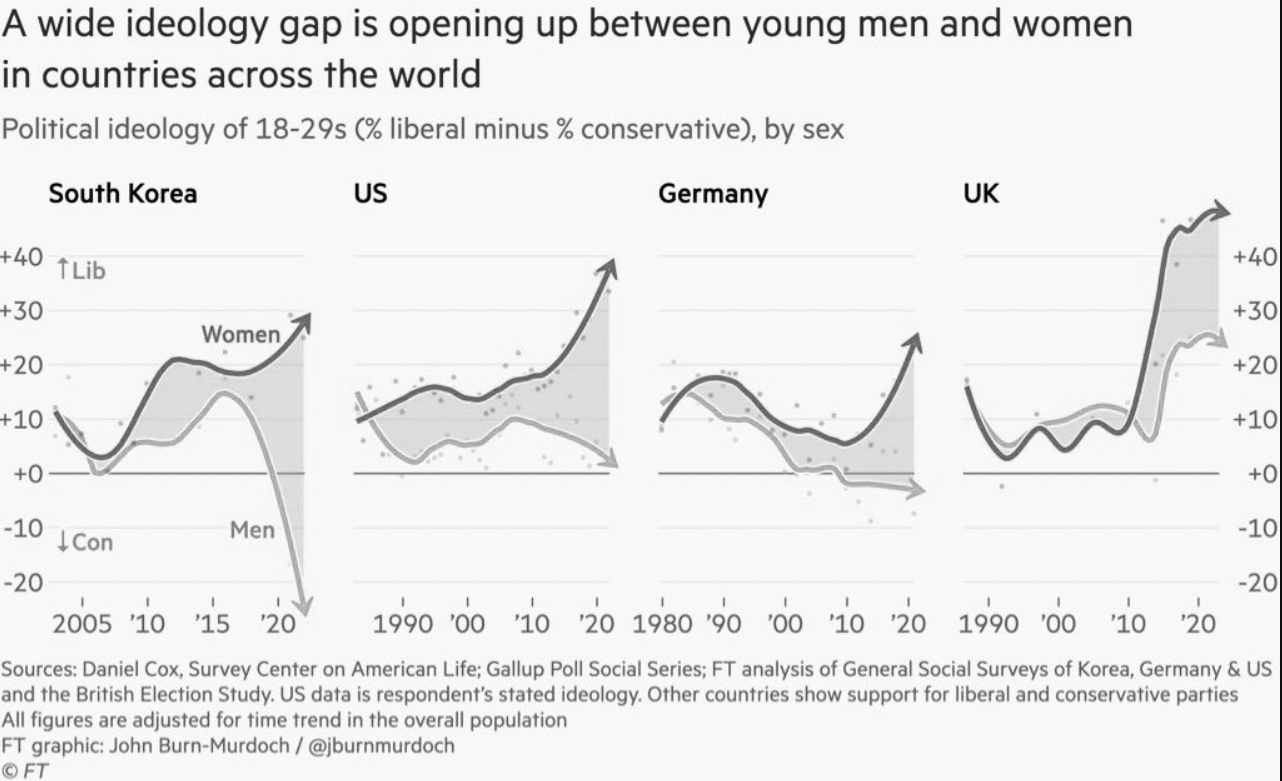
| GEOPOLITICAL HOT SPOTS |
US WEAPONS EXPORTS ROSE BY 50 PERCENT IN 2023 as Washington’s military-industrial majors continued to build up their client base amid rising tensions between the United States, Russia and China, Politico reported. While the majority of deal flow was in Europe (notably Germany, Poland, and Czechia), there was also promising activity in the global south, including in India, where the predominant defence supplier until recently was Russia.
Despite the legion of footage received from Ukraine showcasing burned-up Bradley Infantry Fighting Vehicles and Leopard IIs, one marked quality of these products has drawn positive attention — survivability. While Western products are harder to repair, weigh more, are more visible on the battlefield — and get destroyed by artillery just as easily as their Russian counterparts — it seems the much-touted protective quality of Western vehicles does exist after all.
The critical reasoning behind my love for Russian and Iranian equipment is not geopolitical sympathy or a belief in their superiority for crafting arms: it’s what they’ve managed to achieve given the resources at hand. Being forced to do more with less, has seen Russians and Iranians inadvertently deliver the most cutting-edge development in the modern battlefield: low-cost, low-complexity, attritable ranged weapons.
But the West’s population crisis has also provided it with the impetus to avoid resorting to cannon fodder to win wars.
While Russian birthrates are declining just as rapidly as Western ones, their greater manpower pool means life is less of a premium. We in the West, on the other hand, have borne in mind our numerical inferiority since the earliest days of the Cold War, and, as such, designed military equipment that can keep our highly skilled crewmen alive. And the same goes for our aircraft.
A CHIP SMUGGLING OPERATION sending 53,000 banned American chips to China, with $12m worth of chips being funnelled through a South Korean company in the largest chip-smuggling operation seen to date, was finally busted.
THE MIDDLE EAST’S OTHER WAR IS A NARCO WAR. SentinelOne’s Matthew Pines reminded readers that there’s a narco war going in the Middle East centred in Syria over the production and transshipment of captagon, which provides the regime with 90 percent of its foreign currency. Apparently, the scheme is operated by networks made up of Hezbollah, Syrian officials and Saudi royals. Captagon is an addictive amphetamine-type stimulant that is currenly being mass produced in Syria.
A similar phenomenon is happening in the modern Middle East.

Captagon was developed as a psychoactive medicine produced by the German company Degussa Pharma Gruppe in the 1960s, prescribed as a treatment for attention deficit disorder, narcolepsy, and as a central nervous system stimulant. It’s indistinguishable in that sense to most amphetamines. Its critical synthetic component, however, is fenetylline, which was included in Schedule II of the UN Conventions on Psychotropic Substances 1971. After becoming illegal, most illicit production came from Eastern Europe.
But the desperation of the Syrian regime has seen Al-Assad (and his Hezbollah allies) encourage its production, moving most captagon production to Levantine shores.
What’s more interesting is where the product is flowing to. It may just be that Hezbollah’s backers, the Iranians, have paid close attention to how Western powers crippled China by feeding its opium addiction in the mid-19th century.
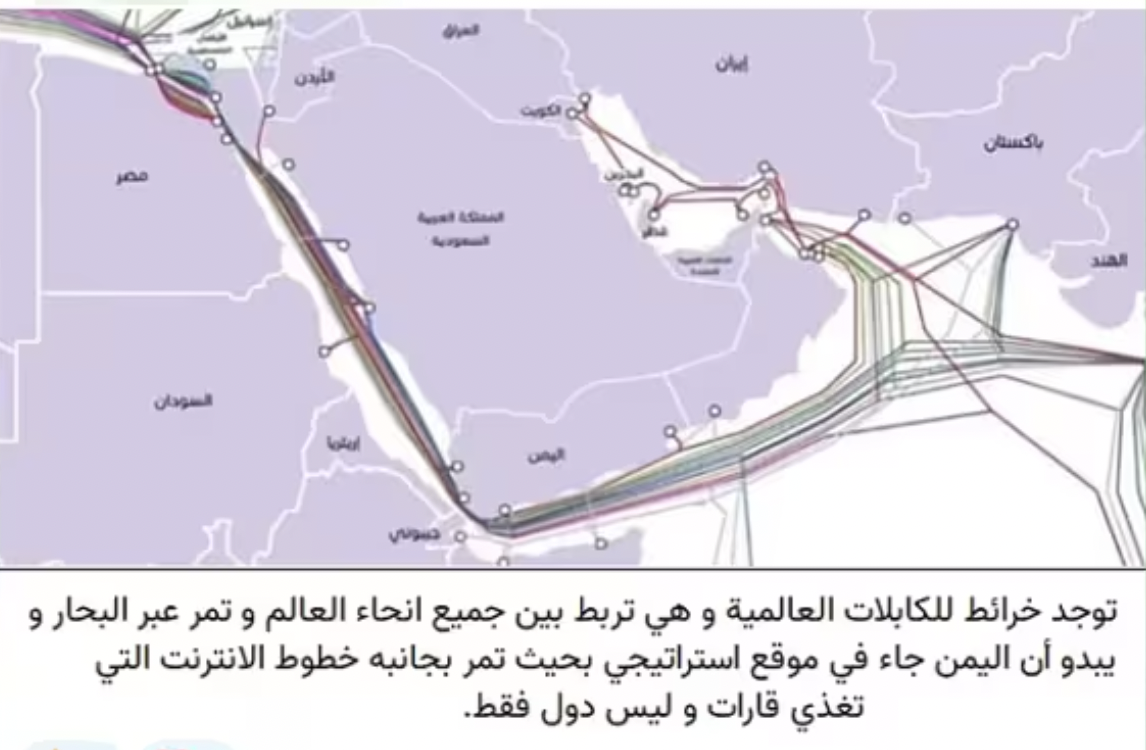
HOUTHI-LINKED TELEGRAM CHANNEL THREATENED TO CUT UNDERSEA FIBER OPTIC CABLE in the Red Sea if the UK and US launched another attack on Yemeni airports. While the credibility of the source is questionable, especially because the threat was made in late December, speculation about the ability of the Houthis to cut such a cable is valid. They have the means, and the large number of undersea international cables skirting near the Yemeni coastline and the plethora of financial quandaries this could occasion in Western capitals certainly grants a motive.
LIBYAN SOLDIERS POSED WITH RIFLES UNIQUE TO THE UK’S SPECIAL FORCES, suggesting UK special forces may be embedded with Khalifa Haftar’s Libyan National Army in the country’s south, along the Chad, Niger and Algerian borders.
IZZY COMMENT: When I bumped into Blackwater’s Erik Prince at last year’s Arc Forum, the world’s best-known mercenary let slip he was in the process of trying to revive a Libya-based plan to launch a public-private partnership to help solve Europe’s migrant crisis. He said the plan was largely the same one he had outlined in a 2017 oped in the Financial Times.
As that oped noted:
“I believe, however, that by using five patrol bases that cover existing smuggling routes, security personnel could quickly establish base camps, alongside a new border force, and secure Libya’s borders. The border police would consist of mentors with a European law enforcement background, supported by locals trained in key basic skills during a 10-week course. Afterwards, mentors would be the skeleton structure of the unit providing key leadership, intelligence co-ordination, communications, medical and logistics expertise.
“Libyans would be the body of the unit. All personnel would be armed and have agreed-upon rules of engagement and migrant detention and repatriation policy. Each base would have airborne surveillance and search and rescue as well as armed vehicle quick reaction forces. Air operations would be provided by third-party professional providers, as would medical evacuation services.”
“There would be nowhere for migrant smugglers to hide: they can be detected, detained and handled using a mixture of air and ground operations. This type of security operation could be established quickly and efficiently, for less than the cost of the EU’s current operations, through a public-private partnership. This plan would also have a crippling effect on weapon and drug smuggling throughout the region.“
Critically, the plan depends on a quid pro quo with Libya wherein European governments provide a comprehensive aid and development plan for Libya and the surrounding region. Call it a bid to initiate a soft equivalent of China’s Belt and Road.
WE NEED TO BE READY FOR WAR WITH PUTIN claimed Romania’s top general, Gheorghiță Vlad, according to Politico. Vlad joins a growing list of NATO-affiliated generals calling for war preparedness in Western capitals. The combined talk, plus an increase in World War 3 references by top newsmakers, has led to growing speculation online that Western powers are slowly trying to condition the population for a formal draft. Gen Z, on their part, have taken to TikTok to declare they’re not prepared to fight for King and country.
| CRYPTO EVANGELISM |
VISA ENABLED CRYPTO WITHDRAWALS WITH DEBIT CARDS in 145 countries, with MetaMask users now able to sell crypto directly to a Visa card in partnership with Web3 infrastructure provider Transak. This move eliminated the need for prospective crypto users to rely on problematic centralised exchanges.
COINBASE ENLISTED FORMER UK CHANCELLOR GEORGE OSBORNE as an advisor, as the American cryptocurrency exchange sought to expand in the face of mounting regulatory pressure. As part of the move, George Osborne will join the company’s advisory board.
| MEDIA MATTERS |
AS IMRAN KHAN WAS SENTENCED TO 10 YEARS, Wikileaks re-released a wide-ranging interview between the former Pakistani PM and Julian Assad filmed in 2012. During the interview Khan spelled out how the Pakistani deep-state had gained control and why it was intent on keeping him out of power.
A POLISH COURT ACCEPTED THE LIQUIDATION of state press agency PAP, as requested by the Polish Government. This court official came to the opposite conclusion of two other court officials, who recently rejected a similar petition to put TVP and Polskie Radio into liquidation.
| AMERICAN DRAMA |
OREGON LEADERS DECLARED A FENTANYL EMERGENCY in Portland in a bid to get ahead of the deadly opioid’s growing grip on its community.
THE NUMBER OF CANADIAN CIVIL SERVANTS SKYROCKETED under the Trudeau administration, opposition leader Maxime Bernier wrote on X. He noted the growth had resulted in greater federal debt, and larger amounts of paperwork, without a discernible increase in public services provided.

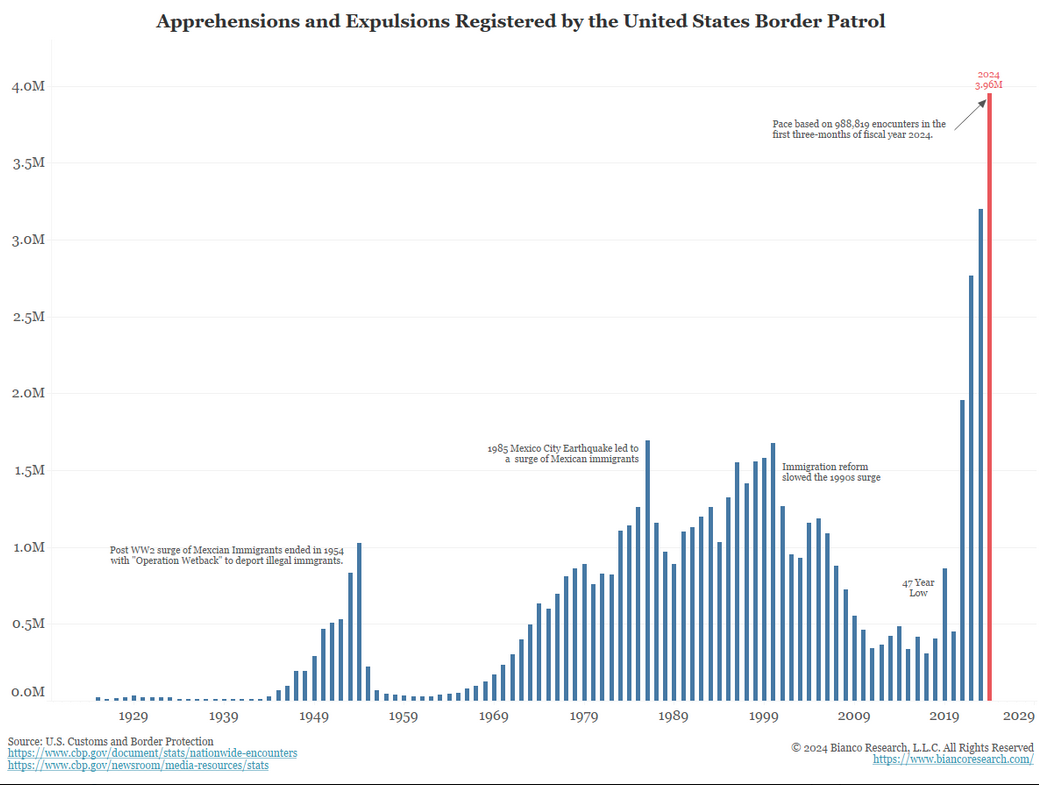
DECEMBER DATA FROM US BORDER PATROL illustrated the scale of the crisis at the US border, as it registered a large spike in apprehensions and expulsions as registered by the federal agency.
TRUMP’S TAX LEAKER WAS UNMASKED. Federal investigators identified the IRS contractor who had leaked Trump’s tax returns after he gave away vital clues to his identity after also attempting to leak details on Jeff Bezos and Elon Musk.
RFK JR’S FAVOURABILITY HIT RECORD HIGHS among both Republicans and Democrats, placing him as the most favored candidate overall. Despite being unlikely to win, Kennedy’s popularity may significantly impact the vote on election day — much as Ross Perot’s independent bid eased Clinton’s path into the White House in 1992. In his weekly note, SocGen’s Albert Edwards noted that “Kennedy’s candidature makes this year’s presidential election unusually unpredictable.”
MENNONITES WERE THRIVING IN LATIN AMERICA. Well-kept gardens and exquisitely maintained lawns reflect the prosperous conditions of Christian migrants who moved to Latin America from Canada, the United States and Europe, according to Christianity Today. Locals, however, are angry about the deforestation that has accompanied them. Below is an illustration of their footprint on the natural habitat:

| TECHNOLOGICAL DEVELOPMENTS |
ELON MUSK ANNOUNCED THE FIRST NEURALINK PATIENT had received their brain implant, which aimed to let people control computers with their thoughts.
There are two major types of BMI, invasive and non-invasive. Non-invasive outputs are based on electrical signals produced by the brain and measured by electrodes placed on the scalp, without a need for surgery. Invasive BMIs rely on implanting electrode wires directly into the subjects’ brain, allowing for greater resolution.
However, there are significant problems with BMIs, particularly invasive BMIs, concerning privacy that sounds awfully familiar:
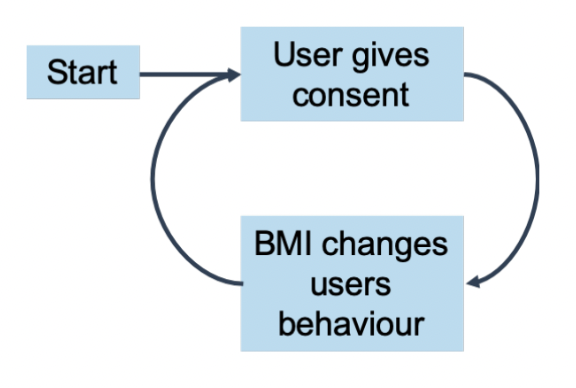
“Alarmingly, powerful BMIs could provide ways to limit a person’s autonomy and as such influence peoples’ consent. Not only could the vast amount of data provide ways to influence people’s decision-making processes, similar to how Facebook data was used to influence political decisions[35], a BMI’s input could be misused to change a person’s thinking process.
Deep Brain Stimulation (DBS) has already been shown to inhibit emotional states; it is not far-fetched to assume that future BMIs might be able to influence thought processes in a more refined way. That gives rise to an inherent problem with BMIs: even if the initial consent is genuine, a person might be influenced to provide consent for a more encompassing or invasive BMI by (mis)use of the BMI already implanted.”
IZZY COMMENT: The real gain will be for paraplegics and the disabled.
THE IMF HEARTS JAVIER MILEI. Javier Milei’s chainsaw may have gone down like a lead balloon with the Davos elite in January, but that hasn’t stopped the International Monetary Fund from showering him with praise in their latest country review of Argentina, out Feb 1. In fact, the international lender judged Milei’s economic reform so agreeable it unlocked $4.7 billion of funding to support authorities’ upfront policy efforts with immediate effect. According to the staffers, the truth is that Milei’s presidency couldn’t have come quicker for Argentina.
“Since completion of the last reviews, Argentina’s imbalances and distortions have become dangerously acute, while the program has gone significantly off-track, reflecting highly expansionary and inconsistent policies of the previous administration. The new administration has begun to take bold actions to restore macroeconomic stability and address many of the long-standing impediments to growth and investment. These initial actions are starting to bear fruit, although the path to stability will be challenging,” it noted.
As for a flavour of the sort of love he is getting, check out this paragraph from the report:
Since assuming office, the Milei administration has implemented an impressive set of measures that: (i) cut bureaucratic costs and unwound costly tax rebates implemented in the final months of 2023; (ii) corrected the exchange rate misalignment; (iii) eliminated the previous opaque system of import controls (removing some exchange restrictions), and started to address the large importer debt overhang; (iv) streamlined monetary policy instruments and reduced the peso debt overhang; and (v) lifted price controls, and adjusted (outdated) regulated prices to better reflect costs. An ambitious Emergency Decree and an Omnibus bill, which include initiatives to underpin stabilization efforts, have been submitted to Congress and efforts are underway to build the needed political and social support. These initial actions have led to a strong turnaround in reserves (with net central bank FX purchases exceeding US$4.5 billion since assuming office), a narrowing in the FX gap (from 190 to around 40–50 percent), and a sharp improvement in Argentine asset prices trading abroad. The authorities have been able to stop the need to intervene in the various FX and debt markets. Inflation in December reached 25.5 percent m/m, largely reflecting the step devaluation, although efforts to establish a strong fiscal anchor have helped to limit the initial pass-through thus far.
And here’s the Milei effect on private sector FX deposits:

| BUSINESS, ECON AND FINANCE |
PAYPAL SAID IT WOULD CUT 2,500 JOBS DUE TO SHRINKING MARKET SHARE. CEO Alex Chris said the move would help improve operating income amid ongoing share price weakness. According to Bloomberg, the layoffs amount to about 9 percent of Paypal’s workforce.
OVER AT ALPHABET, META AND MICROSOFT, record-high stock prices didn’t prevent layoffs of roughly 24,000 workers in January alone.
A RECORD NUMBER OF AMERICANS WERE WORKING 2 JOBS, according to Bloomberg data, which was shared on Reddit. The chart showed 447,000 individuals in the United States were registered as holding two full-time employments.
CHINA’S EVERGRANDE WAS ORDERED TO LIQUIDATE its operations after it failed to restructure $300 billion of debt owed to banks and bondholders.
AGRI GIANT ADM WILL DELAY PAYMENT OF BONUSES TO EXECUTIVES until after its financial statements are completed and audited. The news came days after ADM sidelined its CFO last week and brought in outside lawyers to probe their accounting practices.
FOUNDERS WERE TURNING TO COUPLES THERAPY for the sake of their startups. A Sifted piece explored the growing trend of startup founders using marriage counsellors to aid in their professional relationships, which can often veer into the personal.
WASHINGTON WAS FACING A GLOBAL MARKET REBELLION according to JP Morgan boss Jamie Dimon, who warned the global economy was reaching a point of no return due to mounting government debt. He added it wasn’t just the economy that was worrying him. “This is about the security of the world,” Dimon said while on a panel at the Bipartisan Policy Center. “We need a stronger military, we need a stronger America. We need it now. So I put this as a risky thing for all of us.” Republican politician Paul Ryan later added on the same panel that he believes “in five years we’re going to be paying more in interest than we will be the Pentagon.”
JAPANESE BANK AOZORA LOST 33 PERCENT OF VALUE DUE TO US REAL-ESTATE EXPOSURE. But as Bloomberg reported, the potential for a bank run is limited because about 80 percent of the bank’s deposits are covered by insurance.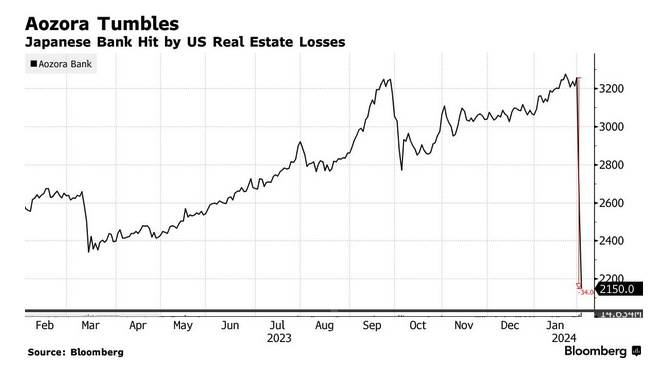
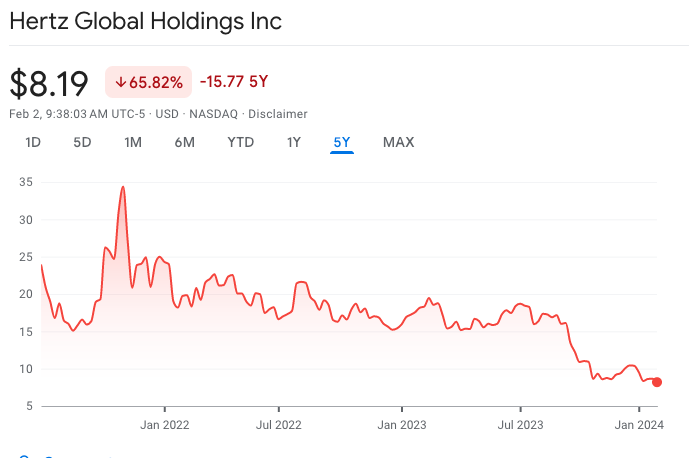
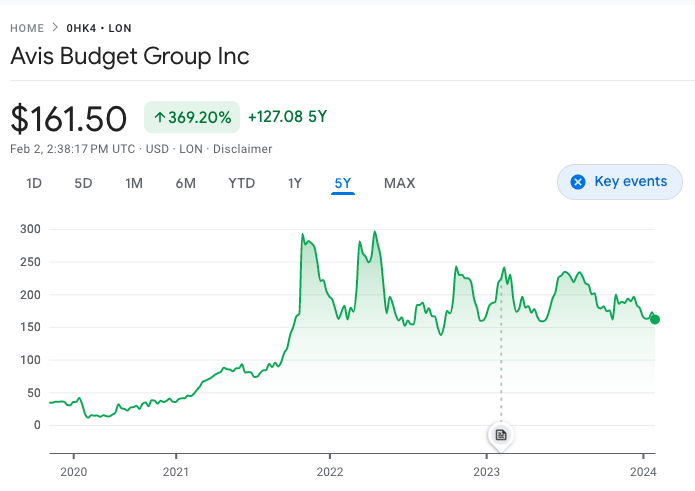
HERTZ INVESTED BIGLY IN EV’S AND IS NOW REGRETTING IT: Goldman equity analyst Lizzie Dove admitted she had failed to clock the scale of the headwinds facing Hertz as a result of its decision to invest heavily in EVs. Hertz had considered the move an investment in the future of mobility, but with 11 percent of its fleet made up of EV relative to less than 2 percent at rival Avis, that has left the rental firm overly exposed to the depreciating resale price of Teslas. These depreciated far more quickly than conventional vehicles this year. Tesla’s still creaky parts and replacement operation, meanwhile, saw the cost of EV repairs come in at double that of the regular fleet, Dove added. To plug the losses, Hertz announced earlier this year that it would be downsizing its EV fleet by a third.
“The move to sell 20k of its 60k EV fleet is a pivot from HTZ’s initial plan in October 2021 to purchase 100k Teslas which was originally greeted enthusiastically by the market,” Dove wrote. Here, meanwhile, is how Hertz’s EV dalliance impacted its share price:
THE BIDEN ADMINISTRATION HALTED LNG export approvals after allegedly being hounded by climate activists, while European LNG producer Eurogas released a tough statement that raised the alarm on this blockage, claiming if American LNG export capacities didn’t materialise “it would risk increasing and prolonging the global supply imbalance”.
THE WHITE HOUSE SAID THE RECENT SURGE IN BUSINESS APPLICATIONS had coincided with a rise in applications for likely-employer businesses, indicative of future job growth. But commenters on the Blind Spot’s Discord begged to differ, noting that a notable Covid-era fraud was to create new business entities just to apply for money. “The White House has been boasting about the creation of new businesses but what if many of these are tied to fraud,” noted one Discord member.
THE FRENCH PITCHED A NEW ‘PAN EUROPEAN SAVINGS ACCOUNT’ that could funnel money into EU-wide projects and companies, reminiscent of how war bonds work, Izzy’s colleague Bjarke Smith-Meyer reported for Politico. “Piling people’s savings into the market would alleviate some of the pressure on finance ministers, and presumably earn savers some decent interest on their deposits, potentially in turn putting pressure on banks to raise their low savings rates,” he wrote.
FRAUD RULES TIGHTEN AROUND BIG TECH: It looks like the European Parliament will move ahead with measures that would require telecom giants and Big Tech to refund anyone who’s tricked into a payment scam, according to draft amendments obtained by POLITICO. Poland’s socialist lawmaker Marek Belka and his team, who are leading the Payment Services Regulation (PSR), want companies like Vodafone, Orange, Meta and TikTok, to be held liable for people who suffer imposter scams through text messages, calls or social media posts. But the refund rules would also expand to fake ads on online platforms, which would also capture online shopping giant Amazon and search engine Google.
NEW YORK COMMUNITY BANCORP SHARES PLUNGED by a record 44 percent after the lender that bought failed Siganture Bank during last year’s bank wobbles reported a surprise loss and cut its dividend.
ELON MUSK WENT TO WAR WITH DELAWARE after a judge struck down his $56 billion pay package, deeming it an “unfathomable sum”. That’s despite the deal having been agreed to by shareholders in 2018. Elon says he will now be reincorporating in Texas.
ANDREW ROSS SORKIN CAME OUT IN DEFENCE OF ELON, arguing the Tesla CEO’s compensation — despite its largesse — provided key incentives for Musk to remain at the helm of Tesla. “I thought the comp plan was the most “skin in the game” in history,” Sorkin noted. Similarly, Shapiro argued the refusal of Musk’s bonus, which amounted to the “riskiest pay package in history”, was tantamount to “hatred of Musk, pure and simple.”
DUTCH REGULATORS HIT UBER WITH A €10M FINE for failing to provide adequate disclosure on how the company stored data on European drivers, and how this data was transferred outside of Europe.
PRIVATE CREDIT BLEW UP SPLENDIFEROUSLY FOR JULIUS BAER: The Swiss wealth manager posted a 52 percent drop in profits for 2023 after the group’s private credit operation wracked up a $679 million exposure to Rene Benko’s collapsed property Signa real-estate empire. The shock hit to the bank’s bottom line has since led to the firing of CEO Philipp Rickenbacher and an announcement by the bank that it will be exiting the private credit business.
ITALIAN GROWTH OUTPACED GERMANY’S: No, your eyes are not deceiving you. Italy, the eurozone’s perennial economic headcase, grew faster than the bloc’s once formidable industrial engine in the last quarter, Politico reported. Official statistics released last week revealed the Italian economy grew by 0.5 percent in the last quarter of 2023, while German growth, for all its manufacturing might, had shrunk by 0.2 percent.
APPLE SOLD OVER 200,000 UNITS OF THEIR VISION PRO, as demand for the niche product seemingly outstripped Apple’s planned supply, which quickly sold out its initial inventory. Some analysts, however, believed this demand might quickly taper once core fans and heavy users have placed their orders.
THE ULTIMATE ‘STAY AT HOME’ STOCK SLUMPED TO NEW LOWS: Peloton CEO Barry McCarthy admitted the home fitness giant still wasn’t turning a profit as the company’s share price hit a new low. Peloton was last seen trading at 3 percent of its lockdown heights.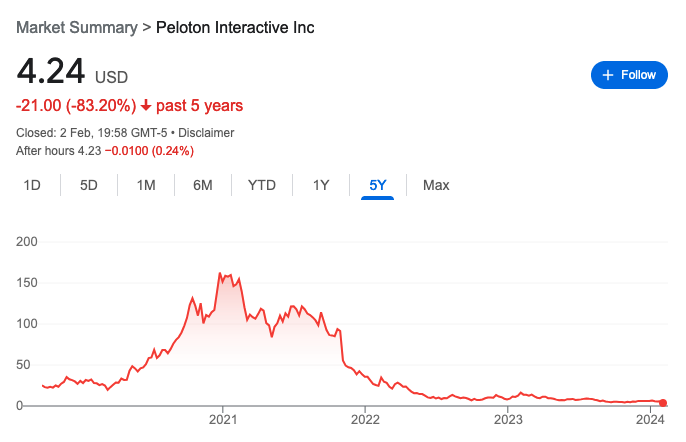
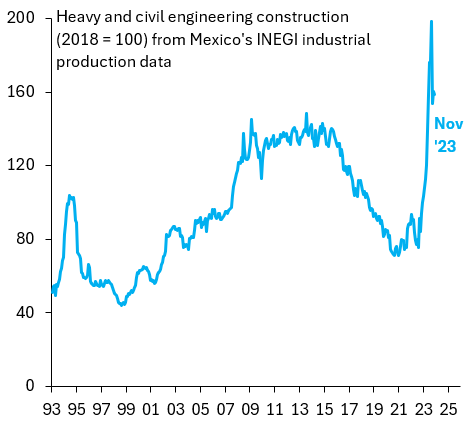
MEXICO’S INVESTMENT BOOM REACHED NEW HEIGHTS IN 2023, according to Robin Brooks, who noted heavy and civil engineering construction activity in the country had risen by 80 percent in 2023 versus 2022, reversing a decade of contraction. The investment boom is likely the result of America’s reshoring trend, which incentivising companies to invest closer to home.
| LENDERS OF ALL RESORT |
CHINA’S POST-COVID MONETARY EXPANSION surpassed that of the United States: 
TURKEY’S FIRST FEMALE CBANK HEAD QUIT UNEXPECTEDLY: According to media reports, Hafize Gaye Erkan, who had previously worked as a banker for Goldman Sachs before taking the top job at the Cental Bank of Turkey, had to “excuse herself from the office” from the office because of a smear campaign conducted against her focused on accusations of nepotism. President Recep Tayyip Erdogan announced Erkan would be replaced by Fatih Karahan, who has been serving as Erkan’s deputy since July.
| COMMODITY CORNER |
KEN ROGOFF WARNED ABOUT THE SCALE OF THE OIL SHOCK: “Oil and gas prices are stuck on a roller coaster caused by the ‘mother of all shocks,’ as the supply-demand imbalance from the pandemic is still roiling energy markets, says Kenneth Rogoff, a top economist,” Business Insider reported this week.
To be clear, I have absolutely nothing against the man. He was always perfectly hospitable, friendly and charming whenever I met him, which — as it happens — was mostly while I was working as a lowly producer for CNBC. (Though I suspect his friendliness was closely connected to how much sway I had at the time over who would or would not be appearing on the flagship show on any given day).
It was in the context of that CNBC booker relationship that Ken invited me for a drink at his hotel one day. All good. Except when I told my then partner — who had studied economics — about the upcoming meet-up he (to my surprise) asked if he could tag along. He said it was because he had been forced to read Ken’s textbooks as part of his course, and found them incredibly challenging. Supposedly, he had “questions”.
And so it was that both of us arrived at Brown’s hotel in Mayfair for an afternoon tea one fine day around 2006 with Ken.
This was when I discovered (to my shock) just how little Ken knew about how commodities and oil moved across the world.
Now, obviously you can’t know it all. Not even if you have a Nobel (not that Ken has one of those). But you’d think the former chief economist of the IMF would have a vague clue about the difference between crude oil and crude products and the fact that both tend to be transported by sea. I can’t remember all the details of the conversation to be honest. What I can tell you is that when I saw the above story I naturally had to share the link with the other witness to Ken’s baffling ignorance that day.
The immediate reply I got: “From the man who didn’t know gasoline and diesel are transported on tankers”. So, yeah. (Though, to be fair, he’s had over 18 years to school himself on the topic since then.)
| LAWFARE |
DONALD TRUMP LOST HIS GDPR CASE AGAINST CHRISTOPHER STEELE: The Bloomberg headline read “Donald Trump loses London case against ex-MI6 spy over Kremlin dossier” while the BBC ran with “Christopher Steele: Orbis welcomes High Court victory over Trump”. Both sentences could give the impression that Christopher Steele, author of the infamous Democrat-commissioned dodgy dossier on Trump, had finally been vindicated regarding the veracity of his explosive Russian collusion allegations. And yet, when explaining her decision, Mrs Justice Steyn clearly specified that she had “not considered, or made any determination, as to the accuracy or inaccuracy of the memoranda (aka the contents of the dossier)”. The case was dismissed on purely technical grounds, notably because Trump’s claim fell outside of a six-year period of limitations. The Trump claim itself was centred on whether Steele, by way of his intelligence firm Orbis, had broken U.K. data privacy laws when he shared his report leading to its eventual publication by Buzzfeed.
THE LAWYERIFICATION OF AMERICA’S PRESIDENTIAL ELECTIONS. Matt Taibi wrote on the “lawfare” being unveiled by the Democratic party for 2024’s US Presidential elections, where a number of Democrat-affiliated institutions are readying lawsuits to impede Trump’s accession to the Presidency.
| POLITICS, POLITICS, POLITICS |
VIKTOR ORBAN SLAMMED THE EU’S ATTEMPT TO ECONOMICALLY BLACKMAIL him into allowing more Ukraine funding: “Forget about the rule of law, Hungary is blackmailed for having its own opinion on migration, the war in Ukraine and gender propaganda. We will defend our interests,” he Xed.
FORMER POLISH PM MORAWIECKI SAID HE WAS OPEN to teaming up with Viktor Orban’s party at the EU level, as the former PM suggested Hungary’s ruling party could join the right-wing European Conservatives and Reformists group in the European Parliament.
FEARS GREW OVER RUSSIAN SPY INTRUSION AT THE EU PARLIAMENT. Three MEPs displayed concerns about deep-seated Russian infiltration of EU lawmaking institutions, according to a leaked letter obtained by Brussels Playbook.
| CIVILISATION |
YOUNG MEN AND WOMEN WERE DRIFTING APART POLITICALLY according to a recent FT data visualisation which showed men were lurching rightwards while women were turning left.
| GEOPOLITICAL HOT SPOTS |
US WEAPONS EXPORTS ROSE BY 50 PERCENT IN 2023 as Washington’s military-industrial majors continued to build up their client base amid rising tensions between the United States, Russia and China, Politico reported. While the majority of deal flow was in Europe (notably Germany, Poland, and Czechia), there was also promising activity in the global south, including in India, where the predominant defence supplier until recently was Russia.
Despite the legion of footage received from Ukraine showcasing burned-up Bradley Infantry Fighting Vehicles and Leopard IIs, one marked quality of these products has drawn positive attention — survivability. While Western products are harder to repair, weigh more, are more visible on the battlefield — and get destroyed by artillery just as easily as their Russian counterparts — it seems the much-touted protective quality of Western vehicles does exist after all.
The critical reasoning behind my love for Russian and Iranian equipment is not geopolitical sympathy or a belief in their superiority for crafting arms: it’s what they’ve managed to achieve given the resources at hand. Being forced to do more with less, has seen Russians and Iranians inadvertently deliver the most cutting-edge development in the modern battlefield: low-cost, low-complexity, attritable ranged weapons.
But the West’s population crisis has also provided it with the impetus to avoid resorting to cannon fodder to win wars.
While Russian birthrates are declining just as rapidly as Western ones, their greater manpower pool means life is less of a premium. We in the West, on the other hand, have borne in mind our numerical inferiority since the earliest days of the Cold War, and, as such, designed military equipment that can keep our highly skilled crewmen alive. And the same goes for our aircraft.
A CHIP SMUGGLING OPERATION sending 53,000 banned American chips to China, with $12m worth of chips being funnelled through a South Korean company in the largest chip-smuggling operation seen to date, was finally busted.
THE MIDDLE EAST’S OTHER WAR IS A NARCO WAR. SentinelOne’s Matthew Pines reminded readers that there’s a narco war going in the Middle East centred in Syria over the production and transshipment of captagon, which provides the regime with 90 percent of its foreign currency. Apparently, the scheme is operated by networks made up of Hezbollah, Syrian officials and Saudi royals. Captagon is an addictive amphetamine-type stimulant that is currenly being mass produced in Syria.
A similar phenomenon is happening in the modern Middle East.
Captagon was developed as a psychoactive medicine produced by the German company Degussa Pharma Gruppe in the 1960s, prescribed as a treatment for attention deficit disorder, narcolepsy, and as a central nervous system stimulant. It’s indistinguishable in that sense to most amphetamines. Its critical synthetic component, however, is fenetylline, which was included in Schedule II of the UN Conventions on Psychotropic Substances 1971. After becoming illegal, most illicit production came from Eastern Europe.
But the desperation of the Syrian regime has seen Al-Assad (and his Hezbollah allies) encourage its production, moving most captagon production to Levantine shores.
What’s more interesting is where the product is flowing to. It may just be that Hezbollah’s backers, the Iranians, have paid close attention to how Western powers crippled China by feeding its opium addiction in the mid-19th century.
HOUTHI-LINKED TELEGRAM CHANNEL THREATENED TO CUT UNDERSEA FIBER OPTIC CABLE in the Red Sea if the UK and US launched another attack on Yemeni airports. While the credibility of the source is questionable, especially because the threat was made in late December, speculation about the ability of the Houthis to cut such a cable is valid. They have the means, and the large number of undersea international cables skirting near the Yemeni coastline and the plethora of financial quandaries this could occasion in Western capitals certainly grants a motive.
LIBYAN SOLDIERS POSED WITH RIFLES UNIQUE TO THE UK’S SPECIAL FORCES, suggesting UK special forces may be embedded with Khalifa Haftar’s Libyan National Army in the country’s south, along the Chad, Niger and Algerian borders.
IZZY COMMENT: When I bumped into Blackwater’s Erik Prince at last year’s Arc Forum, the world’s best-known mercenary let slip he was in the process of trying to revive a Libya-based plan to launch a public-private partnership to help solve Europe’s migrant crisis. He said the plan was largely the same one he had outlined in a 2017 oped in the Financial Times.
As that oped noted:
“I believe, however, that by using five patrol bases that cover existing smuggling routes, security personnel could quickly establish base camps, alongside a new border force, and secure Libya’s borders. The border police would consist of mentors with a European law enforcement background, supported by locals trained in key basic skills during a 10-week course. Afterwards, mentors would be the skeleton structure of the unit providing key leadership, intelligence co-ordination, communications, medical and logistics expertise.
“Libyans would be the body of the unit. All personnel would be armed and have agreed-upon rules of engagement and migrant detention and repatriation policy. Each base would have airborne surveillance and search and rescue as well as armed vehicle quick reaction forces. Air operations would be provided by third-party professional providers, as would medical evacuation services.”
“There would be nowhere for migrant smugglers to hide: they can be detected, detained and handled using a mixture of air and ground operations. This type of security operation could be established quickly and efficiently, for less than the cost of the EU’s current operations, through a public-private partnership. This plan would also have a crippling effect on weapon and drug smuggling throughout the region.“
Critically, the plan depends on a quid pro quo with Libya wherein European governments provide a comprehensive aid and development plan for Libya and the surrounding region. Call it a bid to initiate a soft equivalent of China’s Belt and Road.
WE NEED TO BE READY FOR WAR WITH PUTIN claimed Romania’s top general, Gheorghiță Vlad, according to Politico. Vlad joins a growing list of NATO-affiliated generals calling for war preparedness in Western capitals. The combined talk, plus an increase in World War 3 references by top newsmakers, has led to growing speculation online that Western powers are slowly trying to condition the population for a formal draft. Gen Z, on their part, have taken to TikTok to declare they’re not prepared to fight for King and country.
| CRYPTO EVANGELISM |
VISA ENABLED CRYPTO WITHDRAWALS WITH DEBIT CARDS in 145 countries, with MetaMask users now able to sell crypto directly to a Visa card in partnership with Web3 infrastructure provider Transak. This move eliminated the need for prospective crypto users to rely on problematic centralised exchanges.
COINBASE ENLISTED FORMER UK CHANCELLOR GEORGE OSBORNE as an advisor, as the American cryptocurrency exchange sought to expand in the face of mounting regulatory pressure. As part of the move, George Osborne will join the company’s advisory board.
| MEDIA MATTERS |
AS IMRAN KHAN WAS SENTENCED TO 10 YEARS, Wikileaks re-released a wide-ranging interview between the former Pakistani PM and Julian Assad filmed in 2012. During the interview Khan spelled out how the Pakistani deep-state had gained control and why it was intent on keeping him out of power.
A POLISH COURT ACCEPTED THE LIQUIDATION of state press agency PAP, as requested by the Polish Government. This court official came to the opposite conclusion of two other court officials, who recently rejected a similar petition to put TVP and Polskie Radio into liquidation.
| AMERICAN DRAMA |
OREGON LEADERS DECLARED A FENTANYL EMERGENCY in Portland in a bid to get ahead of the deadly opioid’s growing grip on its community.
THE NUMBER OF CANADIAN CIVIL SERVANTS SKYROCKETED under the Trudeau administration, opposition leader Maxime Bernier wrote on X. He noted the growth had resulted in greater federal debt, and larger amounts of paperwork, without a discernible increase in public services provided.
DECEMBER DATA FROM US BORDER PATROL illustrated the scale of the crisis at the US border, as it registered a large spike in apprehensions and expulsions as registered by the federal agency.
TRUMP’S TAX LEAKER WAS UNMASKED. Federal investigators identified the IRS contractor who had leaked Trump’s tax returns after he gave away vital clues to his identity after also attempting to leak details on Jeff Bezos and Elon Musk.
RFK JR’S FAVOURABILITY HIT RECORD HIGHS among both Republicans and Democrats, placing him as the most favored candidate overall. Despite being unlikely to win, Kennedy’s popularity may significantly impact the vote on election day — much as Ross Perot’s independent bid eased Clinton’s path into the White House in 1992. In his weekly note, SocGen’s Albert Edwards noted that “Kennedy’s candidature makes this year’s presidential election unusually unpredictable.”
MENNONITES WERE THRIVING IN LATIN AMERICA. Well-kept gardens and exquisitely maintained lawns reflect the prosperous conditions of Christian migrants who moved to Latin America from Canada, the United States and Europe, according to Christianity Today. Locals, however, are angry about the deforestation that has accompanied them. Below is an illustration of their footprint on the natural habitat:
| TECHNOLOGICAL DEVELOPMENTS |
ELON MUSK ANNOUNCED THE FIRST NEURALINK PATIENT had received their brain implant, which aimed to let people control computers with their thoughts.
There are two major types of BMI, invasive and non-invasive. Non-invasive outputs are based on electrical signals produced by the brain and measured by electrodes placed on the scalp, without a need for surgery. Invasive BMIs rely on implanting electrode wires directly into the subjects’ brain, allowing for greater resolution.
However, there are significant problems with BMIs, particularly invasive BMIs, concerning privacy that sounds awfully familiar:
“Alarmingly, powerful BMIs could provide ways to limit a person’s autonomy and as such influence peoples’ consent. Not only could the vast amount of data provide ways to influence people’s decision-making processes, similar to how Facebook data was used to influence political decisions[35], a BMI’s input could be misused to change a person’s thinking process.
Deep Brain Stimulation (DBS) has already been shown to inhibit emotional states; it is not far-fetched to assume that future BMIs might be able to influence thought processes in a more refined way. That gives rise to an inherent problem with BMIs: even if the initial consent is genuine, a person might be influenced to provide consent for a more encompassing or invasive BMI by (mis)use of the BMI already implanted.”
IZZY COMMENT: The real gain will be for paraplegics and the disabled.
