
| SNEAK PEEK |
— We do a deep dive on the case against Bulgaria’s upcoming euro adoption and the Atlanticist forces backing it.
— The newly passed GENIUS Act disrupts current creditor status by introducing a new super-senior tranche.
— Our short, sharp review of Adam Curtis’ Shifty
Greetings from heatwave Britain.
Sorry for the late send out. It’s been really busy!
Send tips to [email protected] and [email protected]
| THE BIG BLIND SPOT THIS WEEK |
CAN BULGARIAN DATA BE TRUSTED? Bulgaria is on track to adopt the euro but it may have met the EU’s convergence criteria only by fudging the numbers. To be clear, this is strongly denied by all the authorities I’ve been in touch with. Yet, none of the ripostes have disputed the data, which serves as a whistleblower in its own right.
But it’s not just the data.
As per my story in POLITICO, a former Bulgarian government official has spoken out about the issue.
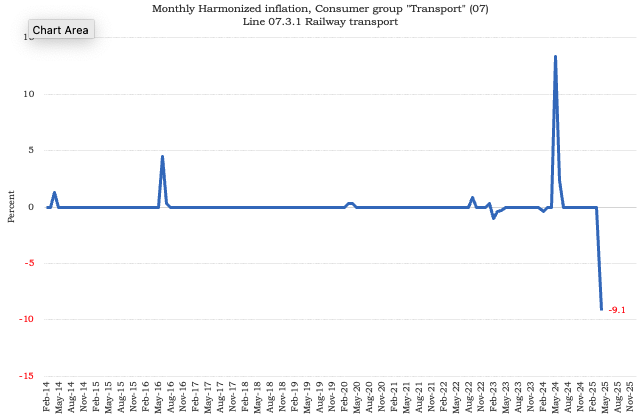
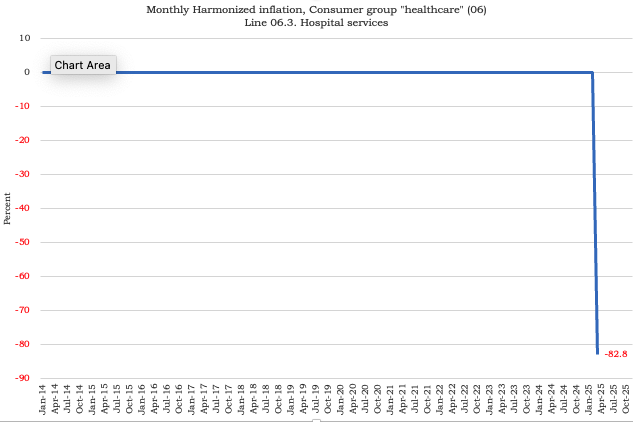
“The only reason Bulgaria has qualified is, if you look at the inflation data, due to state-administered prices,” the former official told me, adding: “It is well known that statistical data was adjusted to show results more favorable than reality — especially in sectors like postal services, transport and healthcare.”
He spoke on condition of anonymity, because, well, it’s Bulgaria.
Geopolitically sensitive: The claims come as Bulgaria takes its final steps toward eurozone accession, despite mounting public opposition and concerns among economists about overheated credit markets, under-reported liabilities, and the long-term risks of joining the single currency without real economic convergence.
The criteria for euro adoption focus largely on economic indicators that are mostly a rough proxy for economic performance. In their final convergence assessment reports, both the European Commission and the European Central Bank warned that Bulgaria still faces challenges in fighting corruption and improving judicial independence. On the issues of inflation, long-term interest rates, government debt and deficits, and exchange rate stability, however, they said it ticked every box.
Making the grade: In order to join the euro, Bulgaria’s average inflation rate from April 2024 to April 2025 had to fall within 1.5 percentage points of the rate of the three EU countries with the lowest inflation rates.
But while Bulgaria’s rate jumped to 4 percent at the start of the year as various measures to protect consumers from the post-pandemic surge in inflation across Europe expired — for example the full rate of VAT was restored on restaurants, bread and flour — inflation then fell back to an annual average of 2.7 percent through April.
But according to the former government official, that was largely due to some conspicuously sharp drops in April in prices that are controlled by the government (so-called administered prices). Rail fares fell by over 9 percent, postage costs by nearly as much. But it was hospital fees, which fell a jaw-dropping 82.8 percent in the last month of April, that had the biggest impact of all — 0.89 percent, according to an economist familiar with the data. In all, the measures pushed the consumer price index (CPI) down by 1.2 percentage points from March 2025 to April 2025, bringing Bulgaria within the required limits.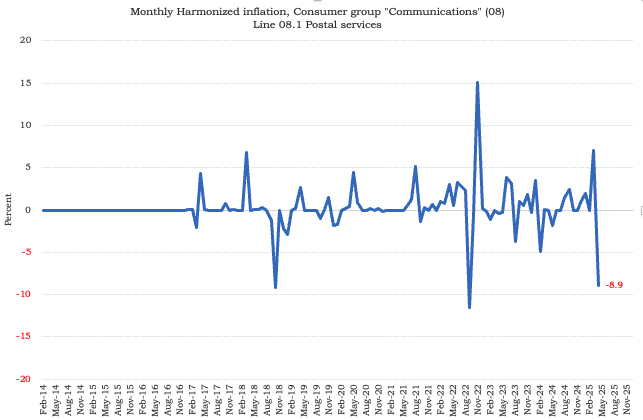
John Hopkins University economist Steve Hanke, who played an integral role in the establishment of Bulgaria’s currency board in 1996, told me he believed there was a high probability that [the inflation data] has been manipulated.
“Given my experience as an advisor to the president of Bulgaria (1997–2002) and my observations of the machinations surrounding Bulgaria’s application to formally enter the eurozone, I would not trust inflation data that have been thrown up as far as I could throw them.”
Hanke said he previously developed a formula to estimate the optimal growth rate of the money supply needed to maintain price stability. That benchmark, in Bulgaria’s case, is currently around 6.3 percent.
“Since April 2023, Bulgaria’s annual money supply growth rate has been well above 6.3 percent per year. Given the elevated growth rate of the money supply, it looks like Bulgaria’s inflation data have been doctored to look somewhat better (read: lower) than true inflation measures would indicate,” Hanke said.
Brussels says nothing to see here: The Commission’s Convergence Report, published last week, acknowledged the statistical distortion: “The decrease in … inflation in Bulgaria was strongly influenced by a significant drop in the prices of healthcare services, due to the reclassification of some administered prices as out-of-pocket expenditures not covered by health insurance.”
However, it stressed in emailed comments to POLITICO pubilshed in our article that there was no reason to suggest the decline in Bulgarian inflation won’t be sustained over the longer term.
“Bulgaria would have fulfilled the inflation criterion even in the absence of the cut in hospital fees,” the Commission said.
Bulgarian authorities also pushed back strongly against suggestions of anything amiss, telling POLITICO:
“The National Statistical Institute of Bulgaria (NSI) cannot agree with such statements, no matter who they are made from,” an NSI spokesman said, adding that “the NSI only provides statistical data, while decisions are made by other Institutions.”
The Bulgarian Finance Ministry, meanwhile, noted it “has always been a reliable partner in providing statistical financial information and will not allow any disinformation and rumors to undermine the authority of the institutions in Bulgaria.”
Atanas Pekanov, former deputy prime minister in the country’s caretaker government and a trained economist who is now at the Austrian Institute of Economic Research, rejected the idea that large fluctuations in administered prices were abnormal.
“There are state-controlled prices in many EU countries. These are not prices that were, until recently, market-based, and now, all of a sudden, the state controls them. These are the services [whose prices] the state has always decided,” he told POLITICO.
He added that Bulgaria would have complied with the inflation criteria already two years ago if various countries across the eurozone hadn’t imposed emergency price caps on energy and various other items, keeping their inflation rates artificially low.
Greek Déjà vu? The claims echo past controversies from the early years of the eurozone, when Greece and Italy were accused of using creative accounting to secure entry (an art that Greece subsequently took to extremes with outright manipulation of its debt and deficit statistics). Now, as Bulgaria attempts to become the bloc’s newest member, some of the figures who lived through those scandals are urging Sofia to tread carefully.
“Don’t do it! It is at best pointless and at worst calamitous,” former Greek Finance Minister Yanis Varoufakis told me in an email, pouring scorn on the establishment’s claims that “only Putin’s handmaidens oppose euro adoption.”
“Bulgaria’s greatest danger is that, if it enters the eurozone, the German and French banks will inundate [it] with private debt,” leading to a banking crisis that will then see taxpayers saddled with the consequences.
Bulgaria’s biggest banks are owned by Belgium’s KBC, Hungary’s OTP and Italy’s UniCredit, rather than French or German banks, but something along those lines may already be materializing.
But there’s more! In a note this month, S&P Global warned that Bulgaria’s banking system is showing signs of “economic imbalance.” Domestic lending is red hot. Central bank data show private-sector credit growth running at 14 percent year-on-year in April, with housing loans up a whopping 26 percent.
Under a currency board, when interest rates aren’t enough to keep bank lending down to manageable levels, the central bank usually imposes a reserve requirement that restricts the amount of money banks can lend. Three people familiar with the workings of the BNB told me there had been disagreements recently over where to set the reserve ratio. This was lifted to 12 percent from 10 percent in June 2025, but a proposal to lift it to 15 percent from September led to the ejection of an official. The rate remains at 12 percent.
Hidden debts, visible risks: Critics add that Bulgaria’s low official government debt — projected by S&P to stay below 30 percent of GDP through 2028 — masks other potentially serious risks. They point specifically to the potential future impact of the cost of shoring up some of the country’s big state-owned enterprises (SOEs).
Pipeline politics and Russian gas cashflows: The most glaring case is state gas grid operator Bulgartransgaz, which has taken on massive debt to fund the Bulgarian leg of “Turkstream”, a pipeline that carries Russian gas across the Black Sea. By the end of 2020, its liabilities had ballooned to €1.3 billion.
Fitch Ratings flagged the risks of its financing structure in 2019, noting that although a Saudi consortium raised the money to build the pipeline, repayment obligations would ultimately fall on the Bulgarian state and should be added to the adjusted debt calculations. Regulators have criticized the company for failing to seek approval for its loan agreements, raising broader questions about fiscal transparency.
In its latest report, S&P said the recapitalization of SOEs like Bulgartransgaz would be a key driver of Bulgaria’s rising debt levels over the coming years.
Some argue that a wave of recapitalizations has been timed to hit the official debt figures only after eurozone accession. In the 2024 budget, parliament approved 7 billion lev (€3.5 billion) in new borrowing — not to fund deficits or refinance existing debt, but to recapitalize SOEs.
Under Eurostat definitions, liabilities from SOEs are technically included in consolidated public-sector debt. But critics of euro adoption argue that the timing and classification of these recapitalizations — made easier by the fact that the government’s borrowing costs should fall once it is in the currency union, will allow the government to “hide the deficit by classifying it as debt.”
This will ensure that Bulgaria stays below the EU deficit ceiling of 3 percent this year, at the cost of a potentially sharper rise in reported debt levels once it’s safely on the inside. “It’s the same tricks Italy used in 1999,” the former government official told me.
Pekanov disagreed, noting “I wouldn’t say that we are an outlier on this. At least we haven’t received any warning or recommendation by European institutions that, well, you are treating your debt in some hidden way.”
“But the people are stupid”: At plush gatherings of dignitaries, government officials, and local intelligentsia in Sofia, support for joining the euro appears almost universal. But stray further afield and the mood turns distinctly cautious.
Demonstrations against euro adoption erupted in Sofia and other cities earlier this year, with protesters accusing the government of rushing the process without sufficient public debate or risk assessment. The latest demonstrations came last Sunday week, when thousands hit the streets to protest the government’s reluctance to consult citizens in a referendum on the issue.
Marchers included both far-right nationalists and progressive NGOs — united in their belief that Bulgaria is not ready. On Thursday, Facebook posts began circling, highlighting that protest organizers were preparing a convoy to head to Brussels.
Victor Papazov, former founder and CEO of the Bulgarian Stock Exchange, now an MP affiliated with the anti-euro Vazrazhdane party [often described as pro-Kremlin], told me: “This [convergence] report was achieved by falsified data on behalf of the Bulgarian government. We are actually moving exactly in the steps of Greece.”
Varoufakis, now Secretary‑General of DiEM25, a pan‑European democracy and progressive bloc in the EU, agreed that the risks of adoption were clear, while the lauded benefits, such as the elimination of conversion costs, were minimal.
“The small transaction costs due to the retention of the national currency are tiny compared to the disastrous loss of the capacity to devalue if needs be and the likelihood of a debilitating banking crisis,” he said.
For now, as noted above, the European Commission appears unconcerned. Its June convergence report gave Bulgaria a clean bill of health, citing “sustained compliance” with the necessary benchmarks and progress on institutional reforms.
No public vote: After a decision from Bulgaria’s Constitutional Court this week blocked the final pathway to a referendum, the only legal hurdle remaining to full adoption by January 2026 is a vote by EU governments on the exchange rate for convergence, which requires full unanimity. It is largely expected that the Council will give that blessing on July 8, though the debate began this week.
Earlier this month Bulgarian central bank governor Dimitar Radev dismissed concerns about potential incoming indebtedness in exclusive comments to POLITICO. “Fiscal discipline has been a cornerstone of our macroeconomic framework for more than a quarter of a century, and this should remain unchanged,” he said.
But others argue that after years of hardship and discipline, the EU’s poorest country can now afford to treat itself a little.
“Bulgaria has, year [after] year, been more restrictive than it needed to be,” Pekanov told me, adding that it was “common consensus” that its low public debt level was “a good thing”.
As was the case with Greece in 2001, however, it may take years before such promises can be properly validated.
The challenge is determining when such decisions are justifiable on an objective basis in a democracy.
And indeed, within 24 hours of my story being published, the President of Bulgaria cited it to justify renewed calls for a referendum, which had already been constitutionally blocked just a week before. Was this a form of narrative weaponization by Kremlin-aligned forces? Quite possibly. But does that mean the story shouldn’t be told? I don’t believe so.
At The Blind Spot, our mission is to report the truth — even when that truth is inconvenient, uncomfortable, or capable of being misused. And to prove that commitment, it’s worth telling the story behind the story. Because no journalist, however well-intentioned, is immune to influence. And when the political stakes are as high as they are in Bulgaria, transparency about those forces matters.
Let me start with some context: until this month, I had limited insight into modern Bulgaria. My entry point to the story was through the euro convergence angle, grounded in my extensive reporting during the 2011 eurozone crisis and its fallout across the periphery — Greece, Italy, Portugal, Ireland, and Spain.
From that experience, it is hardly controversial to observe — in fact, it is practically received wisdom — that the EU and ECB turned a blind eye to manipulated economic data from several applicant states to hasten their entry into the euro. This was done for political reasons, not economic ones.
Thus, when I was asked at fairly short notice to speak at a conference in Sofia at a conference marking the EU’s approval of Bulgaria’s bid earlier this month, I arrived with no foregone conclusions beyond the historical record related to Greece, Italy, Ireland etc — and a better understanding than most of the fractious politics that prevail in post-communist nations.
To make the trip worthwhile, however, I thought why not look into the shape of things on the ground and see if the largely positive picture of Bulgaria’s bid that was being presented in Brussels checked out in reality.
I stress again, up until then, the prevailing image — from the coverage I had seen — was that Bulgarians were broadly in favor of joining the euro. The pockets of opposition I’d heard about were said to be marginal: either rural voters unfamiliar with the benefits of euro adoption, or those susceptible to Russian disinformation.
While Western reporting did highlight that Bulgaria’s President Rumen Radev had surprised everyone with a last-minute call for a referendum earlier in May, the reporting stressed that this was mere political opportunism on the President’s part and that no legal pathway to a referendum now existed.
Recollections differ: Upon arrival, I was quickly struck by the difference in Sofia’s cityscape from that of Belgrade’s (where I had been just the year before). Whereas the latter felt very much like stepping into a time machine to 1980s Warsaw, Sofia’s prevailing communist architecture was punctuated at regular intervals by Western modernist infrastructure, from office buildings to roadworks. In other words, EU cash flows and investments had made a clear mark on the city in the form of ample shiny new buildings.
And yet, just a few wrong turns revealed a far grimmer underside — neighborhoods so impoverished they could only be described as slums. I hadn’t seen anything comparable in Belgrade — or even in 1980s Warsaw. Maybe out of luck. Nonetheless, combined with the Bentleys and other supercars I could see plentifully on the ground, something just far more off-kilter.
To be clear: I wasn’t looking for criticism. I came with an open mind and spent time listening to people on all sides. At the “Sound of Money” conference — well attended by government and EU officials — I encountered widespread pro-euro sentiment, especially among the intelligentsia and Sofia-based media. When I asked about the ongoing protests, the response from many elites was dismissive: the protesters were “simple” people, not sophisticated enough to understand what was good for them.
But it didn’t take much digging to find credible voices who were not just critical of euro entry but deeply concerned about the lack of public input. Their concern wasn’t just economic — it was democratic. The fear was that Bulgaria was being rushed into the eurozone without proper transparency, scrutiny, or consent.
These voices are almost entirely absent from Western reporting. That doesn’t mean they should be accepted uncritically — every faction has its agendas. But nor should they be brushed aside as fringe or irrelevant. Based on what I saw, this is not just a Kremlin-backed astroturf movement. There is genuine public anxiety, and a real feeling of being sidelined in a major national decision.
The anti-euro perspective: One of the core arguments I encountered on the ground is that Bulgaria’s case differs fundamentally from previous euro accession bids — largely because a significant portion of the population — some 70 percent according to some polls — appears to oppose joining the euro, or at the very least, doubts the country’s readiness to do so.
According to Bulgaria’s own constitutional rules, once a public petition surpasses 500,000 verified signatures, the government is obliged to consider a referendum. That threshold was reached in 2023 through a campaign spearheaded by the anti-euro Vazrazhdane party — often described as populist and pro-Kremlin — but the National Assembly ultimately rejected the motion after debate, citing its incompatibility with Bulgaria’s EU Accession Treaty, which mandates euro adoption. This legal constraint remains the cornerstone of the pro-euro camp’s argument: that once a country joins the EU, it cannot legally opt out of eventual euro membership.
Critics, however, counter that while Bulgaria is indeed bound under Maastricht rules to adopt the euro eventually, the public should still have a say on the timing of that entry. This is precisely what President Rumen Radev’s renewed call for a referendum seeks to address.
Yet constitutional experts and former judges I spoke to acknowledged that the way the referendum motion was recently blocked was, at the very least, procedurally questionable. While some view the motion itself as political theatre, the fact that the Speaker of the Assembly refused to even allow debate on Radev’s proposal stands out as highly irregular. The Constitutional Court’s decision last week to avoid ruling on the legality of that move only deepens the ambiguity. As one expert noted, this leaves Bulgaria with a political outcome rather than a constitutional one. In a different parliamentary composition, the same motion could have succeeded.
The pro-euro narraive is also wobbly. Even for those inclined to support Bulgaria’s euro bid, several uncomfortable realities persist — many of which have been acknowledged by EU institutions themselves. Chief among them are persistent concerns over corruption, institutional weakness, and the legacy of Bulgaria’s unique currency board — originally designed to prevent fiscal abuse in a post-communist economy. Inflation volatility adds further pressure.
On that front, the backlash has already begun. Following the European Commission’s green light for euro accession, it was widely reported this week that inflation appears to be accelerating. According to Rumen Spetsov, executive director of Bulgaria’s National Revenue Agency, water prices surged 40 percent, while cheese went up by as much as 25 percent in recent weeks. In response, the government is now proposing a formal price monitoring commission to track inflation and name-and-shame suspected profiteers.
Atlanticist forces: Yet, there may also be more than just EU and Russian geopolitical forces at work. A claim repeated to me by numerous sources is that among those quietly working in the background to obstruct Bulgaria’s entry to the eurozone are the Americans.
The recent visit of Donnie Jr to the country has only heightened such speculation. The claims — unverified — go as far as suggesting the Americans are trying to carve out a central European wedge (potentially under the Three Seas Initiative) from Poland to Greece that remains within the EU, but leans away from Brussels in monetary terms. This bloc, my sources claim, would reflect stronger Atlanticist and dollar-based sympathies, serving as a counterweight to a remilitarized Franco-German axis under euro leadership, with Poland emerging as its geopolitical fulcrum.
That’s why, they argue, the recent election of Karol Nawrocki — a PiS-endorsed, anti-euro candidate — to a key regional position is being seen as a quiet geopolitical win for U.S.-leaning forces in Europe
Pipeline politics: Another striking claim I encountered was that Bulgaria’s push to join the euro is, in part, a bid to secure EU financial support for its troubled energy sector — and to escape dependence on Russian pipeline politics. Following the annexation of Crimea in 2014, Bulgaria bowed to EU pressure to block Gazprom’s South Stream project, angering Moscow. Subsequent attempts to appease Putin — by allowing the Saudis to fund a TurkStream extension via Turkey — backfired, saddling state-owned energy firms with unmanageable debt.
At present, Bulgaria still earns over $300 million annually by transiting Russian gas to Serbia and Hungary.
Interestingly, there is an “Atlanticist” angle here too. Boyko Borissov, former PM and ongoing leader of Bulgaria’s ruling GERB party, recently announced he was in talks with U.S. hedge fund Elliott Management (the former employer of Jay Newman, he of UnderMoney book fame), to invest in supporting infrastructure for the pipeline. Curious, at the very least.
An underhanded Brussels plot? Separately, anti-euro critics remain convinced that European Commission President Ursula von der Leyen and former Bulgarian Prime Minister Kiril Petkov colluded to secure Bulgaria’s eurozone entry by any means, as suggested by a leaked May 2023 recording. Released by disgruntled former ally Radostin Vasilev, the audio from a We Continue the Change meeting captures Petkov and Asen Vasilev discussing bypassing eurozone inflation criteria with von der Leyen, with Petkov stating, “we need to figure out how to bypass the rules.”
Petkov called the recording manipulated, blaming a “deep state” plot, while the EU declined comment.
Dollarization or broke: Separately still, I was told by multiple sources that the Vazrazhdane party was seriously exploring dollarization as an alternative to euro adoption. A delegation from the party reportedly met with Republican and MAGA-aligned figures in the U.S. in May.While the idea of pegging the lev to the dollar instead of the euro is still fringe, it may not be as implausible as it sounds. On June 20 — just days after I first heard of this idea — The American Conservative ran a piece openly advocating for a U.S. strategy of “dollar diplomacy” in Southeastern Europe, specifically Bulgaria.
While this idea is largely seen as far-fetched, advocates say it’s not implausible, especially in light of other concessions and deals that can be done centered on trade. On June 20, days after I first heard about the idea to formally challenge euro adoption with a challenger dollar-peg system, the American Conservative published a piece arguing that the U.S. should use economic influence, or “dollar diplomacy,” to maintain its presence in southeastern Europe, specifically in Bulgaria. The author, Anthony J. Constantini , argued:
“Allowing Bulgaria to anchor the dollar to the lev and thereby blocking the expansion of the eurozone to Bulgaria would not injure the United States economically in any way; America would not be tied down in some sort of complex trade agreement, nor would it require further action from Washington. But it would grant America significant influence over Bulgaria’s foreign policy, a useful chit in a key region.”
He continued: “Finally, by acting, the Trump administration could indirectly give aid to the Bulgarian populist-right Revival party at a time where the American right is increasingly seeking to form ties with nationalists in Europe. Revival, cognizant of Bulgaria’s delicate geographic positioning, would probably prefer that Bulgaria be a bridge instead of a battleground. It would be in America’s interests for a party with those intentions to be in charge of a NATO border state, instead of one interested in following Brussels’ dictates.”
Slovakian veto? In that vein, while the final hurdle to the euro-accession was supposedly overcome last Friday when EU finance ministers voted to approve Bulgaria’s bid to join the euro, I’m told this is not strictly true. In practice, one final vote remains before formal approval can be given on July 8. It relates to the rate which Bulgaria should convert to the euro at. Unlike the previous European Council vote, which only required a qualified majority, this final decision demands unanimous consent from all eurozone members. And according to sources I spoke with, there were already whispers last week that Slovakia — under the populist leadership of Robert Fico — might be considering a veto. Some even suggested the Americans could be quietly encouraging such a move.
Plot twist? Even if Bulgaria formally adopts the euro, that may not deliver the strategic win Brussels is counting on. With the passage of the GENIUS Act last week, Bulgaria could instead become a test case for U.S. dollar-backed stablecoins operating in parallel to its eurozone membership — blurring the lines of monetary allegiance in ways the EU may not have anticipated. It might sound outlandish, but stranger things have happened.
| BUSINESS, ECON AND FINANCE |
SHIFTY FINANCE: I finally digested documentary-maker Adam Curtis’ latest opus, Shifty (available on BBC iPlayer). The five-part series, told through fragments of BBC archive, tells the story of Britain’s quest to revive itself in the aftermath of its imperial collapse.
There are ample reviews online, all of them convinced they understand Curtis’ grand narrative and his politics. But the thing about Curtis’ work is that it is deeply apolitical by design. If anything, his talent lies in constructing visual essays that compel viewers to project their own interpretations. For some, Shifty is a scathing indictment of Thatcherite neoliberalism; for others, it’s a critique of New Labour’s inability to wield real political force to course-correct a system in crisis.
But Curtis’ real villain, according to my interpretation, is the financialization of everything. This is different from a critique of free-market doctrine. Despite the heavy focus on Thatcher, Curtis treats her with an unexpected sympathy. He draws a distinction between self-interest and selfishness, framing her as a disruptive outsider who believed individuals deserved agency and the freedom to shape their own fates. Far from being the establishment, Thatcher is portrayed as someone who tried to wrest control from it — only to unwittingly unleash even more insidious and repressive forces.
Britain’s own traumazone: In this sense, Shifty is Britain’s own Traumazone, aka the Western analogue to Curtis’ previous documentary about the demise of the Soviet empire and its associated fallout on normal people.
Curtis’ underlying thesis, as I see it, is that freedom—real freedom—requires a compelling, unifying vision of tomorrow. Without it, societies become vulnerable to destabilizing forces that prioritize profit over cohesion. This isn’t a nostalgic endorsement of socialism or communism, or even a plea for liberal revival. It’s a bitter truth: individualism can be liberating and empowering, but in the absence of a shared horizon, it easily turns in on itself — producing illiberal, corrupt outcomes that reward the greedy and punish the honest.
In Curtis’ world, we are all left telling our own stories, often irreconcilable with each other’s versions of reality. Just like our varied readings of his films.
Spoiler alert: The final scene is a gut punch. Curtis juxtaposes the Blair government’s conceptual void at the dawn of the new millennium—symbolized by its inability to decide what to put in the Millennium Dome—with Alexander McQueen’s Voss show. The latter, he suggests, is the real vision of the future we’ve engineered: a padded cell. A collective asylum, where we’re driven mad by our yearning for beauty and the shame of falling short. Atomized. Isolated. Alone.
The ending leaves us suspended in contradiction. Should we stage a revolution to rediscover our sense of shared purpose? Or has revolution itself become part of the control system? Can we ever truly break free from the matrix—or is even that hope another illusion?
| CBANKING |
GENIUS IS A GO: While the world was distracted by whether or not Trump would hit Iran, his administration achieved a direct hit much closer to home with the passing of the Genius Act this past Tuesday. The passage comes after months of congressional brinkmanship over details such as whether political office holders, such as the President, will be allowed to endorse or issue stablecoins.
Fed coup: The legislation will now pave the way for a dollar revival project forged through stablecoins and on-chain finance, in an environment where regulatory structure can coexist with offshore pragmatism. In that respect, it is a direct assault on the power of the Fed and all central bank “fractional reserve” forces.
Narrowing the banking system: Stablecoin issuers will now be required to back their tokens 1:1 with short-term Treasuries or cash, with clear restrictions on rehypothecation and a guarantee that token holders rank first in insolvency proceedings.
Redollarization here we come: As U.S. Treasury Secretary Scott Bessent observed on X: “Crypto is not a threat to the dollar. In fact, stablecoins can reinforce dollar supremacy.” He added: “This administration is committed to establishing the United States as a hub for digital asset innovation, and the GENIUS Act moves us one step closer to that goal.”
Bessent’s argument is striking not for its novelty, but for its implicit inversion of decades of U.S. monetary orthodoxy.
As Bessent put it, “A thriving stablecoin ecosystem will drive demand from the private sector for US Treasuries, which back stablecoins. This newfound demand could lower government borrowing costs and help rein in the national debt. It could also onramp millions of new users — across the globe — to the dollar-based digital asset economy.”
What’s the Blind Spot? The key thing to be mindful of is that the legislation, due to its “first-in-line” provision, significantly disrupts how bank resolution works.
The clause prioritizes stablecoin holders for repayment in the event of a stablecoin issuer’s bankruptcy. Additionally, if a bank holding a stablecoin issuer’s reserves becomes insolvent, stablecoin investors’ claims would take precedence over bank depositors, effectively prioritizing crypto investors over traditional depositors, with the FDIC’s Deposit Insurance Fund potentially covering losses without stablecoin issuers paying insurance premiums.
Indeed, due to its impact, the provision was one of the most contested elements during legislative negotiations, triggering pushback from parts of the traditional finance sector, particularly the banking sector, which argued this priority undermined traditional creditor hierarchies. In standard bankruptcy law, secured creditors are typically first in line, and this shift could destabilize expectations around seniority in financial contracts, they said.
There were also fears it could set a precedent for new asset classes being given “super-senior” treatment in insolvency, potentially increasing funding costs for issuers and eroding legal clarity in broader capital markets.
Others argued the preferential treatment risked creating moral hazard: by shielding token holders so absolutely, it could reduce their incentive to vet issuers’ risk practices or capital strength.
| WHAT We’re PROCESSING |
— The FT’s Martin Wolf told a conference that Trump trade policy is so “crazy” that the EU and China should work together to retaliate against the U.S.
— Time for dollar diplomacy in Bulgaria.
— And an open letter on why Bulgaria should not join the euro.
— Short seller Fraser Perring, who successfully uncovered the Wirecard fraud, has beef with Christopher Steele of “Steele dossier” fame.