

| SNEAK PEEK |
— The EU-MERCOSUR deal: Von der Leyen’s push to finalize the agreement may shield Europe from U.S. trade shocks — unless it ignites a farmers’ revolt at home.
— Syria’s fragmenting future: With jihadists advancing and old power centers stirring, the country could revert to its historic city-state roots.
— Germany’s EV reckoning: As jobs vanish and brand equity erodes, can Berlin’s once-mighty auto industry survive the age of electric cars?
Dear Subscribers,
At the culmination of a long week of collapsing governments, self-coups and shifting geopolitical sands, I, Dario, have taken inspiration from this global upheaval to launch an internal coup at The Blind Spot. After announcing an editorial emergency on dubious pretexts, special forces loyal to me have stormed the internal Mailchimp system to bring this geopolitics-led newsletter to you.
Izzy only has herself to blame for the coup as she was distracted making AI videos out of her long-form Spotlight feature on what Poland teaches us about the current vengeance cycle storming U.S. politics. It’s a thought piece obviously inspired by Biden’s pardoning of his son Hunter, which you can watch here.
Quick update: Spoke too soon. Pro-finance forces led by Izzy successfully re-took The Blind Spot’s editorial room just in the nick of time, filling the newsletter with finance and Lord of the Rings references, only pulling back once a backroom deal assured relevant stakeholders that a few token pieces of finance news would still be present.
Back to geopolitics though: It’s a good bet that the current wave of instability is likely being caused by Donald Trump’s imminent arrival to the American Presidency. Foreseeing another upheaval in the Empire’s foreign relations, political players are rushing into their respectively advantageous start boxes.
Rather than offloading news summaries, I’ve compiled three short blindspots of relevant events for your perusal.
So this week’s newsletter is brought to you by me, Dario Garcia Giner, with some supervision from the boss lady.
Send tips to [email protected] or [email protected], or anonymously via our Haya link.
| THE BIG BLIND SPOT THIS WEEK |
VON DER LEYEN TO SIGN MERCOSUR: POLITICO reported that the European Commission President, Ursula Von Der Leyen, flew into Uruguay alongside Europe’s trade commissioner Maroš Šefčovič to draw the ‘finish line’ of the EU-Mercosur agreement. “We have the chance to create a market of 700 million people. The largest trade and investment partnership the world has ever seen. Both regions will benefit,” von der Leyen said in a post on X.
DARIO’s COMMENT: As POLITICO implied, Von Der Leyen’s timing is immaculate.
France has historically been the most ardent objector to the EU’s mission to unite the European and Latin American markets but is arguably submerged in the greatest turmoil since Algeria’s independence.
Against it stands Germany, vying for cheap grain imports and new growth markets for Germany’s struggling manufacturers. Distracted by its governmental crisis, France’s position has been outmanoeuvred and outvoted at the pro-MERCOSUR camp at the Council of Europe. Additionally, should a deal be signed before Trump’s inauguration, it would help to safeguard European markets from any potential trade rift with the United States and, perhaps, grant the EU some much-needed leverage. But the deal’s signing may also typify the EU’s blindness to the rapid evolution of populist movements, particularly those built around farmers’ revolts.
We’ve already spoken of the highly problematic nature of European free-trade agreements. Brazilian ‘eco-friendly’ produce, for instance, is far less regulated and supervised than French produce. This doesn’t stop Latin American trade representatives from convincingly listing all the checks and tribulations their ‘eco-friendly’ producers must go through, even if most of these checks are usually fixed with a bag of cash. European commissioners, who don’t know any better, are more than happy to leverage their greatest carrot in response: ‘eco-friendly’ equivalence.
This gold-standard equivalence allows non-EU producers who manage to regulate with their local authorities as ‘eco-friendly’, even while they continue to use harmful and toxic pesticides for super-intensive farming. And when their products get to the shelf, they can price their goods at the same cost as genuinely ‘eco-friendly’ EU produce thanks to this equivalence label.
It’s not just in Latin America — the Spanish right has been fuming over the EU’s recent free trade deal with Morocco. Spanish orange farmers are seeing their livelihoods vanishing before their eyes as lax Moroccan regulations mean Moroccan farmers can produce oranges with ultra-intense farming methods and pesticides, and still label their food just as ‘eco-friendly’ as the less intensely farmed, non-pesticide Spanish variety.
What the European Union and MERCOSUR’s German backers may fail to realize is the political fuel such bureaucratic sleights of hand will grant to a new generation of European populists. Unlike climate protesters, the political mood swings towards farmers when they take to the roads — as we saw in the Netherlands almost two years ago. As Trump takes the stage and boosts the popularity of isolationists the world over, the EU may literally be campaigning themselves out of a job.
| GEOPOLITICAL HOTSPOTs |
JIHADISTS RUSH SYRIA: Not more than 24 hours after the Israeli-Hezbollah ceasefire in southern Lebanon, the former al-Qaeda jihadists HTS stormed their way across the Syrian countryside into Aleppo last week. This week, the jihadists have taken the strategic city of Hama. This leaves them one city away —Homs — from the entry to Damascus, and cutting Syria’s capital off from its Alawite heartland in the coastal regions of Lattakia and Tartous.
Alongside this, US-aligned Kurdish forces have been trying to advance against regime forces in eastern Syria, while Turkish proxies wiped out Kurdish positions in northwestern Syria. Finally, dormant rebel militias appear to have sprung up in Syria’s Daraya, towards its south near the Jordanian border, further complicating Assad’s seemingly impossible quagmire. It’s a fast-moving story, so forgive us if these details are outdated by the time we send out the newsletter.
DARIO’s COMMENT: We correctly foresaw that Trump’s comments two weeks ago about evacuating American military positions stuck between the Syrian Army and Turkey-backed militias in north-east Syria suggested Turkey was about to embark on another invasion of the country. As it turns out, it was Turkey’s proxy jihadists in western Syria’s Idlib province — rather than its directly controlled militias in northern Syria — that made the first move.
The aim of these attacks is obvious: a weakened Hezbollah and a distracted Russia are an excellent gap through which to force an armed assault. Turkey’s goal in this attack is to further entrench its rule over northern and western Syria before Trump gets a say. As Turkey-backed and American-backed jihadists and rebels descend on the capital, it’s anyone’s best guess what specific authority will emerge in Syria after Assad’s seemingly inevitable fall. Rumors of a secret transition of power (that may even include Assad) between the Gulf powers, Turkey and Washington abound.
But the blind spot we want to focus on is how Turkey’s invasion of Aleppo and the collapse of military authority by the Assad regime may preempt the breakup of Syria into its traditional city-state-centric status, whether a new regime that unifies Syria emerges or not.
Like most modern countries, Syria is not one united entity but rather a confederation of powerful trading cities — traditionally Aleppo and Damascus, and the formerly great city of Palmyra. Historically speaking, the remaining cities of western Syria often fell to whatever dynasty was in control of Aleppo or Damascus, while these two great Syrian cities usually fought against each other.
As we’ve seen in Libya, historical political organizations based around defined regions often perdure under concealment — resurging once centralized power collapses:
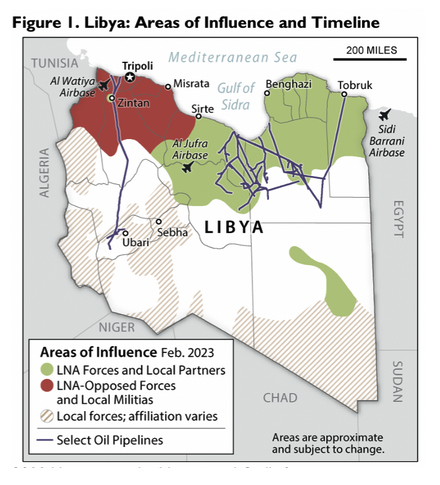
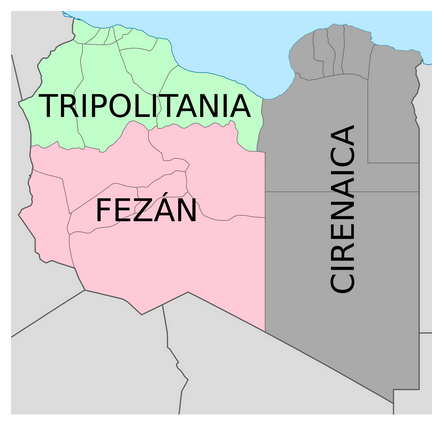
We can predict where future lines of conflict will emerge basing ourselves on this knowledge, which in turn relies on Syrian geography:
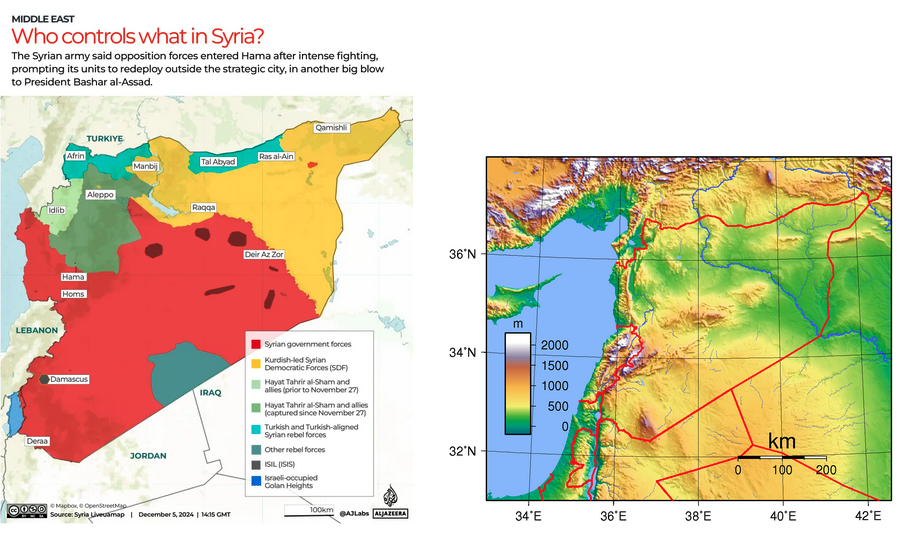
As the map shows, there are three areas of power projection in Syria: Damascus and Aleppo, and Deiz ez-Zor in the east. Aleppo can extend its influence over the plains of northwestern Syria until the banks of the Euphrates — a hole rapidly filled by the HTS advance over the last two weeks. Damascus is relatively protected by more complex terrain but relies on the city of Hama and Homs for communications with the port cities of Tartous and Lattakia.
The next relevant map is the ethnic makeup of Syria:
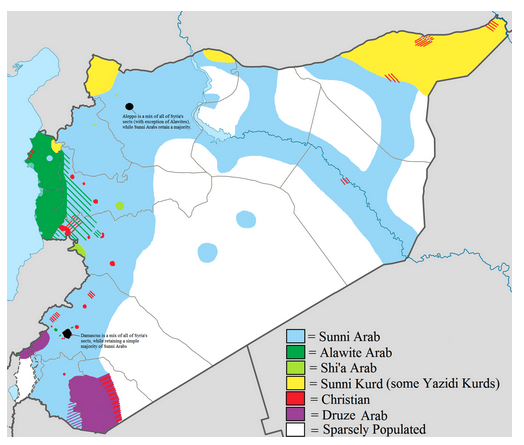 As we can see on the map, Sunni Arabs comprise the overwhelming majority in most of Syria with the notable exceptions of its Mediterranean coastline, its Kurdish north-east and the partially Druze south. That’s precisely why the Alawites rule over Syria. It’s the typical European colonialist divide-and-conquer strategy: empower the weak minority to government to ensure a weak state that’s open to foreign influence.
Humans are terrible at making predictions — and we at The Blind Spot are no different. But if I were forced to predict anything, it would be that the Damascene regime of Assad will likely collapse and different power groups may consolidate around ethnic/religious lines in various proto-city-states. Just like in Lebanon, the civil war has created such an overflow of locally powerful armed militants that this will remain true even if a competent and internationally recognizable authority takes over central governance in Damascus. The Kurdish-led Syrian Democratic Forces coalition, backed by the United States, are likely to continue holding sway east of the Euphrates River (along with its oil fields).
Some Russian or Iran-backed forces may remain around the port cities of Lattakia and Tartous, regardless of which the region would tend towards becoming a de-facto Shia ‘Alawistan’. And I don’t see the Turkish-backed Syrian National Army in the country’s north going anywhere — whether the new Syrian regime is pro-Turkish or not. Druze militias, on the other hand, are likely to maintain their traditionally neutral status and vouch for whatever competent centralized authority emerges as long as their minority religious rights are guaranteed.
For now, it is the HTS jihadist group, under its charismatic leader Al-Jolani, that is positioning itself as the potential ruler of Syria. Whether this jihadist militia’s military and marketing competence will be able to overrule its al-Qaeda tied past to attain international recognition and backing is questionable. Any government composed without his forces’ representation, however, is certain to face immediate difficulties. US-backed rebels are now rushing north from the Jordanian border crossing of Al-Tanf to seemingly block the HTS advance towards the capital, while the moderate rebels in the Darayya neighborhood of Damascus seem to be preparing to storm the capital from the inside.
It may be a matter of who gets to the presidential palace first. But there’s one thing that is certain — neither of the major powers within Syria that hold the upper hand, the United States and Turkey, seem particularly interested in a strong and independent Syria. Rather, we’re probably set to see Syria’s continued decline into distinct secular and urban factions, just like in Lebanon, Iraq or Libya.
| ZEE GERMANZ |
HELL FREEZES OVER IN FRANKFURT: German central bank president Joachim Nagel urged Berlin to relax rules to address defense and infrastructure shortfalls, the FT reported. To do so it would have to remove its famous debt brake, aka the Schuldenbremse amendment, which bans Berlin from borrowing more than 0.35 per cent of GDP in any fiscal year.
As POLITICO reported in November, the provision was written into the constitution by Angela Merkel in 2009 to hold the line against unsustainable government borrowing. The fiscal straitjacket has already helped to bring down Chancellor Olaf Scholz’s ruling coalition. It collapsed earlier last month largely because Finance Minister Christian Lindner’s proposals to keep the deficit within limits all proved unacceptable to his coalition partners, the Social Democratic Party (SPD) and the Greens. After Scholz fired Lindner, his fiscally conservative Free Democratic Party (FDP) left the government, paving the way for an election in February, seven months earlier than scheduled.
200,000 GERMANS MAY LOSE THEIR JOBS: An investigation by Prognos, a European economic research centre, has estimated that electric vehicles (EVs) may reduce the number of workers in the German auto sector by almost 200,000 in 2035 in comparison to 2019 levels. It’s not just due to Chinese competition: electrical vehicles also require fewer components and, as such, less German expertise.
DARIO’s COMMENT: The 2020s seem poised to be Germany’s decennium horribilis, with US-imposed Russian sanctions cutting off their low-cost energy supplies and Chinese EV manufacturers eating German automakers’ lunch. But we learn nothing by simply blaming the Germans for incompetent miscalculation.
Germany’s fateful decision to move to renewables, electrical vehicles and err, Russian gas, was instead what economic elites under Merkel judged to be an excellent strategy to continue to dominate global manufacturing. So, what exactly went wrong?
Two things doomed this German strategy. The first was a genuine miscalculation: the mistaken belief they wouldn’t be affected by the long-running price war affecting the car manufacturing industry, which upset their EV push. The second was more understandable: overestimating Russian military might and underestimating how deep pro-American optimism ran in a Ukraine under siege.
“The natural state of a car company is dead” wrote Elon Musk this February. Today, industry competitiveness means major car manufacturers increasingly make their margins out of servicing failing components on their existing fleets, rather than by selling new cars. This has encouraged automakers to cut corners wherever they can, whereby even German cars are sold with an increasing number of faulty components, particularly electrical failures, which can only be serviced by manufacturer-partnered service centers in order to remain competitive and profitable.
Think of it a bit like that McDonald’s faulty ice cream machine scam, but, you know, with cars. The objective is not to sell a good product. It’s to be able to milk continuous fees from fixing and replacing broken parts.
It’s not that Germans didn’t know that EV technology requires fewer moving parts and manufacturing precision. Most, after all, had significant supply chains in China and good visibility of the market. We suspect that while Germany assumed Chinese EV competitors would abound they were hoping they would not be able to compete with the superior brand equity of German cars. Then there were the regulatory hopes.
While German automakers lobbied EU policymakers to ensure any transition to electric vehicles remained gradual and flexible, they emphasized the need to maintain technology neutrality. So, even while companies like Volkswagen moved aggressively into electrification, the industry broadly hoped it could out-innovate the EV trend with the inclusion of e-fuels as a legitimate compliance pathway under future emissions standards. A breakthrough here would be able to preserve the option to continue producing internal combustion engine (ICE) vehicles while meeting climate goals.
But the combined effects of quality deterioration and Chinese EV competition proved too much. Car influencers today brag on TikTok that Chinese EV manufacturers have even discovered the trick to imitating German ‘quality’ — notably upholstering interiors in leather.
Germany’s second mistake wasn’t even Germany’s — rather, it was a combination of Russian overconfidence in their military ability and Ukrainian overconfidence in their American backers.
As we explained in our piece ‘Germany never slept, but it is losing’, German power projection was formed within the context of Germany’s formation in 1871: building power blocs with lesser countries against the greater empires of France and Britain. This gave rise to its famous Ostpolitik, where German industry and elites sought secret alliances with Russia against its Western geopolitical rivals.
Germany’s renewables drive was made with this strategy in mind. It sought a dual purpose: shutting down its nuclear plants and emphasizing renewables meant Germany could lead the way in developing efficient renewable energy, relying on cheap Russian gas to sustain itself in the meantime. By tying Russian fortunes to German markets, Germany also gained significant leverage over Russian politics.
We suspect that despite increasing tensions in Ukraine — in which Germany played no small part — German elites knew that an all-out war was not in Putin’s best interests. Even if there was one, common knowledge assumed Russia’s military would trounce the Ukrainians just like they had in 2014. They were partially right: all-out war was not what Putin had in mind. His Special Military Operation was designed as a special operations coup de main, with Russian formations rapidly deploying to strategic Ukrainian locations. As we now know, Russian (and German) confidence in its military might proved ill-placed. The war endures to this day.
The failure of this SMO’s original objectives, however, was not as much in the field of battle but closer to home: Boris Johnson successfully walked Zelensky away from the negotiating table that the Russian SMO, however badly deployed it was, had brought the Ukrainians to. This happened because, despite what experts like John Mearsheimer had long argued — that NATO wouldn’t really move a finger for Ukraine, despite the posturing — Ukrainian leaders chose to trust an IOU from the United States more than simple battlefield arithmetic.
It remains to be seen if, or how, the German state may be able to reclaim its status as a manufacturing hub, and whether it will be able to continue its independent and secretive geopolitical streak. Rumors that the Trump Administration may be interested in letting an American investor purchase the bankrupt Nord Stream pipelines, thus ensuring German power and German-Russian relations are forever ensnared within an American grip, suggest this could be the end of an independent Germany. But only time, and the re-election of a CDU/CSU government, will tell.
| POLITICS, POLITICS, POLITICS |
MACRON LOOKING AT SOUTH KOREA RIGHT NOW:
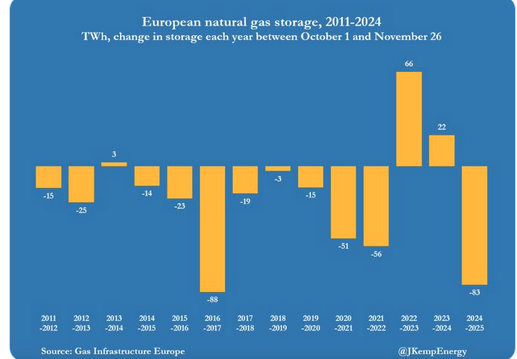
EUROPEAN ENERGY RESERVES: Former Reuters commodity guru John Kemp warned that “Europe’s gas inventories have depleted at the fastest rate for eight years, as the region has experienced repeated bouts of colder-than-normal temperatures and low wind speeds since the start of the winter heating season.”
He added: “Combined inventories in underground storage across the European Union and the United Kingdom dropped by 83 terawatt-hours (TWh) between the official start of winter on October 1 and November 26. Stocks have fallen more than four times faster than the average over the last ten years, and by the most for any year since 2016, according to data from operators compiled by Gas Infrastructure Europe (GIE).”
| BEST OF BLUESKY |
ECHO CHAMBER OF HORRORS: The BlueSky community rallied to the defense of Joe Biden’s reputation after he announced he would be issuing a pardon to Hunter Biden from 2014 onwards. Having thrown so many stones from glass houses regarding disinformation, they should really have seen this coming:
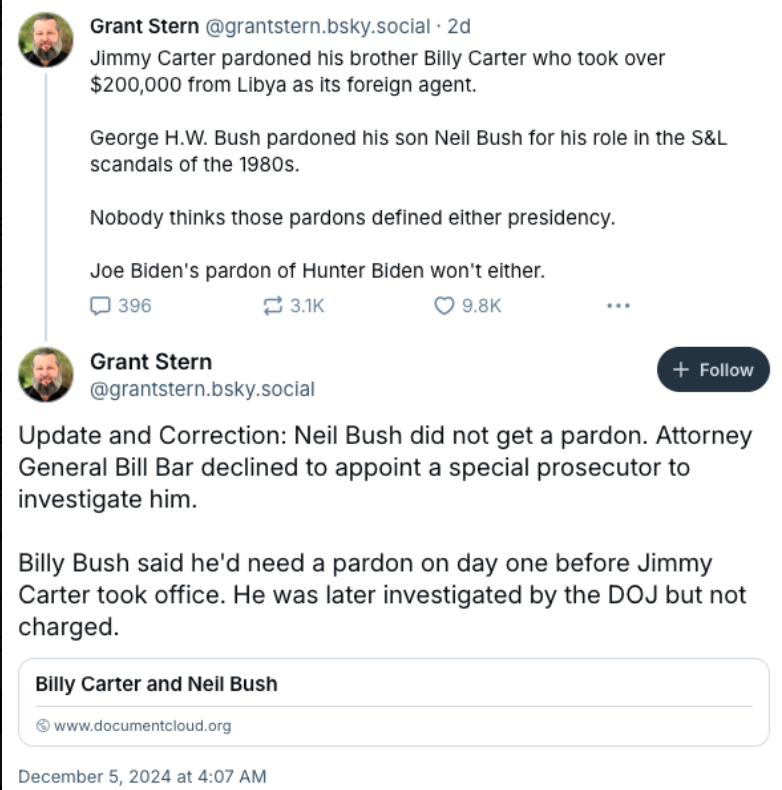
The fake news that George Bush had pardoned his son Neil Bush traveled far and wide before it was finally corrected.
| X-RATED |
CALLING OUT AIRLINE GOUGING: At the Blind Spot we bridge the divide between X and Bluesky (where they’re still trying to make the term skeet happen). This week, among a proliferation of UAP videos, this clip from U.S. senator Josh Hawley went viral. It called out how airlines like Spirit and Frontier paid their gate agents $26 million to harass customers whose bags were “too big”. “Keep in mind that they’re harassing customers who’ve already paid. It’s corporate greed in action,” Hawley quipped.
NIXON WAS SET UP: An old clip of Tucker Carlson explaining to Joe Rogan that Richard Nixon was set up by the deep state also went viral.
| WHAT WE’RE PROCESSING |
— The wonderful Richard Koo made a splash with his latest on Trump, tariffs, and exchange rates. TLDR: Persistent trade deficits combined with a strong dollar have created more “losers” than “winners” in the U.S., challenging the conventional wisdom that the benefits of free trade always outweigh the costs, and ultimately reshaping political alliances and policy priorities.
— France’s Mediapart did the dirty on the OCCRP by exposing its substantial U.S. government funding and tendency to censor non-agenda pieces.
— The British government has a new power to block any acquisition it wants, thanks to a law shaped by economist Jason Furman that targets American tech companies.
— David Sacks of PayPal and SVB bailout fame is Trump’s new AI and crypto czar.
— Speculation mounted that Biden could give Fauci a pardon, while RFK Jr sat in on meetings between pharma execs and Trump. Awkward!
— The ECB finally figured out that RTGS systems have introduced major intraday liquidity risk.
— Why might the U.S. let an American investor purchase the bankrupt Nord Stream project?
— Nominations for The Blind Spot’s Disinfo Awards are open, you can submit your entries here.
That’s all for this week.
Glory to Spain,
Dario
