
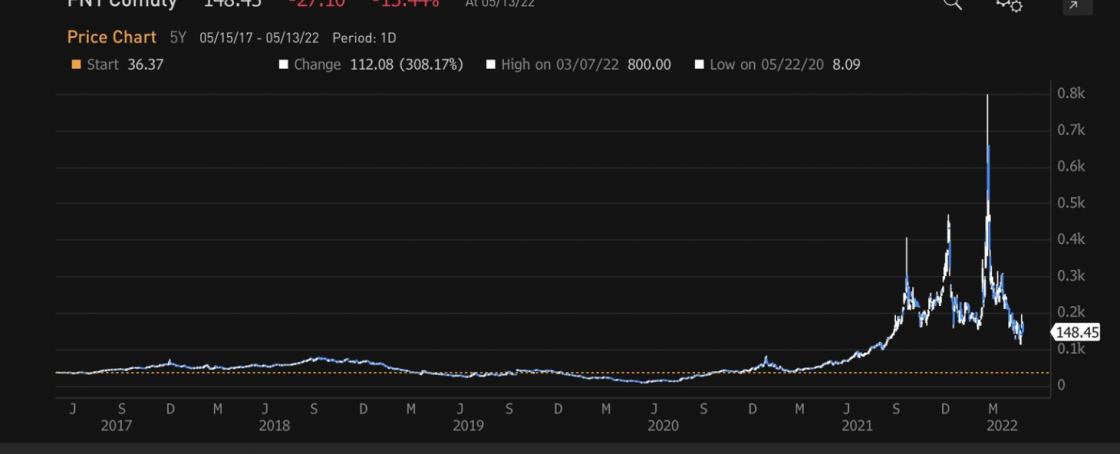
There’s an important story in the FT about the drop in UK gas prices resulting from massive LNG imports over the past couple of months.
The authors note the additional volumes have come from the US, Qatar and Algeria.
The story also carries this eyebrow raising chart:
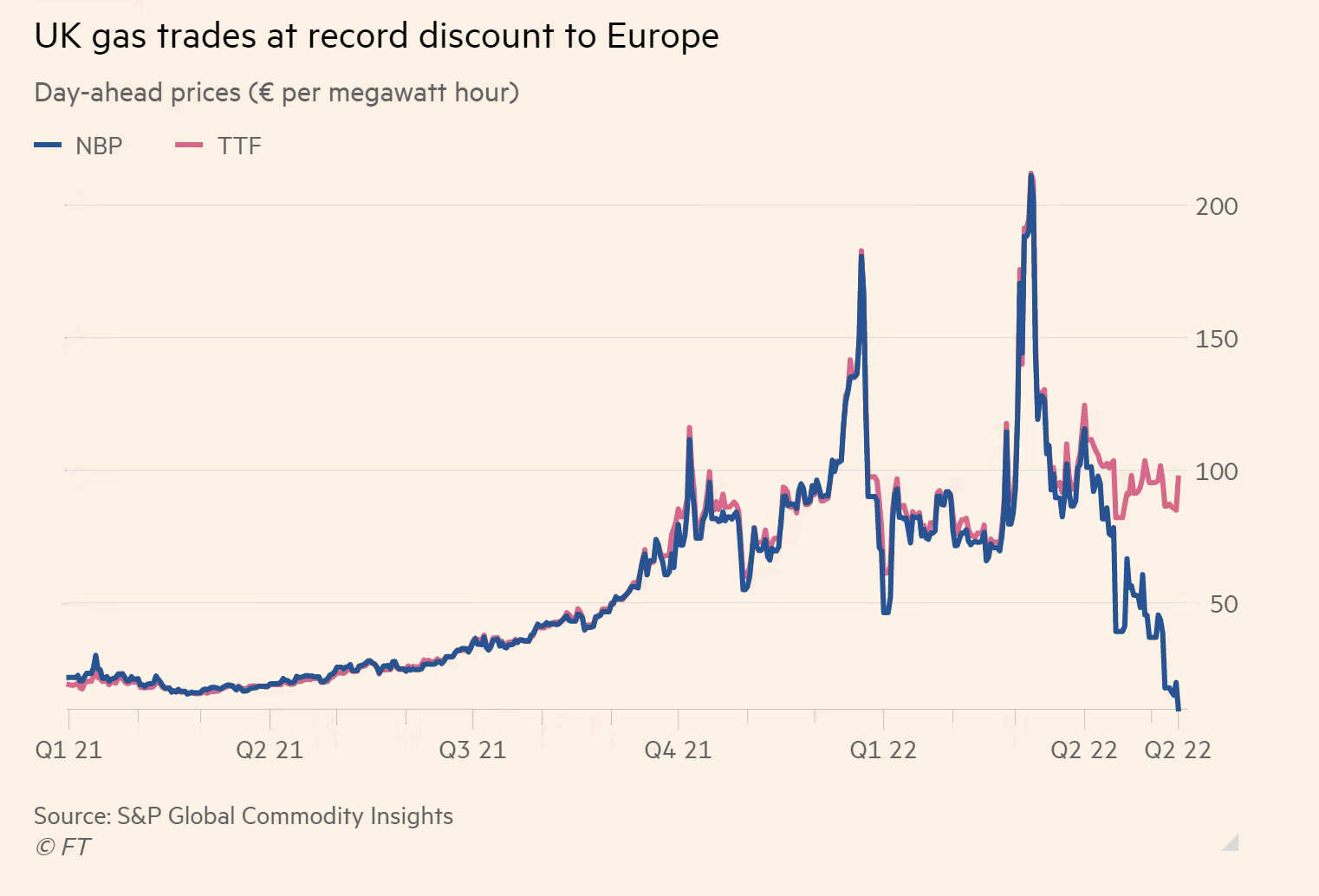
As a result of the above, the story asserts consumers could be facing far lower energy costs than expected by winter. This is great news for the cost of living crisis.
But it is also tempting to interpret this as changing everything vis-a-vis the West’s potential leverage over Putin.
I, however, would caution that it’s probably too early to make such an assumption. There are a number caveats that haven’t been properly explained.
Much of the price decline is the direct result of the US strategically dumping LNG into Europe for politically motivated reasons. European prices will have pulled a lot of that gas to Europe naturally anyway, but the political dimension to the flow is evocative of the US acting as an LNG lender of last resort for Europe.
There are big constraints in this strategy. The biggest is that the UK’s storage facilities are simply not what they used to be five years ago. We simply don’t have the capacity to accumulate buffer stocks the way we used to because of the closure of our primary storage facility, Rough, in 2017. LNG terminals, meanwhile, are limited by their own capacity issues, and it would take years to build new import facilities.
Warm spring weather is good news, and has helped a lot. But it is not something that should be relied on to base long-term policy around.
Whatever the situation is today, natgas prices remain incredibly inelastic. The price is entirely responsive to the marginal deficit of surplus on any given day. Today’s glut can turn into tomorrow’s shortage very quickly. All it takes to upset the balance is for some significant demand to emerge in another part of the world. Unless the US is prepared to prioritise European flows irrespective of market conditions elsewhere, Europe’s security of supply is no better off.
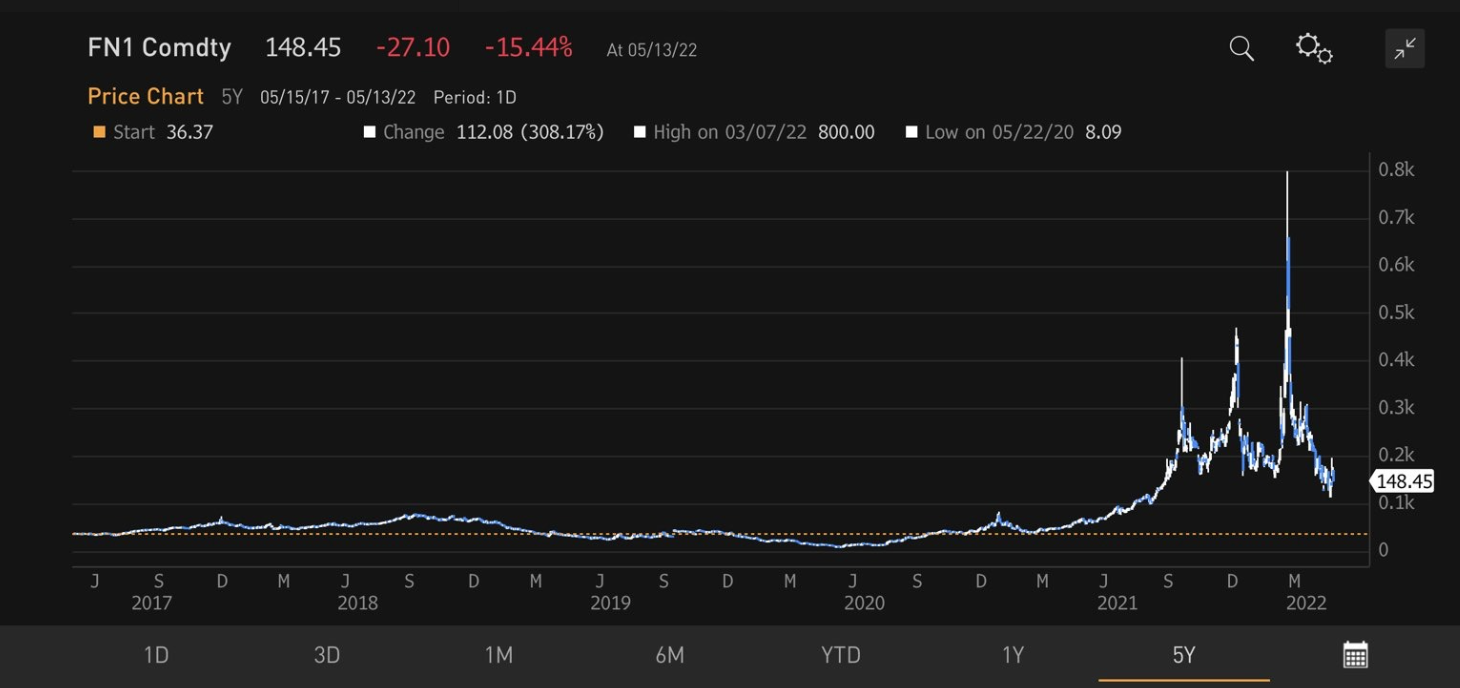
As it stands NBP futures are still pricing at historic highs:
And then we have to consider the impact on US security of supply.
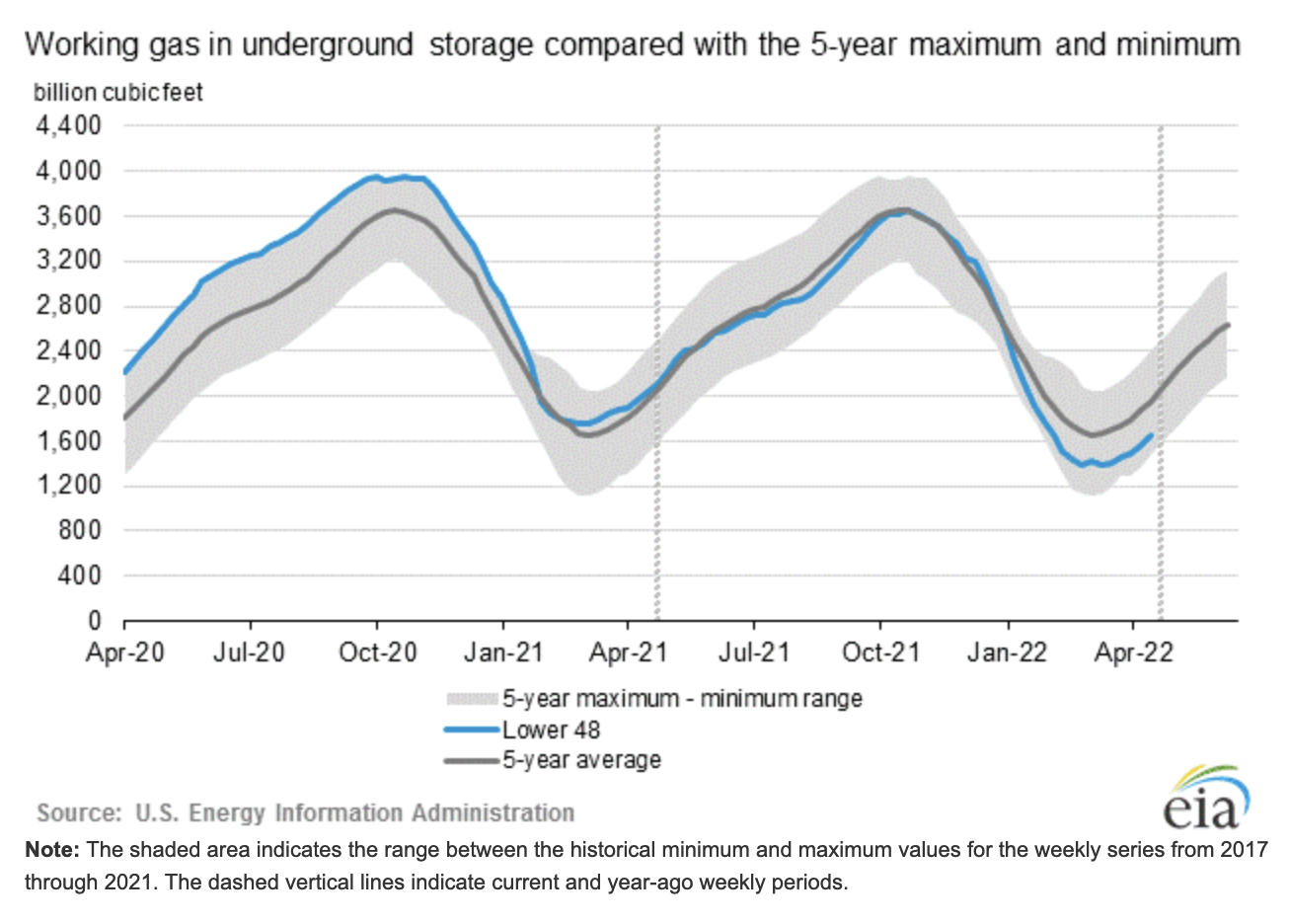
The storage situation there is now trending at five-year lows according to the EIA:
US Henry Hub natgas prices are rising as a result:
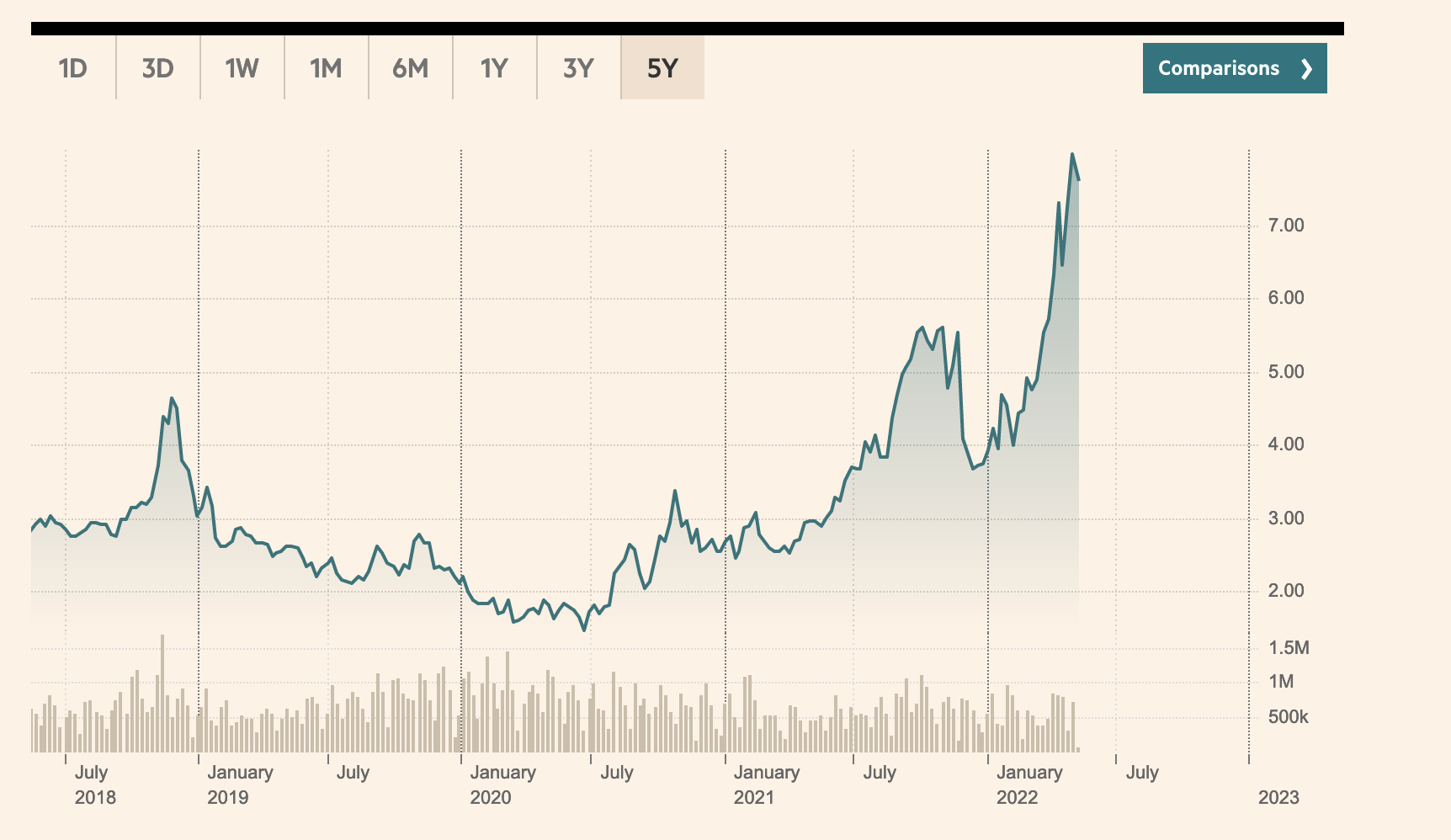
Now it’s true that the US is far better positioned to ramp up domestic production to compensate for that tightness. And rig counts are going up in response. So this could just be a temporary anomaly.
But there is still a cost in being the LNG seller of last resort to the rest of the world if the investing environment domestically is hostile to such development. How much political appetite is there really in the US for continued investment in oil and gas?
In the UK, Centrica’s CEO Chris O’Shea has warned quite rightly that applying large windfall taxes to producers is a lot like “burn[ing] the furniture to stay warm”.
The only way this situation becomes sustainable is if the proceeds from high gas prices are reinvested in further oil and gas development rather than be pinched by the public purse. That requires a shift in longer-term energy strategy.

One Response
“In the UK, Centrica’s CEO Chris O’Shea has warned quite rightly that applying large windfall taxes to producers is a lot like “burn[ing] the furniture to stay warm”.
The only way this situation becomes sustainable is if the proceeds from high gas prices are reinvested in further oil and gas development rather than be pinched by the public purse. That requires a shift in longer-term energy strategy.”
Exactly correct. Punishing oil and gas companies for making big profits in one years is utter moralistic stupidity. But will the companies re-invest without government approval? The anti-carbon movement will cause all of us to suffer, except the rich