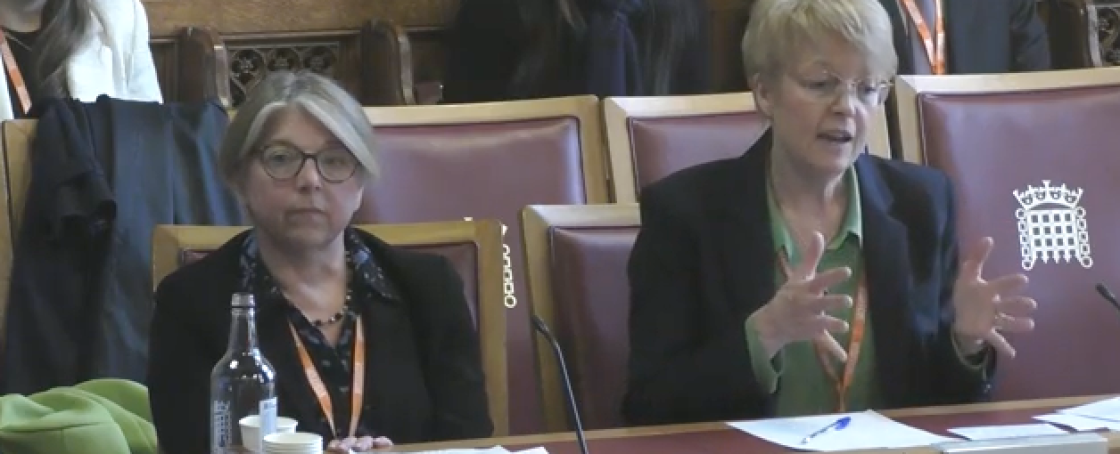
The Bank of England is willing to adjust its proposed rules for systemic stablecoins after listening to industry concerns, Deputy Governor for Financial Stability Sarah Breeden told lawmakers on Wednesday, as the central bank continues consulting on the design of its regime.
Breeden was speaking alongside Sasha Mills, Executive Director for Financial Market Infrastructure at the Bank of England, before the UK Parliament’s Financial Services Regulation Committee, where the two officials were questioned on the Bank’s proposed framework for sterling-denominated stablecoins used for real-world payments. The Bank is currently reviewing feedback from industry and experimenting with the technology through its internal distributed ledger work and policy sandbox, with draft rules expected around mid-year and a final regime targeted by the end of the year.
In her testimony, Breeden stressed that the Bank had already softened its original approach after pushback from the sector.
“The fact that we had originally proposed 100 percent backing assets unremunerated at the Bank of England and have shifted to 60/40 shows that we do listen, try to understand what the challenges are, and try to find creative ways of ensuring that we are able to deliver on our financial stability objective and support viable business models,” she said.
Under the current proposal, stablecoin issuers whose tokens become widely used in payments would be required to hold 40 percent of their reserves on deposit at the Bank of England, with the remaining 60 percent invested in short-term UK government debt. The central bank argues the structure ensures that coins remain redeemable during periods of stress.
“These coins might be called stablecoins, but the ones we are talking about are being used as money, and we need to ensure that they are able to function as money,” Breeden told the committee.
She said the size of the central-bank reserve requirement had been calibrated around the liquidity pressures stablecoin issuers might face in a crisis.
“The 40 percent that we have proposed for the money on deposit at the Bank of England has been sized with regard to actual experience of same-day liquidity risks that the coins may face,” she said, adding that officials would revisit the modelling if necessary. “What we will do is go back and check to see whether we have been overly conservative in those assessments.”
Breeden also sought to place the proposal in an international context, noting that other jurisdictions impose comparable or stricter requirements.
“In the European regime they require 60 percent to be held on deposit… and in the U.S. the proposed rules have 10 percent daily liquidity and 30 percent weekly liquidity, so our numbers are not a million miles away from where other regulators are,” she said.
Lawmakers question the economics
Part of the hearing focused on a concern raised by committee members that requiring stablecoin issuers to keep large balances at the central bank would effectively give the Bank of England access to interest-free deposits.
One lawmaker pointedly asked what the Bank does with those funds.
“You’re doing this because you think this is an important new development in the financial system,” the committee member said. “I can also see there’s an attraction to the Bank that you get these interest-free deposits. What I don’t know… is what do you do with that money?”
Breeden rejected the suggestion that the rule was designed as a revenue source for the Bank, saying the treatment of any income would be the same as for other central-bank operations.
“What happens in terms of any money that we make on the back of it is the same as any other money that the Bank of England makes: half of it goes to the Treasury as dividend, half of it is usually accreted as capital,” she said.
When a committee member suggested the funds effectively “disappear” from the financial system, Breeden explained that the flows simply reflect the Bank’s balance sheet.
“The Bank of England will have some deposits on which it is not paying interest and will have assets on the other side of the balance sheet — that goes to the public sector,” she said. For stablecoin issuers, the business model remains intact: “it will have assets on which it is earning interest and coin holders to whom it is not paying interest, so it too earns some money.”
The structure means that part of the interest margin created by stablecoin reserves would effectively flow to the public sector, rather than remaining entirely with private issuers.
Nonetheless, the BoE’s insistence on a certain percentage of unremunerated holdings draws on policies used elsewhere in digital payments. In China, the People’s Bank of China has required payment platforms such as Alipay and WeChat Pay to keep customer balances in central-bank reserve accounts since 2019, effectively transferring the interest-rate arbitrage from private operators to the public sector.
Breeden suggested the Bank’s proposal was not unusually strict by international standards, pointing out that the European Central Bank’s regime may be even tougher because it requires a large share of stablecoin reserves to be held in bank deposits rather than government debt.
A hint of geopolitical use cases
Breeden also floated a potentially strategic role for sterling stablecoins in cross-border trade.
Responding to a suggestion that US stablecoins are expanding global access to the dollar system as part of a strategic dollarisation policy, she said the Bank’s framework could support international payments using sterling tokens.
“Our focus on the systemic regime is to ensure that these future use cases — real-world payments, which includes cross-border payments — so it could include, I don’t know, a small trading entity here in the UK dealing with a supplier in China,” Breeden said. “The supplier in China will be able to hold in a wallet sterling stablecoins, but it will be part of the AML/KYC regime.”
If widely adopted, such arrangements could allow foreign suppliers to hold sterling outside traditional banking channels. In theory, that could complicate the enforcement of capital controls by authorities such as the People’s Bank of China, especially if balances were held in digital wallets rather than domestic bank accounts.
Toward a “multi-money” system
The broader goal of the Bank’s regime, Breeden said, is to ensure different types of digital and traditional money can operate within the same financial infrastructure.
“What I want to ensure is that central bank money, traditional bank deposits, tokenised commercial bank deposits and tokenised non-bank money in the form of stablecoins can all coexist and be frictionlessly interoperable,” she told lawmakers.
With consultation still underway and draft rules due later this year, the final shape of the UK’s stablecoin framework remains open. But Breeden’s testimony suggested the Bank is prepared to refine its approach — as long as the end result preserves what she repeatedly described as the central objective: ensuring that any new form of digital money remains stable enough to function as money in the real economy.