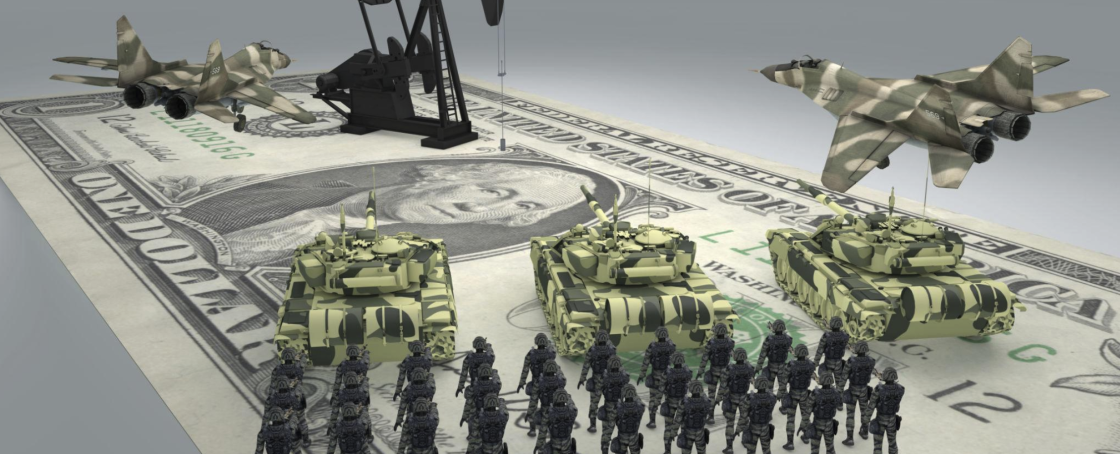
One-sided takes on the dollar are overwhelming social media. After running into the fourth or fifth prediction about the imminent death of the dollar one day last week, I was forced to cut into my self-prescribed Easter break to try and present the bigger picture on X.
You can see the related chain of impulsive posts here and here.
My view is not that things are not changing. They are. But things are far more nuanced than people appreciate about the dollar. Furthermore, I don’t say any of this because I am some sort of ideologue or USD maxi. I say it because I try to be a realist. And the reality is that none of these changes are as bad for the USA as they are for the rest of the world.
A French publication called Atlantico later got in touch asking me for a broader interview about these thoughts. They kindly shared the English transcript before publishing the interview in French on their website. I thought I would share the English version with readers. It is below.
Atlantico : Since the weekend, we have seen a new wave of articles proclaiming the “death of the petrodollar.” What is your initial reaction? Do you find this narrative original or, on the contrary, very belated?
Izabella Kaminska : There has indeed been a deluge of articles proclaiming the death of the petrodollar. However, my reaction is that this narrative is about eleven years too late. The decline of the petrodollar dates back to 2014–2015, when OPEC lost a significant portion of its leverage due to American energy independence. The key turning point occurred many years ago, and since then we have observed a gradual unwinding of the petrodollar system, culminating in the current fiscal situation in Saudi Arabia, which is quite weak. There are also broader indicators suggesting a relative weakening of the Gulf states compared with their position ten or eleven years ago.
– You explain that the real turning point dates back to 2015. But if the recycling of petrodollars has indeed decreased, what, in your opinion, has taken its place in global dollar flows? Shouldn’t we be talking about “sweat dollars” today?
Petrodollars were only one channel through which dollars entered the international monetary system. Another major channel through which dollars circulated globally was through payments to mercantilist sovereigns. I refer to this as “sweat dollars.” The idea is that certain sovereign states compete in international markets not through innovation or quality, but by leveraging cheap labor in a way that allows them to extract value from more developed economies.
This arrangement has effectively driven the accumulation of large dollar reserves in countries such as China, which were then deployed in Belt and Road countries as China sought to diversify its position and move up the value chain. This process is closely linked to currency manipulation and the financial repression of domestic populations.
As a result, a continuous flow of dollars leaves the United States and enters these economies, where it must be recycled. Within a mercantilist framework, this recycling typically takes the form of reinvestment into US dollar-denominated debt, rather than domestic consumption or private-sector investment. This model has functioned as a form of effective subsidy. I describe it as a subsidy, but it is essentially a mechanism for extracting economic rent from the United States. As long as US Treasuries offer positive yields, accumulating them in large quantities to weaken one’s own currency effectively amounts to extracting rent from US taxpayers.
– Ultimately, beyond petrodollars or sweat dollars, what truly explains the dollar’s persistence as the dominant currency? Is it ultimately more about who enforces property rights worldwide, and the fact that the United States is transforming its “exorbitant privilege” into a service billed at its true value?
I think the original arrangement is fundamentally about the certainty of property rights. Very few powers, after the Second World War, were able to defend property rights in international capital markets in the way the United States has. The British were previously the dominant power, and the French to a certain extent as well, but this shifted after the war due to the overwhelming military dominance of the United States.
In short, during the struggle for supremacy between the Soviet Union and the United States, the international capital market system naturally gravitated toward the dollar. The Soviet Union was never in a position to guarantee property rights, as this was fundamentally incompatible with its system. As a result, there were very few viable alternatives.
In the case of Saudi Arabia, where the petrodollar system originates, accepting dollars implies trust that property rights will be upheld beyond domestic jurisdiction. It is important to emphasize that petrodollars were not solely reinvested in US Treasuries or government debt. A significant portion of Saudi revenues was also invested in the private sector, in Europe, in equities, and across a wide range of asset classes. The purchase of US Treasuries was only one component of a broader arrangement. This system ultimately relies on a guarantor capable of defending the property rights associated with these investments.
It is therefore in the interest of such countries to contribute, at least in part, to financing the US government so that its military capabilities can be maintained. This military power underpins the broader system that protects property rights, ensuring the continued effectiveness of US defense structures.
However, under this arrangement, and given the leverage that Saudi Arabia derived from its natural resources, the United States was effectively paying a form of rent in exchange for access to those resources. While the system contributed to funding the US military, it was not without cost. The United States was effectively underwriting the system.
What has changed is that the United States no longer needs to incur the same costs to secure the resources required to maintain its military advantage. It is now in a position to charge third parties a form of rent, creating what can be described as a market for defense. This shift reflects the disappearance of the mechanisms that previously gave other countries leverage over the United States, notably in the domains of energy and, more recently, capital flows that supported the Chinese mercantilist model.
In this context, a market for security has effectively emerged within the international capital system, where different countries must choose their preferred provider.
This can be described in various ways: “exorbitant privilege as a service,” “security as a service,” or other formulations. What matters is that such a market now exists. The advantage of aligning with the United States, rather than with China, which is also becoming active in this space, lies in the legal and institutional framework underpinning property rights. The United States offers a more reliable system in this regard, whereas China’s track record remains less robust.
For international investors, this makes partnership with the United States more attractive than with China. Europe, for its part, does not face a problem of property rights but rather a lack of sufficient security capabilities. Should Europe significantly strengthen its military capacity, the balance could shift. At present, however, this is not the case.
As a result, the market is primarily dominated by the United States and China. Russia plays a more limited role, despite being a provider of security, due to its less reliable record in respecting property rights.
Ultimately, the enduring appeal of the dollar for investors lies in its legal jurisdiction, its commitment to free markets, and its institutional framework designed to preserve and enforce property rights.
– If we follow your reasoning, this means that the dollar system is undergoing a bifurcation. What concrete consequences do you foresee for the United States – its growth and that of its true allies on the one hand, and for the rest of the world on the other?
The main consequence, in my view, is the loss of what has historically been considered a risk-free interest rate. This is a significant development, as it makes the system far more transactional, increases the cost of trade, and reduces the overall level of trust in the global economy. It also forces more countries to strengthen their own defenses and pursue strategic autonomy.
While strategic autonomy may be beneficial in terms of preserving cultural identity or a particular way of life, it is not economically efficient. Globalization was widely seen as a path to global prosperity because economies of scale generate wealth. If countries adopt more defensive structures and rely less on a common risk-free asset to settle trade, and instead must price each bilateral trade relationship according to default risk—without a clear underwriter or insurer—this leads to a costly and complex economic transition. Such a shift is likely to weigh on global growth, representing a step backward rather than forward.
Technological progress may partially offset this loss of global scale. However, it also introduces new forms of dependency. For example, dependence may shift toward companies that provide digital infrastructure or control data. In such a system, power increasingly resides with those who own and control data, rather than with nation-states. This dynamic transfers influence to a new class of technology-driven private actors, including large corporations and individuals with significant control over digital ecosystems. As a result, different trade-offs emerge.
– Many people still view the dollar as a symbol of an America living beyond its means. You seem to suggest that this was never truly the case. Could you explain the underlying logic of the dollar system since Bretton Woods, and why that logic is now undergoing a fundamental transformation?
Since Bretton Woods, and in the immediate aftermath of the Second World War, the United States did not begin as a deficit country. On the contrary, it initially ran substantial surpluses, which were reinvested in Europe through mechanisms such as the Marshall Plan, contributing to the continent’s reconstruction and recapitalization.
Over time, however, as the United States assumed the role of the dominant global power and extended its influence, the costs associated with maintaining this system increased significantly. These pressures eventually led the United States into a deficit position. By the 1970s, this culminated in the Nixon Shock and the suspension of the Bretton Woods system. At that point, the United States could no longer sustain the gold standard, as it was unable to balance the system in a way that preserved convertibility between dollars and gold.
This marked a structural break. From that moment onward, the United States effectively operated within what has sometimes been described as a “non-system” or a rules-based international order, in which market forces—rather than a strict gold anchor or a single national constraint—play the central role in maintaining balance within the global economy.
This shift coincided with a move toward a more neoliberal mindset, characterized by a general rejection of capital controls and protectionist measures. The prevailing idea was that free markets would enable economies of scale, efficiency, and competition, thereby driving progress, making protectionism unnecessary.
This, however, reflects a major misunderstanding of the current era. In line with the work of Michael Pettis, one can argue that countries supporting a highly open, free-market system inevitably had to absorb the policies of countries maintaining tighter, more authoritarian control over their markets and capital flows.
The key point is that, while it is often claimed that US deficits resulted from Americans living beyond their means, an alternative interpretation is that the United States had little choice but to respond to the industrial policies imposed on global markets by command economies such as China.
It is always the open economy that absorbs the policies of the closed economy. For this reason, it is misleading to argue that the United States has been living beyond its means. This phenomenon is not fundamentally about individual behavior. Even today, many Europeans would acknowledge that Americans are among the hardest-working populations in the world: they have fewer holidays and work longer hours. Compared to Europe, where welfare systems are more extensive, this perspective reinforces the idea that such a characterization is inaccurate.
A more appropriate interpretation is that absorbing China’s industrial policy required, by the logic of balance-of-payments dynamics, a corresponding response. This meant the United States had to develop its own form of industrial policy. That policy consisted primarily of exporting what China was not willing to export: financial goods, digital goods, and services.
From this perspective, again aligned with Michael Pettis’s analysis, China and other state-directed or industrial-policy-driven economies effectively reshaped the global system. By imposing their model on international markets, they shifted the balance, pushing not only the United States but the broader Western economies toward specialization in financial services, digital industries, and services more generally.
This outcome follows directly from balance-of-payments mechanisms. When a country exports goods but does not recycle the resulting income into domestic consumption—choosing instead to suppress consumption—it must reinvest those surpluses abroad. In doing so, it generates demand for financial assets. The instruments that met this demand included US Treasuries, as well as a wide range of private financial assets and digital goods and services.
– You criticized the widespread idea of a collapse of the petrodollar system. Why do you think this thesis appeals to so many investors and economic media today, despite what you consider to be its analytical weaknesses?
I think that currently the investment space is largely dominated by noise from a commentariat that circulates information repackaged in short form and without broader analysis. This leads to reactionary positioning in markets by what is historically known as “dumb money.” By contrast, “smart money,” which is less reactionary and more capable of reflection and neutral observation of underlying dynamics, tends to reach more nuanced conclusions.
Ultimately, much of the current hysteria around the dollar is driven by a form of propaganda through social media. The repetitive nature of messaging crowds out more reflective analysis and thought. This is, in my view, a structural phenomenon: there is less discourse and less room for alternative perspectives to emerge, due to the way the media system is currently configured.
– Faced with the argument that recent events, such as tensions around the Strait of Hormuz and the war in Iran, are weakening the petrodollar loop, why do you believe this does not fundamentally challenge the dominance of the dollar?
There are several factors that contribute to the supremacy of the dollar. One of them, historically, has been the petrodollar dimension, which was linked to America’s energy deficit. This created a recycling of dollars through international capital markets via the Middle East. It was an important source of offshore dollars, helping to establish a dollar standard for oil trading. The reinvestment of these dollars also fostered a general preference among many foreign sovereigns for holding dollar-denominated reserves.
However, this was not the only factor driving dollar dominance. Others include the broader emergence of the eurodollar market and, more recently, America’s relationship with China and Belt and Road countries, particularly after 2014. These factors remain in play. As mentioned previously, the petrodollar dimension effectively declined around 2014–2015, when OPEC lost much of its leverage over the United States due to increased American energy independence. This shift has been underway for a long time.
Therefore, current analyses focusing on the “end of the petrodollar” are somewhat misleading. It is not so much an end as a transformation. One could argue that there is now competition centered around other forms of dollar usage, such as the eurodollar or industrial and financial dollar systems.
The term “petrodollar” itself is somewhat outdated, as these dynamics have been evolving for years. This is evident in Saudi Arabia’s economic repositioning and restructuring. Similarly, the United Arab Emirates were among the first sovereign actors to adapt to a different economic model.
It is therefore somewhat late to frame the discussion solely in terms of the petrodollar. More broadly, what underpins the dollar’s dominance in international trade and finance extends well beyond the recycling mechanisms associated with petrodollar economies.
– You refer to a “real revolution” born of the Trump era. What, in your opinion, is the nature of this transformation, and why is it more structuring than the traditional dynamics of the international monetary system?
The global system is currently experiencing a paradigm shift. This shift is driven as much by innovation, technology, and artificial intelligence as by new forms of energy, including potentially abundant energy sources. Although these are not fully realized yet, the system is evolving in how energy is generated and distributed—particularly as electricity grids are increasingly dependent on renewables or new nuclear technologies.
There is a significant transformation occurring, with micro-reactors and nuclear developments emerging in markets that previously had no nuclear infrastructure. This shift will likely undermine the leverage of petrodollar states, which have long relied on rents extracted from countries dependent on their oil. These states must rapidly reconsider and reconfigure their economic models.
The geopolitical volatility we observe is partly due to the need to renegotiate and adapt to these new energy relationships. The underlying driver, however, is more profound than the actions of any single political leader. It involves the emergence of a new economic system shaped by artificial intelligence and other transformative tools, with the potential to fundamentally reorganize and redistribute wealth.
– If countries indebted in dollars are finding it increasingly difficult to access new dollar flows, what consequences could this have on emerging economies and global financial stability?
One key issue is that as the United States becomes more independent, fewer dollars enter the offshore system for recycling. Pre-existing debts may therefore become more difficult to service through conventional flows. This could lead to a series of defaults and economic crises as countries experience dollar shortages.
There is significant concern in the central banking community about the prospects of the United States not underwriting these dollar liabilities as it did in 2008. For example, there is fear that dollar swap lines could be withdrawn in a crisis, giving the United States considerable leverage to decide which countries receive dollar liquidity. During the Trump administration, this meant that liquidity was likely to favor countries aligned with U.S. policy.
In response, European institutions in Brussels and Frankfurt have been working to develop the digital euro as an alternative mechanism should the dollar be excluded from their system. These threats are real, but they highlight the power of the dollar rather than its weakness.
Achieving strategic autonomy in Europe is very challenging and costly. While political leaders may endorse policies toward autonomy, they often underestimate the economic costs and the extent to which U.S. support has indirectly funded European welfare systems. The misdiagnosis lies in perceiving these developments as a weakness of the dollar, rather than a demonstration of its strength.
If Europe can develop its own resources and systems to achieve strategic autonomy without severe economic disruption, that would be a significant achievement. However, it is unlikely to be as simple as some Europeans may assume.
– Do you believe that stablecoins could replace the traditional role of dollar outflows? In what way does this mechanism constitute a more profound transformation than the petrodollar system itself?
Stablecoins represent a way for the United States to maintain offshore dollar influence while controlling risks. One of the issues with the pre-2008 system was that the U.S. controlled onshore dollars but could not fully enforce standards for how dollars were multiplied and lent offshore. There was excessive contagion and entanglement between the onshore and offshore systems, which prevented a free-market resolution in which only failing banks would default.
Since 2008, under the Basel system and U.S. regulations such as Dodd-Frank, efforts have focused on ensuring bank resilience. Mechanisms have been implemented to compartmentalize risk so that American banks and taxpayers are insulated from dollars originated offshore. These measures, including leverage ratios and other complex regulations, have made it difficult for U.S. banks to extend leverage or support correspondent banking outside the United States.
As a result, U.S. banks have significantly pulled back, which slightly reduced global growth but allowed the United States to outperform many other regions. This created a need for alternative mechanisms to provide stable currency in emerging markets no longer serviced by U.S. banks. Thanks to blockchain technology, stablecoins offer a way to deliver dollars to high-risk regions while maintaining accountability locally.
A U.S.-based company can issue tokens backed by U.S. Treasuries that circulate globally without the risk of uncontrolled offshore money creation. This fully reserved, narrow bank model prevents a repeat of the pre-2008 system. Stablecoins thus allow the dollar to continue serving as a medium for trade and commerce.
Stablecoins provide a stable currency that is properly regulated under market rules. Holders cannot earn interest, which is the key advantage for Americans. Previously, recycled dollars in foreign economies, such as China, generated interest costs for U.S. taxpayers when invested in Treasuries. With stablecoins, the system delivers an international reserve currency without interest payments to foreign governments. Instead, profits are collected and taxed domestically, reducing costs for the United States while maintaining global dollar influence.
– What are the main mistakes of those who believe the petrodollar system is collapsing, and how do they fail to recognize the true revolution that is occurring?
It is true that the system is changing. However, it is incorrect to assume the dollar will disappear or that any other currency can realistically compete with it. In regions aligned with the U.S.—what I describe as Fortress America—you will continue to see dollar dominance, the provision of a risk-free rate, and the Federal Reserve underwriting risks to support allied economies through shared incentives and scaling opportunities.
Outside of this network, there is no equivalent access to risk-free instruments. Europe, with the euro, may attempt to provide alternatives, but it is unlikely to achieve the same level of global reserve currency status as the dollar. China cannot assume this role, as the protection of property rights—a key attribute of a reserve currency—is not guaranteed.
China does not have a track record for providing a reliable risk-free asset. Europe has a better track record, but it still does not match that of the United States. This is particularly evident in the recent handling of Russian reserves: Europeans considered confiscation, whereas the United States was less inclined to pursue outright confiscation. There is a clear distinction between freezing assets and seizing them completely.
Generally speaking, the euro is the most likely contender against the dollar, but this occurs within a completely different economic paradigm. It is not yet clear whether Europe can create a truly risk-free asset capable of competing with the dollar. However, there are many ongoing efforts to establish Eurobonds. If these Eurobonds are successfully implemented, they could change the argument, as they would provide an asset class that allows for risk-sharing in a manner comparable to the U.S.
It is important to consider the big picture and, as an investor, not simply follow the popular narrative. Popularity often indicates a crowded trade. This is not to say that trends should be ignored; following them can be a logical and effective strategy. However, risks often accumulate where attention is lacking, in areas considered received wisdom.
Currently, many voices claim that the dollar is ending, which I believe is premature. Data indicate that the dollar is not disappearing. Rather, there is a shift in who holds dollars: the private sector—such as pension funds and international hedge funds—now accumulates more dollars than sovereign institutions, central banks, or government treasuries. The overall usage of the dollar has not declined; what has changed is the profile of its holders.