
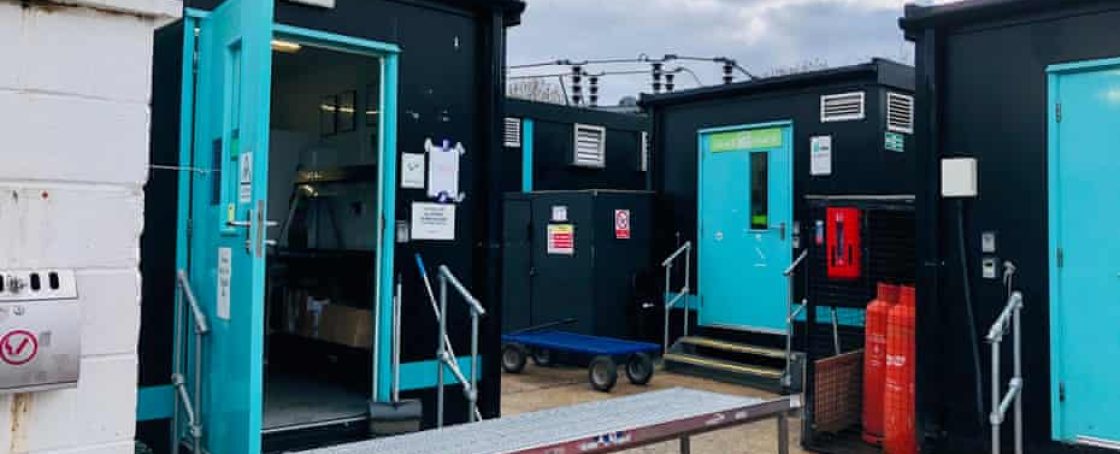
Deliveroo’s dark kitchens, delivery-only kitchens housed in windowless off-site shipping containers, were launched as Deliveroo Editions in 2016.
Using a percentage commission basis, Editions are typically conducted in partnership with brands such as Five Guys, Dishoom, or ShakeShack, all of whom spread the costs of launching each off-site dark kitchen. Their average cost is estimated to be between £60,000 and £80,000.
Years later, it seems Deliveroo’s dark kitchen solution is only getting more popular.
But, weirdly enough, the whole affair seems surrounded by a veil of secrecy.
Travis Kalanick, for instance, the controversial former CEO of Uber, bought a majority stake in LA-based City Storage Systems, parent company of Cloudkitchens. Cloudkitchens is a notoriously secretive company that runs dark kitchens in the United States and Europe through a series of shell companies to block investigators from tying rental sites to the parent company.
But why? What leads operators of dark kitchens to want to remain below the radar, if they’re essentially just kitchenettes?
Fear not, for we dove into the dark kitchen’s mystery so you don’t have to. What emerged from our analysis is that in a world of perenially inefficient delivery services, dark kitchens may be emerging as the only solution.
But windowless, polluting, and out of sight of the customer, it’s not a pretty picture. One which may not bode well for the future of the restaurant industry in large urban centres.
Roo Roo Roo
Dark kitchens, despite what the name suggests, are not some inherently mysterious endeavour. Popular commentary about them has been largely negative thus far.
These kitchenettes are housed in storage containers in cheaper, off-site industrial real estate in major urban centres such as London, Manchester, or Leeds. Instead of serving customers directly, they are focused on delivery-only (though some offer collection services too).
Operators of dark kitchens like to underscore their non-dark nature. Burger restaurant Bleecker’s brand director, Liam O’Keefe, who runs four Deliveroo Editions across London, told TimeOut that “although staff aren’t seeing customers, they have a community where they’re sharing food with other restaurants on a weekly basis, so it’s actually a more collaborative environment than a restaurant.”
Chilango, another chain that runs on Deliveroo Editions, told the magazine that their dark kitchens are like “little villages”. “They have breakout and communal areas, and our staff will exchange food with other restaurants and have a different staff meal a week (…) they have dance music Thursdays, and a lot of the workers go out clubbing together (after their shift).”
And Dr. Kahram Mahroof, Assistant Professor at the University of Bradford, told the Huddersfield Examiner of other positives. The nature of the Deliveroo Editions kitchens, which means that restaurants pay a fraction of the overheads of full restaurants, allows for smaller hospitality brands to open shop and test new markets efficiently.
Instead of large numbers of kitchen staff, waiters, and annoying customers, you simply pay a chef to relocate to a rented dark kitchen. And hey presto, your family kitchen is now running on Deliveroo in Leeds.
Though one would expect nothing less from individuals who bought into the dark kitchen phenomenon, the words of Mahroof do ring true. While it’s rare to find a family restaurant with £30-60,000 to spare, dark kitchens do seem a more affordable option to expand a small restaurant’s reach into new markets than a traditional restaurant venue.
These price efficiencies may explain the apparently continuous expansion of Deliveroo Editions kitchens. Besides its first dark kitchen in Swiss Cottage, Deliveroo has also opened Editions kitchens on large sites in Acton, Brent Cross, Dulwich, and others in 2021. They have also opened across the UK in Manchester, Leeds and Brighton, and have around 360 Editions kitchens worldwide.
And in a sign of the projects’ popularity, dark kitchen competitors have rapidly sprung up. Besides Travis Kalanick’s venture, there are other dark kitchen providers. Karma Kitchen plans to open 53 sites across Europe within the next five years, having raised £252 at a recent funding round. There’s also Spanish delivery firm Glovo, which currently has 12 dark kitchens in Spain, Italy, Ukraine, and Georgia. There’s also the London-based Jacuna.
But unlike what these Deliveroo Editions brand owners claim, the concept is not without its controversies.
Lack of Transparency
Searching for dark kitchens online quickly leads you to disappointing customer feedback.
The problem these customers have is an understandable lack of visibility about who is preparing the food they have purchased.
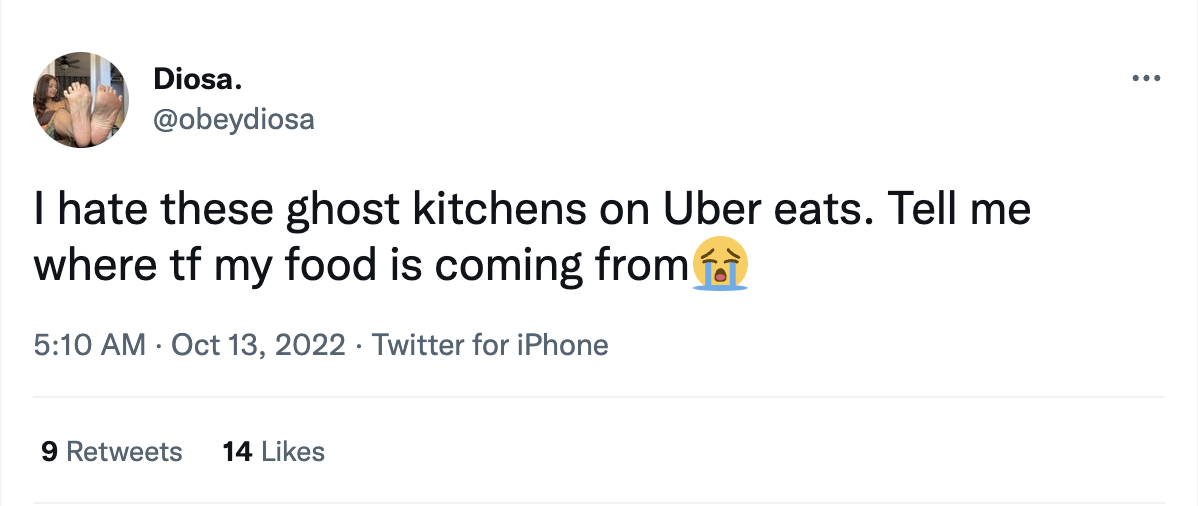
That’s why councils like Haringey have proposed that dark kitchens should be allowed providing, among other measures, that delivery apps clearly state when food is made in a dark kitchen.
This lack of visibility was tackled by the BBC in their documentary on Deliveroo Editions. They asked Deliveroo whether customers have visibility about where their food is being prepared. Deliveroo answered;
“When customers order from an Editions restaurant it is very clearly labelled”
Deliveroo also told the BBC that restaurants that are virtual or which operate under license are clearly described in the information section of any online restaurant in their app. Furthermore, they stated that food hygiene rating information is clearly labeled in the information section.
The facts, unfortunately, don’t seem to bear these statements out.
Let’s focus on a dark kitchen in Unit 2, Phoenix Park, Apsley Way – here’s a link to the listing. It’s clearly labelled as a Deliveroo Editions kitchen.
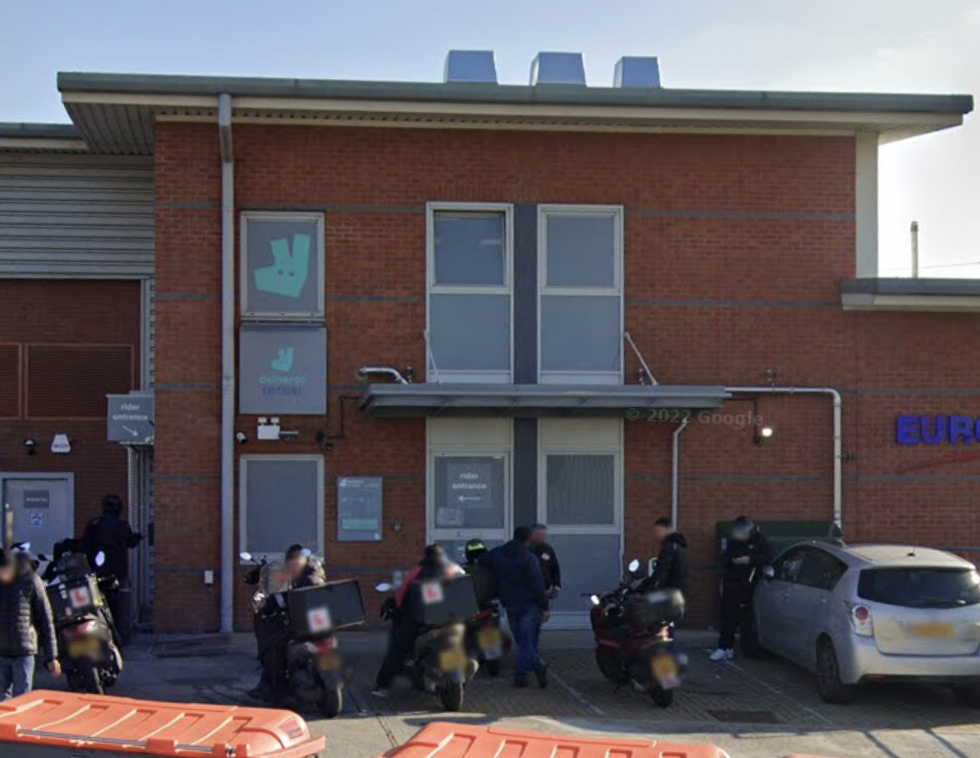
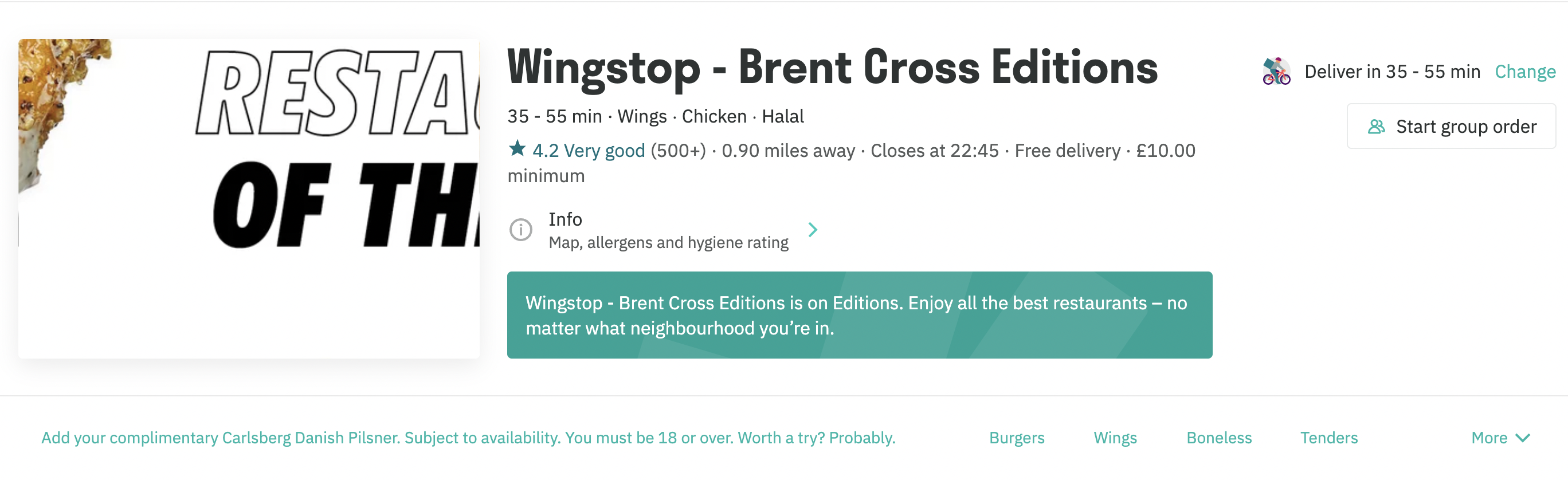
To test Deliveroo’s claims, I used my account and created a fake delivery location that is exactly 0.9 miles away from this dark kitchen. Some brands delivering from this location are appropriately labelled as Editions kitchens.
But here is the listing for the Five Guys kitchen that works from this site:
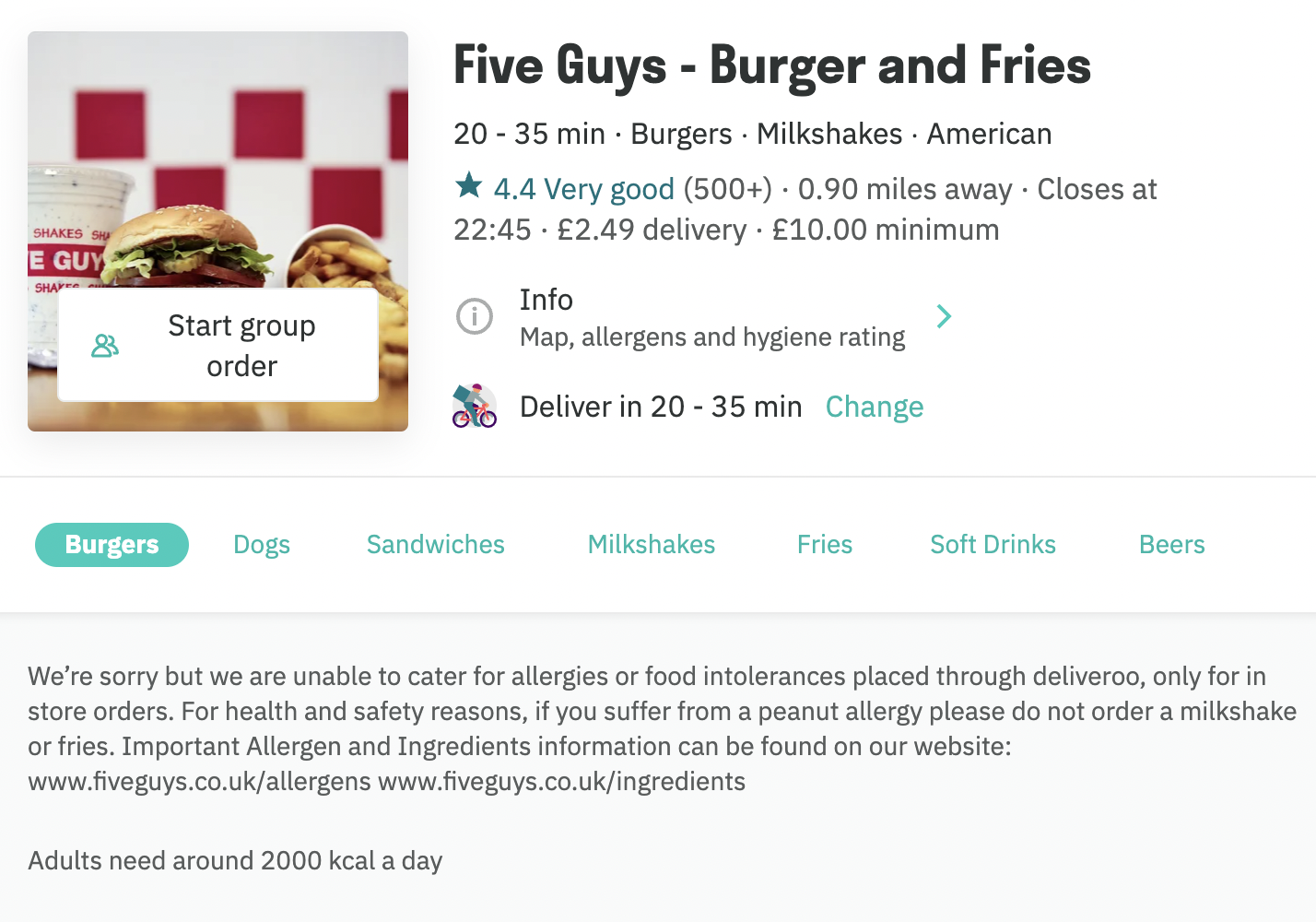
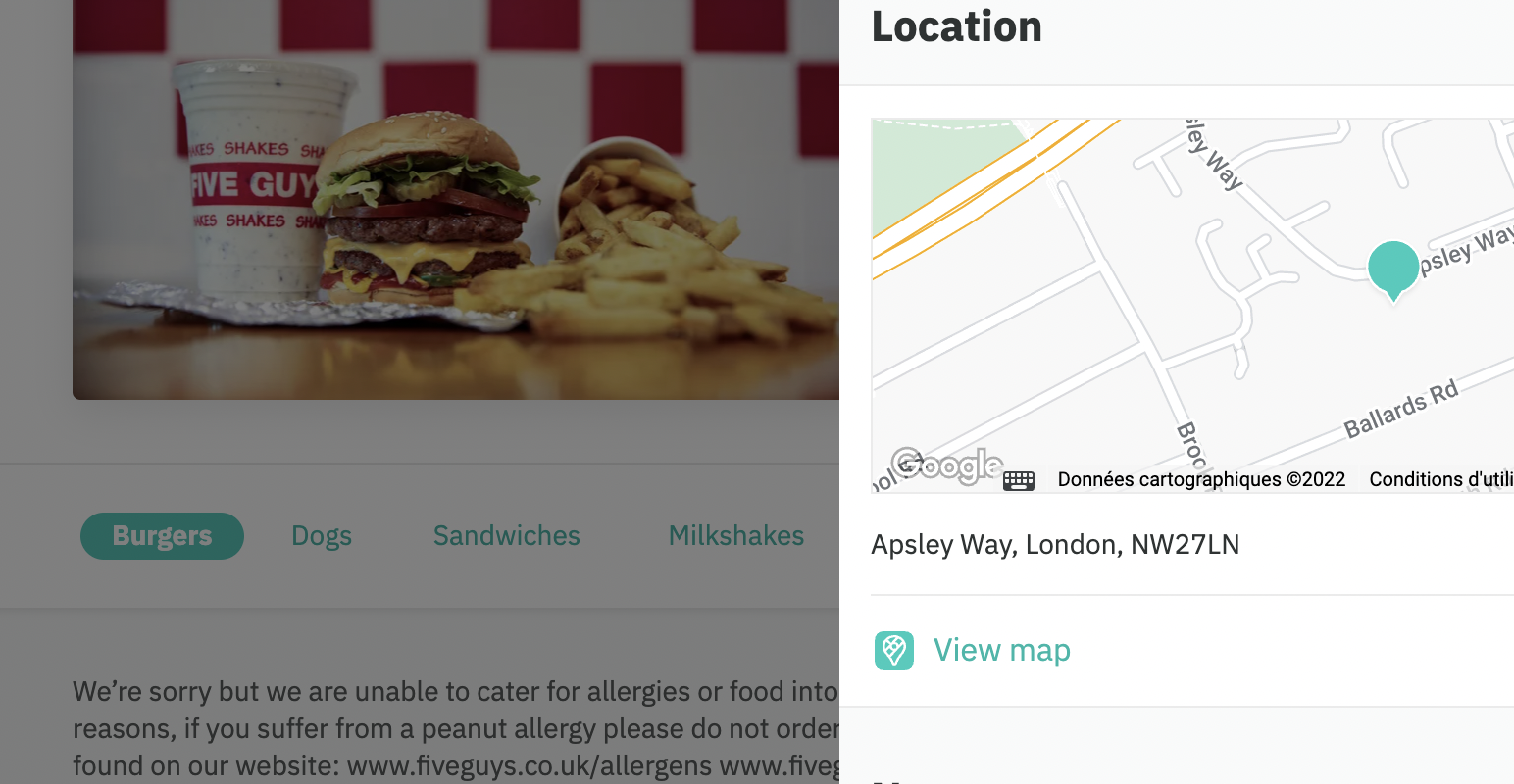
As you can see, this Five Guys is located on Phoenix Park – in the exact corner that is displayed as an Editions kitchen online.
But neither the main page nor the information page states this Five Guys is a Deliveroo Editions restaurant. We note the food hygiene page on the information page only links to the Food Standards Agency’s main page and not to the Five Guys’ in question.
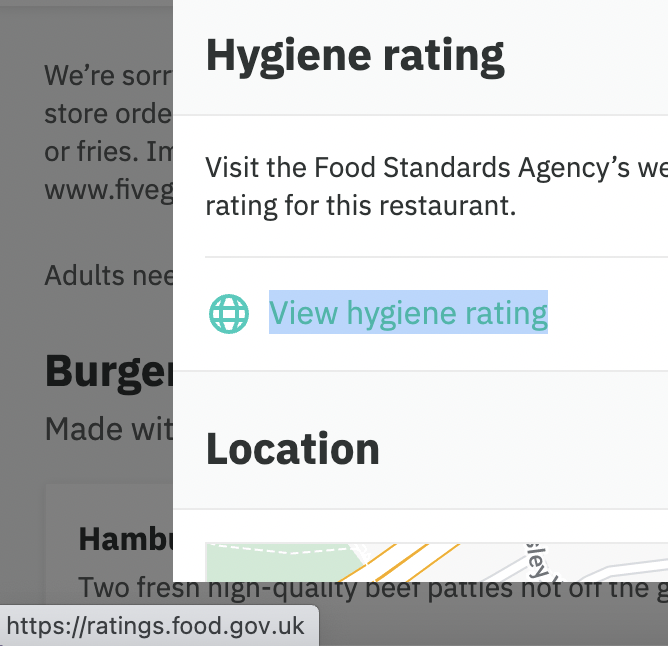
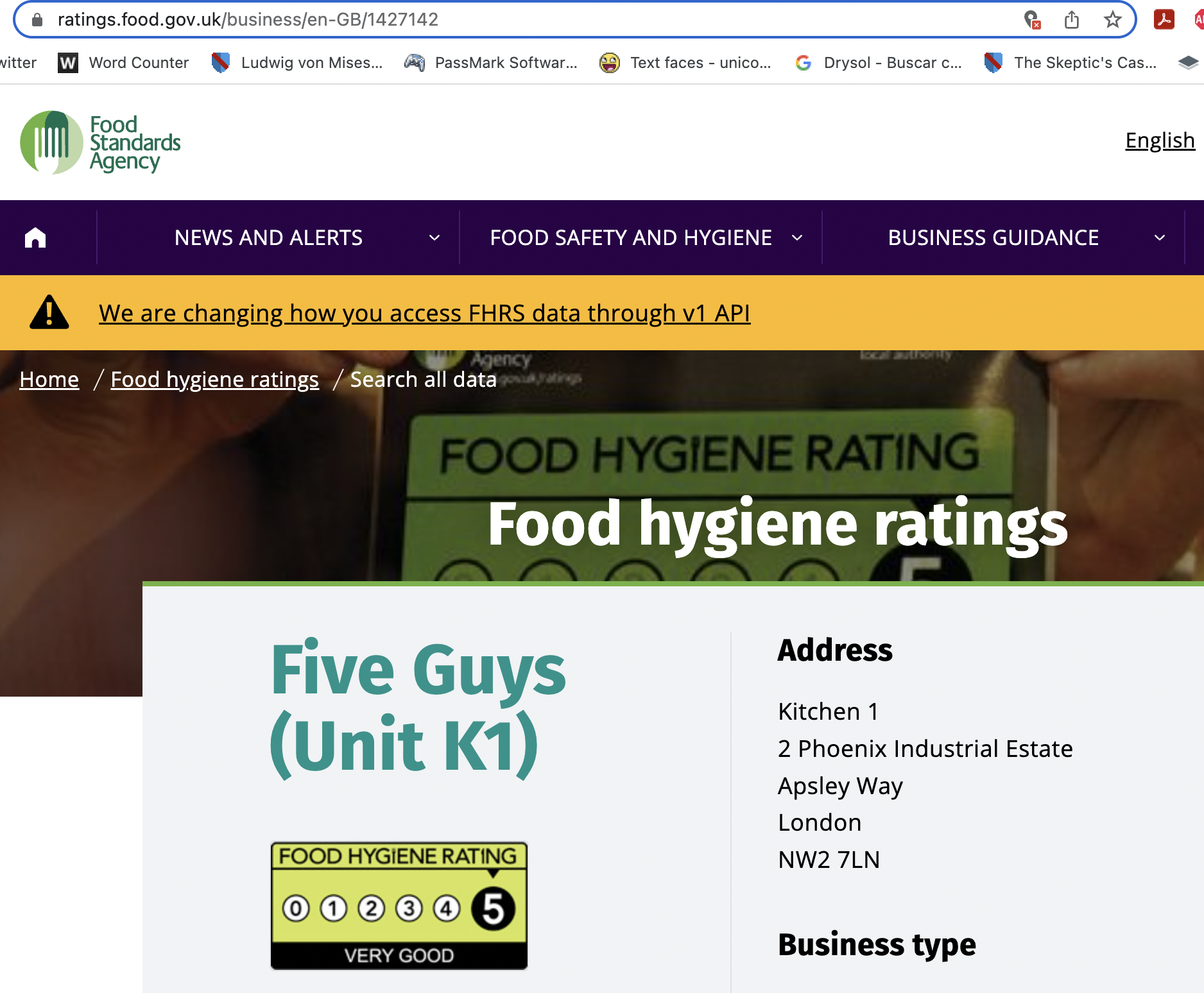
The correct hygiene rating can only be found by manually searching for the Five Guys and using the correct postcode.
Similarly, Popeyes Louisiana Kitchen does not state it is an Editions restaurant – even though it’s housed in the same location as the Five Guys.
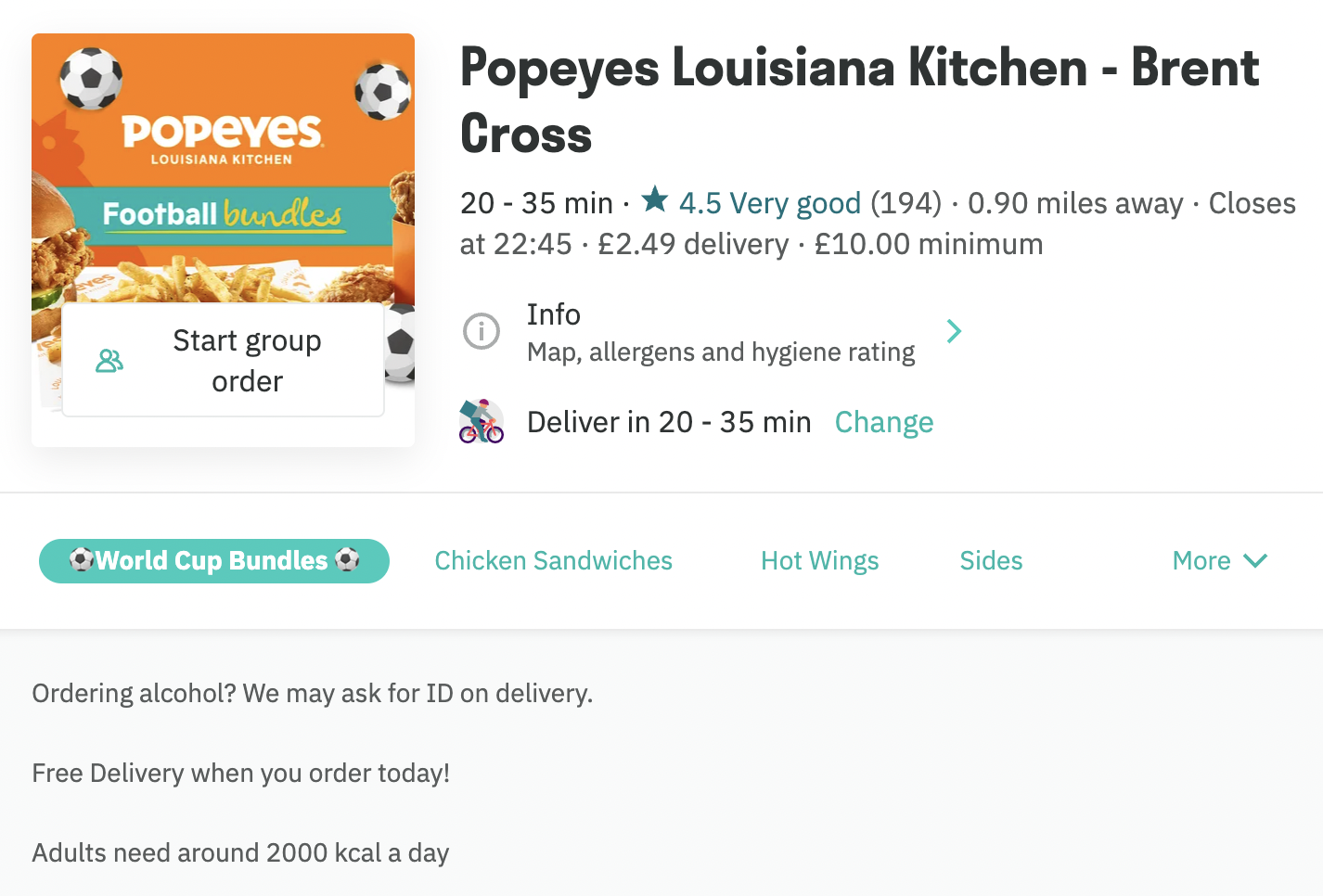
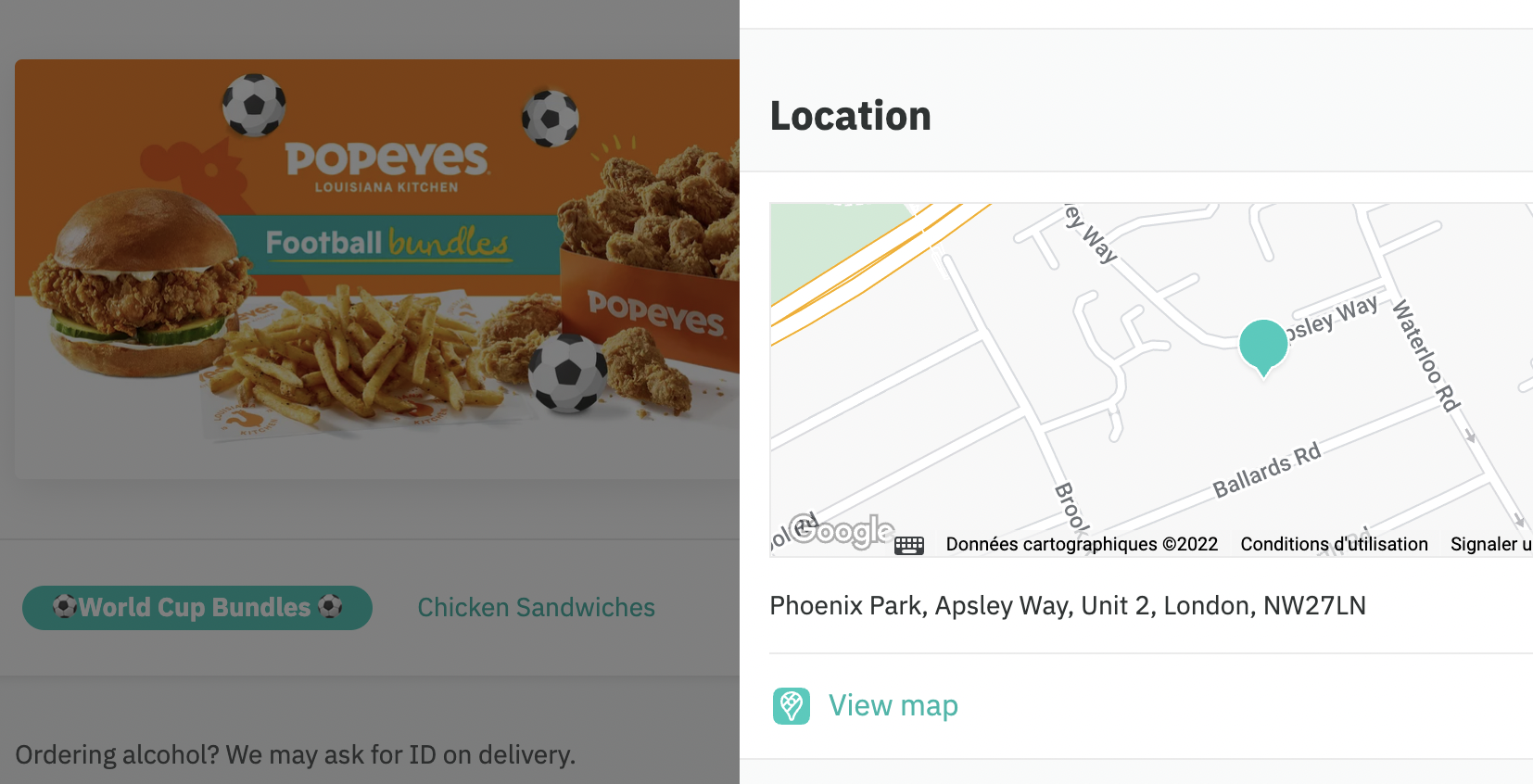
The food hygiene rating link shows it listed under the same entry as the above-mentioned Five Guys – suggesting they share the same kitchen. Observe how the URL is identical in the images below.
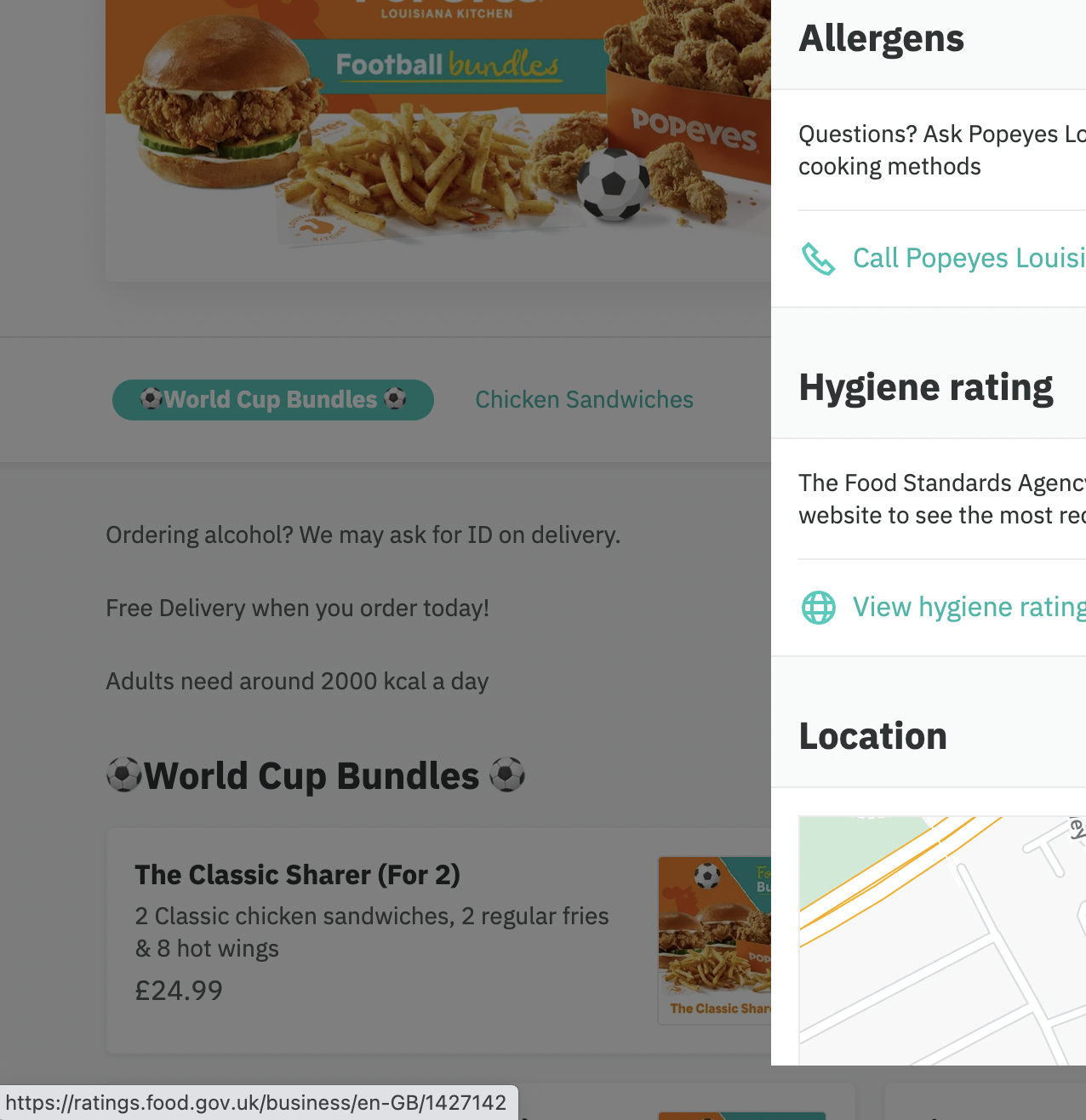
But some of these restaurants in Phoenix Park are clearly labelled- like the Wingstop pictured above. Another one is Tao Tao Ju, labelled an Editions restaurant, whose page appropriately redirects to its own health inspection ranking.
We could assume the above is an unfortunate oversight, considering that some other restaurants we looked at were appropriately labelled.
But one can’t help but wonder. Maybe Deliveroo thinks their customers don’t like ordering from Editions kitchens? Is this an intentional attempt at trying to minimise their visibility? After all, we did find quite a few customers that didn’t like the concept.
Travis Kalanick’s CloudKitchens competitor also has other secretive elements. When CloudKitchens acquires some property, they use a limited liability company that shields the owners’ identity, and which insulates the parent company from potential liabilities. Business Insider reported that CloudKitchens’ employees are heavily compartmentalised – they have little insight into their companies’ activities in other divisions or geographies.
Despite what its proponents say, the secrecy and lack of disclosure in dark kitchen endeavours suggest these providers may not consider that customers, or regulators, are entirely ready for the concept.
Not All Is Light
And there are plenty more valid criticisms towards dark kitchens from both neighbours, traditional restaurants, and regulators.
Camden residents raised around 1,800 reports of alleged breaches of conditions, which were submitted to Camden Council regarding Deliveroo Editions’ dark kitchen in Swiss Cottage. This led the council to reject Deliveroo’s request for additional planning permissions on the site in spring 2022.
Similarly, in December 2020, residents opposite some Gopuff dark kitchens in Archbishop’s Park claimed they received grief from delivery drivers stationed outside. This included public sex, a noticeable increase in the number of rats, and the hurling of abuse towards residents.
And it’s not just scandalised and wealthy neighbours that are complaining.
MPs from Haringey have written to the business secretary in February 2022 to raise concerns about the proliferation of dark kitchens in their borough – one of which belongs to Deliveroo. They state that while dark kitchens can be inspected like any other restaurant, the lack of customers means they de-facto face much less accountability.
The hospitality industry is already suffering from a hiring crisis. Unsurprisingly, hiring individuals to come to dark kitchens is even more challenging. The Daily Mail spoke to an anonymous chef at a dark kitchen, who described tough working conditions where two dozen cooks churn out meals for eight different companies in windowless shipping containers.
The Royal Society of Public Health has jumped on some of these claims of poor working conditions, finding evidence that these chefs are working in “cramped and low-paid environments”.
Why Family Restaurants Can’t Compete
But most criticism directed at dark kitchens is not really about seeming abuses, nasty smells, or bad working conditions. It’s directed at the threat of dark kitchens’ promise, rather than their failures.
The problems of mess, noise, and smell are not unique to dark kitchens. In many ways, these are primarily a problem of the wider restaurant industry.
Restaurants give nasty smells all the time, and living next to one automatically subjects you to its logistical comings and goings. I would know, as I lived above a luxury family-run Indian restaurant for two years. We were subject to prying waiters, who would enter through our fire escape and leave lost and found items on our staircase. They would also let old tenants into our flat without our permission. Rubbish bags would inundate our front door every night. Not the greatest experience.
The same goes for the poor working conditions in dark kitchens. The restaurant industry has notorious conditions for their employees in general, particularly those who work in kitchens.
So what’s scary about dark kitchens is not that they work badly, perhaps. What’s concerning is that they work well. They are the path of least resistance in an economy whose workforce no longer has the time or inclination to cook.
The greatest perceived problem with dark kitchens is how their functioning further undercuts small-scale restaurants in favour of larger, corporate restaurants.
Though family-run restaurants look great on a piece of paper, reality often differs. Most family-run restaurants are bywords for struggling businesses barely making margins on mediocre food.
Branded restaurants on the other hand aren’t cool. But their food is consistently prepared, consistently sourced, and typically better run. More crucially, they’re cheaper.
And this difference just adds up when we get to deliveries. Family-run or small restaurants have little idea of deliveries. The packaging is usually of poor quality, the food arrives soggy and the turnaround times are long. Alternatively, corporate restaurants have delivery down to a tee.
Yes, family-run restaurants take care of their customers with more dedication than faceless corporations. And, naturally, with more customer care than faceless corporations delivering to faceless clients. Lastly, family restaurants prepare their food with love – whatever love means.
Family-run businesses represent cultural heritage, the bedrock of a strong middle class, and are something most consider worthy of protection.
But all this means little to a generation where the luxury of choice and good home delivery are prized more than face-to-face contact and sit-down meals.
Branded, chain restaurants can typically negotiate lower cuts to delivery services – whereas family restaurants are typically charged a commission of around 35 per cent by Deliveroo plus VAT on every order. Plus, family restaurants often complain that Deliveroo seems to provide better marketing to larger clients on their app.
It’s no wonder small operators feel threatened. Every single delivery undertaken in the UK effectively takes a further bite out of their profitability.
That’s why the protectionist continentals have been faster in imposing limits on dark kitchens’ expansion. Spain has been issuing guidance that limits the space and capacity of dark kitchens, particularly in Madrid. France has also taken measures to limit the expansion of dark stores, off-site food warehouses used by services like Gorillas and Gopuff, and these are expected to affect dark kitchens as well.
It’s not just because dark kitchens are smelly that they are reviled. It’s more because they represent the future of a troubled but expanding delivery services market that threatens to castrate what’s left of small, family-owned restaurants.
Innovative Problems
When I started this overview of dark kitchens, I assumed I would discover that the trend is destroying more value than it is creating. Online chatter points to genuine customer dissatisfaction, a lack of transparency from delivery services and a tendency towards pollution and poor working conditions.
But these issues apply to the wider hospitality industry too.
Customer dissatisfaction and a lack of transparency are why we have food inspections. The tendency towards insalubrious and nasty conditions in kitchens is why hiring managers are struggling to hire kitchen staff across the board. And small-scale restaurants’ inability to make real margins on anything but alcoholic drinks, deliveries or not, will continue to plague the industry regardless of whether dark kitchens proliferate.
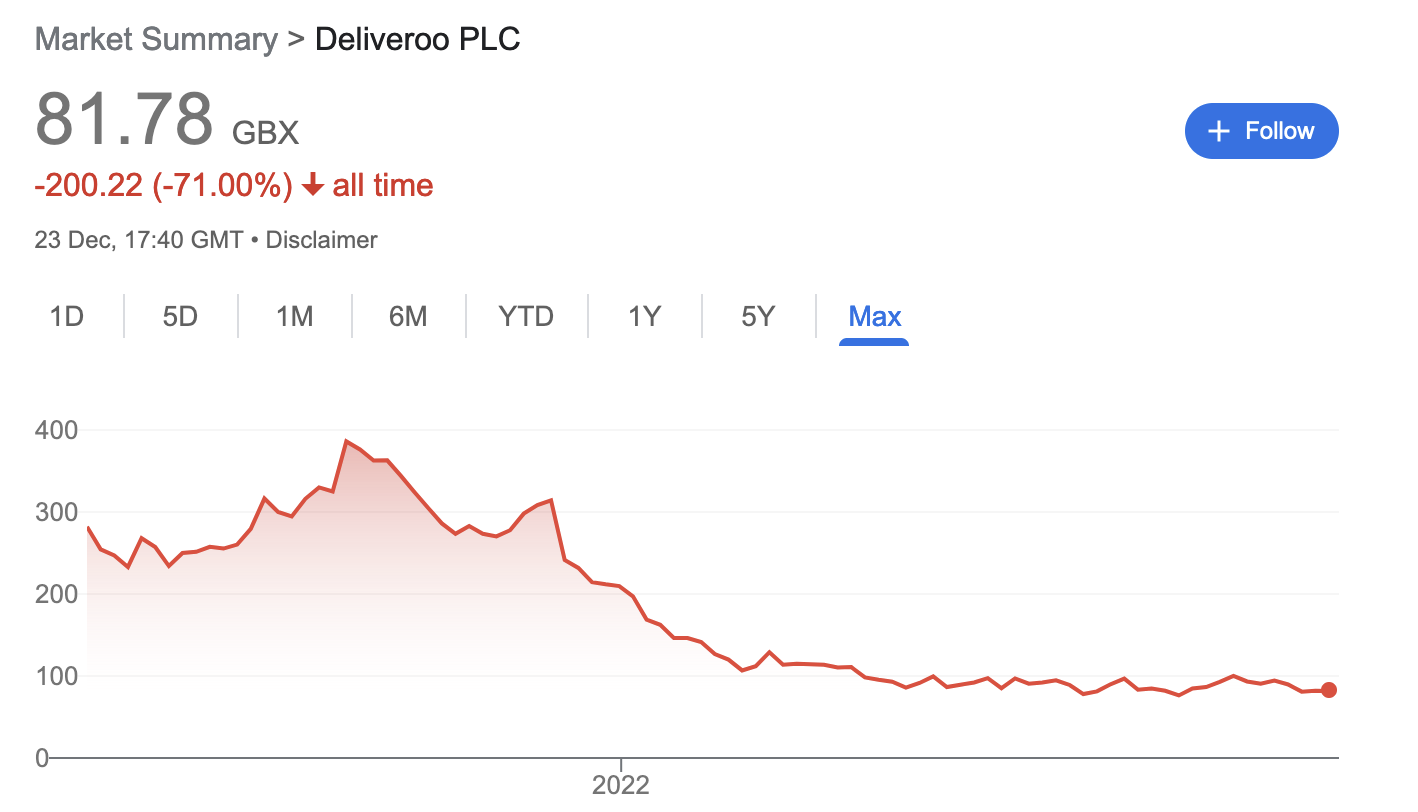
Deliveroo’s original model was never airtight. As Izzy long argued, the unit economics didn’t make sense, especially when you considered the group’s dependency on cheap labour and poor working conditions. Scaling the business was always going to be a challenge, especially outside of dense urban populations. And as Deliveroo’s share price indicates, the model is uniquely exposed to inflation too:
And yet, if the biggest problem in the delivery model is its dependency on cheap labour and poor working conditions, automating dark kitchens could change everything. By replacing labour intensity with capital intensity, a model that already benefits from significant efficiency gains in the pooling of resources, kitchen space and a reduction of overheads already, would only get more efficient.
Yes, dark kitchens are currently an imperfect solution to a problem that might not even exist in a few years’ time if hard times force the younger generation to learn to cook.
But, without the dependency on dismal working conditions, automated dark kitchens could easily begin to compete with what is already a largely “lights out” ready-made meal sector. Providing automation doesn’t undermine quality, it’s a commoditised feeding that actually makes a lot of sense for a hyper-scaled urban environment where time is at a premium.
Cooking then becomes a “for pleasure only” or hobby activity.
In that scenario, family restaurants might even flourish as their business models become experience centred and thus distinct from the general everyday food preparation business.

One Response