

It took nearly five years for Zoltan Pozsar (then at the New York Fed) to map out the full complexity of the shadow banking system in a bid to help regulators and policymakers to better understand how risks piled up in the system.
The end result was this extraordinary chart:
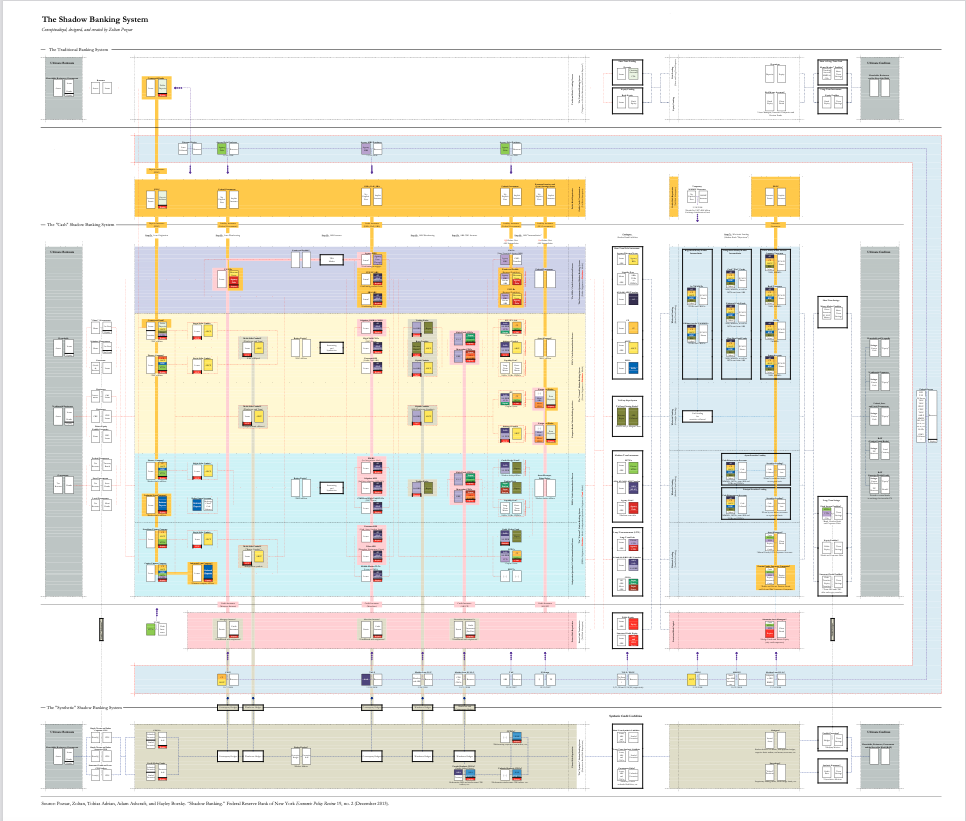
Now, thanks to the endless resourcefulness of the internet, the crypto equivalent has finally found its way into our inbox. We’re not clear who is behind it, but it is an excellent first effort.

As former banking equity analyst Bruce Packard noted on Twitter, in the banking case the complexity was a function of centuries worth of evolution. In the crypto equivalent, they were starting from scratch. Given crypto’s pro-transparency and anti-intermediary attitude, it’s hard to rationalise why a need for the same level of obfuscation emerged other than the obvious (begins with the letter F, rhymes with maud). The other rationale, of course, is that crypto ultimately changed nothing.
The only positive thing crypto may have done is assure that any extended descent into complexity and obfuscation would be self-limiting. Yes, the industry is overly prone to grifters, scammers and speculators, but on the plus side, it seems to compartmentalise all that bad stuff outside of the world of real resources. It also self-combusts routinely enough to ensure the risk of systemic overspill is very low.
Though, of course, we won’t know how true that is until the impact on the shovel sellers in the real economy is better understood in the months to come.

2 Responses
I believe it’s these people: https://twitter.com/alphaketchum/status/1593828448833011714/photo/1 (@Alphaketchum and @DataFinnovation)
Ah weird. looked those handles up on twitter but nothing came up. Maybe typo.