Cushing Oklahoma is where crude that settles under the CME’s West Texas Intermediate contract must be delivered. Whenever there is a big discrepancy between the price of WTI and Brent (the latter of which trades more internationally) there is often a big incentive to store US crude there.
The tankage system at Cushing, however, has a finite capacity. Worse than that, many of the pipes that feed the area only go one way. When storage economics are in motion Cushing’s limits can be tested. The market usually responds creatively, usually by finding ways and means to truck oil out of the area.
Since this is not an infrequent occurrence, the market has by now become used to dealing with the risks associated with Cushing limitations.
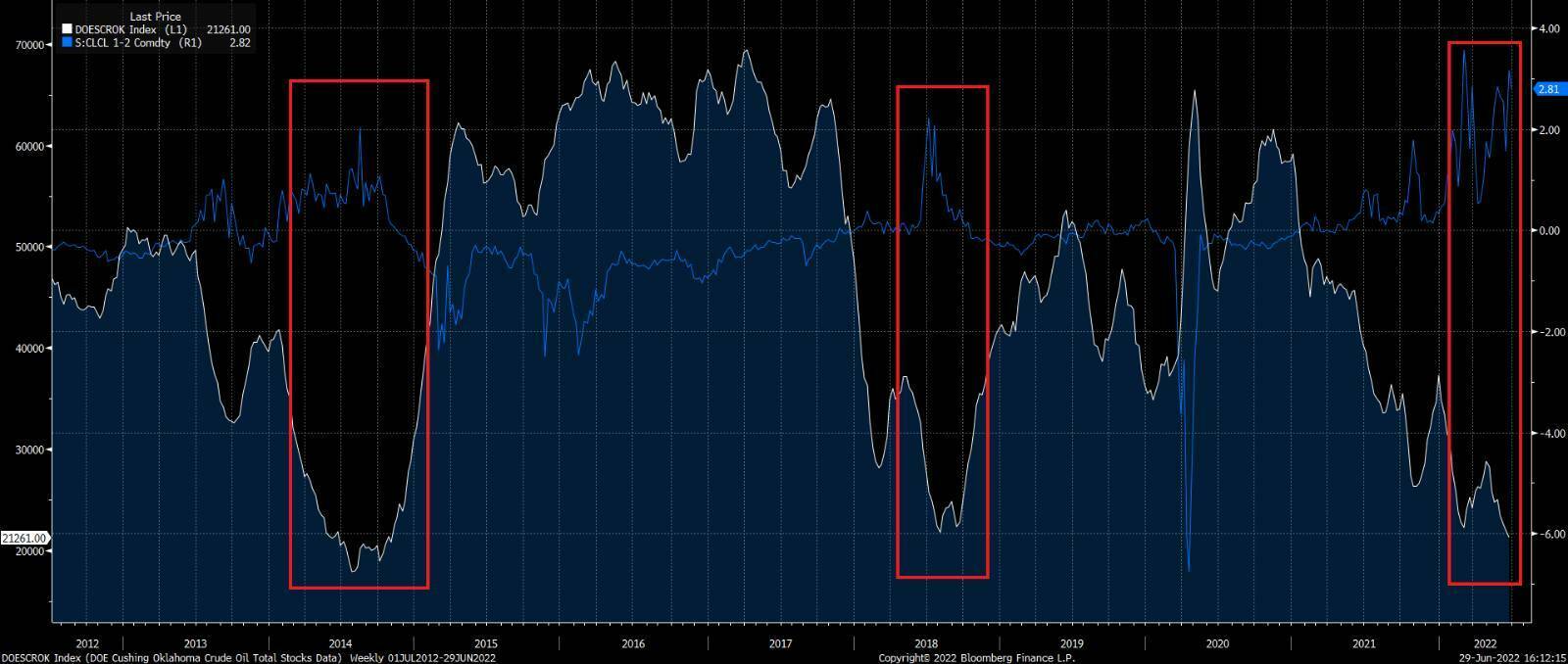
It’s much less accustomed, however, to dealing with the opposite problem: the point where we get to what might be considered the minimum working inventory level. Significant inventory stress last occurred in 2014 and 2018, both times at the end of the seasonal peak demand period. The market adjustment at the time saw the front spread of the WTI futures contract explode higher in response.
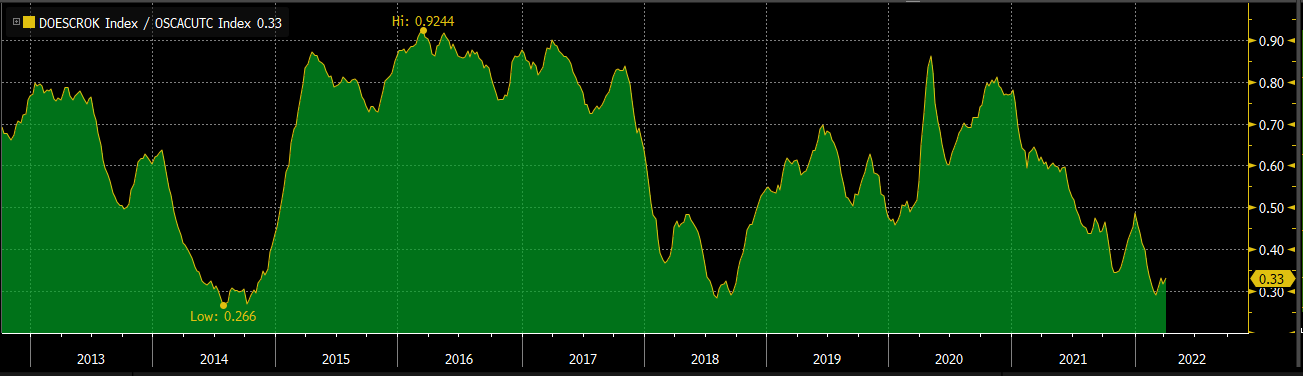
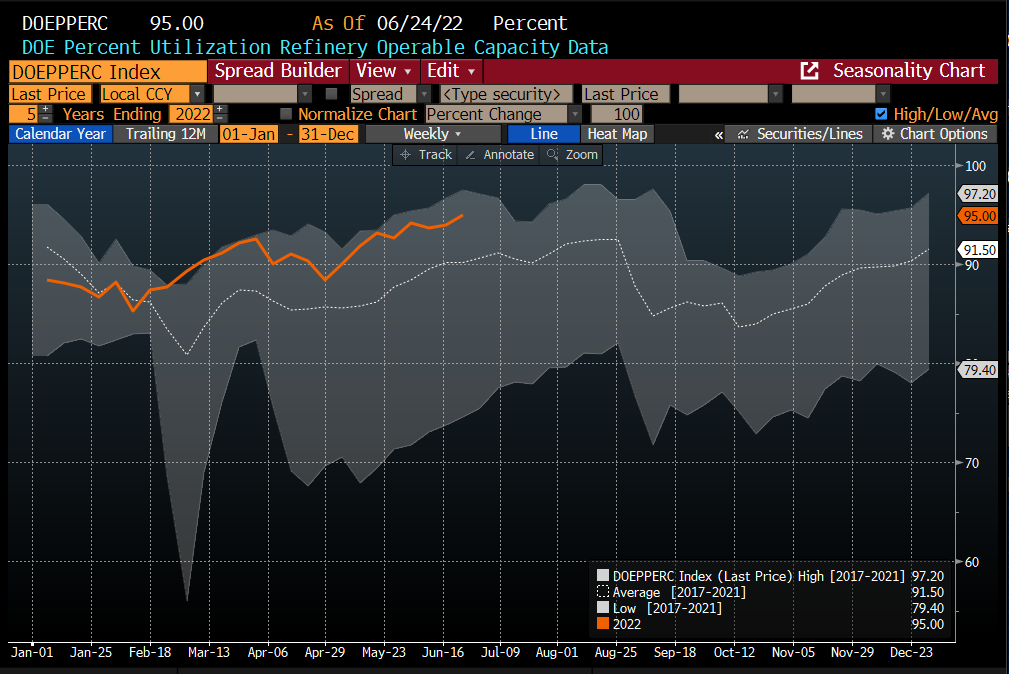
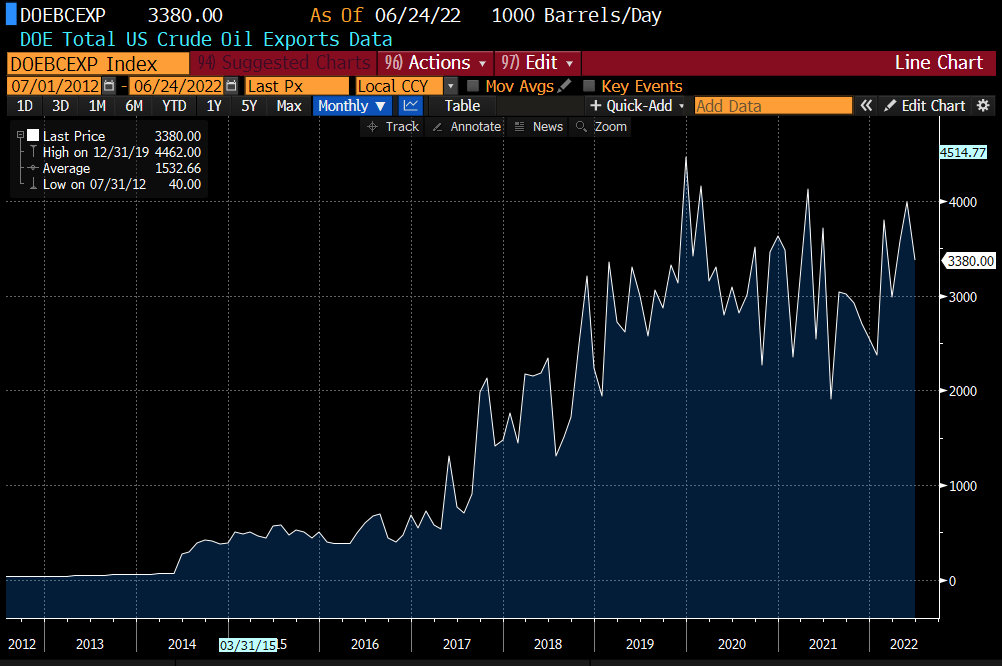
We are now approaching a similar stress point. Inventories are running at about 30 per cent of full capacity (some 21m barrels). The difference this time is that we haven’t even hit peak summer demand. What’s more, refinery runs are high and likely to go higher. Exports incentives are also in place due to strong positive economics for taking arbitraging crude to the rest of the world.
Here are some noteworthy charts to put the situation in context.
To begin, here is Cushing’s utilisation rate. This shows just how low inventories are on historic terms:
Here, meanwhile, is a comparison between Cushing stocks and the front-month WTI spread. The red boxes indicate times when stocks were at similar low points and the degree to which prices spiked in response:
Now let’s look at the US refinery utilisation rate versus the five-year average:
Followed by US crude exports:
And finally, and possibly most notably, here is the US strategic petroleum reserve situation:
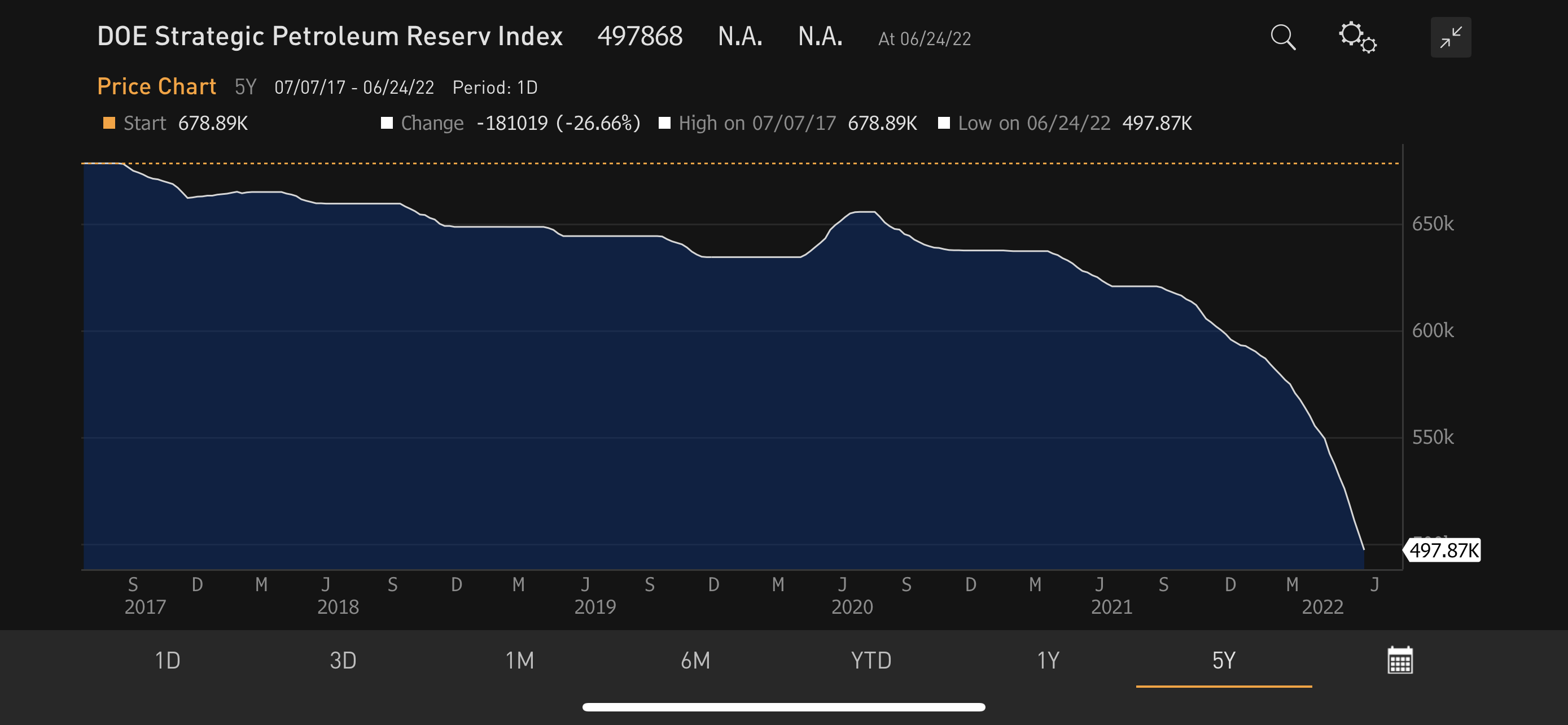
The system is basically running on Mad Max mode. It is the exact opposite of the negative price situation we experienced in 2020. And if someone gets caught in this environment it could get very nasty indeed.
If the LME nickel trade fiasco is an indication of the settlement issues to come, we might even need resolution by Thunderdome.