

| SNEAK PEEK |
— Why Trump’s designation of cartels as terrorist organizations is a covert, flexible and global casus belli.
— Why Middle Eastern optimism over MBS could backfire.
— Egg-gate: How the online backlash over Ross Coulthart’s supposed UFO egg footage reiterates that we should stop worshipping video evidence.
Dear subscribers.
It’s been a week since we moved up into the plush editorial room of the Blind Spot with our new geo/exo politics newsletter.
I’m told the views are nice from up here. But it’s hard to get a glimpse out of the window with so much Polish memorabilia lying around.
Izzy’s main newsletter will resume on Monday.
Without further ado:
| THE BIG GEOPOLITICS BLIND SPOT |
A GLOBAL CASSUS BELLI: CARTELS DESIGNATED AS TERRORISTS BY TRUMP: Within hours of his inauguration, President Trump designated drug cartels and associated organizations as terrorist groups.
This designation allows the U.S. to prosecute cartels and their supporters and deploy military assets like drones or special forces for unilateral strikes.
While the measure is highly controversial, particularly in Mexico and wider Latin America, rising fentanyl overdose deaths had fueled American bipartisan support for this measure.
The Executive Order singled out two drug cartels: Venezuelan Tren de Aragua (TdA) and Mexican La Mara Salvatrucha (MS-13). Many have spotted that this designation is a legal grant to breach Mexican and Venezuelan sovereignty.
In response, Mexican President Claudia Sheinbaum claimed Mexico would “defend its sovereignty and independence”. “We want to fight the drug cartels” Sheinbaum claimed ,“(the United States) in their territory, us in our territory.”
COMMENT: This designation isn’t just about targeting criminals – it effectively creates a global pretext for U.S. military intervention.
The pervasive nature of cartel organizations’ global footprint, alongside the parallel expansion of CTF and AML provisions worldwide, could theoretically permit the American government to go beyond military intervention and legally seize and adjudicate the ownership of foreign countries’ economic infrastructure.
A historical example of this power is the seemingly unbalanced Treaty of Kuchuk-Kainarji between a victorious Russia and a defeated Ottoman Empire in 1774. In this peace deal, Russia returned the hard-won territories of Wallachia and Moldavia in exchange for one seemingly meagre right: the protection of Orthodox Christians in the Ottoman Empire.
But this proved extremely consequential. Russian rulers interpreted this right as the legal prerogative to intervene in Christian-majority Ottoman territory at will, setting the stage for the near-collapse of the Ottoman Empire.
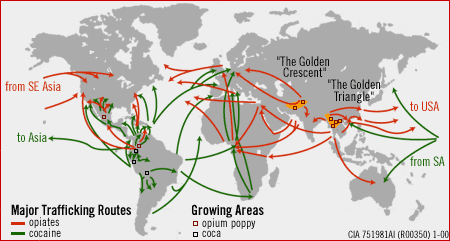
The following map should suffice to explain the scale of potential casus belli that could be generated based on this executive order:
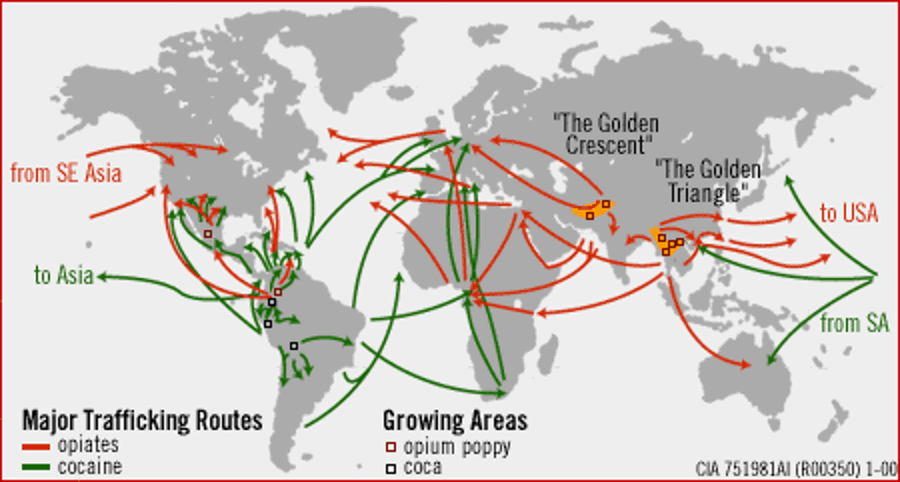
Source: CIA (The above map only includes opiates and cocaine – leaving out hashish and marijuana growers and other synthetic drugs outside of cocaine. Thus, international cartels true reach is far greater than the map portrays.)
Cartels have infiltrated global economic systems and the U.S. could exploit this designation to exert direct influence over foreign assets under anti-terror laws – even in Western states.
As the Executive Order describes, the designation of cartels as terrorist organizations will target not just the cartels but ‘other organisations’. The range of organizations and actions under survey will include:
- “A range of extra-hemispheric actors, from designated foreign-terror organisations to antagonistic foreign governments.”
- “Infiltration into foreign governments across the Western Hemisphere”.
This Executive Order is thus a not-so-covert threat from the United States against the world. Not just against ‘antagonistic foreign governments’, but against ‘infiltrated’ allies in the ‘Western Hemisphere.’
While the naming of MS-13 and Tren de Aragua initially restricts this order to Mexico and Venezuela, it’s unlikely that such a policy pre-empts American interventions around the globe.
Mexico’s sovereignty is sure to suffer. But while some American raids may take place across the border, it wouldn’t be the first time that American drug-busting operations unauthorized by the Mexican government have taken place in the country.
We wouldn’t be surprised if Trump’s executive order has ruffled many Venezuelan governmental feathers. Trump’s strategy on Maduro’s government is still unclear. But allegations by investigative journalists like Claudia Gurisatti suggest Maduro is the head of the Cartel de los Soles – a powerful Venezuelan criminal network headed by members of Venezuela’s government and armed forces.
Outside of Mexico and Venezuela, we believe Trump will primarily use this policy to exercise even greater leverage over foreign countries to enact preferential decisions – like better trade terms.
The next decades, however, are a different story.
Because this casus belli is here to stay.
| SOME OTHER POLITICS BLIND SPOTS |
WILL THE GAZA CEASEFIRE LEAD TO A SAUDI-ISRAEL DEAL? Israeli news channels suggest the Trump administration sees Phase 2 of the Gaza-Israel hostage-ceasefire deal as a step toward normalizing Saudi-Israel relations.
Phase 2 of the Gaza-Israel hostage-ceasefire deal will oblige the Israeli army to withdraw from most of Gaza, except for a 1km-wide section that runs along the inside of the Gaza-Israel border.
WILL THERE BE A SAUDI-ISRAELI NORMALIZATION? Trump may be using the prospect of Saudi-Israel normalization to pressure Israel into upholding its ceasefire obligations.
Reports of American contractors in northern Gaza, the region Israeli hardliners sought to settle, suggest they’re acting as Trump’s ‘tripwire forces’ to deter Israeli military actions in these areas. Tripwire forces deter the actions of a superior military force by forcing political consequences to an attack.
Given Netanyahu’s precarious political position, many expected him to find any pretext to break the ceasefire before Phase 2.
Israel’s mediatized military pivot to the West Bank, which The Blind Spot foresaw over two weeks ago, may reflect an attempt to distract from internal divisions after the Gaza debacle.
Regardless, the possibility of Saudi-Israel normalization is uncertain considering the Kingdom under Mohammed ibn Salman, its de-facto ruler, has made Palestinian statehood a key part of any deal to normalise ties with Israel.
THE SAUDI’S BLIND SPOT: Saudi Arabia’s modernization under MBS — closely linked to these normalization efforts — deserves more scrutiny.
I think there are hidden risks to MBS’s planned modernization. This hunch is driven by the crisis of young men in developed countries.
A polarising figure in the West, MBS is one of the Middle East’s most popular leaders. Adored at home, particularly amongst Saudi Arabia’s overwhelmingly young population, his reforms are launching Saudi Arabia into the 21st century.
This is the positive perception I’ve always encountered in talks with Israelis, Lebanese, and Saudi Arabians both young and old.
As Izzy will explain on Monday, this reality clashes with the outdated – and out-of-touch – Western perception of MBS as a tyrant.
But Saudi Arabia’s position as the birthplace of Islam means I believe these reforms put MBS in a precarious position, despite their current popularity. And the threat won’t necessarily come from old-fashioned conservative Wahhabis.
Counter-intuitively, if the recent history of developed countries is anything to go by, a modern future for Saudi Arabia could turn its young men away from liberalism.
The clear lesson of recent Western history is that our economies have fostered a disproportionately difficult environment for young men. Suicide rates are climbing among them, as young women have begun out-earning and out-working young men.
This, among other societal factors, has led to the widening disparity in political inclinations between young men and women in developed countries worldwide.
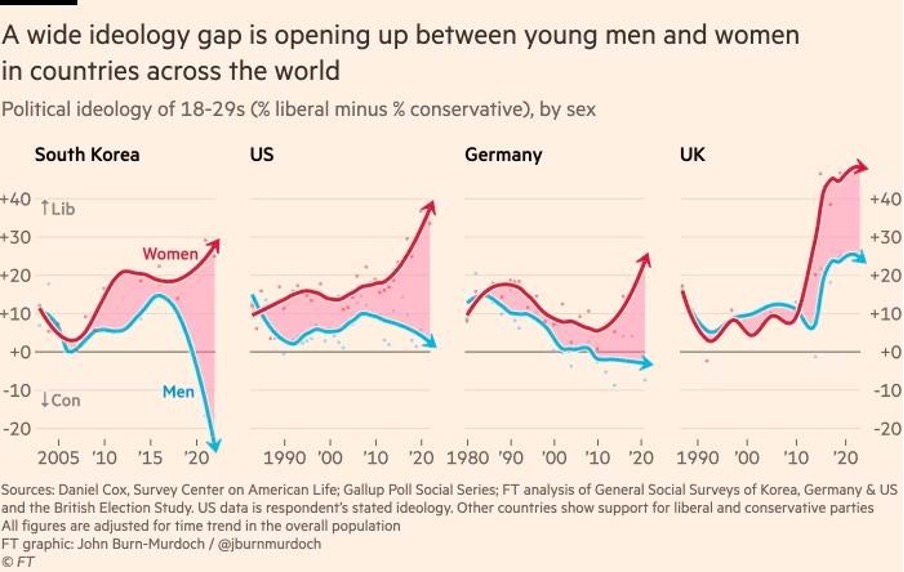
Source: (FT)
And the hypothetical alt-right Saudi Arabian young men’s idealized past won’t be in distant histories, unlike their equivalents in the West. And unlike in the West, they will have coherent reasons to reimpose this nostalgic vision: Saudi is the birthplace of Islamic law.
This perspective came after I accidentally happened upon some TikToks last year by young British-educated Saudis who denounced MBS’s invitation of Iggy Azalea to a Riyadh music festival where she twerked on stage – “In the home of the Ummah!”
This suggests MBS should distance himself from his westernizing reforms. Perhaps he could install a Westernization tsar who could be blamed, fired and exiled should the consequences of the reforms prove too much.
Otherwise, his existence – and that of the House of Saud – may suffer more than it can bear at the hands of angry young men empowered by their lands Shariah.
CONSTITUTIONAL AMENDMENT MAY LET TRUMP SERVE A THIRD TERM: A Republican House member has introduced a resolution to amend the U.S. Constitution to permit future presidents to serve a third term. The 22nd Amendment was proposed in 1947 and ratified in 1951 to prevent a repeat of President Franklin Roosevelt’s election to four terms in office.
WHAT’S THE BLIND SPOT: Trump has often hinted at his openness to any reversal of the 22nd Amendment. But it may come back to bite Trump – and Republicans – in the rear.
That’s because it would allow the Democrat’s most popular candidate in recent memory, Barack Obama, to run for office as a competitor to Trump.
“WHAT THE HECK IS THAT?” CRAIG MURRAY QUESTIONS THE AMERICAN EMBASSY IN BEIRUT: A former British Ambassador to Uzbekistan turned enemy of the state has uploaded a fantastic 15-minute mini-documentary on the mysteries surrounding the American embassy in Beirut, a favourite topic of The Blind Spot.

Credit: U.S. Embassy in Beirut
As we’ve covered before, the embassy is twice as expensive as the next-most expensive American embassy: the $750mn, 104-acre Iraqi embassy. It’s also the second-largest American embassy in terms of project size at 42 acres. All in a minuscule country with a GDP of $20bn.
Murray floats several theories. Will it be used to house secretive CIA black sites? Or will it house the ‘real’ Lebanese government in the shadows?
While it’s unclear what the building’s purpose is, Murray ends his documentary with one certainty: “That building is NOT an embassy”.
| THE EXOPOLITICS BLIND SPOT |
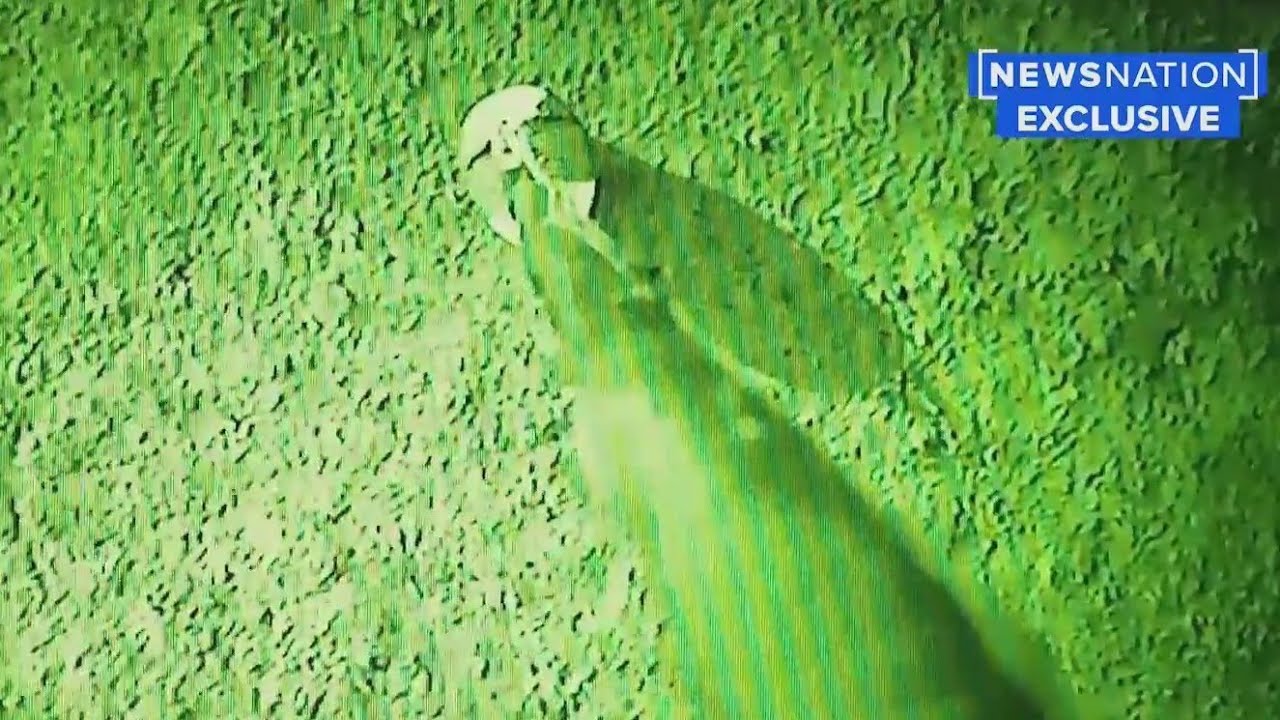
COULTHART’S ‘EGG-SHAPED CRAFT’ VIDEO RIDICULED: Following on from award-winning journalist Ross Coulthart’s interview with Jake Barber that we reported on last week was supposed to be a groundbreaking video of an egg-shaped UFO. Unlike other UFO videos, which are often (and rightly) lambasted for being blurry and out-of-focus, we were promised this footage would be crystal clear.
What emerged seemed anything but. The video was more clear than any other footage I’ve seen of an alleged UFO. But the egg, despite being relatively close to the camera’s lens, looked completely nondescript:
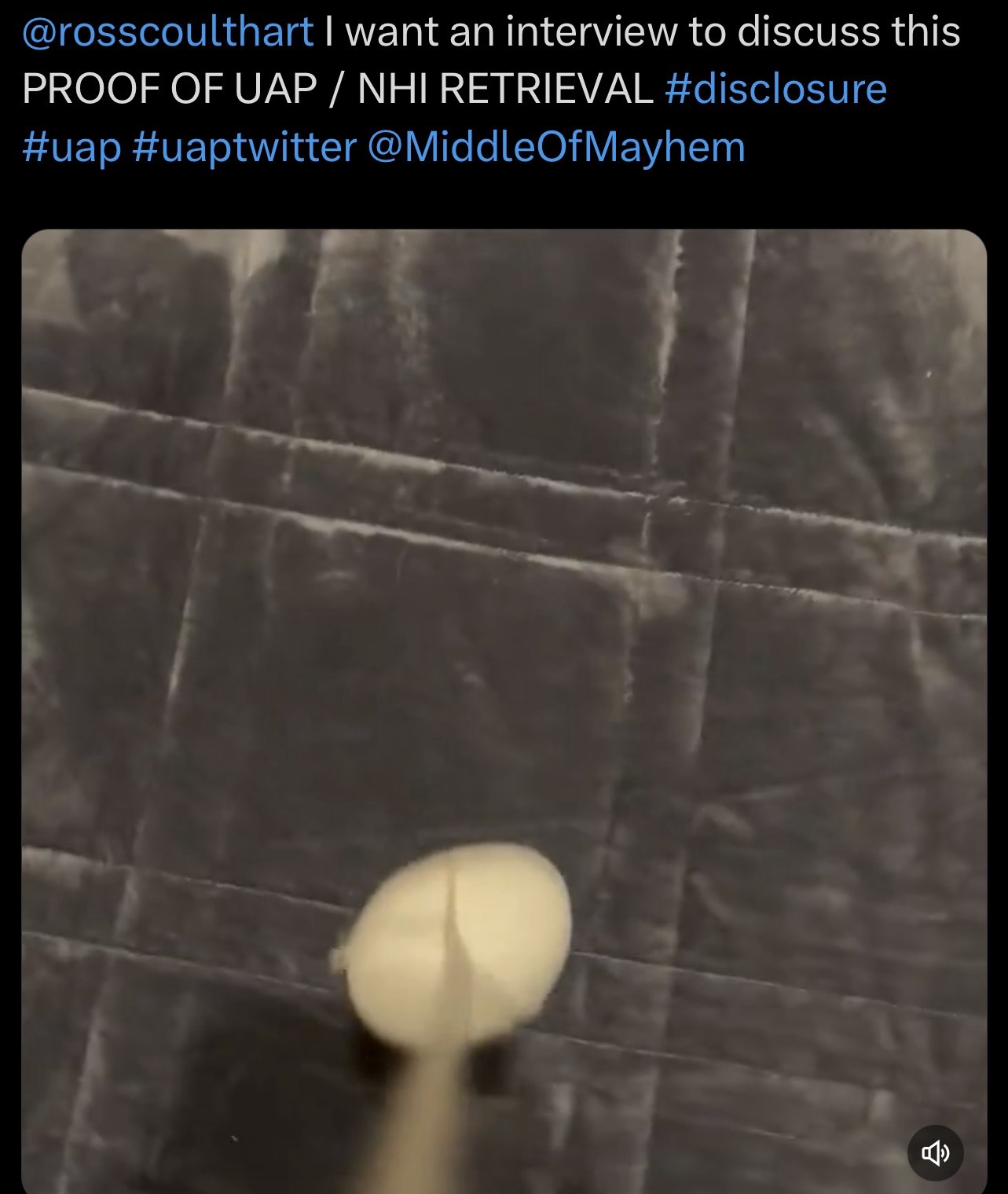
And it spawned some great memes on X:
COMMENT: I hope this episode helps to dispel the UFO community’s obsession with proving the UFO/UAP mystery through crystal-clear video footage. If this community is interested in furthering the cause of the UFO/UAP mystery, it should stop worshipping video evidence for several reasons.
The first is that in today’s era of easily falsifiable footage, whether through AI or CGI, any crystal-clear video footage, even if it shows something extraordinary, will not convince the doubters.
Ongoing attempts by claimed ‘skeptics’ on X to disprove the U.S. Navy’s relatively clear videos (GOFAST and GIMBAL) are a case in point – the highly professional pilots who filmed these encounters professed total ignorance and awe at the events. But this doesn’t stop ‘sceptics’ like Michael Shermer calling the UFO phenomena little more than ‘modern myth-making.”
Thus, any video of UFO/UAP – no matter how extraordinary – won’t serve a functional purpose. If anything, it leads to a counter-productive conversation about video and audio artefacts.
The second is that relying on convincing the doubters keeps the UFO/UAP conversation stalled. Even a hypothetically small probability that so-called Non-Human Intelligence (NHI) is behind UFOs should re-configure societal priorities towards its study. And ongoing hearings in the U.S. Congress attest that this probability is considered to be anything but small.
From a national security perspective, it would be foolish to delay this conversation to please a minority of so-called ‘sceptics’ who are unwilling and unable to change their point of view no matter the contemporary or historical evidence to the contrary.
In other words, why explain how the earth revolves around the sun to somebody who still believes it is flat?
But there’s one thing I couldn’t agree with the so-called ‘sceptics’ more on: all existing video footage of UFOs sucks. So we should move past it.
Glory to Spain,
Dario


One Response