
| SNEAK PEEK |
— Dario reassesses America’s drone sighting panic.
— Izzy argues that the new PISCES regulatory framework in the U.K. for trading private shares may well be economically challenged.
— The panic over foreign interference in European elections, specifically Romania’s, is full of contradictions.
Dear subscribers,
Apologies for the delayed send-out this week. My carpal tunnel still hasn’t abated, plus I was having a week off.
This is the last weekly newsletter of 2024, though we’re not entirely shutting up shop as we have a couple of special pieces prepped to close the year with.
As usual, this week’s newsletter was brought to you by me, Izabella Kaminska, and Dario Garica Giner.
Both of us wish you a very Merry Christmas and a happy and prosperous New Year.
Normal service resumes on January 11!
In the meantime enjoy the Ferrero Rocher, Quality Street, or whatever other family traditions make Christmas special for you.
Send tips to [email protected] and [email protected]
| THE BIG BLIND SPOT THIS WEEK |
DRONE SHOW 2: ELECTRIC BOOGALOO: The drone-sighting hysteria that gripped the United States just a week ago seems to have calmed a tad — but the drones themselves haven’t disappeared. From Lisbon to California, new reports of UFO sightings continue to emerge.
DARIO’S COMMENT: Since last week’s comment focused on the explainable elements of America’s drone panic, we thought we’d focus this week’s dispatch on sightings that are much more difficult to explain. Including those beyond America.
Portugal, for instance, has been experiencing several UFO sightings along its Atlantic coastline since at least December 9, according to TVI Portugal. As Vera Cardoso, a local archeologist, told TVI Portugal: “They didn’t look like planes, and being just below the horizon, they certainly weren’t satellites either (…) they looked reddish, almost orange, a very intense light.” Rui Carato, a professional birdwatcher, described what he saw as “anomalous lights, that slowly lifted above the horizon, something like 20 degrees. Then their light intensified and they disappeared. It was genuinely bizarre.”
In California, several Reddit users uploaded videos of an object seen in Riverside, east LA around 7:30pm on 19 December:

Another Redditor uploaded a separate shot depicting “a large stationary object with three lights” around 8:13pm, noting it behaved differently from the visibly normal flight traffic above the stationary object and appeared to be flying over Downtown LA.

Over in New Jersey, a Redditor highlighted the following drone footage from Clifton, claiming they had checked flightradar24 and there were no airplanes in that location. The object allegedly moved slowly and stopped for 2 to 3 minutes before moving southward.

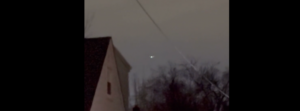
The sighting qualifies as mysterious because of seemingly non-regulation lights. The object, for example, projected red, white, and green lights at seemingly random intervals from its centre. As redditors highlighted, if it were a commercial aircraft, such lights would be in violation of FAA requirements since aircraft must show red, white and green lights around the aircraft rather than in the middle. FAA drone lighting requirements, meanwhile, require a single colour light strobing at a fixed frequency, “The random colours and random intervals make this (footage) a bit of a head-scratcher,” said a user named Sess on Reddit.
Nothing to see here: Federal authorities have not changed their tune, however. A joint statement from the FAA, the FBI and the Department of Homeland Security released on Thursday reassured that “sightings to date include a combination of lawful commercial drones, hobbyist drones, and law enforcement drones, as well as manned fixed-wing aircraft, helicopters, and stars mistakenly reported as drones.” The agencies claimed their officers had yet to identify “anything anomalous and do not assess the activity to date to present a national security or public safety risk over the civilian airspace in New Jersey or other states in the northeast.”
But actions speak louder than words? Despite the statement, the FAA issued temporary flying restrictions for a number of sites across New Jersey on Friday, 20 December citing “special security reasons”.
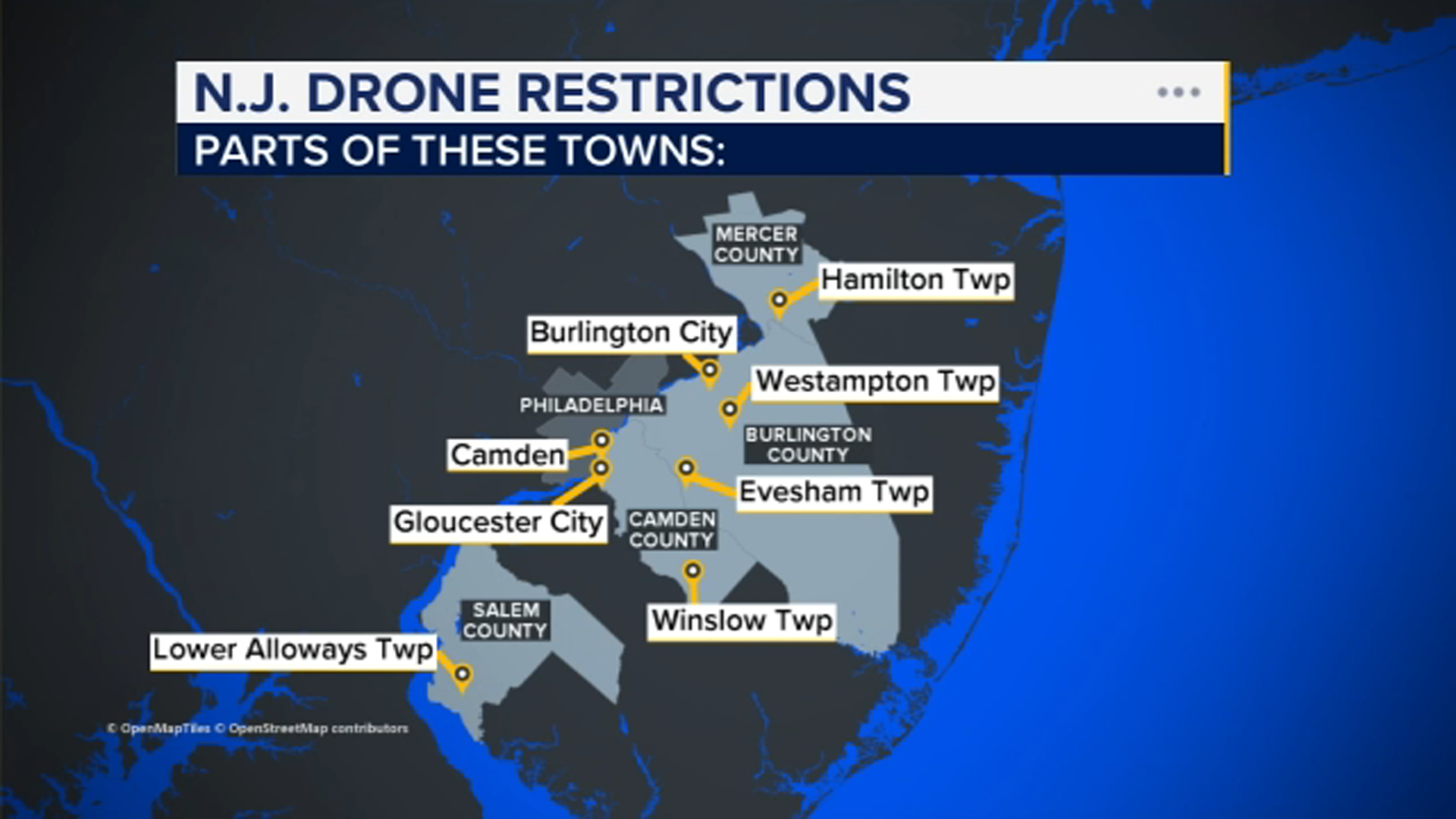
The restrictions on unmanned aircraft in these areas, now deemed “National Defence Airspace”, will be imposed until January 17. Drones that fail to comply or which pose “an imminent security threat” will be met with “deadly force” according to notices issued by the FAA.
Charles Werner, Director of Drone responders, told 6ABC News that the restrictions were “a rare move” and that it was being “done to try and get a better handle and identify aircraft in airspace and try to see any unauthorized aircraft that are still flying.”
Inconsistency continues. It has also not gone unnoticed, however, that the Pentagon’s mundane line on the nature of the drones clashes with its decision to hold classified briefings for Congressional members on the issue. The contradiction was loudly called out by UFO aficionados, who noted it was only likely to court further confusion and suspicion:
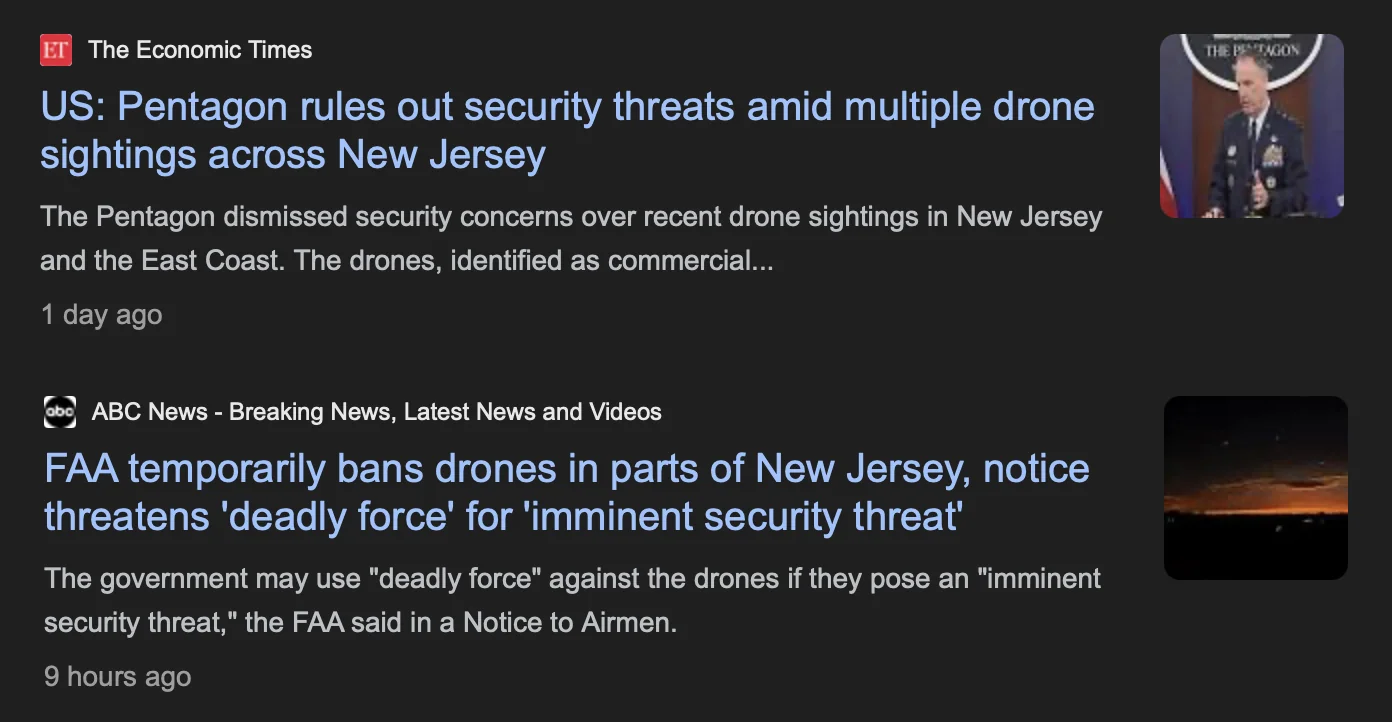
“Someone make this make sense” wrote one Redditor.
Over in the U.K., meanwhile, The Times reported there have been at least two secret meetings of Cobra, the emergency response committee, over the mystery drones flown over American airbases in England. “Military police, troops including members of the US Navy and police with drone expertise have been investigating the incursions over RAF Lakenheath, RAF Mildenhall, RAF Fairford and RAF Feltwell,” the paper reported.
Aerial safety implications: With public fears running large, the lack of a clear line from authorities is only likely to encourage reckless responses. As the FAA reported this week, the public has already taken to pointing lasers at suspected “unidentified craft” that too often turn out to be regular airplanes. Doing so is both illegal and dangerous, since lasers can incapacitate pilots, blinding them during flight, takeoff and landing. Reports of such incidents, nonetheless, have increased by 269 percent in December so far.
A noble lie? Federal agencies may, of course, only be pursuing the low-threat line to prevent public hysteria and panic about a genuine higher grade threat. But if that’s the case, the strategy isn’t working because they’ve failed to come up with a believable cover story for their contradictory actions.
For now at least, there appear to be few satisfactory explanations doing the rounds — all of which make the story a compelling blind spot.
| BUSINESS, ECON AND FINANCE |
BESSENT URGED TO USE U.S. GOLD ACT: An influential Bitcoin think tank that helped to get U.S. President-elect Donald Trump to throw his weight behind the cryptocurrency has unveiled a detailed plan for how the incoming administration can create a strategic Bitcoin reserve.
The policy paper, released on Monday by the Bitcoin Policy Institute, suggested U.S. Treasury Secretary nominee Scott Bessent may be able to get such a reserve underway without the need for Congressional approval if he taps existing executive authority under the Gold Reserve Act of 1934.
The proposal highlighted Bitcoin as part of a broader U.S. strategy involving tariffs, advanced technology controls, and reindustrialization to maintain global dominance. It argued that formally embracing Bitcoin as a reserve asset alongside gold and U.S. Treasuries would help the U.S. hedge against economic shocks and geopolitical risks.
“Authoritarian regimes are already developing systems that challenge U.S. financial power. If left unchecked, these trends could erode dollar dominance and weaken U.S. influence,” the report said.
Quick catch up: Trump publicly embraced Bitcoin earlier this summer, marking a notable shift from his previous skepticism toward cryptocurrencies. Since then, the virtual currency has soared by 50 percent, hitting record highs of over $100,000 per Bitcoin on expectations that the Trump administration will make Bitcoin a central pillar of its American economic and financial policy.
The creation of a strategic Bitcoin reserve (SBR), the report says, would help the U.S. preserve its position as a leader in financial innovation, reinforce dollar dominance and counter rival nations’ moves to develop monetary systems based on gold or central bank digital currencies.
“This plan provides a roadmap for stabilizing Treasury markets, securing technological leadership, and strengthening America’s geoeconomic edge,” Matthew Pines, the report’s author, told the Blind Spot/POLITICO.
If formally adopted, the plan — which cites both Zoltan Pozsar and Russell Napier in its footnotes — would see the U.S. initiate a phased Bitcoin acquisition strategy starting with Bitcoin already in U.S. possession because it was seized by law enforcement.
BITCOIN’S ‘PAYPAL MAFIA’ ASSEMBLES: As well as accepting campaign donations in Bitcoin, Trump’s pro-crypto turn has seen him stack his incoming administration with a plethora of well-known crypto enthusiasts, among them the U.S. treasury’s Bessent and Elon Musk, who as well as being an all round tech tycoon made his initial fortune in the payment space when he co-founded PayPal.
Vice President-elect JD Vance, whose 2022 U.S. Senate campaign was backed by fellow PayPal co-founder and venture capitalist Peter Thiel, is also a prominent Bitcoin advocate and investor.
Other pro-Bitcoin names within Trump’s incoming advisory team include David Sacks, yet another PayPal co-founder, who is slated to take on the position of AI and crypto czar.
Also on the pro-Bitcoin bandwagon: On Sunday, Trump announced the appointment of Stephen Miran, a pro-Bitcoin economist, as the new chair of his council of economic advisers. Trump’s nominee for Secretary of the Department of Commerce, Howard Lutnick, currently CEO of financial services firm Cantor Fitzgerald, is also anticipated to promote the integration of digital assets into the U.S. commerce sector.
Finally, Trump’s nominee for chair of the Securities and Exchange Commission, Paul Atkins, who is set to replace arch-crypto skeptic Gary Gensler in the role, is considered a crypto-friendly regulator.
LSE EXODUS CONTINUES: The London Stock Exchange’s dismal performance goes from bad to worse. According to the FT, the embattled stock exchange suffered its biggest exodus since the 2008 financial crisis. Overall, 88 companies delisted or transferred their primary listing from London in 2024 with only 18 taking their place, marking the biggest net outflow of companies since 2009. This is despite efforts by the U.K. government, regulators and the LSE to try and boost the City’s attraction to companies by reforming market rules.
ALL EYES ON PISCES: One of the big new concepts the government is backing to rescue the U.K. equity market is the creation of a “Private Intermittent Securities and Capital Exchange System (PISCES)” — a regulatory framework focused on facilitating trade in private shares. The idea was originated under the Tories, but Chancellor Rachel Reeves has leaned right into it, making it a central pillar of her growth plan.
Heralded as a “world first”, the exchange framework aims to make it easier for private companies to draw funding from qualified and sophisticated investors without the costly rigmarole of having to worry about investor protections.
As FT Alphaville’s Bryce Elder highlighted last week that means that, while platforms operating under the framework will be regulated, the concept of “caveat emptor” will apply to the spirit of regulation. One of the consequences is that insider trading will not be policed at all. The system is, therefore, geared to embody the Wild West dynamism of, say, the crypto or DeFi markets.
IZZY’S COMMENT: Britain’s entrepreneurial and business scene is, as might be expected, very bullish on PISCES. They think the new system will make the U.K. equity market more dynamic and attractive to growth companies.
But there are probably sound economic reasons as to why ‘information asymmetry’ has not historically been considered a competitive advantage in the exchange business.
Investors are usually far more willing to trade when companies adhere to common regulatory standards and disclosures and when they can be sure the playing field is level.
Without shared standards, investors have to expend more effort and resources to analyze different markets, reducing participation and activity. This also lowers trust and liquidity.
Information asymmetry of the sort celebrated by the PISCES framework is therefore very unlikely to beget liquidity.
While PISCES doesn’t pretend to be anything other than a resource for “intermittent” and, thus, low-liquidity exchange, it’s hard to ignore that it is liquidity that traditionally draws investors to platforms. It is also liquidity that drives transaction volumes, which are the ultimate objective of any exchange business model (since that is where fees usually come from).
It’s hard to imagine a scenario where for-profit entities will be prepared to invest in the development of PISCES-conforming platforms unless they can chase volumes and liquidity to boost profits. To be able to do that effectively, however, chances are they will end up imposing standards and regulations, as well as investor protections as a matter of competitive edge. Failing that, platforms will be forced to operate more like high-touch brokers than conventional exchanges.
But herein lies the paradox. If operators succeed in boosting liquidity and volumes, then they may no longer qualify as intermittent exchanges.
The other notable concern relates to adverse selection. High-quality companies might ironically end up avoiding PISCES if they think investors might assume that all companies using the regime are risky or fraudulent, and priced according to that risk. The further tiering of the market might also just add more complexity.
Last and not least, if the intent of PISCES is to help the U.K. government advance its industrial policy, the lack of control over insider trading, related party transactions and dual-class listings, may encourage government cronyism and/or state-directed investments.
| POLITICS, POLITICS, POLITICS |
SWITZERLAND AGREES TO EU DEAL: After three years of negotiations, Switzerland and the European Union have agreed on a significant deal to improve Swiss access to the bloc’s single market. The deal still has to be ratified by a national vote in 2026 but Swiss leaders say it is very much in their favor and should pass easily. Other politicians, such as the leader of the Swiss People’s Party, however, condemned the agreement as “a new step towards the submission of Switzerland to the EU” while wielding a halberd.
EU TO COMPETE WITH STARLINK: The European Union has signed an $11.1 billion deal to launch almost 300 satellites into low and medium-Earth orbits by 2030, seeking to construct a satellite constellation to rival Musk’s Starlink. The consortium developing the system is called IRIS (Infrastructure for Resilience, Interconnectivity and Security by Satellite). The cost of the public-private partnership has lept 76 percent from its initial estimate of €6 billion at inception. The program is set to be mostly funded from the public purse, with an industry consortium making up the difference.
ELON MUSK HEARTS THE AFD: The billionaire ruffled more than a few feathers this week when he opined that “only the AfD can save Germany”. The comments were attached to a video he reposted from a right-wing German poster highlighting how the media was underrepresenting the AfD’s strong polling. The video also highlighted that the media’s favored candidate for chancellor, the CDU’s Friedrich Merz, was overly committed to preserving Germany’s inflated bureaucracy. The collapse of Olaf Scholz’s government has triggered elections for 2025.
Former EU commissioner, Thierry Breton, meanwhile, accused Elon Musk of engaging in foreign interference by backing the AfD (even though Breton himself is French).
DARIO’S COMMENT: Recent polling implies the right-wing CDU/CSU led by Friedrich Merz is poised to have the upper hand in coalition talks, continuing a trend that has been apparent since this summer.
While these elections may prove disastrous for the CDU’s conventional coalition partner, the FDP — which is currently polling beneath the 5 percent threshold for entrance to the Bundestag — the high numbers for the CDU suggest they may only have to partner up with one additional party to achieve a majority: either the Greens or the SPD. Here is a graph concocted by the FT that explains it: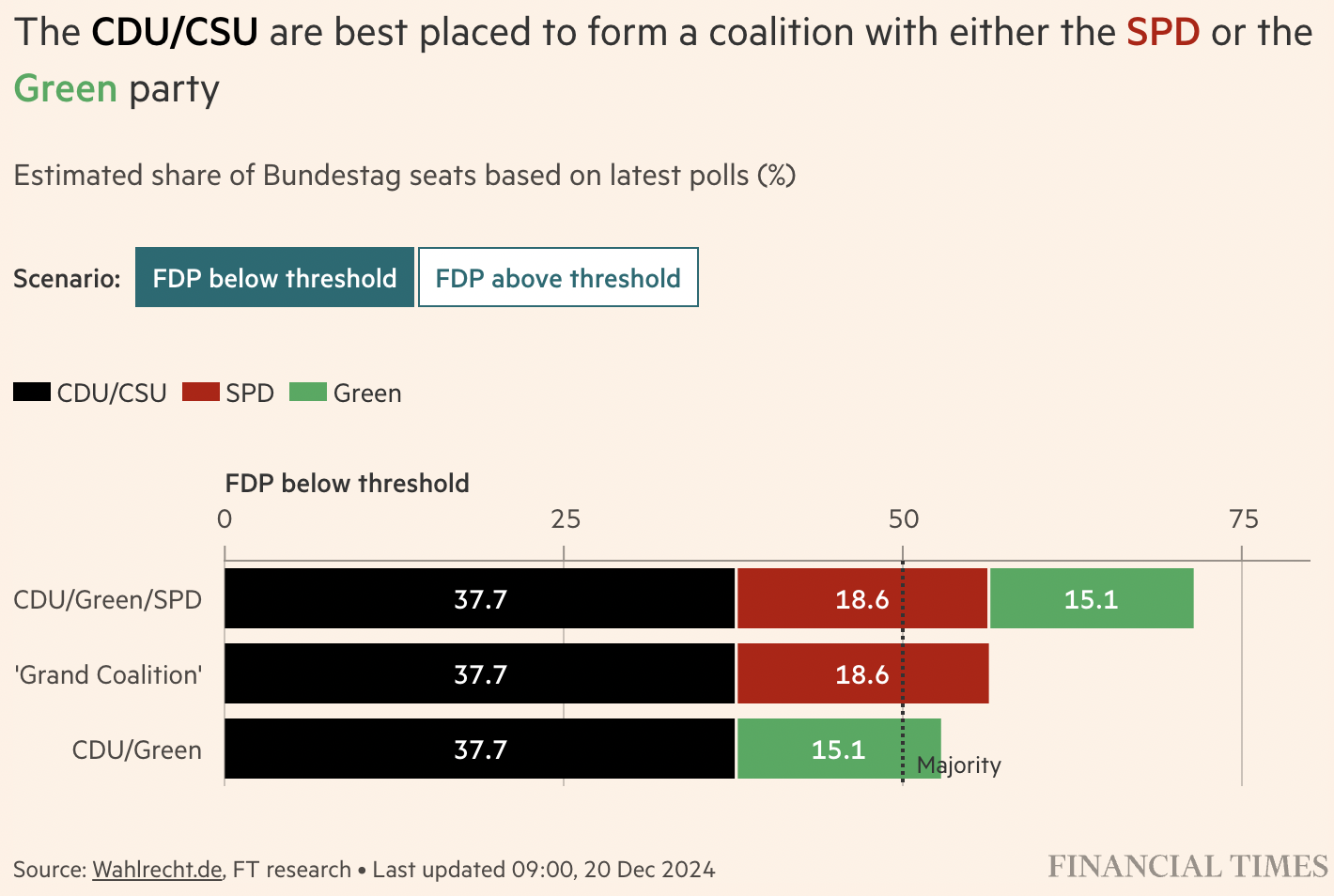
What these polls don’t account for, however, is the potential popularity of the AfD. Officially, support for the AfD has fallen from a 25 percent high of vote share achieved in January to some 18 percent. But that’s still 10 percent more than it achieved in the last election cycle.
Another election novelty is how the hard-left vote split between Die Linke and the BSW, the novel nationalist and socialist parties, has made it possible that Die Linke is set to remain below the 5% threshold necessary to enter parliament. The BSW, on the other hand, is down from its heights of 8 percent support to around 5.8 percent.
As we have long pointed out with reference to Marine Le Pen’s reversal of fortunes in the French election, we believe cordon sanitaires against far-right parties often play to their advantage. The far-right message usually involves claiming they are the silent majority, opposed by a cabal of liberal interests — points of view that are seemingly proven right when the entire political spectrum from far left to center right plots to keep them out of power. Going further, keeping these parties out of government does them an incredible favor. It means that their largely inexperienced cadre of political operators do not get to commit embarrassing mistakes that limit their follow-on chances at governance, boosting their popularity relative to those who have had experience governing.
However, the biggest question hanging over Germany does not relate to the AfD as much as whether the country will be able to get its economy back on its feet.
Friedrich Merz’s leadership has already proposed alternative energy ventures to satiate industrial demand for low-cost power, mostly involving the rebooting of nuclear energy plants, but none of these plans will be able to plug the energy gap in the short-term upping the chances of a long and painful recession in the interim — one that may finally send the AfD over the electoral edge.
| GEOPOLITICAL HOT SPOTS |
HOUTHIS TO LAUNCH SAFE SHIPPING SEMINAR: In an unexpected turn of events, Houthi rebels have reached out to trade periodical TradeWinds for advice on what to include in their upcoming webinar on “security of navigation in the Red Sea”. In an email to the publication, they said they were seeking topic ideas to “enrich the discussion” which will take place at an unspecific venue and date.
The notable change of tone may indicate two things. On the one hand, progress may finally have been made in negotiations between the Houthis and Western security officials over how to transit ships safely through the critical shipping route. On the other hand, this may be the Houthis’ unilateral way of establishing ties with Western firms and enforcing a unilateral agreement with them (which will likely involve some type of toll).
ROMANIAN ELECTION PROBE: The fallout from Romania’s canceled election continues to spread online, with the affair poised to become a key battleground for European hearts and minds in 2025.
Quick recap: Romania’s Constitutional Court canceled the Romanian elections two weeks ago on claims that Călin Georgescu, an outsider candidate who performed unexpectedly well in the first round, had benefitted unfairly from a Russian-funded TikTok campaign that supposedly broke Romanian election laws.
The court’s decision was based on declassified intelligence reports indicating that far-right candidate Călin Georgescu benefited from an aggressive online campaign, including the use of artificial intelligence and substantial undeclared funding, aimed at manipulating public opinion in his favor.
The European Union has not officially commented on the legality of the election, leaving the issue as is its practice to the domestic constitutional court. Brussels has, however, sent a strong indirect signal by opening a formal investigation into whether TikTok failed to “assess and mitigate systemic risks” linked to election integrity. A significant portion of Romanian society is on TikTok.
The mainstream view: Few mainstream outlets have questioned the assessment of Romania’s intelligence services, taking it mostly at face value, despite their well-known shortcomings and problematic history.
Key context: Romania’s intelligence services, while significantly reformed since the fall of communism, continue to be weighed down by speculation that linkages to the networks of the notorious Securitate have not been entirely weeded out. During the communist era, the Securitate acted as an oppressive tool of state control, engaging in extensive surveillance, political persecution, and human rights abuses. After 1989, many former Securitate members were absorbed into the new intelligence agencies, such as the Romanian Intelligence Service (SRI), fostering skepticism about their democratic legitimacy.
Lingering concerns over corruption, political interference, and opaque practices have further undermined trust. Key controversies include reports of secret protocols between the SRI and the judiciary in the mid-2000s, reminiscent of the Securitate’s tactics.
The bigger picture: Among the Eastern European countries that are now part of the European Union, Romania has retained the greatest share of former communists in its political system, both in overt forms and in reinvented parties composed of former communist officials and interests.
The Bertrand pickup: The internet’s favorite authoritarian apologist Arnaud Bertrand weighed in on the saga at the weekend by highlighting the findings of a Romanian journalistic investigation by Snoop.ro into the underlying evidence provided by intelligence services as well as his own review of the underlying evidence.
His conclusion? “An entire election was canceled on the basis of what could just amount to an effective social media strategy”, and that “what just happened in Romania is that you had the country’s top court cancel an entire presidential election because of the existence of a coordinated social media campaign on TikTok that the intelligence services claimed — without concrete evidence — resembled Russian tactics.”
Bertrand also argued that the snoop.ro investigation proved that what was presented as evidence of foreign interference was actually a campaign paid for by the ruling party.
Or, as he put it, “a ruling party used intelligence services to cancel an election based on ‘foreign interference’ evidence that they themselves paid for!”
But is it really so? Bertrand’s interpretation suggests Romania’s ruling party, the National Liberal Party, emulated the tactics of the U.S. Democrat party in 2016 by creating a de facto “foreign influence” insurance policy in the event of a loss at the polls. Except, instead of using former spooks to draw up and circulate a damaging dossier alleging evidence of Russian collusion, the Romanian equivalent was focused on surreptitiously funding a collusive digital marketing strategy that could then be pinned on the Russians.
Bertrand went on to argue that publications like POLITICO purposefully misrepresented the findings when they reported the ruling party’s campaign may have been maliciously hijacked to benefit Georgescu.
Except… if anyone is misrepresenting anything, it is Bertrand.
The report acknowledges PNL’s financial involvement but does not conclude that the campaign was explicitly designed to manipulate the election in favor of Călin Georgescu. It suggests that elements of the campaign were altered or repurposed, potentially beyond PNL’s intentions.
IZZY’S COMMENT: It is wrong to suggest that the collusive digital marketing techniques at the center of Romania’s canceled election — amplification, copypasta narratives, and influencer-led boosterism—are exclusively a Russian hallmark. These methods are not a geopolitical innovation; they are standard tools in the playbook of modern digital marketing. Whether used to astroturf support for corporates like Wirecard or political candidates worldwide, these techniques are effective, readily accessible, and universally deployed. Labeling them as foreign interference disregards their ubiquity and distracts from the deeper issues at play.
The idea that an outsider candidate rising through social media is inherently suspicious is similarly flawed. Platforms like TikTok are political tools no different from traditional media assets like newspapers or broadcast networks. Just as The Sun, a foreign-owned tabloid, played kingmaker in British elections, TikTok’s algorithms can amplify certain voices and narratives. This is not evidence of sabotage but a reflection of how influence operates in a hyper-connected world.
The real structural issue lies in the absence of local alternatives to foreign-controlled social media platforms. Unlike traditional media, which often has domestic ownership and regulatory oversight, platforms like TikTok and X (formerly Twitter) operate under foreign jurisdiction, with opaque algorithms determining visibility and engagement. This creates a vulnerability where foreign interests can indirectly influence political outcomes.
Proposals to counteract this risk—such as restricting political discourse on these platforms—introduce a dangerous precedent. Censorship and suppression of free speech, however well-intentioned, undermine the democratic principles they seek to protect. The challenge is to ensure fair political competition in the digital age without resorting to draconian measures that erode freedoms.
In this evolving landscape, the focus should shift from blaming foreign interference to addressing the systemic imbalance of power in digital media. Building transparent, locally accountable platforms and ensuring algorithmic accountability are critical steps toward protecting democracy without sacrificing liberty.
| MEDIA MATTERS |
POLISH MEDIA PROTECTIONISM: Polish Prime Minister Donald Tusk is looking to prevent hostile foreign entities aligned with opposition parties from acquiring strategic independent media assets in hostile takeovers.
According to POLITICO, Poland’s government will now have to approve any takeover of major media company TVN, which it fears is a target for investors from countries like Hungary, Russia and China.
Czech and Hungarian companies are supposedly interested in taking over TVN because its American owner, Warner Bros. Discovery, is facing huge losses.
IZZY’S COMMENT: During his 2023 campaign, Donald Tusk, leader of the Civic Platform (PO) party, criticized the ruling Law and Justice (PiS) party for transforming Poland’s state media into a propaganda tool. He accused PiS of undermining media independence and pledged to restore objectivity and free expression in public broadcasting.
Upon assuming office in December 2023, Tusk’s government swiftly dismissed and replaced the directors of state television and radio outlets, as well as the government-run news agency, aiming to depoliticize these institutions and ensure impartiality.
PiS, however, argued that prior to its governance, public media were biased towards liberal viewpoints, neglecting conservative and traditional Polish perspectives. By guiding TVP’s editorial direction, PiS said it was correcting this imbalance, promoting media pluralism, and safeguarding Polish cultural and national identity.
The counterpoint was always that the state broadcaster should represent both perspectives and that in a free market there was nothing preventing conservative interests from forging right-wing media brands to compete with liberal ones.
Blocking the acquisition of TVN (which is already owned by foreign interests) by hostile foreign actors like Russia or China is one thing. But blocking the acquisition of TVN by business entities from a fellow EU member state like Hungary is another thing entirely — especially in the context of Mario Draghi’s bid to encourage cross-border consolidations.
TURKISH BUILDUP IN SYRIA: Kurdish and American officials have become preoccupied with what they claim are signs of a Turkish military buildup that could signal an incursion into areas of northern Syria currently controlled by the Kurdish-led and American-backed SDF.
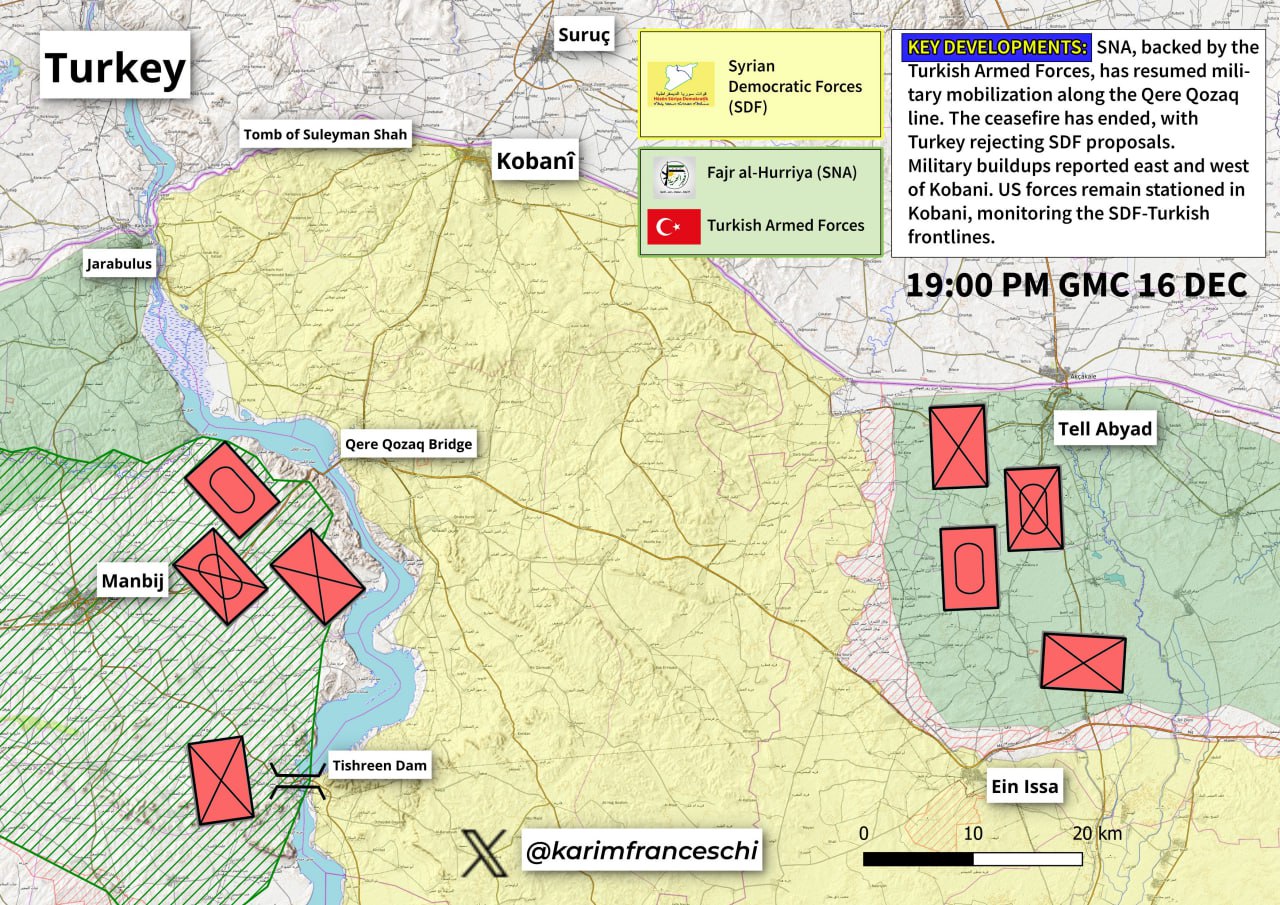
(Map source)
This buildup comes after news that an American-brokered ceasefire between the SDF and their Turkish enemies broke down last week opening the door to the continuation of a Syrian Civil War along regional lines, as predicted by us two newsletters ago. Turkey’s increasing free hand in the region and its seeming disregard for U.S. interests has led American think tanks such as the Middle East Forum to claim that Americans should get ready to “kill Turks in Syria”. It also comes amid President-elect Trump’s statement that Turkey “did an unfriendly takeover of Syria.”
WEST BANK CRACKDOWN: The Palestinian Authority has cracked down on West Bank militants in the Jenin refugee camp, a long-time hotspot of armed Palestinian militant groups opposed to the neutral political position of the Palestinian authority. This crackdown came after armed militants stole two vehicles belonging to the Palestinian Authority in response to the arrest of a local moneychanger who was accused of transferring funds to the Islamic Jihad.
DARIO’S COMMENT: With all eyes focused on American drones and the fall of the Syrian regime, chances are you may have missed that things are heating up in another area of Israeli interest: the West Bank.
The recent action by the Palestinian Authority is a salient move for a number of reasons. As sources told Haaretz, Jenin is “a microcosmos of the whole West Bank. If the PA sputters there, its control in the entire region is in danger.”
These sources also informed Haaretz that graffiti sprayed on streets in the West Bank compared the fall of Assad to the future fall of Mahmoud Abbas’ PA.
The Palestinian Authority is embroiled in a long-term legitimacy crisis over its continued failure to deliver Palestinian statehood and hold elections. Its popularity has waned significantly, particularly in the northern West Bank — where the Jenin camp sits.
The paper also claimed “there are political figures of influence in Israel, notably the far-right parties in Netanyahu’s coalition, who would take a positive view of any such scenario.”
Thus, while it’s not in the interest of the main Israeli authorities to let the PA collapse, far-right groups now lodged inside the Israeli state and police would be more than content to occupy the power vacuum left by a PA collapse and use it to expand Israeli settlements in the area. This places their interests in line with extremist organizations in the area, who have long been vying to take over the helm of the West Bank but have been impeded by the PA’s international legitimacy and the military aid it receives from Israel.
Where’s the blind spot? Given such developments, it’s entirely possible that another centralized Arab authority, this time in the West Bank, could collapse in the following months. This in turn could lead to an Israeli offensive to safeguard the interests of its nationals there.
| WHAT WE’RE PROCESSING |
— The Vatican is allegedly ‘on the brink of Bankruptcy’ due to the dramatic decline in global donations under Pope Francis’ leadership.
— Swiss lawmakers issued a 560-page-plus report on Friday revealing a culture of secrecy at the centre of Switzerland’s government and detailing the confusion it caused.
— Who is Daniel Křetínský, the new boss of Royal Mail?
— Trump is looking to privatize the U.S. Postal Service.
— The interim report on the failures and politicization of the January 6th select committee is now available.
— How an ex-Stasi officer was allegedly appointed to a cabinet minister post in Thüringen to keep the AfD out of government.
— Marc Andreessen inadvertently corroborated Eric Weinstein’s longstanding theory that a lot of science may have been purposefully suppressed.
— Nigel Farage accused Keir Starmer of purposefully canceling some local elections to prevent Reform from upstaging Labour.
