They say if it floats, flies or [EXPLETIVE], don’t buy it: the expense of maintaining yachts and private jets can be far more expensive than buying the assets. Hence, ownership of such assets ends up a domain of not just the wealthy, but the ridiculously wealthy.
And yet, the funny thing about yachts and private jets is that, despite their ridiculous expense, the market for these assets is often remarkably resilient to recession. The ridiculously wealthy tend to be price insensitive to the woes of the broader economy — unless they are really, really unlucky.
This time, however, could be different due to how intimately connected this crisis is to energy constraints.
There is no better indicator of the upcoming woes facing the PJ-endowed than the current furore surrounding Kylie Jenner’s private jet use.
The billionaire makeup-mogul is getting all sorts of heat for posting the following image of her and her other half in front of their respective private jets on Instagram. “You wanna take mine or yours?” reads the caption.
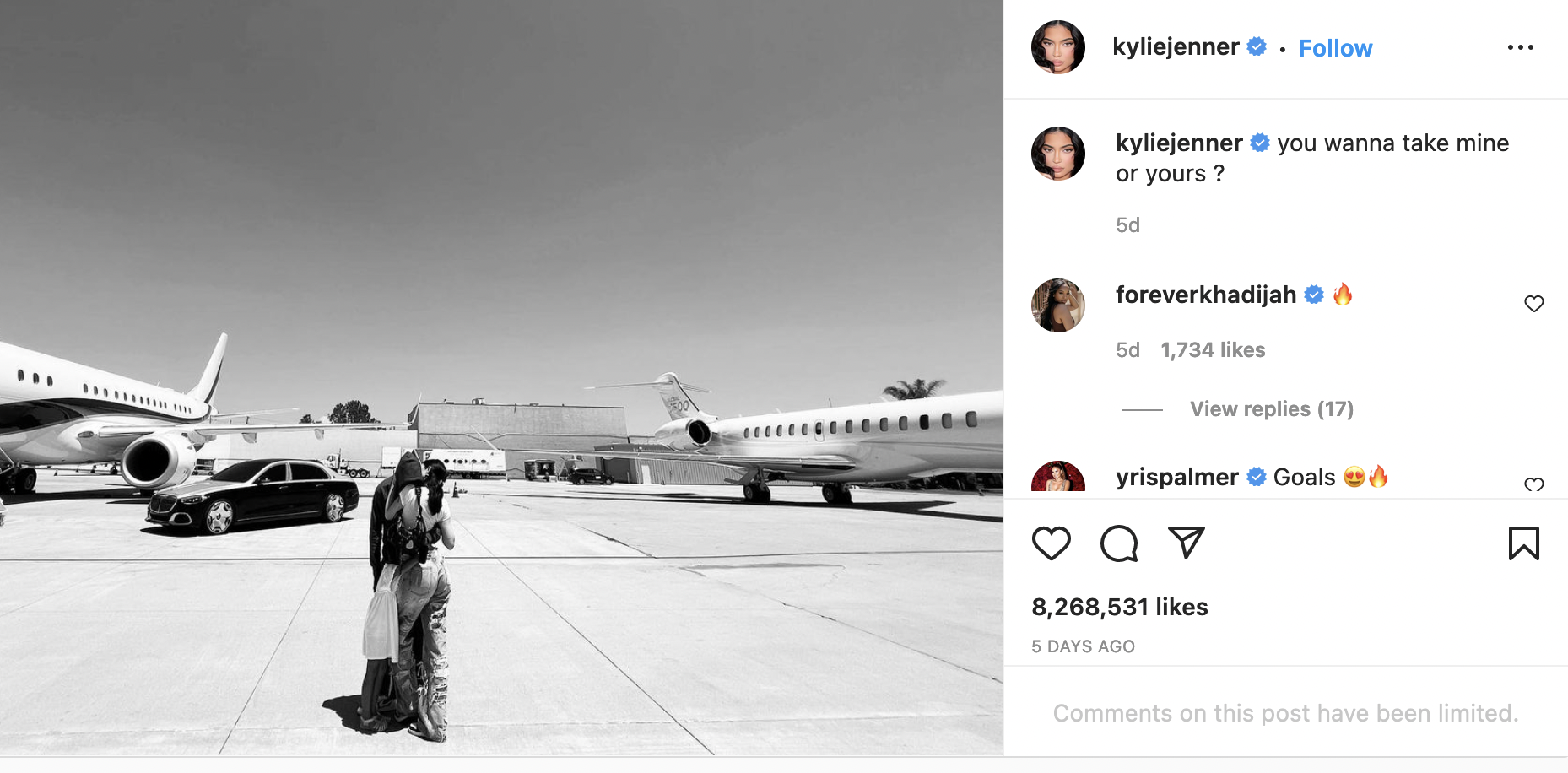
Was it tone deaf? For sure. Was it on brand? Hell yes.
The Kardashians are rarely ones to shy away from flashing their wealth because being excessively opulent and proud of it is the foundation of their collective brand. They are supposed to play the part of aspirational figures for the wider masses.
And yet, this time around, something has really changed in the mindsets of their usually obliging fans. The backlash to the private-jet-gate has been extraordinary. On par even with that time the world (specifically India) went after Jade Goody for being mean to Shilpa Shetty.
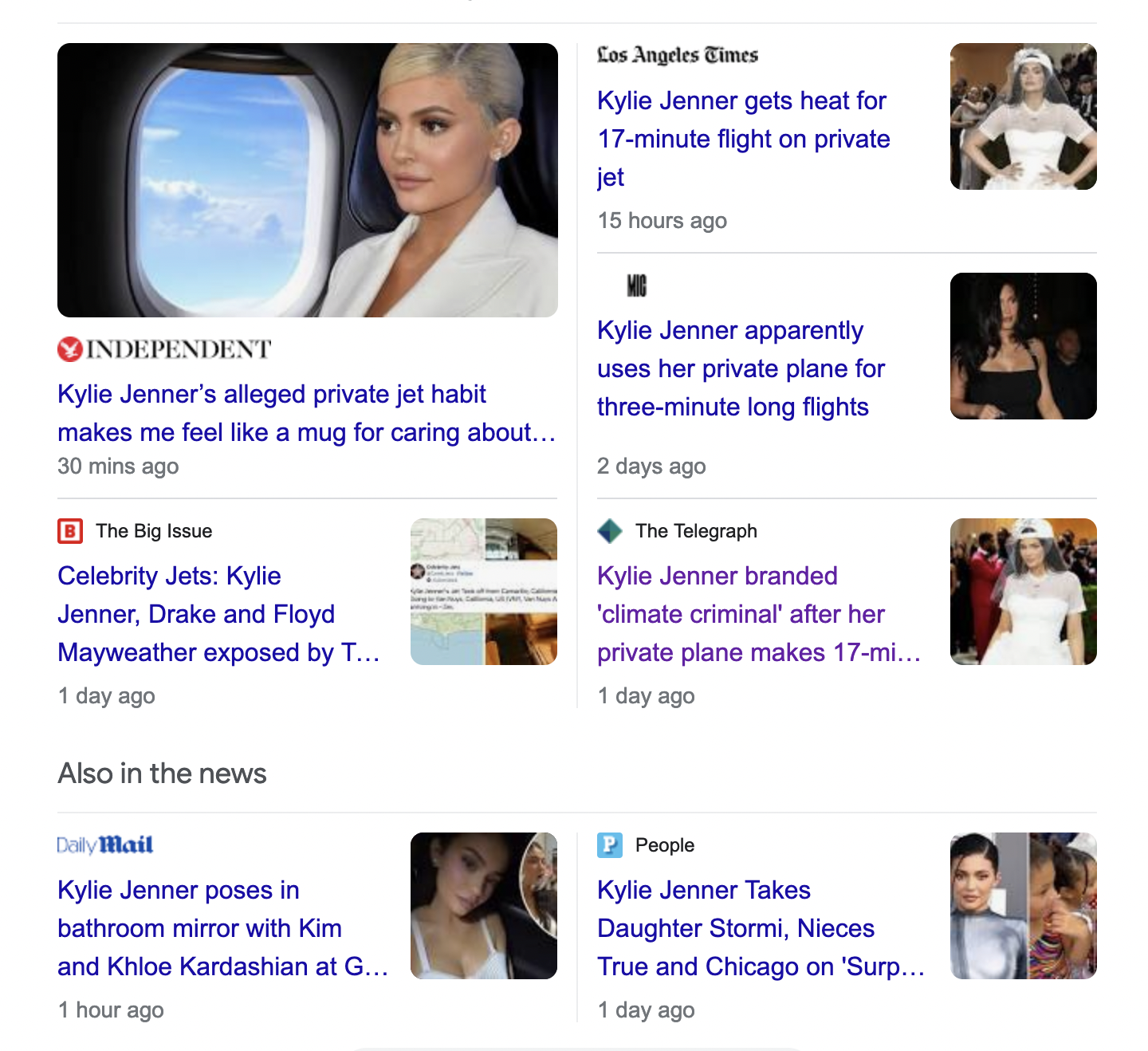
A forensic analysis of Kylie’s private jet use has since followed, revealing she often takes a private jet to troubleshoot her way through 40 miles of traffic or less for a few minutes in the sky. For this she has been branded a climate criminal.
Here’s just a small flavour of the news:
In some sort of medieval atonement ritual, Kylie has even taken to shopping at Target to make public amends.
But why should investors care?
Probably because of what this episode indicates for how the world is likely to view the super-rich and their array of excessive lifestyle assets in a recessionary period marked by a shortage of core resources. What started off as the confiscation of oligarch yachts is arguably turning into a much wider “cancellation” of the ability of the rich to indulge in their own personal wealth. It feels somewhat revolutionary what’s going on.
The message for the wealthy seems to be that once you are on the public radar it’s hard to go back into private consumption of your wealth. This is due to how easy it is these days for the public to watch and track your mega assets, from boats to PJs through the system.
Indeed, the only way to enjoy one’s mega wealth in this climate is not to draw attention to it in any shape at all.
This is a big turnaround for what it means to be wealthy in America, since the country was one of few in the world where being proud of one’s material wealth was viewed as natural rather than crass. This is very different to how Europeans engage with their super wealth. They are far more likely to be private and discrete because, no doubt, many multiples of revolutions have taught them it doesn’t pay for anyone to know the full extent of your wealth.
Adding to this zeitgeist is the latest super-yacht piece from the New Yorker. As Evan Osnos writes, citing Bob Denison, of Denison Yacht Sales (who The Blind Spot has been speaking to as well regarding crypto payments in yachting):
In Palm Beach, the yachting community worried that the same scrutiny might be applied to them. “Say your superyacht is in Asia, and there’s some big conflict where China invades Taiwan,” Denison told me. “China could spin it as ‘Look at these American oligarchs!’ ” He wondered if the seizures of superyachts marked a growing political animus toward the very rich. “Whenever things are economically or politically disruptive,” he said, “it’s hard to justify taking an insane amount of money and just putting it into something that costs a lot to maintain, depreciates, and is only used for having a good time.”
This, by the way, might explain the move by Denison to accept crypto payments.
And yet it’s unlikely that crypto will be able to fully mask who owns what and where. The yachting world, like crypto itself, remains anchored to onshore jurisdictions which demand full KYC and AML.
Nor do we think that the mega-rich have really understood the full implications of Western countries moving to Central Bank Digital Currencies (CBDCs) — de facto account-based money — which has the capacity to end the neutrality of money.
In that scenario, it doesn’t matter how much money you might have, it’s how you are permitted to spend it that does (based on other government/social imposed compliance variables).
The rabble may truly be coming for the yachts and planes in the style of a Russian revolutionary mob. And that means the super-wealthy might be about to get a rude awakening.