

| SNEAK PEEK |
— Izzy takes a closer look at new Chancellor Rachel Reeves’ big economic idea of “securonomics” and what it really entails.
— The US Supreme Court’s decision to grant immunity to the presidential office puts America’s constitution on course for an Augustus moment.
— The prospect of peace talks between Turkey and Syria looks set to unsettle NATO.
Good morning subscribers!
The Blind Spot’s mission is to focus on angles or stories not reported elsewhere. So let’s first get to the points that might have been crowded out by the UK general election.
Last week we warned of potential turmoil in France on Monday should Macron’s centrists be largely wiped out after the first round of France’s snap parliamentary election. That did not transpire. Not only did Macron put in a better showing than expected, the far right’s Jordan Bardella began to hint of Melonification — i.e. a willingness to moderate once in power. This notably took the shape of walking back the National Rally’s original spending plans. Meanwhile, a bunch of noteworthy economists came out to say the left’s much spendier plans were likely to be less fiscally dubious for France than Le Pen’s, giving Macron just the excuse he needed for a tactical alliance with them on the candidate lists. That’s despite Finance Minister Bruno Le Maire’s warning of exactly the opposite a mere two weeks ago.
The logic behind this advice is that the Left are far more likely to keep France integrated within the EU, while RN’s policies could encourage fragmentation. The second round of the vote is on Sunday. Thus far, there is a good chance France gets its equivalent of a hung parliament, and — if it happens —markets should respond favourably. At least at first. The sentiment could change once the penny drops that the related political gridlock would make it tougher for France to achieve its fiscal targets.
Politico’s central banking correspondent, Ben Munster, meanwhile, was on the ground with central bankers gathered in Sintra, Portugal, and according to him there was more anxiety in those circles about a prospective power vacuum in America and a Trump presidency than any instability in France. We think the worst-case scenario in France has now abated. But the country is certainly not out of the woods just yet. As for the US, there’s something of a bank run going on with Joe Biden. What began as a small trickle of calls to step down, has turned into the equivalent of a landslide of an exit.
Over in the UK, meanwhile, Labour has won a literal “landslide”. But, we think, regardless of anyone’s politics, it’s difficult to get excited about the regime change. Fraser Nelson at the Spectator coined it a Potemkin landslide, based on the disappointing vote share for labour and the low turnout. Nigel Farage, meanwhile, has been dubbed a useful idiot who only served to break up the Tory vote. And perhaps that is the case. But, we guess, those lacking enthusiasm for any of the main parties, felt a need to have their voices heard. The result is the rise of the independents, Reform’s four seats, the Greens’ four seats and the Pro-Palestinian bloc, made up of another five independents. Where Labour was down in vote share, it was also due to the Palestine or Reform challengers.
Our big blind spot this week is a long one, but we think an important enough subject to justify it. Please stick with it.
Send tips to [email protected] and [email protected]
| THE BIG BLIND SPOT THIS WEEK |
FIVE YEARS OF ‘SECURONOMICS’: All eyes may be on new Prime Minister Keir Starmer, but it’s Rachel Reeves, the first female Chancellor of the Exchequer, who offers the more interesting story for markets and business. Below are the key Reeves factoids to be aware of, courtesy of Politico’s James Fitzgerald.
Rap sheet: The new Chancellor has been a Labour MP for Leeds West since 2010 and Keir Starmer’s Shadow Chancellor since 2021. Prior to entering politics, Reeves had stints at the Bank of England as an economist, including a secondment in Washington at the British Embassy, and four or so years working in Britain’s private banking sector, namely Halifax Bank of Scotland. Oh, and she was also once the under-14 U.K. girls’ chess champion.
Strong and stable: Reeves’ thing is what she terms “securonomics”. She hopes her strategy of reforms, safe and sensible economics, and (rather restrictive) fiscal policy will usher in a new age of U.K. economic growth and wealth creation, which were the main messages in the Labour election manifesto.
What’s the big idea? Securonomics is centred on a rejection of the hyper-globalisation of old and an acknowledgment that Britain must embrace a more strategic industrial policy concentrated on “modern supply side” economics if it’s to move on. In a speech in Washington last May, Reeves spelled out how her vision would see the formation of new partnerships between the free market and an increasingly active state, but also between countries across the world who share each other’s values and interests.
Lock it in: Following on from the Liz Truss mini-budget debacle in October 2022, Reeves has promised voters that she will stick to “iron-clad fiscal rules” to demonstrate Labour will be fiscally responsible, and has pledged to legislate a “fiscal lock”, guaranteeing that any government wanting to make permanent and significant tax and spending changes will be subject to an independent forecast from the Office for Budget Responsibility. Reeves wants to be seen as a safe pair of hands, essentially.
Together forever: Reeves has also promised to partner with UK businesses, including those in the City of London, through the party’s Industrial Strategy Council and other groups. Business leaders will have a seat at the table and a say in the direction of travel, which has been welcomed by City bosses, including the CEO of TheCityUK. Labour has also pledged to create GB Energy and a National Wealth Fund, and all of the above, it is hoped, will drive a boom in private investment into the UK economy.
If the term ‘securonomics’ has only crept up on you now, fear not. You are not alone. Sometimes we are slow to recognise bigger trends. Or, more notably, the same old concepts being rehashed under new names.
But with the UK’s new Chancellor Rachel Reeves having made a very big deal of the idea, it’s time to get familiar with the thinking.
For the full low down, it’s easiest to refer to the numerous speeches Reeves has already presented as Shadow Chancellor, in which she outlines her vision for the UK economy.
But that, we don’t think, tells the full story. Securonomics, really, fits into a much bigger economic trend feeding its way across the Western bloc. For a long time, we at the Blind Spot, had our own term for this trend. We described it as the political push towards a perma “war economy” in tandem with a Gosplan technocratic system in the UK, Europe, and the US.
It turns out, however, that the “powers that be” had somewhat different ideas about how to classify the trend. The correct nomenclature is actually “Modern Supply Side Economics” (something we discovered only recently).
If that immediately evokes thoughts of Thatcher or Reagan, that’s probably not coincidental. In the world of behavioural “nudge” systems, it pays to deflect one’s real intentions by cloaking them in euphemistic language. Reeves, herself, has already been likened to Thatcher in the press due to her continuous invocation of Thatcherite language. But don’t let that fool you. In reality, modern supply-side economics (which we will refer to as MSS from now on) couldn’t be more different to what Thatcher and the monetarists were trying to accomplish in the 1980s. In fact, it’s probably fair to say it is the antithesis of what would later become known as “trickle-down” economics.
But first some historical context.
The so-called Barber boom that followed ran from 1972-1973. During this time the government pursued an explicit growth target of 10 percent in two years. But the experiment failed disastrously. Prices and unemployment eventually ended up rising together, bringing about not just inflation but high unemployment too. The consequences set the scene for the UK’s 1976 IMF bailout and the winter of discontent of 1978 which brought Britons the three-day week.
When Prime Minister Liz Truss decided to undertake a similar go-for-growth tax cut policy in 2022, markets understandably freaked out fearing a similar outcome.
But what markets might have missed was that Truss was likely conscious of the fact that, while Heath’s policies had failed abysmally, they would years later be emulated by Margaret Thatcher somewhat successfully thanks to the help of some new economic thinking.
“You will only have inflation if the quantity of money increases more rapidly than output. You can only stop inflation by slowing down the rate of monetary growth,” Friedman famously argued.
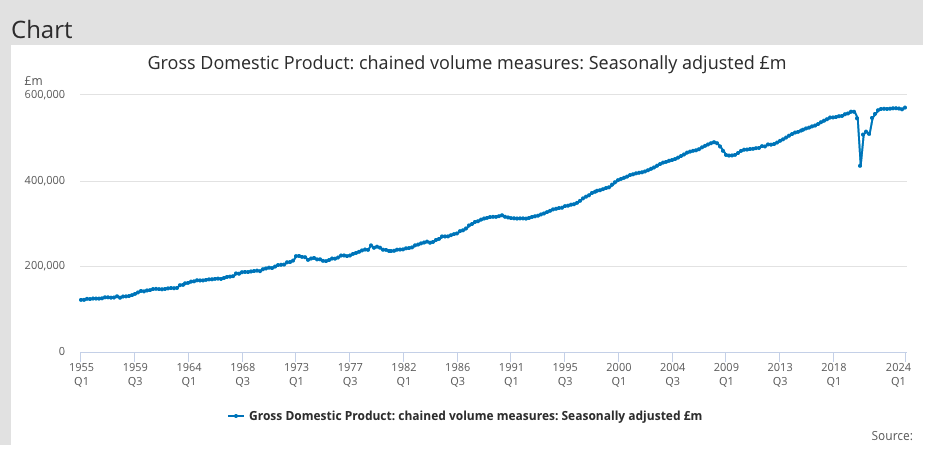
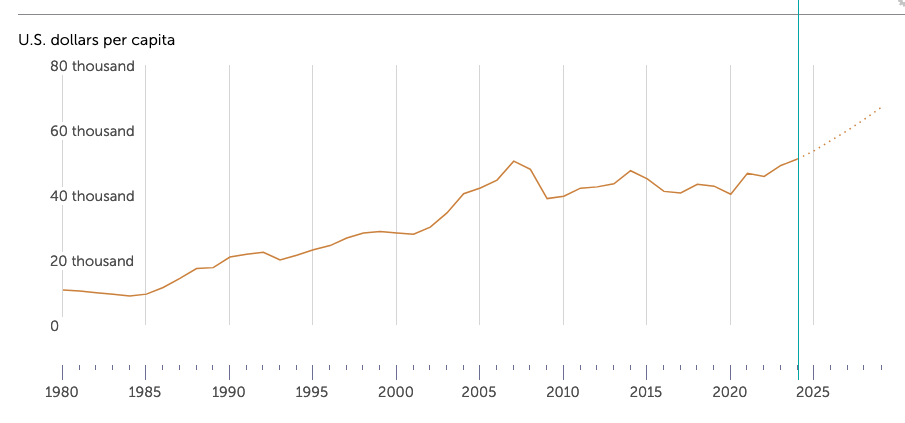
What is often forgotten is that the early days of Thatcher’s policies were a massive dud. Fiscal austerity was leading to unprecedented bankruptcies, unemployment and factory closures, and she too came under extreme pressure to give the policies up. But when Thatcher’s popularity, just like Heath’s, began to plummet — unlike him — she famously refused to turn. Not only did she double down on cuts to public spending, she pushed ahead with nearly complete deregulation of the City by 1986. Yet, it was only when she cut interest rates and allowed the pound to devalue, making British exports even more competitive, that things really began to pick up.
The UK boom that followed eventually turned the City into an international financial centre. Her success was all the more notable when juxtaposed with the accelerating decline of the USSR at roughly the same time, and the fact Moscow was only then beginning to recognise the need for substantial market-based reform of its own.
You can see the impact of the associated boom below:
Take note of the GDP per capita in dollar terms over that period (via the IMF):
Trussonomics, unlike Thatcher, aimed to emulate Heath’s supply-side cakeism — unleashing the power of markets and free enterprise with tax cuts, but without the associated hardship of Thatcherite austerity. And that, by and large, wasn’t entirely irrational, because unlike Thatcher and Heath, Truss didn’t have the power to apply a monetarist policy of her own.
But it also became clear to markets that Truss could never fully emulate Thatcherism. Britain had become too beholden to international financial regulatory standards, of which it could not afford to drop out without the risk of further loss-generating penalties. The scale of depreciation needed in the pound to offset these forces of centralisation would have amounted to a currency crisis.
The most important thing to stress is that MSS — of which Bidenomics is merely another offshoot — represents a total rejection of the supply-side experiment, including the pro-market reforms of Tony Blair. According to the Institute for Public Policy Research (one of the biggest MSS advocates) “the modern supply-side approach recognises that our economic problems are caused by over-reliance on market mechanisms and argues for greater use of the powers available to the state.”
That is to say, if Thatcherism was all about the decentralisation and financialisation of the economy, MSS is based on precisely the opposite tenet: centralisation and politicisation.
To date, the policy has been warmly received by some of the world’s most influential economists. Speaking at the World Economic Forum in 2022, US Treasury Secretary Janet Yellen framed the policy in the context of Bidenomics, which she said aimed to emulate the effects of traditional supply-side economics but without reliance on deregulation or tax cuts to promote private capital investment. Instead, MSS would focus on state-directed means, centred on subsidies and penalties, to rebalance the economy in the direction of growth.
“Our new approach is far more promising than the old supply-side economics, which I see as having been a failed strategy for increasing growth. Significant tax cuts on capital have not achieved their promised gains. And deregulation has a similarly poor track record in general and with respect to environmental policies—especially so with respect to curbing CO2 emissions,” Yellen said.
The policy, she added, would embrace collaboration with the private sector “through a combination of improved market-based incentives and direct spending based on empirically proven strategies”. Favoured sectors would include clean energy, electric vehicles, and anything related to decarbonisation.
Meanwhile, when it came to labour markets, the government would aim to make it easier for everyone, but especially working-age parents and low-skilled people, to participate in the labour market.
The reason for this pivot, she explained, was that markets left to their own devices had created far too many negative externalities for society to deal with, among them environmental damage and growing inequality. More so, the “powers that be” had belatedly realised that globalisation (at least in neoliberal form) had failed to achieve their objectives, largely because attempts to liberalise China had back-fired on the West.
Reeves, herself, has been very explicit about this in most of her speeches.
“We have discovered that a globalised system can be gamed by countries like China who have undercut and ignored the international trading rules, and made it impossible for our own to compete,” Reeves told the Peterson Institute earlier this year. “And in the process, we have allowed the production of critical technologies to slip from our grasp – costing us jobs and compromising our security.”
The irony that this is exactly what Brexiteers and MAGA Trumpers have been arguing for years, however, seems to have escaped the proponents of MSS. That’s perhaps because the globalists haven’t entirely given up on global alignment. They’ve just come to believe it can’t be achieved with the expansion of international free trade and open capital markets. It now requires us becoming more like China, and beating them at their own game.
Under the Reeves vision, this amounts to an industrial policy in the UK focused on catching the West up on those wasted globalisation years. Key policy ideas include the creation of a national energy champion, GB Energy, a National Wealth Fund and a multiannual economic industrial plan — all accompanied with a crackdown on offshore finance, money laundering and corruption. The plan further advocates for greater police powers and a build-up in military investment.
While there are few details about how a National Wealth Fund would work in practice, given the UK doesn’t have natural surpluses to direct into such a fund (the way that Saudi Arabia or Norway has), it can be assumed the fund will have to be funded by private savings pulled in through financial repression elsewhere. And that too runs parallel to how China managed to generate its boom: applying financial repression of its own people.
But isn’t it just the return of Keynesianism?
To some extent yes. But to another extent no. Much like post-war Keynesianism, MSS is anchored in the view that government is better placed to direct industrial strategy and competitiveness than markets are, as well as to alleviate social inequalities by reconfiguring the economy for a new age. Similarly to Keynesianism, it also preaches that free markets should be constrained and repressed when they have to be to better mobilise capital for “national interest” causes or to inflate away large debt stocks in moderation.
But where MSS really differs to Keynesianism is in its political and geopolitical context, and how it slots into a much bigger international economic plan for the Western bloc.
Then there’s the nature and scope of the new concord that Rachel Reeves hopes to establish between business and the government. At first sight, much like Keynesian or Galbraithian corporatism, it appears predicated on the concept of multistakeholder capitalism, and the idea that corporates should have a greater responsibility than just maximising profits for shareholders. In the MSS rendering too, corporates will be guided to serve a wider public and community mission, which itself must be articulated and defined by the state — an echo, if anything, of the pact forged between the industrialists and the state in fascist Italy. And while capital will remain private, the state is set to play a growing role in how corporates go about their business, from who they can and cannot employ, for how long and how flexibly, to how much of a surplus they get to retain or reinvest.
Putting the labour into Labour
The problem is, none of this squares with Reeves’ other outlined objective: the promise of export-oriented growth centred on international competitiveness. It’s clear that for corporates to achieve international competitiveness they would either be forced to automate and dispense with employees altogether, or to operate along the same lines factories do in China. That is not quite the same thing as an idealistic 1950s corporate town that caters to the complete needs of all employees. It also leaves the country lacking the low-skilled labour it needs to support its aging population.
There is one alternative source of cheap labour Labour could tap onshore to achieve these objectives: illegal migrants. And for what it’s worth, the US under Biden has already gone there. While it’s been little reported, most illegal migrant detainees in the US are held in private facilities where they are routinely given the option to earn money for extra food and leisure at far below the minimum wage. The outrage over mass immigration, meanwhile, has assured public backing for the building of further detention centres, most of which are incredibly profitable, and, you’ve guessed it, have the growing look and flavour of old school corporate technostructure towns.
To what degree such ideas might be replicated with UK prison reform, are yet to be determined. But it’s probably meaningful that Keir Starmer has already made prison reform a top priority for his premiership. It’s also notable that he’s appointed a man known for employing ex-offenders as key cutters and shoe repairers as the new prisons minister, via a backdoor appointment through the House of Lords.
At this point it’s worth reminding readers that what we call China’s Xinjiang-based Uyghur internment camps — which provide the forced labour that make the vast majority of our clean-tech goods that hit Western shores — the Chinese government has always described and defended as “rehabilitation” or “vocational education and training centres”. The Chinese argue such camps are necessary to quell a hotbed of separatism, terrorism and religious extremism by providing inmates with essential education and vocational training, including skills that will help them secure employment and help them integrate with broader Chinese society. A key part of the re-education includes assimilation to Chinese culture, including the teaching of Chinese language skills, laws and cultural values.
What determines release from such centres, meanwhile, is an entirely subjective judgment by officials based on how well-transformed they view a person to be.
Of course, with Nimbyism a big constraint on the building of onshore internment camps in the West, it’s conceivable offshore processing centres in friendly African countries might one day become a convenient alternative base for such facilities. If they do, they could represent a new soft form of colonialism, where would-be colonialists this time round would be invited in, much the way China has been invited in thanks to its Belt and Road programme.
In an echo of the voluntary migration that saw Chinese peasants flee from the countryside to urban centres for exploitative factory work, locals and other migrants might even be willing to voluntarily offer themselves up to such corporate towns in the hope of one day meeting the assimilation standards that allow them passage to the Old World. In the meantime, the Old World would benefit from their labour.
The return of public choice
The question now turns to who or what will determine the scope of the ‘national interest’ within the framework of Securonomics. Reeves, on her part, has made it pretty clear. Her plan — in contrast to Truss’— is to devolve even more power away from government and over to technostructure civil servants and bureaucrats. That includes to the Office for Budget Responsibility, which famously brought down Truss.
Indeed, one of the founding principles of securonomics seems to be that only those governments that are happy to abdicate political power to technocracies will be able to guarantee optimal outcomes for large complex populations and societies. What those outcomes should look like, however, remains pretty vague. For now, we mostly have wishy washy statements about wishing to be “a government that serves”. [Serves who, eh?]
That’s likely because the consensus mechanism that powers blob decision-making behind the scenes doesn’t really have a vision of a better tomorrow. Its fixation is simply on keeping everything stable within the construct of a new “techno paternalism”.
That our subjugation to the tyranny of the faceless blob should arise under the presidency of a senile Joe Biden — whose cognitive decline we’ve all been told endless times is unimportant due to the high competency of the people around him — is all the more fitting.
As is the fact that in Britain it should arrive under the premiership of the great caretaker prime minister, Keir Starmer, whose defining characteristic is the lack of any personality at all.
This suggests one of the key tenets of “modern supply-side economics” might just be that it doesn’t require any leaders at all. But if that is to be the case, we will all still need to be convinced that civil service bureacracies really do have the capacity to serve the public interest and not themselves. The theories of economist James M. Buchanan — who argued compellingly that bureaucracies are rarely immune to corruption or self-interest — however, suggest otherwise.
Small surprise, nonetheless, that the system’s natural challengers should be the personality-cult-driven movements of Donald Trump, Nigel Farage, Viktor Orban and other populists.
Is the policy prescription justified?
It’s hard to argue with the contention that globalisation failed because China wouldn’t play a fair game, leading to the hollowing out of British industry and higher inequality. It’s also hard to argue against the argument that unconstrained free-market capitalism generated extremely negative externalities for society in the past 16 years. But, to suggest that more statism and centralisation wouldn’t be accompanied with similar — if not greater — risks and downsides, ignores a fundamental point. Neoliberalism might itself not have been the source of the current failings at all. On the contrary, the current failings may have resulted from neoliberalism having been sabotaged by Chinese statism and obstructive policymaking more concerned with globalism than on the UK.
Speaking in an interview with former Chancellor George Osborne and former Shadow Chancellor Ed Balls after he lost his seat on Friday, former Conservative MP and arch-Brexiteer Steve Baker didn’t hold back when he tried to hold both of them accountable for what had happened.
“You know, as well as I do, that these big treaty changes with the European Union and indeed, the monetary system post Bretton Woods, are 50 years old and are now breaking down. And I’m afraid you and George are as bad as each other on this particular score. Neither of you ever really understood monetary economics. And I’ve wasted a lot of breath in the House of Commons, trying to explain to George in particular, what was going on and the kind of injustice it was manufacturing. Well, much good, did it do everybody and now with the nation seething with a sense of injustice, economic injustice — and of course they are, they can’t afford house prices if they’re young. Why? Because cheap credit was pumped into the housing market in which supply was constrained by planning laws about which neither of you did anything,” he said.
They, however, were having none of it.
Whoever is to blame, “securonomics” is what we’ve now got.
| BUSINESS, ECON AND FINANCE |
$1BN BIOFUEL PLANT HIT FOR SHELL. The energy giant said it would abandon one of its biggest energy transition projects in Rotterdam at a cost of $1 billion due to weakness in the underlying market for biofuels. The FT reported Shell is now reviewing the economics of the project, as prices for biofuels in Europe come under pressure from oversupply, cheap imports from China, and lower than expected growth in demand. This halting, which will entail a $1bn loss, comes alongside the scrapping of several renewables projects at Shell that will allow the oil major to focus on its profitable fossil-fuel business.
ITALIAN PROSECUTORS UNCOVERED DIOR PAYS a fraction of the sales price of one of its luxury handbags, which retails for $2,780 but which is produced by Dior for $57. But this can’t come as a shock to wary consumers — the bag in question is produced out of a simple textile, unlike other luxury bags produced out of leather.
FORGET ABOUT EV: The European People’s Party lawmakers announced they want to revise the 2035 ban on selling new internal combustion engine cars to “allow the use of alternative zero-emission fuels,” according to a draft five-point plan. The party wants to allow an exemption for “alternative zero-emission fuels” to the 2035 ban, which was approved last year.
STR USAGE HITS NEW HIGH: The quarter-end factors that drove U.S. overnight rates up earlier this week found an echo in the sterling money market on Thursday. With liquidity steadily getting scarcer, demand for the Bank of England’s short-term repo facility hit a new high of £22.7 billion. As reported, the gradual rise in demand at the weekly STR operations is a function of the steady decline in liquidity from other sources, as the Bank runs down its bond holdings and loans taken under the Term Funding Scheme for SMEs mature.
SO MUCH FOR THE 4-DAY WEEK! Greece’s new pro-business government decided to introduce a ‘growth oriented’ six-day working week. The government claims the measure is needed because of the country’s shrinking population and a shortage of skills.
THE GREAT NATIONALISATION BEGINS: Labour pledges it will bring all passenger rail into public ownership as contracts with train operators expire, the Guardian reports.
| POLITICS, POLITICS, POLITICS |
CITIZENS TO PLEDGE ALLEGIANCE TO GERMANY AND ISRAEL: Berlin has passed a new landmark citizenship law that provides would-be German citizens with faster naturalisation as citizens if they acknowledge the state of Israel’s right to exist. The move comes as the country, which previously did not allow dual citizenship, aims to shorten waiting times for new citizens to obtain a German passport to five years. “Anyone who shares our values and makes an effort can now get a German passport more quickly and no longer has to give up part of their identity by giving up their old nationality,” said Interior Minister Nancy Faeser on Tuesday. The move to tie citizenship to values and pledges could set a wider precedent for Europe as it battles a rise in anti-semitism and an immigration flood.
SPQR 2.0? A precedent for using citizenship as a carrot to inspire behavioral change and assimilation arguably already exists in Europe. In Ancient Roman times, the fastest pathway to becoming a Roman citizen — which used to be an elite and privileged status in the early Roman Republic, but became available to everyone living in the empire — was by tying citizenship to award status, usually for services expected or services rendered. As a foreigner, a key pathway was by becoming a slave of a Roman, during which time the onus was assimilation to Roman ways. A properly integrated slave, once freed by his master, had the opportunity to become a citizen. Eventually, the empire also began to grant citizenship to army veterans and foreign-based elites who never even traveled to Rome. Citizens were entitled to the protection of the Roman state but also access to its civil law structure.
ADMINISTRATIVE COUP, FRENCH EDITION: Aspiring French leader Marine Le Pen, whose populist right-wing National Rally party is leading the polls ahead of Sunday’s final-round vote, accused current President Emmanuel Macron of engaging in an ‘administrative coup’ to sabotage her party’s ascent to power. Le Pen outlined that Macron had rushed through several key high-ranking appointments within the country’s civil service in the last few weeks. “When you want to counter the electorate’s vote, the results of elections, by appointing people of your own, so that they prevent you within the state from being able to carry out the policy that the French want … I call that an administrative coup d’état,” Le Pen said.
DONALD TRUMP CALLED OUT BIG PHARMA by claiming “There is an unexpected and alarming growth in the prevalence of chronic illness and health problems, especially in children, with a rise in autism, autoimmune disorders, obesity, infertility, serious allergies and respiratory challenges. What is going on?” he said. He went on to ask whether the illnesses were linked to the food we eat, the environment we live in, or the over-prescription of certain medications, or the toxins and chemicals present in our home? He argued that every year we spend hundreds of billions of dollars to treat these chronic problems rather than looking into what causes them and that too often the public health establishment is too close to big pharma. He vowed to investigate should he be voted President, with an independent commission.
DARIO COMMENT: On Presidential immunity and the pathway to a new constitutional norm.
Last week, the American Supreme Court determined that Donald Trump benefits from “presumptive immunity” granted him by the office of the President of the United States, meaning that any allegations about personal misconduct will first have to be distanced from his official conduct for a viable path to conviction.
Chief Justices, Democratic voices, and the Western mainstream at large denounced this Supreme Court decision, but others maintain it was a long time coming. Some even claim such a decision was hard-baked into the Constitution all along.
The Supreme Court decision effectively comes down to three main points:
- The President has absolute immunity for “official acts” — that is, the “exercise of his core constitutional powers.”
- Presidents have “presumptive immunity” related to acts outside of their core constitutionally defined powers.
- The President has no immunity for “unofficial acts”.
This is an important distinction. While Trump would not benefit from constitutional protection for his unofficial acts, the key is that Presidential immunity is “presumptive” for acts outside of his core constitutionally defined powers, meaning anyone seeking to prosecute a President will first have to prove that such an act was unofficial, and as such does not benefit from immunity.
This has, naturally, created an outcry among the American left — but also among two of the Supreme Court’s Justices. Sonia Sotomayor claimed the President would now be able to order Navy Seals to assassinate political rivals, or organise a military coup to hold onto power, for instance. Justice Ketanji Brown Jackson called it a “five-alarm fire”. Both judged the ruling a dramatic and radical expansion of presidential power, as if the Supreme Court majority had invented a brand new form of presidential immunity rooted neither in text nor history.
But would there be a similar level of outrage if the object of the ruling was someone other than Donald Trump? Several opeds have argued the ruling is little more than the continuation of powers granted to the executive branch since at least the 1930s, with Democratic leaders Theodore Roosevelt and Woodrow Wilson insisting the Presidential office had to directly channel popular will. This discussion reached another zenith during the Watergate debacle, and Nixon’s now-vindicated claim “when the president does it, it’s not illegal.”
Many of us non-Americans were introduced to this legal theory after the Dick Cheney biopic “Vice”, where Cheney discovers “unitary executive theory” as his secret tool to explosively enlarge executive authority over other branches of the US government.
Jeffrey Rosen of the National Constitution Center, reminded NPR that immunity was deeply rooted in Alexander Hamilton’s philosophy and that codifying this protection would prevent former presidents from being prosecuted by their successors: “A feeble executive implies a feeble execution of the government. A feeble execution is but another phrase for a bad execution; and a government ill executed, whatever it may be in theory, must be, in practice, a bad government.”
Unitary executive theory didn’t come out of thin air, of course. It has been an evolving development since the days of the founding fathers. The United States’ top executive office has since then shifted from operating as a mediating, enfeebled power broker between all-powerful states, to a powerful presidential office with an all-powerful federal authority that exerts power across the globe.
According to our own legal whizz and anacyclosis advocate, Tim Ferguson, the key lies in the preambles to the Articles of the Constitution, which lays out the powers accorded to the legislative and executive branches. For Congress: “all legislative Powers herein granted” sets out Congressional rights, indicating the limited reach of Congressional authority. Executive authority, by contrast, has no specifically defined reach other than fairly executing the will of the People of the United States. Rather “it floats above the authority granted to the legislative”, Ferguson said.
So, if anything, the blind spot in the latest development is not the increased power given to the Presidency. If we look at the previous decades of executive power in the United States, you could argue that such a ruling was practically foreseeable, especially after the expansion of executive authority post-9/11 with the Bush and Obama administrations.
What seems to be out of the ordinary is how the Supreme Court’s decision benefits its own body and federal judges. That’s because judges have now abrogated for themselves the power to identify limits on what constitutes “official” presidential authority. In effect, this means that federal courts have become the final arbiters of who decides when the president can be checked and when he can’t, placing a large amount of authority in the hands of the Supreme Court. This falls in line with the latest decision that overthrew the Chevron deference — a legal decision which now means that if a court is faced with legal ambiguity, a federal judge will be allowed to determine what this ambiguity means rather than federal agency experts.
The real elephant in the room is, thus, not the expansion of presidential power — which has been the norm since the 1930s or even earlier — but the expansion of judicial power that can hardly be checked in practice by either the democratic process or the executive branch.
While the jury is still out on the consequences of eroding democratically-checked power in favour of elite, judicial power, we can easily see the consequences in the judicialisation of politics in my own home country of Spain.
After months of negotiation, our President Pedro Sanchez finally managed to get an agreement with the Catalonian separatists to allow him to govern with his minority coalition. The agreement, controversially, held one stinging clause: an amnesty agreement for those Catalan leaders tried and sentenced for treason. Whether or not you would agree with this amnesty-for-power agreement, and I certainly don’t, what happened next was rather worrying. The Spanish Supreme Court slapped down any possibility of handing a pardon to Carles Puidgmont, the former leader of the Catalonian region who now resides in exile in Brussels, due to the appropriation of public funds for the illegal separatist referendum.
Whether or not the deal is palatable to individuals, there’s no denying it comes out of Sanchez’s coalition, which democratically voted in. I, on the other hand, don’t recall the last time I voted in a Justice of the Spanish Supreme Court. So while the Spanish Supreme Court is exercising its own mandate, imposing Spanish law, one has to wonder just how far this sort of overreach — which has the power to scupper peace deals — can go?
But while the US Supreme Court’s ability to judge on constitutional matters was established in the Marbury v. Madison case of 1803, there is one constitutional power that was left undefined — the size of the court. As Ferguson explained to us, Franklin Roosevelt threatened to pack the Supreme Court in 1937, when he felt his New Deal was being judicially gridlocked. This is a threat that has hung over the court ever since — and one which ultimately guarantees executive supremacy over the judiciary, no matter the judiciary’s powers.
So while the United States is faced with a judicial power which is far more obscure, elitist, and unrepresentative of the population at large, it only exists under the shadow of an ever-expanding executive.
Looking at the bigger picture, this is the way most Republics go. Take Rome as an example. Its executive became empowered by the necessity to exercise power over its ever-expanding bureaucracies, dominions and wealth.
What remains to be seen in the US is if its executive authority can adequately merge with whatever rising figure emerges in the system with intent to dominate it. If, as with Caesar, the powers granted are nakedly abused for a shot at absolute power, the system may come close to breaking. But if, like with Augustus, the Republic’s legal mechanisms are intelligently used to mould and shape a new supreme office, filled with formal and informal powers, maintaining Republican traditions and laws — at least superficially — the turn to Empire could re-energise the system and propel it forwards to successfully engage in another cycle of history. All the more so in the context of a well-established personality cult.
Though, it’s worth noting, it is Michelle Obama who has now thrice declined the crown.
Meanwhile, in Britain, Peter Hitchens continues to warn of Labour’s dastardly plans for constitutional reform which will transfer democratic power away from the Houses of Parliament.
| GEOPOLITICAL HOT SPOTS |
HIGH ALERT FOR EUROPE: American commanders placed bases in Europe on high alert on July 1, the Deputy Pentagon Press Secretary announced, in response to a “combination of factors and not related to a single threat” in the European region. “U.S. European Command is taking steps to increase vigilance for our service members, their families and our facilities,” she announced during a briefing. “This was done out of an abundance of caution. I won’t get into more specifics.” The heightened security comes amid warnings from intelligence agencies about potential terrorist threats against the Paris Olympics this summer.
Turkish President Erdogan announced this week he would be open to meeting with Syria’s President Bashar Al-Assad to lay the ground for an eventual resolution of the Syrian conflict. This coincided with large-scale revolts by anti-Syrian refugees in Turkey, with similar kerfuffles boiling over in Turkish-held areas of northern Syria, putting long-simmering tensions in the Turkish coalition of Syrian rebel militias and the Turkish Army back in the spotlight.
The context: Huge anti-refugee protests erupted in central Turkey after a Syrian refugee was caught sexually harassing a child. This then triggered anti-Turkish riots in the Turkish-held areas of northern Turkey, where Turkish-backed militants, formerly called the Syrian rebels, took down Turkish waves and ambushed several Turkish military and civilian vehicles in the region.
Turkish authorities have since detained almost 500 people after the anti-Syrian riots in central Anatolia, while almost eight Syrian protesters have been killed in clashes with the Turksih army in northern Syria.
Now Erdogan is caught between a rock and a hard place. Turkey’s position in Northern Syria has long been assumed to be a bulwark for several Turkish interests. For starters, it kept the PKK-allied YPG Kurdish forces away from Turkish borders. Secondly, it allowed Turkey to have a geographical location within which to keep and settle the millions of Syrian refugees that flooded across its border following the kickoff of the Syrian civil war. Third, it allowed Turkey to keep a knife in Bashar al-Assad’s side and hold significant leverage in the future makeup of Syria.
Erdogan’s sudden interest in meeting with Assad himself rather than his intermediaries represents a not so thinly veiled move for peace and comes alongside a broader coalition of Arab states seeking to normalise relations with Syria. The Arab League already readmitted Syria in 2023, for instance. But Erdogan’s interests are more immediate.
Should he manage to broker peace with Assad, this could take several potential paths. The most obvious would be a mirroring of Bashar’s taking of southern Syria and the insurgent movement there, by extending broad pardons and commutations of death penalties to life sentences, life sentences to 15-25 year sentences, and the like. While only a fragile peace has taken hold of southern Syria, with occasional fighting still breaking out, al-Assad’s regime seems to have been integrating its former rebels (more or less) back into its war-torn society.
This would help Erdogan deal with increasing pressure from his right-wing electorate to deal with the Syrian refugees in Turkey, as it would allow Erdogan to begin a more forceful repatriation and resettlement policy to bring them back to Syria — which has already been done in a small scale across Turkey’s holdings in northern Syria.
But this will make Erdogan butt heads with his NATO partners because the United States Congress passed a law last year that would seek to block any attempts by countries to normalise relationships with Assad’s regime. To what degree this law, or existent American interests — which are well intertwined with Syrian rebels of dubious ‘democratic’ credentials (read: jihadists) — played any part in the incitement of anti-Turkish riots in the Turkish protectorates of northern Syria is worth questioning. A slightly more absurd anti-Assad move came from the French courts this month, when the Paris Court of Appeal confirmed the validity of a French Court’s decision to issue an arrest warrant for President Al-Assad for complicity in war crimes and crimes against humanity in the 2013 Ghouta chemical attack.
Erdogan’s need to pass these laws amid greater right-wing pressure explains why none of these revolts lessened his public intentions to meet with Assad directly, claiming on Friday that he was considering inviting Assad to Turkey for an official visit with Russian mediation in order to create a “permanent solution mechanism” for peace in Syria.
What remains to be seen is whether the United States will allow for such an outcome to take place. Ultimately, it still has broad influence in vast swathes of Syria, including in its south-eastern desert regions, and east of the Euphrates rivers, with its proxies, the mostly Kurdish Syrian Democratic Forces. The SDF has long been calling for Syrian peace so long as this peace comes with significant regional autonomy for this oil-rich Kurdish statelet in the East, mirroring the deal that Iraq’s Kurdistan province has with its own central government.
Common sense would suggest the US still holds sway with Islamic militants in the Syrian rebel-held area of Idlib, which is to say that if the US doesn’t want this peace deal to come about, it won’t — no matter what the close regional players desire.
| OPEN TABS AND TLDR |
— Ursula Von Der Leyen’s EPP party’s Securonomics vision for Europe (leaked document via Politico).
— Google’s separation from the state is getting fuzzier.
— Snapshots from Viktor Orban’s peace mission to Moscow.
— Labour’s ‘New Britain’ constitutional reforms will end parliamentary democracy and enact an actual coup on the British state, argues J. Sorel in the Daily Sceptic.
— Ukraine was told it was too corrupt to join Nato.
— Did the secondary growth and competitiveness objective pass you by as applied to the FCA and the PRA? Time to read up on it here.
— Trump’s NATO would cut a deal with Putin but stick around in Europe (just) as it becomes clear the motivation for leaving Europe behind is that US simply can’t afford it anymore.
— Costs jump at world’s biggest nuclear-fusion project in France, with testing delayed.
— The Netherlands has been showing off its gold.
— The world is sitting on a $91 trillion problem: Governments owe $91 trillion, an amount almost equal to the size of the global economy.
— American lawmakers reveal a new plan that would automatically register men for a potential military draft when 18.
— Citigroup chose Obama’s 2008 cabinet, Wikileaks reveals.
