There’s a very reasonable counter narrative going around to the whole Russia is demanding roubles thing. It argues this is more a reserve management story than it is anything else.
And this would be correct.
Ultimately it doesn’t matter what currency a country demands for its exports. The buyer just goes to the FX market to obtain that currency and hey presto all is sorted.
What matters is what the receiver of that currency does with it. And in the case of the current rouble theatre it seems what Russia is saying is that it will forgo euro reserves in favour of holding domestic rouble balances. Except, this is a little silly. It either means utilising the trade advantage immediately with immediate counter trade, before FX fluctuations evaporate your gain. Or it means sitting on a bunch of your own reserves (that you control the creation and destruction of) and hoping they can be recognised by foreign players — which they won’t.
Sitting on a big pot of rouble reserves is simply not very useful. And even Russia recognises this, hence why, I assume, it’s announced a permanent bid for gold at a fixed rouble rate.
The gold move de facto sets a floor on the price of gold in rouble terms. It’s comparable to the way the PBOC offers a permanent bid for foreign exchange with its own domestic currency.
In both cases the end effect is the same: the foreign exchange or gold gets directed from private hands over to state coffers. And doing this empowers the government on the international stage.
There’s another issue to consider too. As was pointed out to me on Twitter, the long-term Russian gas supply deals will have the denomination of the payments firmly contracted into them. This means a switch to rouble is tantamount to a breach of contract or a form of default.
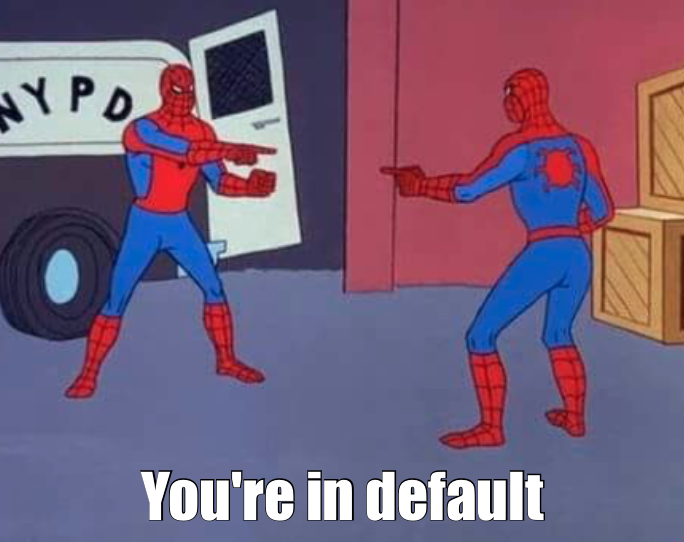
Putin is countering this by saying that the West has already defaulted on Russia by freezing its central bank assets abroad. He is also playing Jedi mindtricks on the contracts by claiming that European countries or corporates that don’t pay up in rouble, will themselves be in default.
It’s all a bit:
But even the default talk is a bit of a red herring.
Such supply deals are rarely sovereign to sovereign. One might assume that what is really happening is that utilities in the West are being told their counterpart suppliers in Russia want settlement in roubles. In such circumstances they would have to go to their FX supplying banks to secure those roubles.
But this isn’t the pathway. Putin has actually set up a sophisticated mechanism to achieve his aims which involves European companies having to set up rouble accounts at Gazprombank, where foreign currency will be swapped to roubles for settlements.
As Reuters notes:
A foreign buyer is now obliged to transfer foreign currency to one special, so called “K”, account. Gazprombank would then buy roubles on behalf of the gas buyer to transfer roubles to another special “K” account, the order said.
Gazprombank would then transfer rouble funds from a ‘K’ type account of the foreign gas buyer to Gazprom’s (GAZP.MM) rouble accounts, the order said. Gazprombank can open such accounts without a presence of a foreign buyer’s representative.
So it’s a bit of a Transferwise-style operation.
But what happens to the actual foreign exchange that Gazprombank picks up, however, is not specified. It seems reasonable to assume, however, that Gazprombank only has two choices on where to source the roubles from. The first is the market. The second is the central bank.
In theory, it’s only by going through the market that the deal can influence the RUBEUR exchange rate. If Gazprombank was to pick up freshly minted roubles from the cbank, it would do nothing for the stablisation of the rouble.
More likely, Gazprombank is acquiring a lot EUR foreign exchange and dumping it on the rouble market. But just to be able to operate in the FX market, it will either need a license at the ECB where it can hold euro-denominated reserves proper, or it will have to have a corresponding euro account with a foreign bank that does.
It all comes down to an account swap between one system and the other. Which is why the prospect of being able to totally “unbank” Russia from the European banking system (at least if you want to continue to do trade with Russia) is small. Whatever happens next, whether Russia accepts roubles, euros or bitcoin, somebody somewhere will need the capability to hold accounts both in the Russian system AND in the eurosystem, to allow any foreign exchange, and thus trade, to happen.
And it’s intermediaries with these sorts of capabilities (likely only to be found in neutral countries) that will walk away as the winners.
A Polish precedent
I speak from experience on that latter point because back in the day my dad used to operate through some of these intermediaries (albeit on a micro level). During communism in the 1980s he managed a money transfer business that helped the Polish diaspora in the UK send funds to family back home in Poland.
The way he tells the story is that at the time there were only a handful of British-based institutions that held licenses with the Polish central bank. His company was one of them.
According to dad, he acquired the license in 1984 by buying it from a small company that was up for sale.
The way the process worked was that Polish expats would deposit sterling deposits into his Allied Irish bank account, one of the few “neutral” players in the game back then. The Irish were then able to switch those FX deposits into the foreign currency account that dad held at the National Bank of Poland (NBP).
But the credits on the Polish side didn’t manifest as foreign exchange. What the NBP did was issue “Bony Towarowe” — aka “trade bonds”.
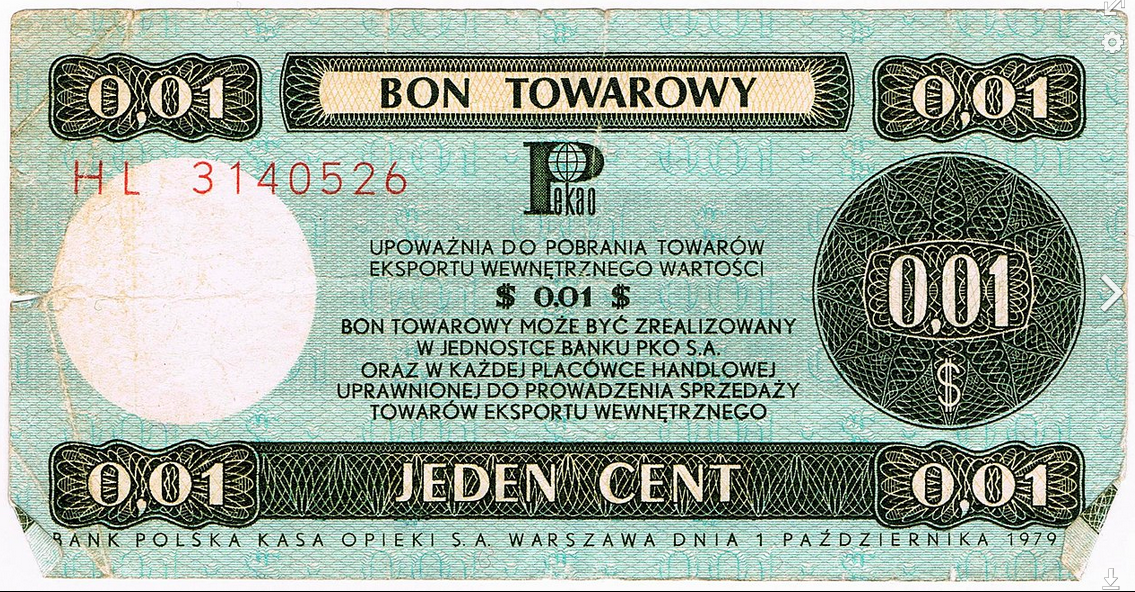
These would be pegged to the FX held in the foreign correspondent banks prepared to do business with the Polish communist government — in the style of yesteryear stablecoins.
Poles receiving these parallel notes would then be able to spend them in controlled ways, mostly for foreign imported goods at shops like PeKaO.
And this is ultimately how foreign goods would find their way into Poland. The Polish government would be able to use the FX it held in foreign accounts to settle trade conducted with businesses happy to ship cargoes to Poland.
Agents like my dad would get excellent commissions to entice these sorts of foreign exchange flows. And I myself was a small beneficiary because I remember spending my Saturday afternoons helping dad organise and file all the respective invoices and accounts for extra pocket money. But stamping everything with one of those old fashioned ink-pad stamps was also really fun.
Of course, at the time I had no idea about the signficance of what I was doing. I just remember dad having to go almost daily to the Allied Irish branch in Ealing to deposit the cheques. When the queues were long, which was often, I would hang around on the sidelines playing with the ink pens, filling out the paper deposit cheques.
Many years later, as dad tells the story, the Bank of England decided to crack down on these sorts of operations, and the business was put to an end. It was then that dad, whose little business was also a small front for the activities of Solidarity activists trying to bring down communism, turned to shipping parcels of physical Western goods to Poland instead. To distribute the goods on the Polish side, he would have to deal with corrupt counterparts from the regime. But this was a necessary evil to get the required goods into the country and then into the hands of needy poles who otherwise had very little.
I tell the story to remind everyone not to lose sight of the other part of the FX trade. It’s not just about the roubles, it’s also about the euro-side. And we need more information about that.
Here’s another equally insightful snippet from John Dizard’s Fortune 1983 piece on countertrade in the communist era about the true nature of these “special account” arrangements:
“Some countries try to sidestep the barter and countertrade mess by setting up “bilateral clearing arrangements” between central banks. East Germany and Brazil, for instance, have established accounts in “clearing dollars” at each other’s official banks. If East Germany sells Brazil chemicals, Brazil credits the East German account at the Banco do Brasil with clearing dollars that can be used only to buy Brazilian goods. When Brazil sells coffee to East Germany, the reverse occurs. The idea is for the trades to balance out without either party needing to acquire hard currency to settle accounts. Any imbalances, called swing credits, are supposed to be settled in three years.”