

| SNEAK PEEK |
— Why Trump may secretly love what he openly pretends to hate about Zelensky.
— How the firewall that protects American citizens can only be upheld by dismantling America’s dirty tricks empire and replacing it with an open empire.
— Why Morocco is more fragile than you think.
Dear subscribers:
Dario here. Is it just me, or are things finally starting to slow down?
Unlike the hectic maelstrom of the last few weeks, this week has mostly been about American-Russian negotiations in Saudi Arabia regarding Ukraine, and the Trump-Zelensky spat.
The German election results were unsurprising: Friedrich Merz’s CDU/CSU victory with the AfD taking a big leap to second place. Merz has already outlined his desire for a more independent policy from the United States — this coming week should see details of this policy publicized.
We should see the initial framework of a Russian-American peace deal and a continuation of the already raucous American-Ukrainian negotiations.
Without further ado, let’s dive right in:
| THE BIG GEOPOLITICAL BLIND SPOTS |
TRUMP CALLED ZELENSKY A DICTATOR as the rift between the two leaders widened. These comments came after recent US-Russia talks in Saudi Arabia, from which both Europe and Ukraine were excluded.
Trump’s accusation centers on Zelensky’s decision to delay presidential elections in Ukraine.
While the official reason is the ongoing war, Trump used unsourced figures to claim Zelensky had poll numbers as low as 4 percent, which the American President claims was the real reason for the electoral delay.
On Tuesday, Trump tied new elections in Ukraine as a condition for continued American support: “It’s time for elections, and it’s also time to find out what happened with all the money (we sent).”
Tim Waltz, White House national security adviser, suggested Ukraine’s vast mineral wealth (which includes billions in lithium, titanium, coal, gas, oil and uranium deposits), could “compensate” the United States for the military assistance it has provided to the country.
The backlash: All this has prompted strong criticism from European leaders. German Chancellor Olaf Scholz called the rhetoric “wrong and dangerous.”
Meanwhile, Ukrainian sources, including Zelensky, echoed Western media’s framing of the whole event as a massive Russian victory, claiming that Trump is “living in a disinformation space” of Russian propaganda.
DARIO’S COMMENT: Trump has many strengths, but nuance isn’t one of them. Putting dollars first, on the other hand, is.
And that’s exactly why he secretly loves Zelensky, even while making dubious claims about the Ukrainian president. Trump is able to use Zelensky’s known flaws and track record against him. If it requires more than a little exaggeration, so be it.
For instance, while one is free to speculate that Zelensky’s approval rating may be lower than official poll numbers, Trump’s 4 percent number doesn’t stack up. And although Ukraine may not be an entirely blameless victim, it is objectively true that Ukraine did not start the 2022 conflict. Yes, Zelensky’s behaviour is sometimes questionable, but not in such a way that qualifies him as an actual dictator.
The current outbreak of Zelensky smears also fits Trump’s pattern of making impulsive and comical — and, seemingly inaccurate — comments in diplomatically sensitive arenas.
In hindsight, however, some comments have turned out to be truer than first appreciated (such as the claim the Obama administration was funding ISIS in Syria). Others? Not so much, like stating that Spain is a BRICS member.
But the habit highlights another of Trump’s strengths: unlike other American Presidents, he doesn’t pretend to be fair.
Instead, he openly follows Sun Tzu — creating the ideal conditions for negotiations, usually by dismantling his opponents’ position before the negotiation has even begun. His opponents do the same — they’re just more subtle players in the geopolitical game.
But this is a game Trump intends to win. Hence, why he prefers Zelensky to any alternative leader. You can’t do that to a newbie, for instance.
The objective is to set the parameters of the negotiations in a way that questions established assumptions. These include:
- A – Ukraine’s struggle is a proxy for Western values against Russian aggression.
- B – Zelensky is representative of this struggle.
- C – The Ukrainian electorate supports both.
Adding fuel to the fire, Trump also claimed that Ukraine started the war with Russia: “You should never have started it. You could have made a deal.” Trump also accused Zelensky’s government of breaking a previous deal on the American acquisition of Ukrainian rare-earth minerals.
So could Ukraine have ‘started it?’
I would disagree even if it’s true that Putin’s casus belli to invade Ukraine, based on Ukraine’s constant artillery strikes in Donetsk since 2014, did have some merit to it.
This is because Ukraine was clearly egged on and led into the conflict by the West. Ukraine is less a player than a pawn.
For instance, in the early days of the war, I spoke with the son of a Ukrainian senator. He was convinced — based on “good sources” of his father — that NATO was about to impose a no-fly zone over Ukraine. It never happened. Another example was Boris Johnson advising Zelensky to forego peace negotiations with Russia, which caused Ukrainian negotiators in Turkey to leave the peace talks according to establishment bete noire Jeffrey Sachs.
Others, like John Mearsheimer, have consistently argued since 2015 that Ukraine is effectively a “double victim”, and that it was America and NATO’s eastward expansion that “started it.”
So, even in a scenario where we agree that Ukraine played a role in “starting it”, I would blame the West — not Ukraine.
Secondly, even if Zelensky is a dictator, when has that proved an issue for Trump? He objectively has no issue negotiating with dictators or respecting their turf.
The problem for Zelensky, I think, is that admitting to Ukraine’s democracy not being perfect robs it of a key negotiating position, which may seem unfair.
However, remember that both sides are playing this unfair game. Western media boosting the Ukrainian claim that Trump lives in a Russian disinformation bubble similarly discredits Trump’s legitimacy.
It would be just as unserious to claim Zelensky’s entourage truly believes this, as to claim Trump’s entourage doesn’t know that Zelensky isn’t exactly a dictator, and that Ukraine has been egged on by the previous American administration and its allies.
In other words, much of this is “kayfabe” — a fake performance for the benefit of an audience that knows it is fake. Much like WWE wrestling, from which the term originates, most diplomatic rhetoric is staged and scripted combat, even if it is presented as authentic.
So, is Trump serious about Ukrainian elections? Yes and no. The threat of forcing new elections onto Zelensky should negotiations falter is likely real. But it’s not Trump’s goal.
Ending the war, the rare earth minerals deal mentioned previously, and limiting American exposure to the conflict, would benefit Trump far more. Those are the true objectives in the region — not new elections.
That’s why the supposed problems Trump listed about Zelensky are actually a love letter: A new Ukrainian president with a renewed mandate would be harder to press.
ADDENDUM: This hypothesis has one logical flaw. If Trump’s seeming antipathy is really a tool in negotiations, why not use it against Putin?
I don’t think it’s because Trump is a Russian agent, or because he believes Russian propaganda. It’s also not because Putin has nuclear weapons and Zelensky doesn’t.
It’s because, I dare say, Trump believes he is facing down a more fearsome opponent than Putin. The enemy within, aka “the swamp.”
This dismantling of Zelensky’s position thus serves a dual purpose. It pushes Zelensky to a peace deal but it also undermines the positions of the Washington-based foreign policy establishment that has supported this endless war.
But wait, there’s more.
Please put your tin foil hats on. You’re going to need them.

In our last Geo/Exo Politics newsletter, we argued that Trump is a peacemaker because it’s easier to make money from stability than chaos.
But not all money-makers love peace. Some businessmen rely on war and destruction to fill their coffers. And if war is not forthcoming, they’re incentivised to lobby for its creation.
This underlined Eisenhower’s final warning to the American people about the rise of the military-industrial complex.
That’s why Trump is playing a dangerous game by angling at peace-for-business in Ukraine and Gaza and dismantling America’s pro-conflict USAID.
Particularly when he’s signalled lowering American military spending. Because you can fire bureaucrats. You can’t fire leagues of corporations who rely on warfare. If their incentives aren’t placated and addressed, you risk the ire of powerful individuals for whom warfare and violence are their currency.
I suspect Trump’s plan is to get the warmongers to buy-in to his peace plans by pushing for Europe’s rearmament – replacing one source of income with another.
I mean, just look at Rheinmetall’s soaring share price; it jumped 11 percent just last Monday.
But there’s more.
First, we’re gonna need a bigger hat:

Have you seen the spate of terror attacks on German soil in the two weeks before the election? There was another one on the 21st of February at the Holocaust Museum.
My first thought was to suspect these benefitted the AfD. Considering the AfD’s huge jump in popularity, this is partially true. But it’s broader than that.
Anti-migration policies have never been more popular, even with centrists. Look at Donald Tusk’s about-turn against migration, or Keir Starmer’s.
In the last two years, Europe has dramatically shifted right. Whether that is the increase in vote share to right-wing parties or the shift rightward of most mainstream parties.
I can see why. It’s safer to walk around with a nice watch in Beirut than Barcelona these days.
But this collapse in safety has been a long time coming, whereas the dramatic popularity of normalized antipathy towards migrants is very recent.
Since we’re in conspiracy-land now, let’s speculate.
Europe needed migrants, particularly illegal ones, to address the widening gulf between demand for cheap, manual labour and overburdensome labour regulations.
What coincidental technological development could we point to, to explain why we don’t need them anymore?

If Elon is to be believed (big if) these versatile, manual-task-performing robots could cost below $20,000 once production gets going.
A conspiracist could claim the ground is being laid for a future in which cheap migrant labour can be done away with.
If that’s true then Europe may be preparing for a massive political and societal reboot even beyond rearmament.
Going back to the military-industrial complex’s need for conflict, does this mean America keeping the business suit while handing the toxic sword of conflict to Europe?
I don’t know. It sounds crazy. But reality has been pretty crazy lately…
AMERICA HAS A DIRTY TRICKS PROBLEM claimed Mike Benz, a controversial former State Department official and ardent anti-censorship advocate, was recently on the Joe Rogan podcast.
This doctrine of covert influence traces back to the National Security Act of 1947, which created the National Security Council and the Central Intelligence Agency. This so-called ’empire of dirty tricks’ emerged from this law as a workaround to post-war bans on overt military intimidation and foreign interference under international law.
The architects of this empire knew the American public couldn’t fully grasp the necessity of such operations — nor should they be exposed to them.
As Hans Morgenthau explained in his ‘dual state’ theory, America would have two states: the democratic façade of elected politicians who operate according to the law, and a hidden national security hierarchy and shadow government that operates to monitor and control the former.
A firewall was built as a compromise, whereby the American tricksters were forbidden from exercising their vast powers of deception at home.
But as Benz argues, this firewall has crumbled. The so-called “Blob”, a derogatory term that describes the pro-foreign intervention stakeholders primarily based in Washington DC, now applies these tactics domestically as well as abroad, mostly by depending on foreign allies.
DARIO’S REVIEW: This is a podcast I could have dreamed of. Including but not limited to the CIA’s involvement in the wholesale drug trade, USAID’s support to jihadists in the Sahel, the corruption of prosecutors worldwide under the deceitful term of ‘judicial reform,’ the State Department’s co-opting of investigative journalistic bodies like the OCCRP, and its funding of hip-hop artists in Cuba. It’s a must-watch.
One example was how USAID funded a Cuban Twitter ripoff called ‘ZunZuneo’ to slowly inspire a Cuban uprising. It spent years popularising this app, primarily by advertising it as a platform to receive hurricane alerts, and later to promote football and music. Over time, however, the USAID contractors amassed data on Cubans to target who would be more receptive to revolutionary messaging. As we now know, the initiative failed after millions in taxpayer funds (earmarked for an unspecified aid project in Pakistan) were wasted.
DOGE and Trump deserve an accolade for shuttering this source of worldwide deception. The closing down of USAID, which has fired around 95 percent of its staff (almost 10,000 people) is the largest mass-firing event in American intelligence history since Jimmy Carter’s ‘Halloween Massacre’ when 800 senior CIA officers were purged from the agency.
THE CAVEAT: Mike Benz’s explanation of America’s dirty tricks industry is similarly laudable. But I didn’t like everything about it.
The first is that Benz’s history of espousing controversial theories often mentioned by white nationalists, like the Great Replacement Theory, shows him to be a complicated character.
But I was also alarmed at Benz’s claim that these dirty tricks are key to maintaining American power and prosperity. His real concern, he claimed, is that because these dirty tricksters have gone unchecked the firewall defending Americans from them has collapsed in the form of acute blowback. It seems Mike Benz has less issue with the dirty tricks themselves — as long as they’re used on foreigners.
This position is inherently flawed. If nothing else, because his proposed fix — a new firewall — is self-defeating.
History proves that power always corrupts, and no safeguard lasts forever. The only surefire way to prevent these tools from being misused at home again is to dismantle the empire of “dirty tricks” altogether. Ideally by exposing it with The Blind Spot‘s proposed inaugural Disinformation Awards 😉
This is no idealistic position — it’s pragmatic. It also echoes the battle over the democratization of encryption. Better for everyone to benefit from it than for there to be an asymmetrical advantage.
America’s global dominance needn’t depend on covert subversion. Or on one-sided encryption.
The greatest Empire this world has seen, the Spanish Empire, thrived for centuries without it.
Instead, it projected power through raw confidence in a God-given civilizing mission, kinetic methods and gunboat diplomacy.
America should start taking notes.
After all, this isn’t 1947 anymore. The mid-20th century idealisms around nationhood and rights which led to the refinement of international law and the United Nations are now dead or dying.
Izzy has often written that since the blossoming grand narrative of societal advancement has collapsed, American institutions and people have never been more comfortable with unfiltered, naked power.
This positive narrative collapse has already been noted by American military recruiters, as seen in a viral recruitment video for the 4th Psychological Operations Unit of the US Army titled Ghosts in the Machine. The video proudly conveys the unit’s intention to deceive and influence.
If Americans can already stomach their country’s negative role overseas, why not go the extra step and ditch the deceitful mask?
Pulling a gunship into a foreign harbour and lobbing a few warning shots over the governor’s palace may be more brutal. It may seem outdated. But it would be far more honest than the dirty trickster’s current games — and arguably more cost-effective.
And that honesty would allow the world— especially Europeans — to see geopolitics for what it is.
It would also help ensure that American power projected abroad cannot secretly turn against its citizens.
Instead, they would be well aware (and proud) of the harmful beast that the United States of America can be. In many ways, they already are.
| OTHER GEOPOLITICAL BLIND SPOTS |
MOROCCO FOILED A TERRORIST PLOT and arrested 12 suspects allegedly armed and financed by the Islamic State militants in the Sahel region.
This follows the dismantling of a four-member terrorist cell in Casablanca last month.
DARIO’S COMMENT: The media and popular culture paint Morocco as a rising regional power. Its ability to ably shut down terrorist cells is only one of these examples. But beneath the surface, a fragile foundation remains: its all-encompassing monarchy.
On the surface, everything seems rosy. Morocco is the fifth-largest economy in Africa and, according to the WEF, is considered North Africa’s most competitive state. By 2024, Morocco surpassed Egypt as the continent’s top tourist destination.
Achievements keep rolling in — even for its most controversial actions, such as the invasion of Western Sahara in 1970. The U.S. and Israel now recognize Morocco’s claim to the territory, and even the African Union is falling in line.
Morocco is on a winning streak.
But its strength hides a structural flaw. And it revolves around one institution: an effectively absolute monarchy.
Morocco’s sudden development is less about its economic liberalization, as most Google searches would describe. Rather, it is a royal monopoly which has silently spread over Morocco’s key industries.
The French magazine Marianne claimed, based on testimonies from people close to the royal palace in Rabat, that Mohammed VI “has swept up all the powerful companies in the country to the point of creating a monopoly that is not very attractive for the Moroccan economy.”
This is no secret — ask any educated Moroccan abroad and they’ll confirm it.
Most monopolies sit atop the commanding heights of the economy — steel, energy, and infrastructure. But Morocco’s royal control stretches further. When Morocco legalized medical marijuana in 2021, insiders knew the rule: you can grow and sell it, but the palace gets a cut.
And while Morocco has a functioning, elected parliament, the most critical decisions effectively remain in the king’s hands.
This system has its advantages. A unified leadership structure allows for decisive governance — as we’ve been seeing.
But monopolies cut both ways. If things go south, there’s no scapegoat — the monarchy must own the consequences.
This brings us to the monarchy’s biggest liability: King Mohammed VI himself, whose reign began in 1999.
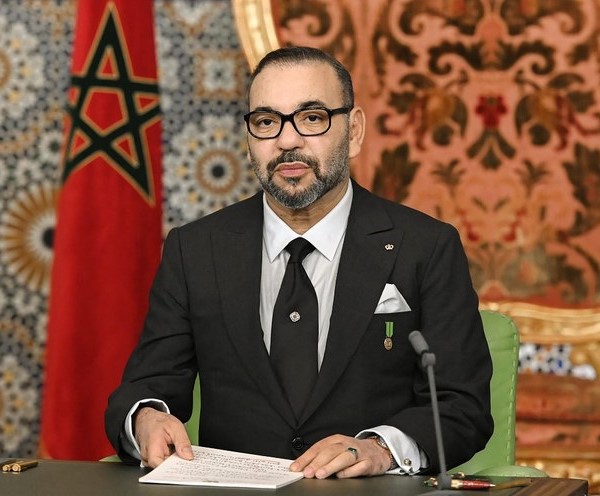
Not because he’s incompetent — far from it. His reign has been Morocco’s most prosperous, outshining even his father’s, the widely revered and beloved Hassan II.
The problem is typical of powerful monarchies: an overreliance on a single ruler and the absence of escape valves for public discontent.
This can become an explosive mix. Particularly when we consider the King’s private habits.
His hedonistic lifestyle is an open secret among Moroccan elites in Paris, where he spends much of his time. His rumoured sexual curiosities shouldn’t be the cause of a scandal, but homosexuality is still illegal in Morocco.
Just as dangerous is his distaste for being seen in public. Unlike Hassan II, who commanded loyalty with constant, rousing speeches, Mohammed VI rarely addresses his people.
The consequences of this detachment were clear in 2023 when a deadly earthquake struck Morocco. With key decisions centralized in the monarchy, the king’s absence (he was in Paris) delayed the government’s response.
There are only two solutions.
Either the system changes — voluntarily or otherwise — or the monarchy distances itself from political and economic affairs by genuinely privatizing the economy.
The latter option might seem unpalatable to the royal family, but it’s the safer bet. It would shield the monarchy from political fallout and ensure Morocco’s growing wealth is more evenly distributed. Otherwise, Morocco will always be one economic and political crisis away from total disaster.
NIGERIAN SENATE OPENS INQUEST INTO USAID’S TERROR FINANCING. At the request of Senator Ali Ndume, Nigerian intelligence chiefs have been summoned to address allegations that USAID has financed terrorist groups.
This inquest was sparked by the recent statement of U.S. Congressman Scott Perry, who claimed USAID had provided hundreds of millions of dollars to Boko Haram and ISIS in the Sahel. While that may sound outlandish, such allegations have been mirrored by investigators of American foreign policy like Mike Benz.
America’s Ambassador to Nigeria and USAID have denied these allegations.
COVID PUSHED YOUNG PEOPLE TO THE RIGHT wrote The Atlantic, quoting research which suggested that pandemics are more likely to reduce trust in scientific and political authorities.
This piece suggested, among other theories, that Trump’s record results amongst young people are due to the loss of trust in federal institutions following their mismanagement of the COVID-19 emergency.
$1.3 million IN ETHEREUM WAS ‘BURNED’ TO SPREAD A MESSAGE. A Chinese netizen named Hu Lezhi destroyed around $1.3 million in Ethereum to broadcast an unusual claim: a secret brain-chip conspiracy is unfolding. Not just in China, but in the world.
The netizen alleged these brain chips have been secretly militarized and deployed on a large scale, and that “all” military powers using them to control unsuspecting citizens.
Hu Lezhi blamed a hedge fund, the Kuande Investment fund, and how bosses “Feng Xin and Xu Yuzhi used brain-machine weapons to persecute all the company employees and former employees, and they themselves are also controlled.”
Brain-computer interfaces are real, but there’s no clear evidence on the bit about these brain chips being widespread and already controlling minds. That hasn’t stopped the cryptocurrency world from buzzing about it.
| THE EXOPOLITICAL BLIND SPOT |
THE CIA’S PSYCHIC ARMY EXISTED recounted SF Gate’s piece on the origins and end of the CIA’s contract for ‘parapsychological research’ at Stanford Research International beginning in 1972.
The project operated for over two decades, passing from the CIA to the Defense Intelligence Agency before being officially shut down. A 1995 report concluded that the data was too unreliable for serious intelligence work.
DARIO’S COMMENT: The world of secrets operates by counterintuitive rules.
If you were an agency director, and a seemingly fringe research project suddenly showed promise, your best move might be to declare it a failure — steering attention elsewhere while you quietly refine the breakthrough.
This speculative line of thinking is exemplified in the hypothesis of “The Hunt for Zero Point” by Nick Cook. This book dives into the abandonment of anti-gravity research by leading aerospace corporations just as they seemed to be getting off the ground in the 1950s.
I’m not saying this is what happened with SRI International’s research.
But consider this: it ran for over 20 years, and key figures with intelligence and science-adjacent careers —like Hal Puthoff and Jacques Vallée—are still deeply interested in remote viewing.
That alone should raise eyebrows.
(Oh, and you should definitely watch The Men Who Stare At Goats).
Glory to Spain,
Dario
