
Dispatches from the frontlines of European manufacturing
There is something Kafkaesque about European manufacturing: it doesn’t really exist.
The problem isn’t just how expensive manufacturing in Europe is.
It’s how inflexible and specialized most participants have had to become to fend off Asian competition.
The result is a dearth of manufacturing methods, materials, and expertise, with only a handful of notable exceptions (two being Albania and Romania).
How do I know all of this? Well, what readers may not know is that as well as being Izzy’s in-house geopolitics and Gen-Z expert, I’m also trying to bootstrap a small-scale manufacturing business.
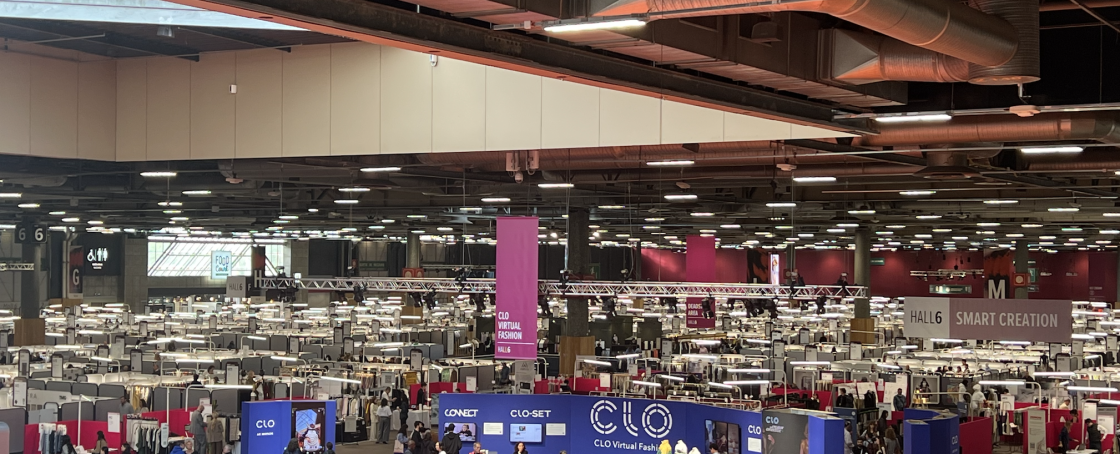
This is how I found myself waddling through the stands of the Premiére Vision expo in Paris this month. (And how I came up against the problem first hand.)
Première Vision is one of the world’s best known textile fairs. Here, a multitude of fabric manufactures and leather-goods specialists gather to talk creativity and fashion, while trying to distract from the fact that the only thing that matters is how cheaply they can make things.
What’s particularly surprising is that despite this being a European-based fair, interest in local offerings was thin on the ground. Besides a few stand-out French suppliers like La Filière Française or Teintures de France, and some Italian suppliers with forgettable names, it was primarily the Turkish, South Korean and Chinese exhibitors that stole the show.
The reasons for this are obvious: attendees know better than to seek European. They intuitively get that European manufacturers will not be able to compete on flexibility or cost with producers from more industrious nation-states. Also, their so-called “minimum order quantities” (MOQs) will be higher.
This became obvious the few times I accidentally strayed over to European stands. Once it became obvious that a hard sell on quality wouldn’t bite, most would defeatedly admit that they “also manufacture in China.”
A German cotton producer claiming to specialize in sustainable, circular cotton yarn “at an affordable price” rapidly added: “…we recently moved all our machinery to Romania” before practically shoving a sample request form into my hands.

It’s not all bad, though.
While Europe may lack manufacturing prowess, it more than compensates for it in the sophistry of its marketing spiel and double speak.
This, perhaps, is hardly surprising for a continent that has had no choice but to funnel all its spare resources and talent into the soft power arts of persuasion, finance, and digital services. Lacking manufacturing cost advantages, the West has collectively made its comparative advantage grift.
The result is positively Orwellian.
Here’s what I learned:
Recycled means low-quality products offered at a higher price. At its most brilliant, it applies to recycled synthetic products, which lets brands spin necessary nylons and polyamides in certain textiles into a recycling story.
Sustainable simply means the developing country’s farmer is charming enough to smile when you take a picture of him, affably covered in sweat, while little else changes.
Carbon neutral means that purchasing the products will either qualify your company for generous EU subsidies, or accumulate a promise that someone will sow a seed somewhere on the planet (not that it will necessarily take hold).
Ethical sourcing means your products come with a map.
Biodegradable or organic means customers will be pleased rather than angry when their premium-priced bio-denim jeans fall apart after their second wash.
Chinese vendors, on the other hand, could make no such promises. They were reduced to the lesser art of selling decent products at competitive prices. “No MOQ. Good price!” a Chinese label manufacturer said, smiling and nodding. “We own factory”, she shamelessly explained.

Skilled handicrafts to the rescue
There is one aspect of European manufacturing that still thrives: Handicraft.
The rule applies to textiles, consumer goods, and accessories.
In that space, Europe really is a formidable player. Curiously, its artisanal expertise is mostly relevant for brands at both their infancy and maturity — and not in between. Let’s examine what that means.
The most sophisticated luxury brands choose Europe for its high-end ateliers because of the prestige and cultural cache associated with a “made in Europe” label.
And these outfits certainly know their power.
Inquiring over the cost of ordering a product refined in something known as a single monkey’s fist knot at a high-end French accessories maker, the dame in charge shot back, “six euros et demi, monsieur” in a tone that Richard Gere’s platinum card would struggle to bring down to size.
The least sophisticated start-up brands can rely on artisans with generations of expertise to produce complex products relatively cheaply. Good craftsmanship can substitute the most complex automated production line in China. That’s primarily because a skilled artisan can offer competitive MOQs. Especially if the products are custom, high-end or low-batch products, which are hard to manufacture at scale in low quantities. Lastly, these artisans also offer better market adjacency.
Andalucía’s Ubrique, the town in the middle of nowhere that specializes in creating leather goods, is a perfect example of this expertise. It has become a major artisanal hub, attracting thousands of commuting craftsmen along its winding hillside roads, filled with speeding, and blasé truck drivers.
But handicraft comes with a catch: imperfections. It’s one thing to indulge in a Birkin bag’s irregular hand-stitching as proof of Hermès’ enduring quality. It’s another to accept similar imperfections with a never before heard of label. This is especially the case when your non-existent brand equity means you’re stuck in premium (non-luxury) pricing territory, providing non-essential goods that weren’t cheap to manufacture.
In a world where $4 Chinese products on Temu look perfect, an impeccable product isn’t a nice-to-have.
It’s table stakes. Because a perfect product is not a competitive advantage; it’s the cost of entry.
This sets up the first trap most European (and developed-world) start-ups in this space fall into; an imperfect product, manufactured expensively, with little hope of pricing beyond a 4x markup on Cost of Goods Sold (COGS) — widely seen as the baseline for a sustainable business.
There are many ways around this. Two of these are ruled out in my case: strong external investment or pre-existing celebrity status. I’m no celebrity, and my independence is worth its weight in gold.
The third option is what savvy entrepreneurs in Europe tend towards: purchasing existing white-label designs being churned out by the few high-end, production-line factories in Western Europe and making slight modifications. This removes the cost and time of prototyping as well as most MOQ requirements.
My problem with that is simple: there are easier ways of making money.
And what’s the point of getting into this notoriously complex industry if you’re not going to create?
My first attempt: CLSFYD.CO
Naïve and well-intentioned, my first manufacturing and e-commerce brand was launched with an intentionally ultra-short and local supply chain. And, without seeking to flex, my first workaround to Europe’s manufacturing limitations was brilliant. Or so I thought.
I designed and printed 3D product ‘shells’ at home using nearly indestructible rubbery Thermopolyurethane (TPU). Then I hired artisans from Ubrique to glue and stitch leather onto a pre-existing shape.
I was proud to be the first to produce 3D printed shells for leather goods. The advantages were numerous:
- No prototyping cost beyond the time I spent designing the product on CAD and figuring out how to print it.
- Minimum MOQs due to the ease of sticking leather to an already-printed shape.

But like an episode of Wile E. Coyote and Road Runner, I carefully avoided the European manufacturing trap just to fall into a new version of it.
Firstly, printing TPU is difficult: it would take me days of work to produce just 20 impeccable TPU shells, as I struggled with printing temperatures and filament humidity. This meant I spent hundreds of hours printing when I should have been focusing on marketing, branding and selling. It also added an unnecessary leg to the supply chain, as I had to ferry my shells to Ubrique and bring the finished products back.
Second, low MOQs and this innovative manufacturing method meant the artisans never had the time to acquire expertise on what I expected would be a simple process, leading to defects. And while the artisans were skilled and relatively cheap, the cost of running the 3D printer, the magnets, the dust bag and boxing always brought me above €10-15 per product.
Furthermore, my own inexperience meant these products were far from perfect to begin with.
All in all, while beautiful, they had critical defects that made them overpriced at barely survivable 3.5x margins.
The last beginner’s mistake is out of scope: I was obsessed with making my CLSFYD products as secret ‘keys’ that led customers who were open to it into a real investigation of remnant Nazi networks in Marbella.
(I’m still happily running the game as a stand-alone tool to capture gifted investigators for my fascinating project. You should try it here: the code is 111. Desktop recommended)
In short, my first beginner’s mistake was overthinking the product stage.
A product should be as simple as possible.
Execution is the real kink.
What is sustainable?
With the feather of my half-failed attempt on my hat, maturity has taught me what European production values should actually mean.
Here are some examples:
Recyclable is a garment so good that it becomes a hand-me-down.
Sustainable is a brand so intelligently organized that it can survive and thrive (even after a major catastrophe).
Ethical sourcing is a production process so smartly contrived that you can brag about it.
Sadly, the generation of well-meaning do-gooders in so-called sustainability, ESG-focused jobs and HR departments do not reflect the values they proclaim.
They’ve now debased and corrupted all these terms, just like the Nazis corrupted the swastika.
Their grift has been sustained, unfortunately, because Europe’s malaise needed a palatable cover story to secretly contravene their supposed values and survive.
That’s how we ended up with atrocities like plastic-based ‘vegan’ leather, while up to 40 percent of cow hides get thrown away.
The irony is that my next brand will aim to be recyclable, sustainable, and ethically sourced.
As a result, I’m not sure how my entire production process can be made in Europe anymore.
