

SNEAK PEEK
— What does FCA listing reform have to do with the new era of technopaternalism?
— China expert George Magnus shares his thoughts on whether it’s wise to emulate the China model.
— Somaliland’s quest for international recognition is compromised by its deteriorating security situation, Dario writes.
Greetings subscribers, or should I say Salve Romani?
Today’s very late edition of the Blind Spot was originally configured to look at whether we are coming to the end of the era of shareholder power, and what that means for the makeup of Western enterprise.
But the assassination attempt on Donald Trump overnight, at a rally in Butler, Pennsylvania, has dramatically upstaged our plans. It’s also likely brought the US political system one step closer to a Roman Republican-style collapse, making it impossible to ignore in this edition.
Trump’s near brush with death will understandably consume the media for weeks to come.
Our job here remains (as ever) to look beyond the noise at where the blind spots are.
What we will say is that it didn’t require the forecasting skills of Nostradamus to predict that an assassination attempt was brewing on a US presidential candidate or even the president. We’ve long argued the Western system is going through an anacyclosis shift, similar to the one that happened when Caesar gave way to Augustus and the Roman Republic became the Empire. The conditions that accompany such a shift naturally bring about similar political occurrences, that include extreme action by factions committed to course correction.
As Dario warned last week about the constitutional changes being eked into the system by the Republican-skewed Supreme Court:
“If, as with Caesar, the powers granted are nakedly abused for a shot at absolute power, the system may come close to breaking. But if, like with Augustus, the Republic’s legal mechanisms are intelligently used to mould and shape a new supreme office, filled with formal and informal powers, maintaining Republican traditions and laws — at least superficially — the turn to Empire could re-energise the system and propel it forwards to successfully engage in another cycle of history.”
Historians today view Rome’s shift into Empire as regrettable but not entirely regressive or undesirable. Most agree Augustus’ reign in the end proved a boon for the safety, security, and prosperity of the Roman people who had grown weary of constant civil war, corruption, and factional dispute. They also understand the shift to autocracy helped to extend the lifeline of the Roman system. The conspirators who plotted Caesar’s assassination, naturally, did not see it that way. Nor did they understand that the Republican system was too far gone to reassert itself in its former glory or that they themselves were possibly the problem.
History rhymes rather than repeats. That means while Trump may have dodged death, there’s still plenty of room for the sort of vengeance that followed Caesar’s death. At 78, Trump will have to give way to a successor sooner than later. Figuring out who the emergent Mark Antony or Octavian figures will be, and how vengeful they will be — as well as our equivalents of Cleopatra — will be key to anticipating how things go from now.
In the meantime, we will revert to the issues we originally planned to raise in this week’s newsletter. In the context of what has happened they might feel like a lower priority, but it won’t be too long before they become a focal point again. We think they still fit into the larger theme anacyclosis narrative.
As usual, this newsletter was brought to you by me, Izabella Kaminska, and Dario Garcia Giner.
Send tips to [email protected] and [email protected]
| THE BIG BLIND SPOT THIS WEEK |
FCA LISTINGS REFORM: As our colleagues at Politico reported this week, the Financial Conduct Authority has confirmed major reforms to the U.K.’s regime for company listings as the London stock market struggles to attract businesses. The intent is to reinvigorate UK capital markets by reducing complexity, allowing dual-class shares and removing the ban on related transactions. Labour says the aim to boost the attractiveness of the UK as a capital destination by lowering investor protections and reducing shareholder power in favour of company founders.
We’ve done our bit: “Regulatory reform is only one of the changes required to reinvigorate the UK’s public markets. We have played our part,” the FCA said in its policy statement.
Will it be enough? The jury’s out. Politicians hope the amendments will stop the London Stock Exchange from losing listings to the NASDAQ or the NYSE. But the bigger question is at what cost might that attractiveness come? We think the nature of British enterprise could be transformed as a result of the changes.
The backdrop: The debate over how to rejuvenate London’s flagging stock market has been incredibly political, and started long before Labour came to power. At its heart, it has put the FCA under pressure to ease regulatory burdens that might put off companies and tech startups from floating, while applying a secondary competitiveness and growth objective for the FCA and the PRA.
Government intervention power: The Tories had originally wanted to provide governments with the ability to veto FCA diktats that conflicted with their political agendas. But this proposal was scrapped after regulators and the Bank of England balked at the prospect of having their independence undermined. The resulting compromise mutated into the secondary competitiveness and growth objective and the current listings reform.
The details: Under the new plans, businesses will face lighter requirements to list shares in the U.K., and the old premium and standard separation will be scrapped in favour of a single listing. This will see standards raised for companies previously capable of listing under the standard classification but watered down relative to premium norms. The deterioration in overall standards includes the removal of mandatory shareholder votes on transactions such as takeovers or related party transactions and allowing for more “permissive” dual-class share structures.
The reactions are in: UK banks are particularly enthused by the prospect of not having to put takeover deals to shareholder votes. “This will boost prospects for UK-listed companies involved in M&A,” said Julie Shacklady, director of primary markets and corporate finance at UK Finance.
WHY IT MATTERS: It’s tempting to view the policy as a classic Tory attempt to replicate the 1980s boom spawned by Thatcherite deregulation. But we at the Blind Spot think that would be remiss. There’s a reason why the incoming Labour government is unlikely to repeal or amend the regulations: enough constraints remain to ensure the resulting financial framework will be nothing like the one that brought about the so-called Big Bang.
Key to this fact is how competitiveness is defined in the legislation. The prose reads that it’s all about “how well the UK economy as a whole achieves sustainable, positive economic outcomes, attracts international businesses to the UK, and enables UK-based firms to compete effectively in international markets.”
That means how the UK goes about competitiveness is entirely dependent on the political context. If the underlying political climate dictates that the UK needs more government-directed industrial policy to achieve its growth objective, the FCA will have to bend the knee accordingly. That could mean having to put domestic investor interests behind those of big foreign investors prepared to fund the government’s industrial policy. It might also mean having to relegate the interests of investors who disagree with the government on where capital formation is needed and to what extent.
The context: M&A has been used as a market disciplinary force to penalise inefficient companies since the dawn of equitisation, with “efficiency-minded” activity either focused on breaking apart unproductive companies to strip out loss-making divisions, taking targets private in a bid to restructure them and make them more efficient or by buying in necessary specialist operations instead of developing them.
The anti-competitive flipside of M&A is conglomeration focused on taking out rivals or the sustained provision of loss-leading services for other purposes (such as achieving political power or founder-related vanity projects). The first, in theory, is constrained in a capitalist economy by anti-trust supervision while the latter is constrained by shareholders pushing for the maximisation of shareholder value.
The Tory government under Sunak, however, has already attempted to push through antitrust changes that will make it easier for certain companies to conglomerate, especially if they are deemed green, while making it harder for foreign companies to disrupt domestic enterprises.
In the context of current listings reform, that stands to put a very specific offer on the table from UK PLC to global markets: Foreign investors will be able to get a slice of government-directed anti-competitive practices (in the form of outsized returns from those emerging cartels), in exchange for conditionality about how and when that capital enters and exits the country. They will also benefit from being prioritised over domestic investors, who will no longer have an equal footing with strategic investors. The dual-class share system, meanwhile, will provide protections to the founders but also — via the founder’s own obligations — to the state.
What sort of environment does that breed for a country that needs to continue attracting foreign investment?
There is one protectionist precedent out there that it could very well be modelled on. Chances are the much talked about National Wealth Fund might feature many classifications like this:
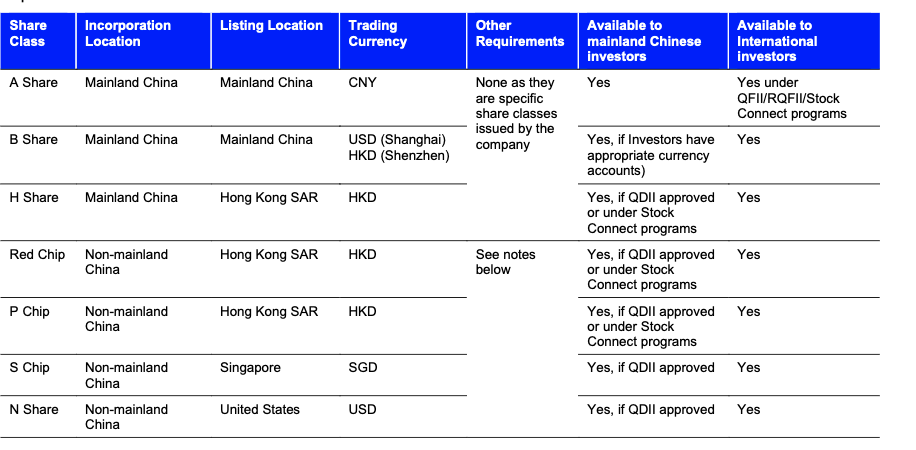
Is it viable? Maybe. But probably not. For one, the UK is not the China of 1979, which at least had cheap labour on offer in terms of competitiveness. Second, none of the underlying sectors or technologies being favouritised by the government are actually tried and tested in terms of growth generation. When China industrialised it knew it was importing growth-generating technology that had previously worked elsewhere. Third, as Emma Dunken at The Times noted on Sunday, the risk that this will skewer investor confidence for the long term is not insignificant. “An industry characterised by vicious competition, protection and subsidy is not one in which the government should be investing taxpayers’ money,” she said. That seems fair.
IZZY COMMENT — THE TECHNO-PATERNALIST RESTRUCTURING OF THE UK.
In their first week in power, Britain’s new prime minister Keir Starmer and his Chancellor, Rachel Reeves, spelled out their intention to operate “a government of service” that applied a mission-oriented mindset to the management of the economy.
Mazzucato has become an increasingly influential voice in Labour circles in recent years, where she’s been busily focused on urging party members to replicate the US model.
What’s the theory? Mazzucato’s big premise is that growth is best fostered by a virtuous state that is happy to subsidise and de-risk the early years of industry and capital formation. She usually cites the US Defense Advanced Research Projects Agency (DARPA) as an example of pioneering government intervention that helped catalyse technologies and ventures that would later generate huge value for the broader economy.The statist iPhone: For Mazzucato, the iPhone is probably the best example of what can be achieved when the state and private sector engage in effective co-missions.
“Every technology that makes [the iPhone] so smart, traces its funding back to a mission-oriented public agency in the US government which likes to pretend it believes in the free market when actually it has been one of the most interventionist in history,” she wrote in FT Alphaville in 2014, in a piece I commissioned.Are we really capitalists? In Mazzucato’s worldview, America has never really practised what it preaches with respect to market-based economic management. Behind the scenes, she says, the US government has always played an influential role in directing industrial policy on mission-oriented grounds whether that’s through awarding government contracts, grants and loans or (as in the case of InQtel) engaging in direct co-investments.
Not alone: As we discussed at length last week, most Western jurisdictions in the immediate postwar era engaged in Keynesian-style industrial policy which saw industrialists forge privileged positions within the state architecture. During that period, capital remained in private hands but management submitted to the will of the state in terms of pursuing broader “national interest” goals (beyond just maximising shareholder value).
Corporate raiding and market discipline: For most of the West, it wouldn’t be until the 60s and early 70s that market forces would align to test the efficiency of those arrangements. In the UK, the reversal came with the emergence of corporate raiders like Jim Slater of Slater Walker and James Goldsmith, both of whom became known for using market power to shatter the prevailing corporatist system. Their formula centred on identifying undervalued companies, acquiring significant stakes, and then restructuring these companies to unlock greater returns, usually by stripping them of loss-making assets or making management changes that focused on disempowering unions.
Greed is good: The trend soon got replicated in the US where it became the poster child of 80s financial excess and greed. This was most famously depicted in the Oliver Stone classic Wall Street, where the ruthless dealmaker Gordon Gekko, played by Michael Douglas, uses insider information to get his hands on a struggling airliner on discounted terms with a view to breaking it apart. It’s also the plotline of Pretty Woman, where Richard Gere plays a corporate raider intent on dismantling an industrial ship builder (with a tonne of US Navy contracts) until he’s finally persuaded by a prostitute with a heart of gold that it’s better to preserve jobs and just build stuff.Dual-class consequences: In response to such hostile corporate raiding, many family businesses and founders in the 1980s sought to protect themselves by adopting dual-class share structures to better control their companies. These became particularly popular from the noughties onwards among tech startups and innovative companies, where founders and early investors believed founder control was essential to establishing longer-term network-effects.
But it didn’t come easy: The Securities and Exchange Commission battled hard to try to ban dual-class share listings when they first became popular. Its efforts were unexpectedly supported by free market proponents who sided with the idea that sometimes shareholders needed protection from themselves. Neither would succeed in persuading the US Court of Appeals. It overruled the ban in 1990, unleashing the era of dual-class norms and the return of founder-centred companies. The effect was to shift power away from shareholders and over to founders and early investors. The former more often than not being persuaded to do so within the parameters of an initial public offering which substituted voting rights with promises of capital growth or more favourable dividend treatment.To what end? At the same time as these dual-class norms were being established, the US entrepreneurial state also began to up its investment activity, both in terms of funding or seeding start-ups (often high-tech) or dishing out lucrative contracts or loans to entrepreneurs that met the grade. To what degree the national security system groomed said entrepreneurs to be loyal servants of the state in the process, well, let’s just say there is room for speculation.
The unintended consequences? Whatever the case, it’s difficult to deny that the combination of dual-class structures, US government-funded grants, or direct minority investment by the USS made it impossibly difficult for other jurisdictions (especially those that still believed in laissez faire systems) to compete.
| BUSINESS, ECON AND FINANCE |
ON EMULATING CHINA: China has famously applied a protectionist shield to its corporate sector ever since it decided to open its economy up in 1979. It didn’t need a dual-class share ranking to woo foreign direct investment though. It merely stipulated that all foreign investors had to work with the China International Trust Investment Corporation if they wanted to invest in the country. CITIC thus operated like a matchmaker, marrying up investors with local partners, in which the foreign element could never own more than 49 percent. Other incentives were also offered, such as state guarantees and or in-kind payments.
National Wealth Fund copycat?: Might Labour’s NWF emulate CITIC? We think there’s a good chance it does. Will it also take advantage of the Tories’ wider special economic zones and Freeports strategy? It’s hard to imagine how it wouldn’t. SEZs were an essential component of China’s economic reforms in 1979 for a reason. Without them it would have been much harder for China to attract foreign capital and reinvent itself as an export-oriented economy.
But should the UK emulate China? Who better to advise on this question than China expert George Magnus. He told us that before addressing whether the UK should emulate China, it was important to establish who was pushing us to do so and why. He pinpointed three different groups with three different motivations.
Three views: On one hand, there are the left-leaning voices who believe “China has cracked the code and that state-led industrial policy is the appropriate antithesis to neoliberal ideas,” he said. On the other hand, there are the populists, who probably always wanted more state-led IP or were persuaded, post-GFC, that our model of capitalism had given China too many advantages and that it was time to fight back. The final group, he said, was made up of those who recognise that we are already living in a “beggar-thy-neighbour world” largely because of China, and see national security as the key factor “necessitating a change of emphasis in policy, favouring a more activist industrial policy.”
But it’s not neoliberalism that failed. That final group, Magnus added, doesn’t believe in championing industrial policy and protectionism as an ends in itself but rather as “a response to the distortions traceable to China.” It is acutely aware that China, as the world’s biggest mercantilist, is doubling down on its strategy as a solution to its own domestic shortcomings and systemic weaknesses.
Can we beat them? Magnus isn’t optimistic. “The truth is we cannot compete with a China that’s spending 2 percent of $20 trillion of GDP annually on new productive forces, and we are mostly (some multinationals excepted) angsty about China Shock 2.0. What if we lose the rump of manufacturing we still have?” he said.
Not technopaternalism: Whether it works or not, Magnus doesn’t see the current shift the way we do in terms of a return to 1960s “national champions” strategy or a “state knows best” policy. In his eyes, it’s more that “the state can and perhaps should help private firms and employees to compete and become more resilient/less dependent on China.”
“Doubtless, mistakes will be made, money will be lost, firms will lobby for favours. But I’m not sure we have a choice really. There’s no multilateral forum to settle the struggle in which China and the west/rest are engaged,” Magnus said. “So, I think we have to accept the second best solutions if we want our type of governance and economic model to survive and compete effectively.”
| POLITICS, POLITICS, POLITICS |
PRAETORIAN GUARD IN THE MAKING? Donald Trump famously froze out government intelligence agencies while he was on in office, favouring his own alternative intelligence advisors. This weekend’s failure of the Secret Service to properly reccy the Pennsylvania rally venue, allowing for an assassination attempt on his life, now has people asking if Trump might follow suit with a direct replacement for the aging presidential protection service if he is elected in November? This comes as many noticed how diminutive female agents — supposedly recruited during a Secret Service DEI binge — struggled to keep on top of the fast-moving situation.
Prince to the rescue? Blackwater founder Erik Prince is certainly one man who could be up for the task of providing the President with an alternative security detail. Arguably the world’s most famous mercenary (albeit not a tall man himself), Prince turned to X on Sunday to recount his view of the SS’s failings at the rally. “In my old business of providing Diplomatic Security in two active war zones we were expected to execute the basics or we would be fired,” he posted, adding “unserious and unworthy people in positions of authority got us to this near disaster. Merit and execution must be the only deciding factors in hiring and leadership, not the social engineering priority of the day.” Sounds like an application?
THE FRENCH ELECTION RESULTS shocked many around the world last week. Despite Le Pen’s Rassemblement Nationale gaining 37 percent of the total votes in France, the de-facto alliance between Macron’s Renaissance party and La France Insoumise (LFI), the hard-left ‘popular front’, managed to come out on top with France Insoumise leading in the race for parliamentarians. A hung parliament in France has somewhat calmed financial markets.
DARIO COMMENT: The elation of France’s left at their party’s victory over the hard right in this election cycle was hard to miss last week. Immediately after the exit polls emerged showing the leading position of France Insoumise, bands of French urban youths began celebrating in streets all across the main cities of France — where most of the vote for the supposedly ‘popular’ (but, in truth, very bourgeois) Popular Front voting base comes from.
Opposed to this, the largely rural and working-class supporters of the Rassemblement National were dismayed at the results. But they shouldn’t be. The blind spot in most mainstream coverage last week was how the results play right into Le Pen’s hands for the next election cycle, for several reasons.
The primary reason is due to the tactical play ahead of the election. France Insoumise’s results were almost exclusively linked to their alliance with Macron’s party, after both parties dropped out of contested races in order to damage Le Pen as much as possible. Note that Rassemblement National got an overwhelming 37 percent of the popular vote as opposed to 26 percent for LFI and 22 percent for Macron’s Renaissance, the victorious parties.
Now consider this. What were the European hard right’s talking points over the past two decades? In sum:
- We are the silent majority.
- The government and our elites are in bed with cultural Marxists and communists.
- The left no longer represents the working class, but establishment interests.
And what happened in this election? Everything to prove those talking points right. That despite gaining an overwhelming number of votes from largely rural and working-class electors, they were beaten by an alliance of the establishment and the supposed ‘hard left’, which together comprise most of France’s urban middle and upper classes.
Thus, it’s hard not to conclude the defeat actually presents many opportunities for Le Pen’s Rassemblement Nationale.
But a key one is longevity. The recent historical record suggests that all hard-right (or hard-left) parties in Western Europe rapidly decay and fall apart a single election cycle after their election into government. Think of Spain’s Podemos, Greece’s Syriza, or Italy’s Salvini. Focusing on the hard right, the simple fact is that most of their policies are entirely divorced from the economic reality that ails their country — particularly concerning immigration.
Europe needs immigrants — especially illegal immigrants — who can cover the low-skill, below-minimum-wage economic opportunities that are flourishing across the continent. See Izabella’s brilliant work on ‘Securonomics’ in last week’s newsletter on the increasing Western need for what effectively amounts to modern slave labour. (Not an endorsement.)
While a centrist government can deal with immigration scandals, a hard-right government cannot survive such hypocrisy. Just look at Meloni’s rapidly falling vote count as she undertakes the necessary compromises needed to keep an Italian economy — dependent on illegal immigrants — even as she betrays her own base.
So, if Le Pen’s party had entered government during this cycle, the historical record would suggest that 40 percent of the popular vote would have been a hard ceiling that Le Pen would never reach again.
Instead, as it stands, Le Pen has just been handed an electoral gift on two fronts. Not only will the reality of the parliamentary alliance between Macron and the France Insoumise empower much of her rhetoric, she will be able to exploit this for yet another electoral cycle while being undamaged by the reality of governing — unlike France Insoumise and Macron.
| CRYPTO EVANGELISM |
GERMAN BITCOIN INTERVENTION: For weeks now, the German government has been selling hundreds of millions of dollars worth of Bitcoin, which CNBC claims is a “key factor” behind the digital currency’s intense sell-off this summer. The Bitcoins were seized by German law enforcement as part of an investigation into illegal piracy websites. Despite the sale being relatively minor compared to Bitcoin’s overall market share — worth $1.1 trillion — market sentiment has been impacted, claimed James Butterfill, Head of Research at crypto asset manager CoinShares.
| GEOPOLITICAL HOT SPOTS |
DARIO COMMENT: SOMALILAND’S RACE FOR RECOGNITION is continuing in earnest.
What first brought our attention, and the world’s, to the region was the controversial signing of a memorandum of understanding in January this year between the aspiring autonomous state of Somaliland and Ethiopia. Under the plan, shares of Ethiopia’s state-owned airline were to be exchanged — alongside a long-term lease on a 20km strip of land — for international recognition of the separatist region.
In a signal that support for the deal may be fairly broad-reaching in international circles, the US ambassador to Somalia visited Somaliland President Muse Bihi Abdi at the capital of Hargeisa last week. That visit followed a visit by a British delegation of MPs this past April, headed by Tory minister without portfolio Gavin Williamson, aimed at solidifying British recognition of its former colonial territory.
Neither visit was short of controversy, however. Somalia, which considers Somaliland to be an illegal breakaway territory, condemned both meetings, announcing it would be cooperating with Turkish armed forces to boost defences across the disputed coastline to prevent its secession. In exchange for Turkey’s help, it agreed Turkish oil and gas companies would receive contracts for resource extraction along the coastline.
But Somaliland isn’t merely a breakaway state hoping for recognition. It may also be a failing state, drawing its last gasps of air, torn apart by an internal civil war that may be on the verge of escalating further.
Modern-day Somalia is the product of a de facto merger of British and Italian Somaliland in July 1960. Prior to that merger, British Somaliland attempted to establish itself as an independent territory named the State of Somaliland — a state that lasted a mere five days.
Those in favour of Somaliland’s recognition argue this five-day spell of independence was enough of a legal precedent for Britain to aptly recognise its de-facto autonomous state. In line with formal protocol, however, Britain has opted to wait for regional recognition of statehood prior to making any formal declaration.
It’s worth noting that African independence from Western powers resulted in only two wholly new states, Eritrea (which emerged from Ethiopia) and South Sudan (which emerged from Sudan). Both of these came about due to the former motherland withdrawing its formal claim to the territory after a peace agreement.
But this hasn’t stopped Western politicians from trying to carve out another state deserving of Western patronage and aid.
Somaliland is a beacon of peace and democracy in a crisis-prone region, MP Tim Loughton claimed in May, “and its nation has concrete aspirations that deserve acknowledging.” In the myriad of pro-Somaliland articles online, all point to Somaliland’s peaceful capital city, where normal life abounds, as well as Somaliland’s functioning democracy and peaceful internal security situation — in total contrast to the broader chaos in Somalia.
This Western-crafted narrative contrasts sharply with the truth of Somaliland’s internal situation, at least as reported by local media. First, the incumbent President of Somaliland has been sitting in office without a democratic mandate ever since elections, originally due in November 2022, were postponed until this November.
The civil situation meanwhile is far from peaceful. November 2023 saw the rise of another separatist movement based on recognition of the SSC-Khatumo State — an autonomous region within autonomous Somaliland — that yearns for re-integration within the Somalian Federation. While this had been a minority secessionist movement from secessionist Somaliland for decades, broader regional turmoil in 2023 has led to its resurgence.
The conflict expanded with the capture of several Somaliland army positions in eastern territories of Somaliland in August 2023. By September 2023, Somalian authorities had reached an agreement with SSC-Khatumo forces, establishing them as an autonomous state within Somalia.
And it’s only getting worse for Somaliland as a result.
July has seen a plethora of intelligence drops that claim neighbouring Djibouti is preparing to kick off another proxy war in Somaliland. News released by global intelligence firm Stratfor described that Djibouti was training members for a group called the “Awdal State Movement” rebel group, in a bid to breakaway another Somaliland province. This one is to the west of Somaliland, bordering Djibouti, and is slated to host the would-be Ethiopian coastline in Somaliland:

Stratfor’s news comes just after the leader of Khatumo state visited Djibouti on July 8, and suggests Djibouti is seeking to undermine Somaliland stability in order to force Ethiopia into relying on Djibouti to access international markets instead. Other reports say that Djibouti has imported around 2,000 mercenaries, who are being trained by Djibouti’s Republican Guards, 50 km from the Somaliland border, with plans to eventually infiltrate and destabilise Somaliland from within.
The most fascinating piece of this puzzle is the incredible extent to which the dismal security situation in Somaliland was not reported by Western media while coverage of the MoU with Ethiopia was widespread.
| COUNTER CONSPIRACY CORNER |
RUSSIA ADMITS US 1969 MOON LANDINGS HAPPENED: Yuri Borisov, Head of the Russian Space Corporation Roscosmos, apparently admitted to this in an address to the Russian State Duma last week. The evidence allegedly provided by NASA was a portion of lunar soil brought back by the astronauts of the American moon landing expeditions, where tests on these samples confirmed their authenticity. Why now? Who knows.
| OPEN TABS AND TLDR |
— One of my tweets using a sankey chart to demo the nonsense of Uber’s business model unexpectedly went viral. I had to explain myself here.
— Liz Truss had a go at the Tories. Told them they should have rolled back Blair’s leftist agenda years ago.
— Elon Musk exposed the EU’s secret censorship dealmaking. Thierry Breton was having none of it. A court case is now brewing.
— The pro-China enthusiasts are still pushing for a Chinese economic model for the west.
— There’s a little known corporate cartel that controls 90 percent of global marketing spending and helps to defund news outlets.
— NATO allies were discussing the possibility of “reclaiming” (rather than appropriating) Chinese-owned infrastructure in Europe, says CNN.
— Ousted CBS reporter Catherine Herridge spoke with Tucker Carlson about *that* Hunter Biden investigation. Her former boss at CBS, meanwhile, was ousted for blocking her work.
— Senators pushed for a stock trading ban to prevent lawmakers from profiting from insider knowledge.
— Deutsche Bank settled with the trader who alleged he had been scapegoated by the bank for the Libor scandal.
— UK millionaires are exiting the country, UBS said.
— CFR’s Brad Setset reviewed China’s claim that there is no such thing as overcapacity in its system.
— Socgen’s Albert Edwards pointed out that Trump is leading not just among Hispanic voters but also young people.
— Mick Jagger was aggressively booed on stage when he expressed his love for Canadian prime minister Justin Trudeau.
