
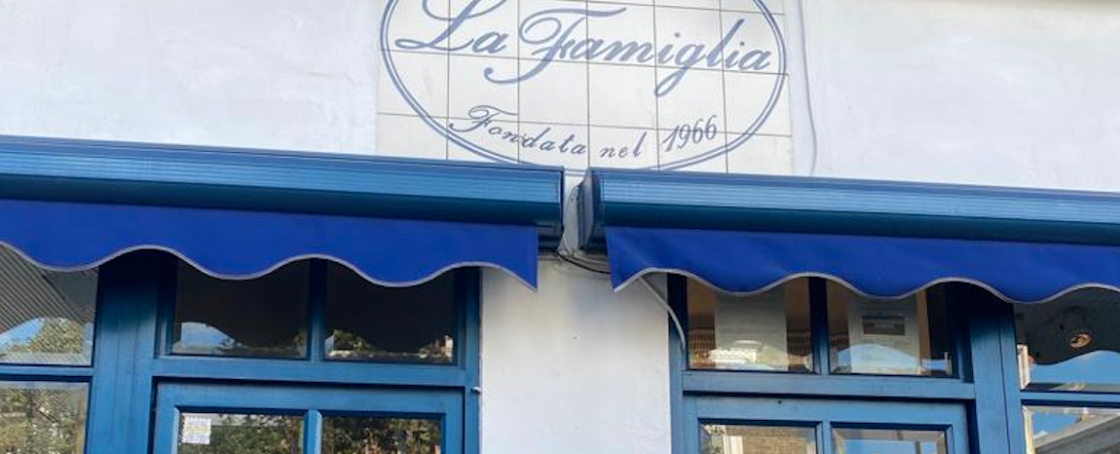
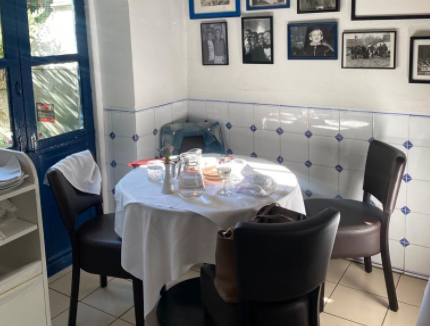
Here are the show notes for the Leaked Lunch podcast with head of Enodo Economics, Diana Choyleva, recorded at La Famiglia restaurant in Chelsea on September 16.
Show Notes:
2:00 – How Choyleva became founder at Enodo economics, going into how she came to study Economics in the West.
4:00 – Studying Economics in the West, and how it affected her beliefs, going into her time at Lombard Street Research.
8:04 – Ordering food. (Octopus starter followed by Risotto for Izabella and another starter for Diana.)
10:30 – Choyleva’s work on China, and on how she learned to have courage and stick true to her theses, even if they lie contrary to the mainstream.
15:56 – How she started Enodo, going from head of research in Lombard to founding her own company. How for accurate macro markets research you basically only need to understand US and China, but since 2008 a critical factor for understanding anything in macro research is geopolitics.
20:00 – Choyleva explains how the political resurgence over economics means current economic affairs are often misunderstood by contemporary western investors.
24:20 – The importance of independent researchers. How big banks undercut their prices, but also use their research to benefit their own bottom line.
27:00 – Allegations of bias in Chinese research. Frustration with the inflexible terms of China researchers – either China bear or China bull, and nothing more nuanced.
32:30 – On how China front-runs its abilities, siphoning expertise off Western companies, while opening their markets. Particularly on how they hollowed out German expertise in machinery – and American nuclear research.
34:00 – On how Germany might be overvalued and which sphere of influence Germany has fallen into. Also, the similarities of German state-handled economy to China’s.
37:30 – On how technological prowess will determine the bifurcation of the world into two competing spheres of influence. Diana sees that bifurcation as ‘authoritarianism’ vs ‘free liberal democracies’.
39:00 – Her analysis of Chinese economic development is based on the country’s position in history – Chinese exceptionalism – but also on how Chinese influence differs from the American type. More non-interventionist, but also more isolationist. Choyleva believes Chinese foreign policy will eventually need to resemble American interventionism.
43:40 – Where is the Western blindspot on China? Diana says the major problems are elites who are not able to carry out changes with conviction. That elites hide behind events like the ‘science’ or some such to carry out their policies. How our world is one of radical uncertainty, and why authoritarianism inevitably creates echo chambers that lead to mistakes. Similar issues in China.
52:20 – On factionalism in China. On how Xi could use Pelosi’s visit to silence his critics by focusing on an American national security threat. But also how Xi’s support is based on the army.
54:20 – On surveillance and lack of privacy in China, and the low risk of a revolt or a coup d’etat.
57:40 – Economic risk in China, beginning with the Chinese real estate crisis. The chinese real estate crisis was enforced from above based on a Chinese pre-emptive policy, Xi’s policy in combatting high real estate prices.
1:04 – On the importance of a lack of bias when trying to engender peace and reconciliation.
1:07 – On the problems of unfettered deregulation after the fall of the Iron Curtain, and why China is interested in a slower integration of the market economy.
1:14 – On Chinese decoupling from the global financial system/ de-dollarisation.
1:22 – On finding the most effective way of dealing with the CCP, the shock to the West of Chinese decoupling, and the death of convergence to liberalism theory.
1:26 – Going through de-financialisation, re-politicisation.
1:29 – Going into COVID and lockdowns – how has Covid changed things? COVID accelerated the swing towards decoupling. How COVID is now being used to further internal political narratives for the benefit of the ruling factions.
1:37 – The vulnerabilities of the surveillance state? Choyleva is doubtful there are any, thinks people have to be so desperate vs. the overwhelming capabilities of the surveillance state to push back on it.
1:38 – Restaurant has been run with the same menu for decades, as well as the same chef.
1:39 – Looking ahead, what is the one thing people need to be mindful of with respect to China? Diana says that if Xi is crowned leader for life, then he will double down on the direction he’s taking China in, bringing with it a very different economic backdrop to global growth. There will also be heightened geopolitical risk vis-a-vis Taiwan and lower overall growth.
One Response