
I have just had the pleasure of spending about 24 hours with precious market participants attending the annual London Bullion Markets Association gathering which took place in Lisbon this week. I was there as a keynote speaker, embracing the challenging task of speaking on a topic of my choice.
In the end, I stuck to what I know best; what is happening to mainstream media, and how this connects to the broader macroeconomy landscape.
But I also got to meet a lot of interesting people with many valuable insights about gold and all sorts of other things. I thought I would sum up the big takeaways — not least because it’s been a while since I looked at the gold markets closely.
I’ve organised the reflections thematically.
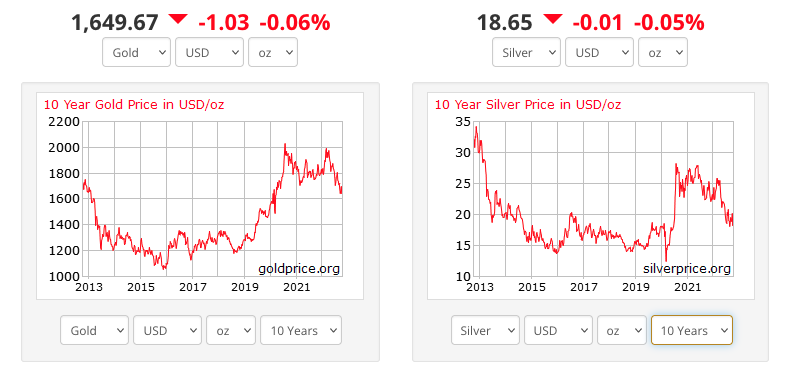
Here’s the longer-term trend in both gold and silver to get us going (chart courtesy of goldprice.org):
The LBMA Conference:
- This was not a goldbug fest. Attendees included a broad range of market participants, from bullion traders and banks to central banks, refiners, and miners. There were about 700 people in attendance, which is (supposedly) a good reflection of the size of the entire professional industry. The atmosphere was casual but thoughtful, the debates were nuanced, and everyone seemed open to out-of-the-box thinking. I very much liked the crowd. Disclosure: I did get a freebie silver coin in my goodie bag, but chances are I would have said all of the above regardless.
Tidbits About the Gold Market:
- Most of the industry had a very pragmatic perspective on the current gold price. Many argued there was little evidence for gold being a highly effective inflation hedge. Others said time frames for measuring performance really matter. Overall, there seemed to be a consensus view that gold doesn’t fare too badly during inflationary periods and it probably makes sense to keep some small allocation in your portfolio. Turkeys don’t vote for Christmas, but you wouldn’t have got this sort of nuanced view at a crypto conference.
… - In terms of the bear case, most agreed that while liquidity and financial crises tend to be good for gold in the immediate moment, rallies are often hard to sustain. This is because during crises the most liquid and well-performing assets – such as gold – are often liquidated first. That has a habit of making gold a victim of its own success.
… - Gold remains one of the deepest and most liquid markets in the world.
… - Years ago, I had the opportunity to visit a gold refinery and was surprised to learn that despite all the massive sums of bullion being processed at the plant, the margins underpinning the flows were tiny. About 1 percent. This week I learned those margins might be even smaller than that.
… - The increasing cost of financing is beginning to impact mining and refining costs. In the first instance, this may prove price supportive as prices will have to move beyond mining breakeven rates to keep production flowing. In the medium to longer term, the higher cost of doing business might threaten the sustainability of the least efficient producers.
… - ESG is just as forceful a presence in the gold market as in any other. In gold it seems highly focused on responsible sourcing. The biggest challenge here relates to the artisanal miners, who are small-scale prospectors living in the poorest communities who dig up gold for a subsistence wage. Unfortunately, they often use informal techniques that are very polluting and environmentally damaging. Official producers and refiners try to limit how much of this supply they add to their own feedstocks since it compromises their ESG scores. But the industry also understands that freezing these players out completely may also have detrimental effects on local communities. The industry is currently trying to devise ways to allow artisanal miners to maintain an income without resorting to all these bad practices. I’m not an expert here, but it seems like it could end up fronting a formal subsidy/compensation mechanism. I know that environmental groups in Kenya, for example, have similar programmes compensating local Massai for not killing lions that attack their subsistence flocks.
… - Gold lease rates are no longer transparently available on an indicative basis because of complexities associated with compiling consistent rates for the entire industry. This is a function of many variables, among them the varied credit profiles in the industry as well as the move to transaction-based data and the rebooting of Libor.
… - Over a year ago some feared regulatory moves might classify gold held in the London bullion market on an unallocated basis as not meeting the criteria to qualify as HQLA on bank balance sheets. This would have meant haircuts on gold as an asset class and/or the additional and impractical use of allocated gold throughout the trading community. Both risked undermining the liquidity of the market. The market seems to have convinced regulators not to move ahead with this.
Tidbits About Silver:
- Something very strange is going on in the silver markets. Supposedly, it all started earlier this year when a Wall Street Bets-style campaign hit the market in an attempt to shake out the shorts by pumping up the price. Adrian Ash of Bullionvault noted on a panel, however, that he doubted this was linked to an organic process. He sensed a strategic play by legacy speculators focused on the revival of a longstanding conspiracy from years ago related to JP Morgan allegedly having inherited a large silver short position from Bear Stears.
…
That conspiracy theory is likely linked to a misunderstanding by retail speculators about how bullion banks hedge their physical supply with short positions on the Comex, I was told. Even so, strange things are still afoot silver. Things first turned weird during the pandemic, when the gold/silver ratio blew out to multi-decade highs in gold’s favour in March 2020: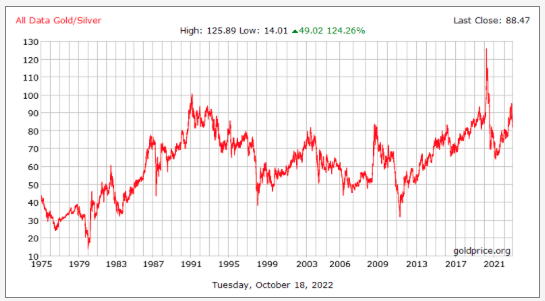 Much of this was down to logistical bottlenecks, which prevented supply from being delivered where it was needed due to the aviation industry being grounded. Even so, silver prices remain elevated on a historic basis and the industry confirms that physical supply is still very tough to source quickly. In some cases, the industry is once again resorting to using commercial aircraft for delivery, which they say is usually a sign of market tightness. Silver lease rates have hit 2 percent (versus what is usually a negative rate).
Libor Low-Balling
- Financial journalist Andrew Verity of the BBC hosted the macroeconomic session I was on with Peter Zöllner of the BIS, Adrian Ash of BullionVault and Saad Rahim, chief economist at Trafigura. I had not appreciated the incredible work Verity had done on the Libor manipulation case — the only legal process out of the global financial crisis that had delivered any prison terms for the industry.
…
As Verity was explaining to me on the sidelines of the conference, this may have been one of the most extraordinary miscarriages of justice of recent times (outside of perhaps the Post Office scandal). Whistleblowers ended up being jailed for the actions of those they were whistleblowing on at the very top of the financial system.
…
Verity’s full report came out on March 1 (which might explain why I missed it, as it was peak Ukraine invasion chaos) and features an amazing podcast that is really worth listening to. A short extract:In the confidential tapes, we hear Johnson being told by his bosses that the need to fix interest rates came from above: first from senior managers at Barclays Bank, then from instructions from the Bank of England, then from the UK government, including Downing Street.
The tapes reveal that Johnson and Bermingham repeatedly blew the whistle to the US central bank about his and other banks publishing false estimates of the cost of borrowing cash, known as “Libor submissions”.
On 11 April 2008, Bermingham alerted the Fed to what he regarded as a broken market, frankly telling them that Barclays, like other banks, is not posting “honest” estimates of the cost of borrowing cash. The Fed official says she understands fully and does not report a crime.
The BoE has never faced a proper public backlash about its manipulative role here.
Amazing stuff, and good on Verity for pushing ahead with a story that runs counter to the popular narrative.
Other Tidbits:
- Blockchain people were there. They’re still convinced they can solve all provenance issues by layering in blockchain. I remain unconvinced that this ever solves the garbage in garbage out problem.
… - Peter Zöllner, head of the Banking Department at the BIS, warned of a paradigm shift and a combined stagflationary/debt challenge for European economies.
…
- Saad Rahim, chief economist at Trafigura, shared similar views about the energy challenges facing Europe this winter. He agreed our vulnerability was the result of major under-investment in the sector and that this was obvious long before the Ukraine war broke out. He wasn’t convinced price caps were going to make much difference.