

This is the first in an occasional series looking into Russia’s decaying sphere of influence. In this edition we take a closer look at the scale of contested resources in the region.
The Global and International Domain of Minero-Dollars
What are the resources (or lack thereof) currently being battled over at the periphery of Russia’s decaying geopolitical influence?
As we outlined in the last week’s Blind Spot Wrap:
Some unfortunate news for Russia and its regional NATO-lite equivalent, the Collective Security Treaty Organisation (CSTO), this week.
Armenia and Azerbaijan appear to have entered a ceasefire after days of intense shelling and assaults into Armenian territory. Though Armenia officially filed a request for military assistance from the CSTO, the body appears reluctant to provide any.
Compounding these troubles, clashes erupted between Tajikistan and Kyrgyzstan (both CSTO allies) killing one border guard and injuring two.
As if things couldn’t get any worse, Georgia and rebels in its breakaway South Ossetian region also clashed two days ago.
It’s almost as if regional strife on Russia’s border is inversely correlated with its success or failure in Ukraine.
Armenian Syunik Region
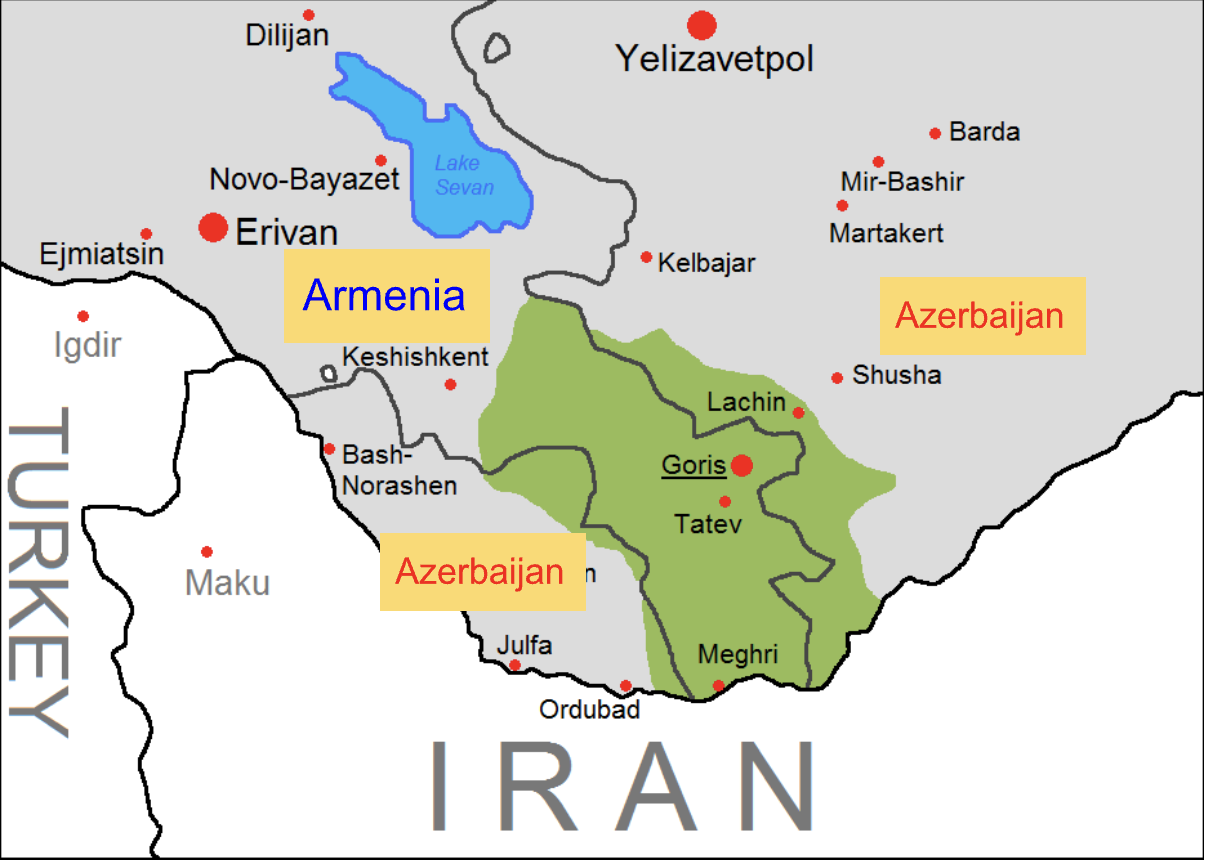
There are several regions under contest in Armenia but arguably the most significant is the still-Armenian controlled Syunik province (shaded in green).
Control over the area would allow the Azeris to consolidate their borders. According to news reports Azeri President Aliyev intended to continue into Syunik after seizing most of Nagorno-Karbakh in 2020. A reunited Azerbaijan feeds into the development of the Great Turan – Turkey’s empire-building project touching all Turkic peoples in the Caucasus and Central Asia.
For now, US support is helping the Great Turan expand in a bid to roll back Russian and Iranian influence. The project has been linked to uprisings in Kazakhstan, where local intelligence sources pointed to a secret US-Turkish-Israeli military intelligence operation room as responsible for January 2022’s unrest.
But the Syunik region also boasts significant natural resource wealth. To paint a picture, of 36 major Armenian mining projects, 13 are located in Syunik, according to a Wikipedia-based table.
Look at the blue circle below. That concentration of resources would be attractive to almost any state:
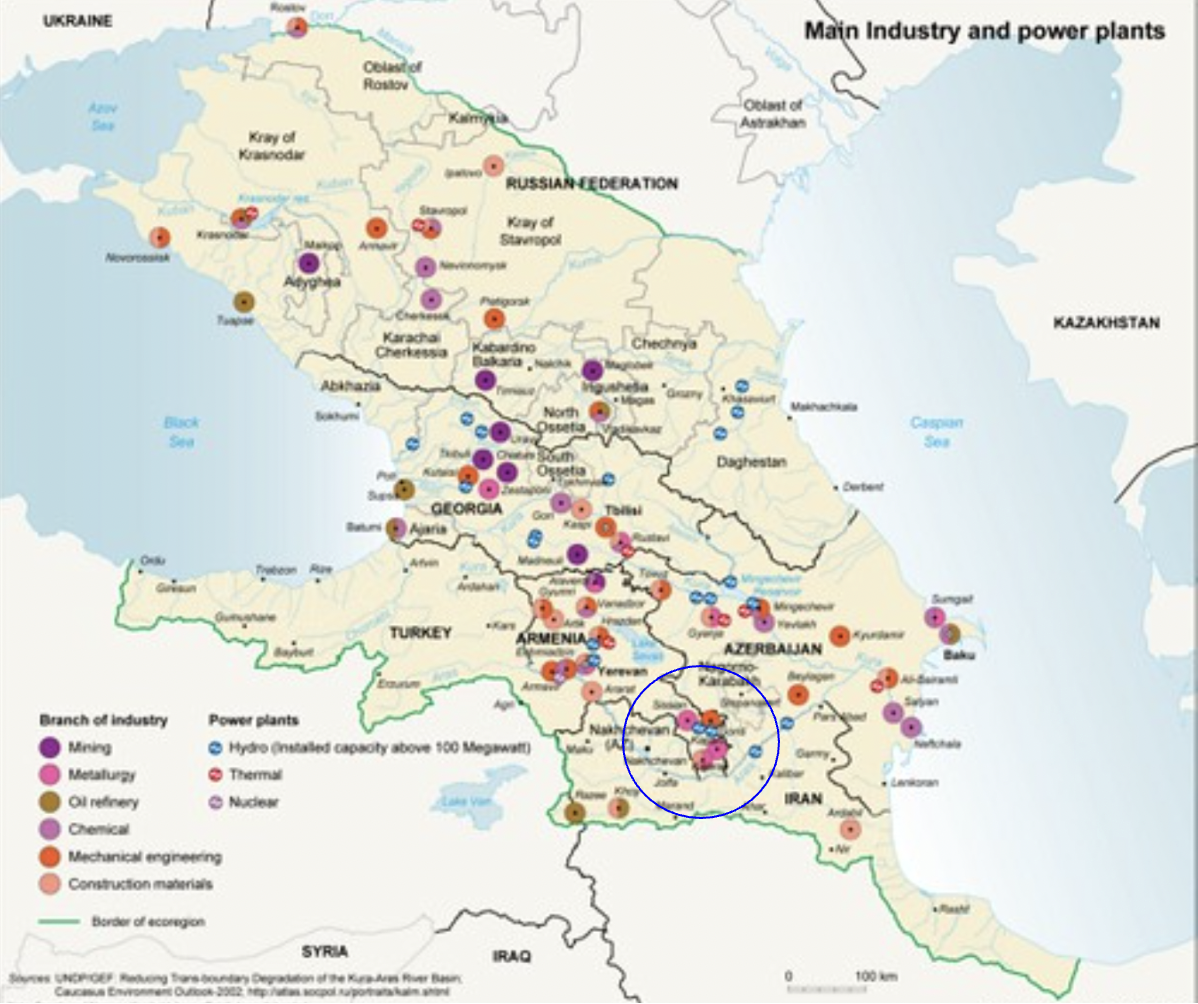
Key among the resources to be found in Armenia’s Syunik region is Molybdenum, a mineral used to make alloys and which can be added to steel alloys to increase strength, hardness, conductivity, and corrosion-resistance. It is also used to make copper.
Notable areas of exploitation are concentrated around Kajaran and include the Russian-owned Molybdenum and Copper mine. The facility employs around 4,000 people and is the largest mining project in Armenia, producing around 10mn tonnes of copper and molybdenum concentrates per annum. The Mining Technology newsletter ranked the Kajaran mine as the largest of 10 producing surface mines in the former territory of the Soviet Union.
There are also about 1.5bn tonnes of iron in the Little Syunik area, concentrated in the Svarants mine.
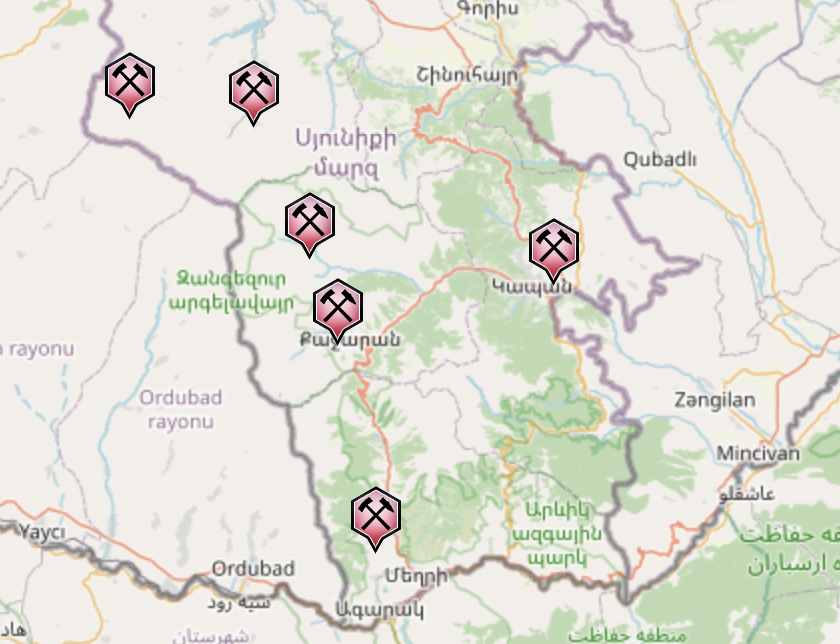
To top things off, the Armenian region also holds large deposits of gold. Mindat.org counts at least five significant gold deposits in the region (below).
Finally, there’s the uranium. A Russian exploration team from the 1970s estimated around 30,000 tonnes of uranium might lie in the region. Deposits have since been found near the village of Lernadzor and studied by the Armenian-Russian Mining Company CJSC. While most were deemed not commercially viable to develop at the time, a sustained European energy crisis might change that one day. We note the company’s exploration was severely impeded by local NGO and grassroots movements concerned about radioactive poisoning. Another, much smaller deposit of 75 tonnes of uranium and 25 tonnes of thorium were found in another Sunyik gold mine, Amulsar, in 2007.
A kink in Azerbaijan’s plans, however, is the Islamic Republic of Iran, which is unlikely to be pleased with any plan to leave such a mineral-rich region in the hands of its closest geopolitical foes, Azerbaijan and Turkey. Rumours are thus swirling that Iran would intervene against Azerbaijan should the Azeris decide to invade.
South Ossetia
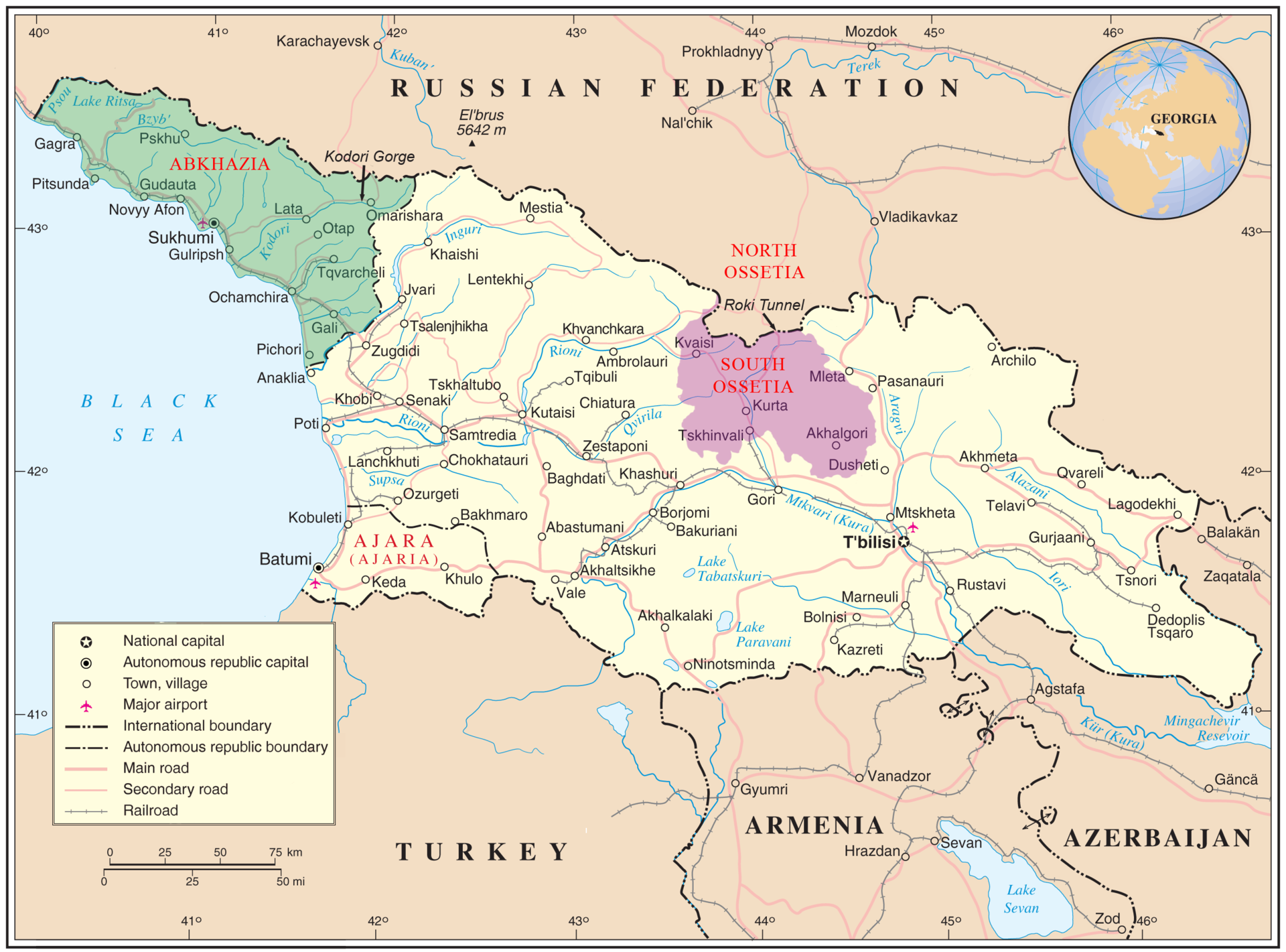
This small region consisting of about 70,000 people made headlines in 2008 after a chaotic invasion by Russian forces in both Abkhazia and South Ossetia consolidated the regions as breakaway territories of Georgia. Russian control over the Greater Caucasus mountain range provides a handy buffer against any hypothetical NATO-supported territorial incursions from the south.
This region is important in one more crucial way though; South Ossetia is within striking/control range of two major Caucasus pipelines.
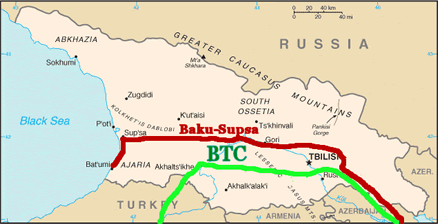
The first is the Baku Supsa line is a 518-mile-long oil pipeline running from Baku and carries Azeri oil from the Caspian sea to the Georgian port of Supsa, from where it goes on to feed the West through Turkey’s Black Sea ports.
The pipeline’s integrity has already been threatened by a Russian assault beyond the South Ossetian borderline, which took control of a short length of the pipeline. It was only in June 2022 that BP, the pipeline operator, rerouted oil towards the Baku-Tbilisi-Ceyhan (BTC) pipeline.
South Ossetia also holds a number of natural resources in its mountainous terrain. Timber, manganese, iron ore, copper and coal deposits are all to be found there. As yet, they have not been exploited to any significant industrial scale. English language searches reveal no further development – bar one covering the illegal export of timber in South Ossetia.
Some of these resources lie close to where Russia has been making territorial advances in the region since 2008 and are within striking range. Chiatura, a neighbouring region to South Ossetia, hosts one of the world’s largest manganese mineral deposits.
South Ossetia also functions as a corporate cover for Russian interests in the Donbas, with 146 registered South Ossetian companies conducting business between Russia and separatist eastern Ukraine.
Abkhazia
Also in the Blind Spot is the announcement by Abkhazian Foreign Minister Inal Ardzinba, who told the country’s public council on September 16 that there was a ‘high likelihood of conflict with Georgia. The Abkhazian minister pointed to intensified military drills, armament deliveries, and intensified NATO consultations as escalatory moves by Georgia.
Abkhazia, another Georgian breakaway region (shown on the map in the section above), is not, however, another Syunik-style cornucopia.
The Presidency of Abkhazia has an old-fashioned website claiming that Abkhazian resources make it ‘one of the richest countries in the world’. Besides large reserves of mineral water and arable land, they estimate around 5.3mn tonnes of coal, as well as peat, marble, granite, limestone, gabbro-diabase, chalk, tuff, barite, dolomite, lead, and various building materials. From the website:
There are also small oil and gas fields on the shelf of Abkhazia. According to preliminary data, oil reserves range from 300 to 500 million tons. Most of the oil reserves are located at a distance of 10 kilometres from the coastline. There are also small gas fields.
The claims from the Abhkazian presidency are contested, however. Though some oil and gas wealth does exist, Abkhazian revenues depend heavily on seaside reasorts. This has led to significant grassroots opposition to Rosneft-led oil exploration projects in the Abkhazian sectors of the Black Sea. Coal mining is also dying – with the formerly critical mining town of Tkuarchal a ghost of its former self since the last operation, a Turkish coal-operated quarry, was shuttered in 2005.
The country is also suffering from a draining crypto-mining boom. Resulting from subsidized electricity prices and a lax regulatory regime, it contributed to the area’s rolling blackouts in 2021. Despite an attempted crackdown on cryptocurrency mining, it appears to continue unabated.
This story, naturally, goes further. The consequences of a weak state mixed with healthy port facilities should be obvious; the cryptocurrency boom may not be unrelated to its status as a key heroin transit entry point in the Black Sea.
In papers presented to the Annual Conference of the European Society of Criminology in 2003 by Sami Nevala and Kauko Aromaa, the authors claim heroin is shipped into Russia via Abkhazia from Turkey using Russian military transports, which Abkhazian authorities are forbidden from inspecting. Alternatively, heroin begotten from Afghanistan is smuggled through Georgian or Abkhazian ports, through Turkey, and into Spain.
Strategic resource wealth is more limited, bar a splattering of mercury deposits.
Tajikistan-Kyrgzistan Border Regions
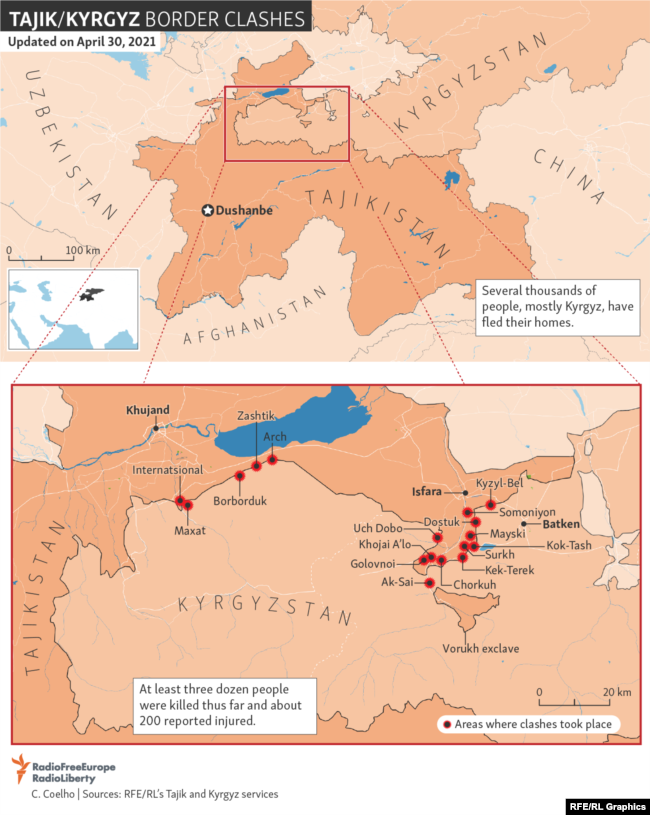
If resource wealth underpins conflict motivations in Armenia or Ukraine, this cannot be said of Tajikistan or Kyrgyzstan.
And yet, Tajikistani and Kyrgzistani border guards have been clashing repeatedly over the past year in several disputed border regions. These skirmishes are infrequent but still threaten to turn into a full-scale conflict. From April to May 2021, the most severe flare-up so far, the conflict quickly claimed 50 deaths and 270 injured on both sides.
Most recently on September 14, the two nations clashed in fights where both sides accused the other of using heavy weaponry, including mortars, armoured personnel carriers, and tanks. Now under ceasefire, it still represents mass potential border instability for Russia.
With almost half of the 970km periphery being contested, population growth alongside a scarcity of arable land and water result is now resulting in intermittent violence between the two camps. The situation is complicated by the lax attitude to borders when both sides were under Soviet control, meaning that farms and local populations fell on both sides of each other’s territories. This explains why most of the conflicts outlined are spats over roads; a region where local population and supplies such as water must cross daily between different Tajik or Kyrgyz-controlled spaces almost guarantees a yearly tussle or two.
The 2021 conflict erupted after a Tajikistani worker installed a surveillance camera to monitor the taking of water supplies by Kyrgyz workers, which provoked a local Kyrgyz official to demand the removal of the camera, whereby the situation escalated with the deployment of police and angry mobs.
Beware the Cornered Foe
The mineral wealth of contested regions within the CSTO’s sphere of influence varies dramatically. From the cornucopias of Syunik, to the troubled narco-economies of Abkhazia, to enmeshed cross-border poverty in Tajikistan and Kyrgyzstan, diversity in these conflicting regions is vast.
There is one concrete thread running through them all, however. All the actors in the region appear motivated by Russia’s weakness, most apparent since its failure before Ukraine’s Kharkiv offensive. Even Armenia has seen the apparition of the American Kraken; Nancy Pelosi, in a sign of encroaching American interests in Russia’s southern border.
With Georgia now threatening a referendum on the invasion of Russia, and Tajikistan and Kzyrgzistan experiencing stubborn skirmishing, claiming over 100 lives since Saturday, despite repeated ceasefires, the situation is clearly coming to a head.
It will be interesting to observe how such actors will behave should Russia either continue to fail in its efforts in Ukraine or somehow regroup and successfully counterattack.
It’s been almost 600 years since Ivan III of Muscovy forced the withdrawal of the Mongolian horde that had reigned the plains of Eurasia for almost two hundred years. Pathologically traumatised, the Russian raison d’etat has sought safety in distance ever since.
We can only hope the challenges to this brutalised state’s core motifs do not end in a mushroom cloud.
