You may be wondering why it is that oil prices aren’t roofing given headlines such as “An EU embargo on Russian oil in the works – French minister” and “Putin panicking as EU plans oil move that will ‘explode prices’ in bitter blow to Moscow”.
Yes, prices remain elevated ($103 for WTI, $109 for Brent), but there doesn’t seem to be any incoming urgency or panic:
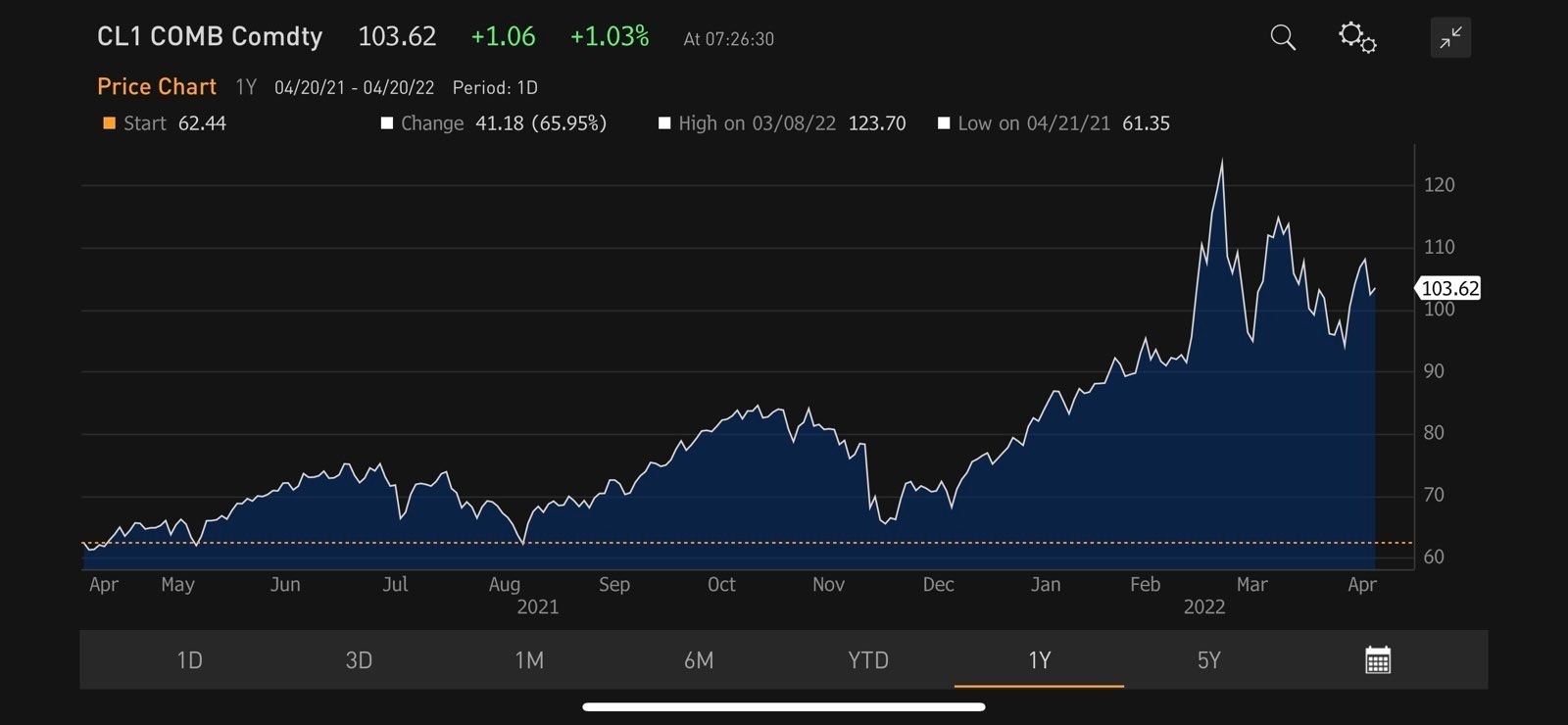
Those encouraging an outright European ban might be inclined to interpret this as a broadly supportive signal for their policy. An indication, perhaps, that the West can handle shutting out Russian commodities completely?
But this would probably be a mistake.
Oil is a spot clearing commodity with expensive storage. That means it operates quite differently to the equity market, which is is forward looking by definition. Commodity prices, to the contrary, tend to be really bad at forecasting future prices due to competing supply and demand forces.
In that respect, today we have a multitude of competing forces:
- Chinese Covid lockdowns curbing 2mbpd of demand.
- SPR releases at the very significant levels.
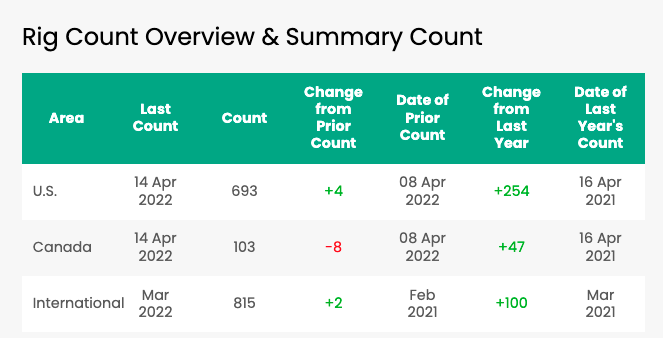
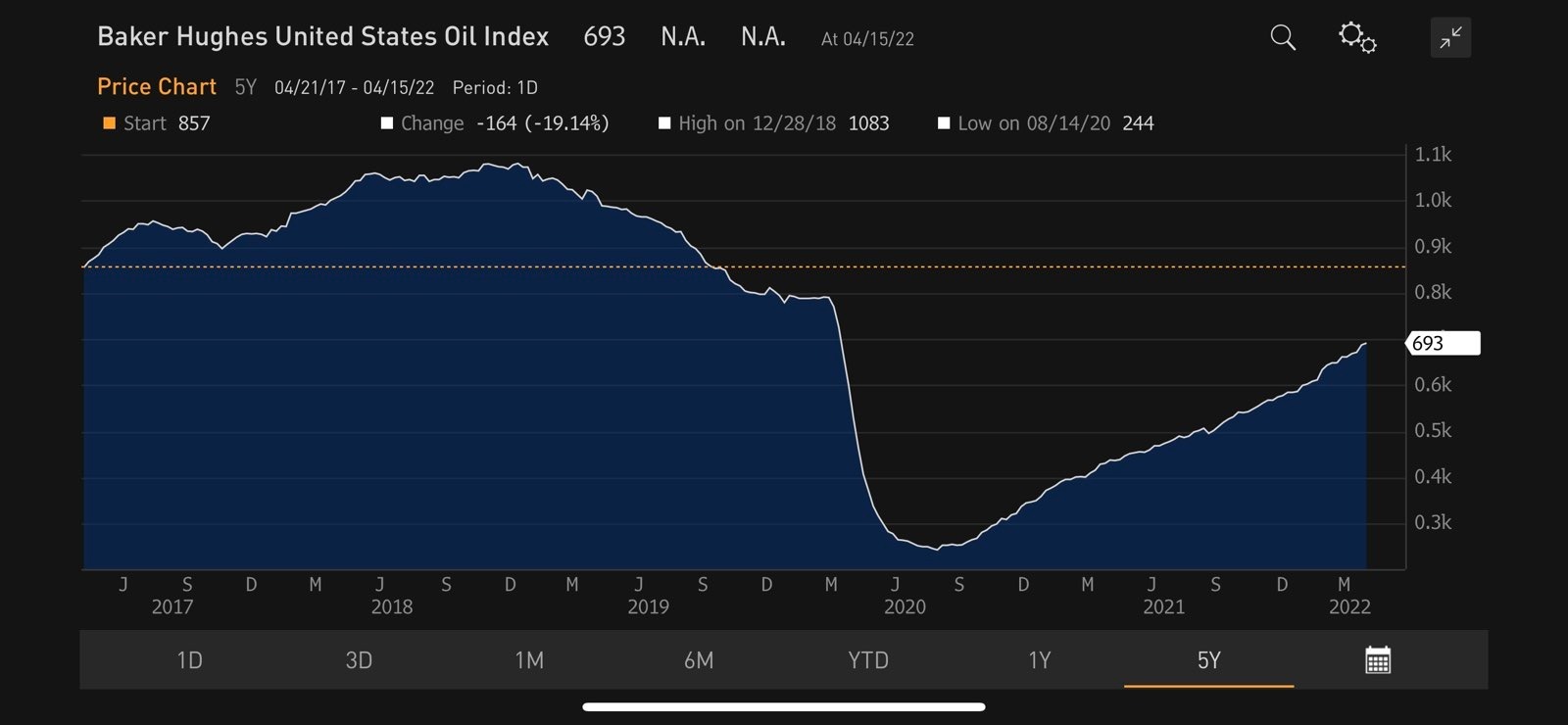
- Increases in the US rate of production and rig counts in general:
- Winter heating season is over, but summer driving season hasn’t arrived yet. Spring and autumn have always seen seasonal lulls in demand as a result.
- The constant debate on Iranian production returning to the arena.
- Russian crude is still being exported and sold.
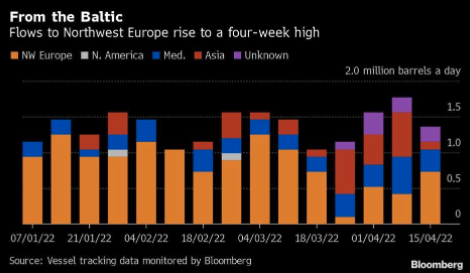
As a consequence it would simply be weird if oil was $300/bbl right now.
When Russian exports do wind down, however, Russian tanks will inevitably hit tops (because the crude has nowhere else to go), floating storage will continue to increase and something will have to give as a result. Remember Russian fields are not as shut-offable as Middle Eastern fields. Shutting in their supply, can lead to permanently reduced output.
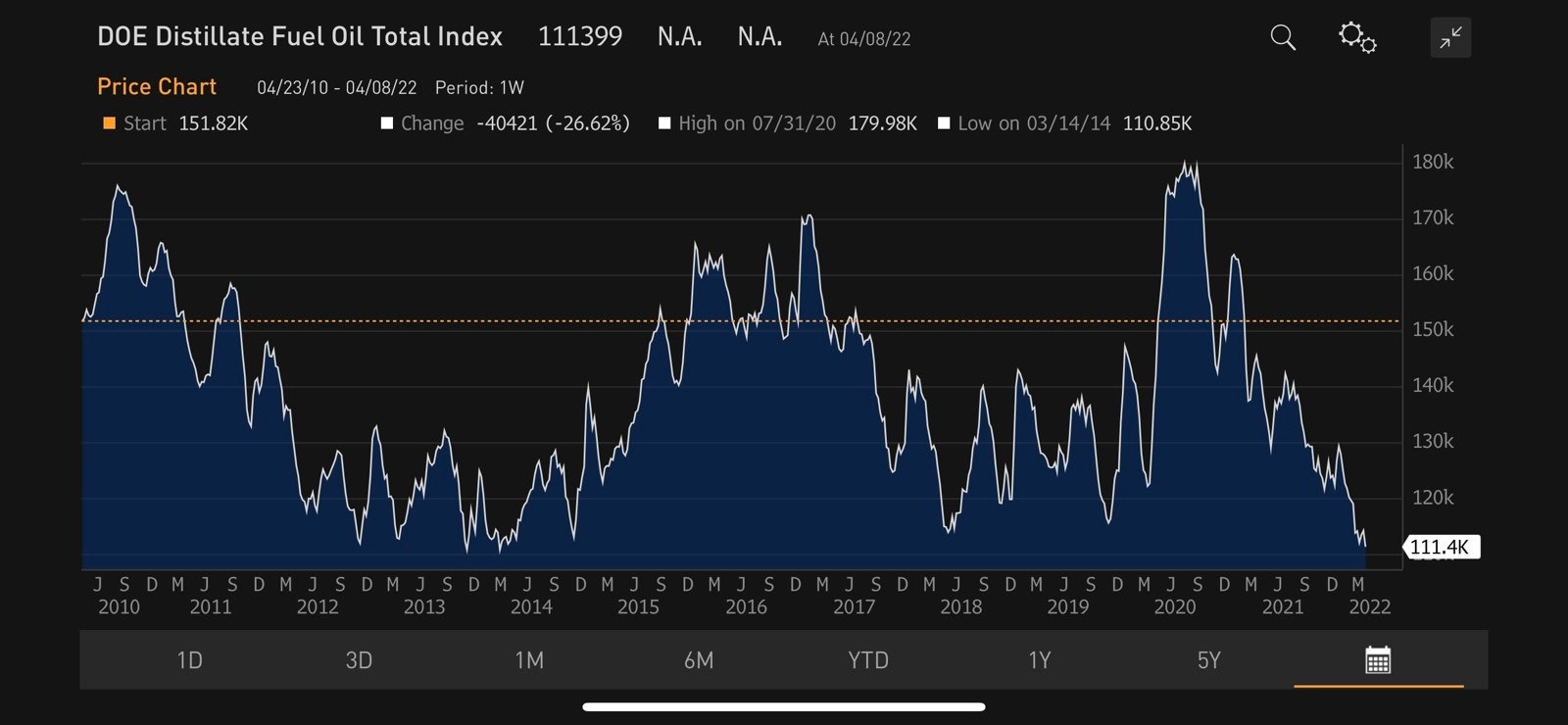
And yet, you’ve only got to look at the diesel market to see that we have a massive problem on our hands. As Bloomberg reported this week, there is now a global scramble for diesel. Waterborne diesel exports from the US Gulf Coast are up 1.3m barrels per day this month — nearing the highest level since January 2016.
Here’s the diesel stock situation in the US:
And for all the bearish chat on crude in the prompt, Z2Z3 Brent (i.e. the difference between crude prices for December 2022 and December 2023) is +12 bucks or so … i.e. near all-time-high levels.
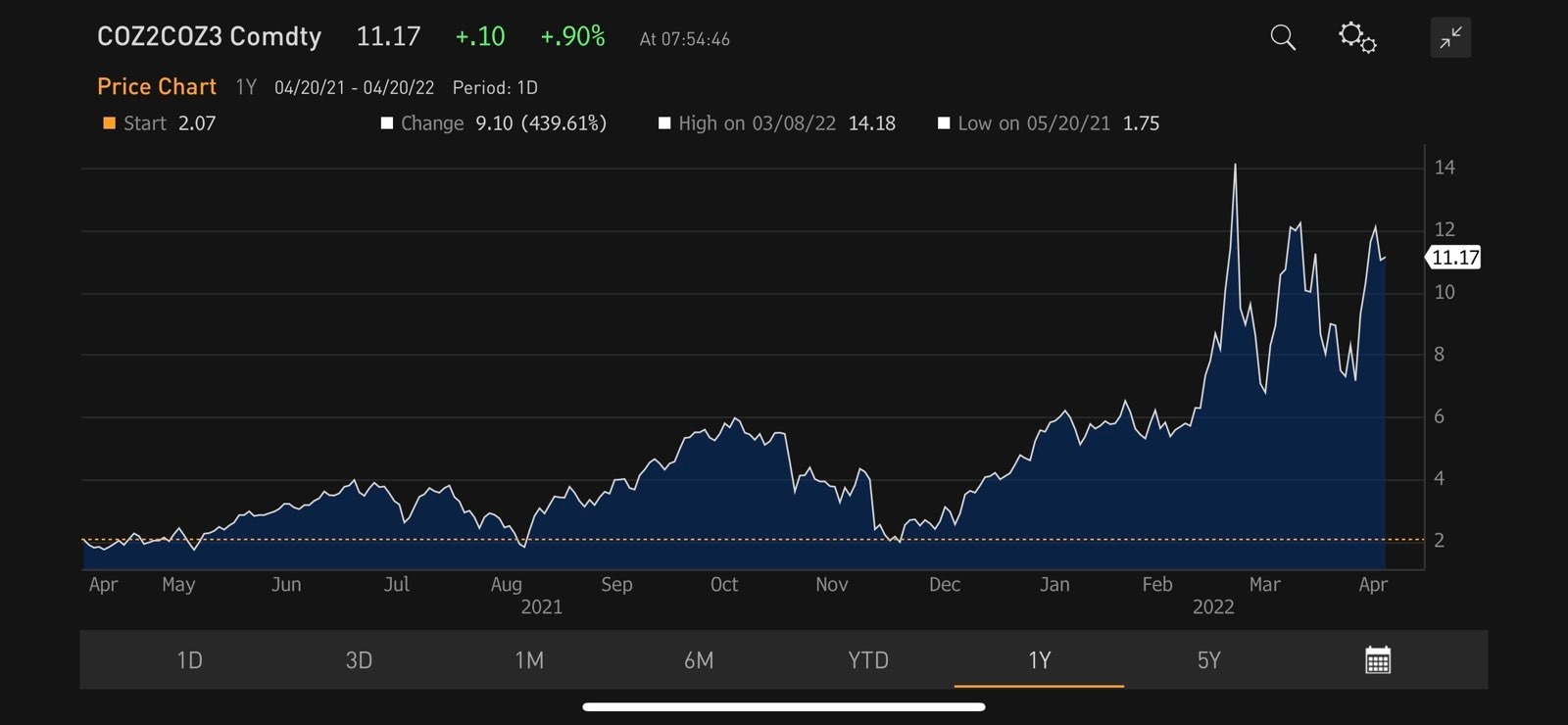
The sharp discounts are true, but that’s hardly an indication of normal flows. Quite the opposite, the discounts are materialising due to a lack of willing buyers and this in turn is resulting in a reduction in exports at an escalating rate.
As for the shipping angle, Zoltan Pozsar of Credit Suisse rightly noted in his piece this week that:
…the re-routing of Russian crude oil from the Baltics to far flung places like China and India (instead of Hamburg, where crude oil from the Baltics is usually transported) will require 80 very large crude carriers (VLCC) in permanent use. Put differently, getting the same amount of oil from oil fields in Russia to end consumers will require 80 additional VLCCs in permanent use.
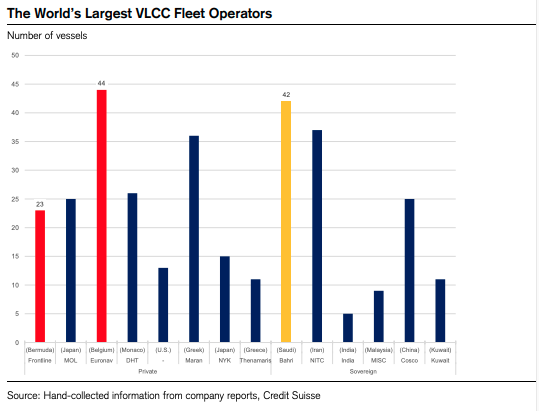
The 80 ships theory, however, is based on willing takers for the arbitrage in hand. Whether they appear remains a big if. China, for example, has been relatively sluggish to buy Russian grades loading out of the Sakhalin region. But if it does decide to get buying, the market risks a logistical constraint with shipping capacity.
What we end up with is either a situation where there are no willing buyers at all and crude supply drops, or where willing buyers in far flung destinations cause a logistical bottleneck that consumes all available VLCC capacity.
Either way, none of this is good.