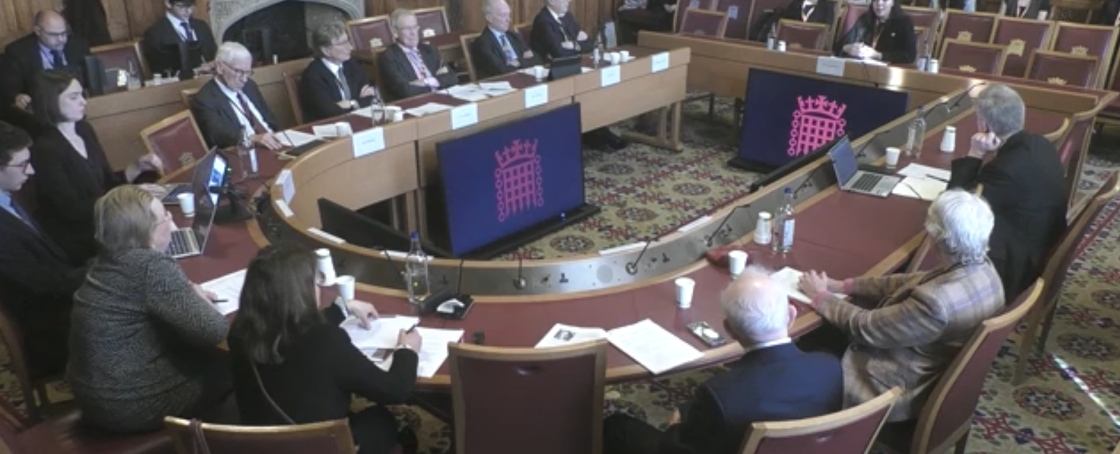
UK lawmakers were warned Wednesday that without proactive support for pound-denominated stablecoins, Britain’s digital finance landscape could be increasingly overtaken by dollar-based alternatives — with broader implications for monetary sovereignty and the City’s global fintech clout.
Speakers from the fintech industry told the Financial Services Regulation Committee that dollar-denominated stablecoins already dominate the global market and, unless the U.K. moves decisively to build a viable sterling stablecoin ecosystem, firms, innovators, and liquidity may increasingly coalesce around the greenback.
The UK is “at a strategic inflection point,” and stablecoins are “no longer a question of whether they will be growing globally, but where and under whose supervision,” Elise Soucie Watts, Executive Director of Global Digital Finance, said in the session.
Watts went on to warn that if the UK market “goes offshore, dollar stablecoins, which already dominate 99 percent of the market, will then become the default,” framing the issue as a matter of currency sovereignty as much as innovation policy.
In effect, this would create a form of digital dollarisation — not through formal policy but by default, as US-linked digital money becomes the rails for global payments and settlement. The concerns underscored how policy design now could shape which currencies underpin future financial infrastructure, a theme with clear geopolitical and economic overtones.
The debate came against the backdrop of a fresh regulatory push: the FCA selected four firms to test stablecoin innovation in its Regulatory Sandbox on Wednesday, including Monee Financial Technologies, ReStabilise, VVTX, and challenger bank Revolut. They will now trial stablecoin issuance under the BoE and FCA’s proposed framework in real-world conditions as part of efforts to refine a stablecoin regime due later in 2026.
The sandbox move was cited in the session as evidence that regulators are seeking a balance between innovation and risk mitigation.
Remuneration question
Another central thread of Wednesday’s questioning revolved around how much reserve assets should be held in non-yielding “unremunerated” form. The Bank of England-driven prudential proposal has stated that up to 40 percent of reserves should be unremunerated to strengthen backstops.
Witnesses argued that excessively high unremunerated requirements could cripple the economics of stablecoin issuance by eroding issuers’ revenue models, which currently depend on earning yield on short-term government and high-quality liquid assets.
Soucie Watts cautioned that the proposed 40 percent unremunerated reserve requirement could make the model “commercially unviable,” suggesting a lower calibration would better balance prudence and competitiveness.
Committee members also probed whether stablecoins should explicitly offer yields to holders and how that interacts with risk — a debate reflecting wider global scrutiny of digital money products and the trade-off between investor appeal and systemic safeguards.
Witnesses stressed that under current UK proposals stablecoins would not pay interest to holders. “Stablecoins are payment instruments, not investment products,” Watts said, drawing a distinction between issuer revenue — earned on reserve assets — and yield passed on to consumers. Any potential “rewards,” she noted, would likely resemble credit card-style incentives rather than direct interest payments.
The session further saw a lively back-and-forth on the nature of stablecoins versus other forms of digital money.
Jana Mackintosh, Managing Director for Payments and Innovation at UK Finance, emphasised that fully backed stablecoins are fundamentally different from tokenised deposits offered by banks: the former are designed to circulate on public blockchains and settle peer-to-peer without traditional bank intermediation, while the latter remain within established prudential structures with deposit insurance protections.
Tokenised deposits could provide a “safer backbone” for innovation in the UK, Mackintosh said, arguing that acting “with purpose is more important than acting at pace” when it comes to reshaping payment systems.
Members also questioned whether the allure of stablecoin yields could pull funds away from traditional banking, with witnesses cautioning that while such dynamics warrant study, fully backed stablecoins under strong oversight should not precipitate destabilising deposit runs.
Ghost of Terra Luna
Lawmakers did not let the past go unexamined.
The collapse of algorithmic stablecoin TerraUSD and its sister token Luna in 2022 came up repeatedly. Committee members pressed experts on lessons learned from that episode, querying whether similar models could ever be permitted under a regulated regime.
Watts, however, was unequivocal: Terra, she argued, “was not a stablecoin” in the regulatory sense, describing it as an algorithmic construct that would “not be considered to be a stable coin under” emerging frameworks such as the U.S. Genius Act.
The reassurance came as the crypto sector once again grapples with the legacy of Terra — with news this week that the liquidation administrator for Terraform Labs has filed a lawsuit against trading firm Jane Street, alleging insider trading and market manipulation that contributed to Terra’s de-pegging and collapse. The lawsuit — which names Jane Street and others in civil claims that could have far-reaching implications for market conduct in digital assets — is a stark reminder of the risks algorithmic models have posed to investors and broader market confidence.