

| THE BIG BLIND SPOT THIS WEEK |
LEBANESE CABINET VOTES FOR HEZBOLLAH DISARMAMENT in agreement with a U.S-backed plan to make the Lebanese Army the sole power with weapons in the country.
The disarmament of Hezbollah would be essential for restarting Lebanon’s fortunes, especially since Hezbollah’s empowerment runs contrary to Sunni investment in the country. Sunni investors, mainly the Kingdom of Saudi Arabia, pulled out in 2016 amid signs of increasing Iranian backing for Hezbollah.
Hezbollah’s disarmament by the end of the year would come hand-in-hand with guarantees of Israel’s cessation of military operations in the country’s south, according to parts of the American plan as communicated by official Lebanese sources.
Meanwhile, Hezbollah-aligned sources have called the decision a “march in humiliation” and a surrender of the country before Israel and the United States.
Shia-aligned politicians withdrew from the cabinet meeting in protest during these discussions, while pro and anti-Hezbollah protests broke out across the country.
It remains to be seen whether Hezbollah is weak enough to be disarmed by the end of the year. I suspect it will inversely correlate with how much investment the Saudi’s are willing to pour into the country’s military infrastructure.
Should it be successfully disarmed, the consequences would be highly symbolic. Not only would it herald the beginning of the end of the long-running internal turmoil in Lebanon, which has devastated the Middle East’s most beautiful country, since 1975.
The reconstruction of the Lebanese state is especially symbolic because Lebanon was the Middle East’s canary in the coal mine.
But that’s not all — the Beirut Blast epilogue: The second step that would prove the Lebanese have recovered their state would be a successful conclusion of the judicial investigation into the Beirut Blast of 2020, one of the largest non-nuclear explosions of all time.
The investigations have so far been mired in controversy, death threats, and unfinished research after more than half a decade since the ammonium nitrate explosion on August 4, 2020.
Especially because the Beirut Blast, properly understood, is the epitome of governmental incompetence: an unnecessary tragedy that likely happened as a direct result of the Lebanese government’s intervention.
Western blind spots: More importantly for us, stepping into the mysteries which continue to surround the tragedy of the Beirut Port highlights how a Western fascination with anything which smells of Russian-aligned scheming often detracts from our media’s ability to identify points of investigative salience.
Because there are only two points that really matter with the Beirut Blast. The first is why the stash of ammonium nitrate exploded on August 4, 2020. The second is why it ended up stuck at the Beirut Port in 2013 aboard the Rhosus ship, and was later taken from the sinking Rhosus and interned at Beirut Port’s Warehouse 12.
Mostly, I suspect, because the story of how the ammonium nitrate was purchased involved businessmen with ties to the Russian-backed Assad government. And that makes it an angle of editorial interest.
For instance, the shipowner, Cypriot Charalambos Manoli, was in debt to a Lebanese-owned bank named FBME, which had been accused of assisting Hezbollah and the Assad government. On the other hand, British shell company Savaro Ltd. shared corporate addresses with two other Assad-linked businesses in London.
This isn’t useless information. But it’s certainly not the most salient part of the Beirut explosion.
The first point of salience is that the explosion probably occurred because workers were welding shut a door in Warehouse 12, which housed the ammonium nitrate. But this wasn’t routine maintenance. It was the result of a memo that was circulated to the Lebanese Prime Minister’s office on July 14, only two weeks before the explosion. This was the first time the Lebanese executive was made aware of the ammonium nitrate. Crucially, the memo informed the executive that the door to the warehouse was damaged, leaving the explosive contents open to pilferers. That’s why the Lebanese government then ordered the door welded shut, and presumably caused the catastrophe.
It’s no coincidence that the ammonium nitrate sat in the warehouse without incident for almost ten years, only to explode once the Lebanese government attempted to fix it. That’s Lebanon in a nutshell. A country that works despite, not thanks to, its government.
The second point is how the ammonium nitrate ended up at the port. While this point is similarly shrouded in mystery, we know that the investigative angle should probably point towards a British surveying company called Spectrum Geo, which was acquired by a Norwegian-American company called TGS Global in 2019.
Spectrum Geo had ordered a Jordanian firm called Geophysical Services Centre (GSC) to organise the return of its seismic surveying equipment from Beirut to Jordan through the Suez. GSC hired Beirut-based Cogic Consultants to aid in the transfer. It was this crucial decision which led the Rhosus into Beirut’s port.
Either GSC or Cogic then made the bizarre decision to select the near-derelict Rhosus as the transport. It was bizarre for many reasons. The Rhosus is not a ship designed to transport equipment. And the former captain of the Rhosus claimed there was never enough space to onboard the heavy seismic equipment anyway. The decision was defended as the Rhosus was the cheapest option available.
These findings led some U.S. victims to launch a lawsuit against TGS Global for $250 million, holding the company responsible for bringing the ammonium nitrate to the Beirut port. After many years of procedural foot-dragging by TGS’s lawyers, the case is finally in pre-trial discovery.
The very long and detailed Wikipedia entry of the Beirut Blast, for instance, makes no mention of the letter to the Lebanese government or the involvement of Spectrum Geo, GCS, Cogic Consultants, or ICS. The OCCRP’s summary of the half-decade of investigations since the event, and most of its articles on the Beirut Blast, don’t list either of these findings, despite having posted a separate article summarising the case against TGS Global.
And despite the historic nature of the explosion, as one of the largest non-nuclear explosions in history, these angles have barely been scratched. For instance, GCS’s now-defunct website indicated their partnership with another British company, International Computer Systems (London) Limited.
The ICS Group’s website almost seems to be a compilation of red flags that typically indicate a front company, filled with paragraphs of generic corporate language combined with low-quality stock imagery. Interestingly, ICS also claim to offer services to police and intelligence agencies with a big-data analytics service.

Despite the evident salience of this angle, our limited searches online revealed that only Intelligence Online, an intelligence newsletter widely understood to be linked to the French external intelligence service DGSE, have written about the ICS Group and its links to the Beirut port explosion.
Investigations determined by headline potential are at the heart of this issue.
Even if such structures and wide-ranging connections are commonplace in trading dual-use materials like ammonium nitrate and in the shipping industry.
But as many of our Blind Spot readers know, the most interesting and shady aspects of the world rely on staying as dry, mundane and boring as possible.
And in today’s fierce competition for online eyeballs, everyone from conspiracy theorists to respected journals will happily sideline the salient but boring in favour of the seemingly scandalous but irrelevant.
A HYPOTHETICAL TRUMP-RUSSIA CONNECTION WAS ABUSED to turn a growing censorship-industrial apparatus loose on American citizens, as suggested by revelations in paperwork seized from the Department of Homeland Security called the “Durham Annex” last week.
These formerly classified documents were released after a request was lodged by Senate Judiciary Chairman Chuck Grassley. The original declassified portions of this so-called Durham Report were released in 2023, compiled by Trump Special Counsel John Durham. This Durham Annex contains purported 2016 emails showing close coordination between Hilary Clinton’s staff, NGOs, and the intelligence community.
One example that went viral was supposedly written by an individual called Leonard Bernardo, the regional Director of the Open Society Foundation for Eurasia. The email describes supposed attempts by parties allied with Clinton to smear Trump by association with Russia, and to manipulate the electorate by fabricating a false narrative of Russian electoral interference with American elections.
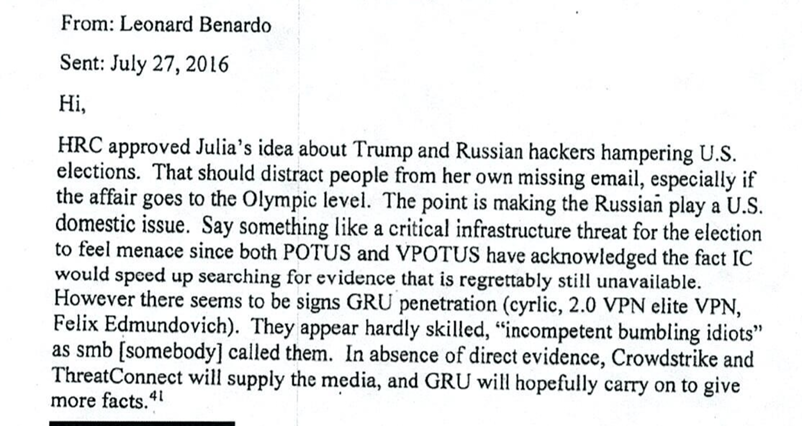
A dangerous legal pretext: Mike Benz, a controversial political influencer who went viral for his long-standing work on the dual-use nature of NGOs, argued these emails show how powers designed to counter Russian propaganda (2016-2019) were later turned inwards against U.S. citizens during the 2020 elections and the COVID crisis.
He believes these emails are fascinating because only four years after 2016, the Department of Homeland Security’s Cybersecurity and Infrastructure Security Agency (CISA) would legally brand tweets that questioned the integrity of mail-in voting as “cyberattacks” to “critical infrastructure”, which allowed the agency to censor and shape domestic conversations.
But their credibility remains in question as partisan media rushed to cite investigators’ reports to argue the emails are either authentic or fabricated.
I’d be surprised if they are fully legitimate. But it’s irrelevant anyway, because I don’t think this question matters.
Real or not, the emails demonstrate early knowledge of how CISA would later use cyberthreat pretexts to shape domestic opinion. This means they are as real as they need to be to discuss the core problem, even if they’re Russian fabrications: the empowerment of illegal actions by the American state against its citizens.
As we are fond of explaining, the state of exception is the legal mechanism by which the normative rule of law is suspended. This legitimizes illegal actions by state actors under emergency pretexts — the so-called prerogative state.
And they have a point. Almost 10 years after Russia-gate became a thing, nothing close to concrete or interesting has emerged about Trump’s connections to Russia.
Because while both sides argue about the whodunnit, the how remains unquestioned.
To those paying attention, the real story is of bureaucratic overreach, not political intervention in the direction of the intelligence community. Thus, it doesn’t matter if the emails are real or not. What matters are the very real powers gained by CISA to surveil American citizens as “cyberthreats” to “critical infrastructure” that only became public years after the fact.
This fosters the illusion that power abuse is partisan, not systemic.
In other words, that pseudo-legal bureaucratic overreach is a bug of the current system — and not a feature.
GHISLAINE MAXWELL WAS A SEASTEADING PIONEER, according to a long-form Substack piece by Jason Jorjani.
Jorjani posits that while Ghislaine Maxwell was originally involved with Jeffrey Epstein, she may have been unfairly portrayed as central to Epstein’s machinations despite Maxwell’s attempt to distance herself after Epstein’s first conviction.
More interestingly, Jorjani claimed that Maxwell’s interests lay in marine biology and creating an ambitious seasteading project, which could have operated outside any state’s legal boundaries.
THE UK INFLUENCED ELECTIONS IN SLOVAKIA by reportedly diverting approximately £10 million through a media agency to pay social media influencers to undermine Slovakia’s ruling Smer-SD party, according to Slovakian Prime Minister Roberto Fico. These allegations first surfaced in a British media outlet called Declassified UK, which published the results of their supposedly three-year-long investigation in mid-July 2025.
The media outlet claimed the action was carried out by the UK’s Foreign, Commonwealth and Development Office (FCDO), which paid a London-based media agency called Zinc Network to run an influencer campaign by identifying and recruiting influencers and political activists.
Declassified UK details that these influencers were obliged to sign legal contracts forbidding them from disclosing the government’s involvement, with Whitehall officials giving “feedback” on each video before the influencers could post them. Furthermore, the payment to Zinc Network was kept under wraps, contrary to usual practice for large British government contracts.
Fico has accused the U.K. of direct election interference and summoned the British ambassador to demand an explanation. The U.K. has “firmly rejected” these allegations through its spokeswoman at the Slovakian embassy, claiming the influencer campaign was only “aimed at encouraging young people to participate in the democratic process (…) regardless of their political affiliation or support”.
This conclusion was backed by Martin Williams, the British investigative journalist who found these payments, claiming the British effort was “not an explicit partisan campaign nor support for any particular party”.
Nevertheless, the Declassified investigation clearly displayed that efforts by the U.K.’s FCDO were strongly focused on countering supposed “Russian interference”, which would have unduly affected Fico’s party since Smer advocates for a middle-ground in the Ukraine-Russia conflict.
As we recounted last year:
“This law would require NGOs receiving more than 20 percent of their funding outside Georgia to register as foreign agents with the government.
Western media, NGOs and governments had joined together in denouncing this as a “Russian law” since a similar law drafted in Russia resulted in the banning and imprisonment of thousands of pro-democracy and pro-Western activists in Russia.”
In sum, this “Russian agents” bill was simply a tool for hunting down pro-democratic, pro-Western critics of the Russophile regime of Georgia.
To the surprise of exactly nobody, there were solid grounds for this law. The British government’s concealed use of NGOs to meddle with elections overseas is just one example.
“Unlike our ability to spot Russian foreign policy lurking behind supposedly non-partisan or independent Russian-aligned media, we in the West seem unable to do the same for ourselves.
Our ire isn’t levelled at the individuals in the U.K. secretly deploying influencers to illegally meddle in elections overseas: there are no rules in love and war.
Rather, it’s levelled at a media ecosystem which defaults to taking the moral high ground with little capacity to observe ourselves as anything other than “the good guys.”
As usual, we believe honesty in blatant displays of power is the best policy. The state was never a home for good actors. Those who climb to its top positions are usually dirty players. A point beautifully conveyed in The Godfather by Michael Corleone to Kay Adams:
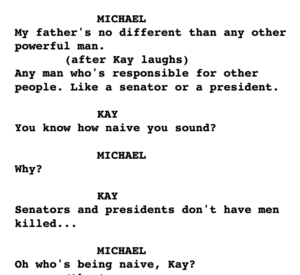
That’s why I have such a soft spot for Trump. Unlike European officials, he doesn’t play a double game. He makes the implicit explicit by leaning into his reputation as a powerful, cunty, straight-talking asshole.
Will the real European statesmen please stand up?
JAPANESE PARTY DRAFTS RADICAL CONSTITUTIONAL PROPOSAL that would restore power to the Emperor, among other proposed modifications.
The party, Sanseito, is an ultra-right-wing party that is currently Japan’s third-most popular political formation. It was created in 2020 and advocates for more traditional conservative values.
The ambitious constitutional proposal would be nothing less than a total reversal of Japan’s Constitution of 1947, albeit an unpolished one which displays an absence of extensive legal expertise according to The Japan Times.
Most interestingly, the proposal would severely curtail the rights of foreigners to own homes and participate in Japan’s labor market.
RUSSIAN TANKS GO BACK IN TIME (or forwards, depending on your perspective), since Uralvagonzavod or UVZ — a leading tank manufacturer in Russia — has engineered a curious modification for the Russian T-90 main battle tank. 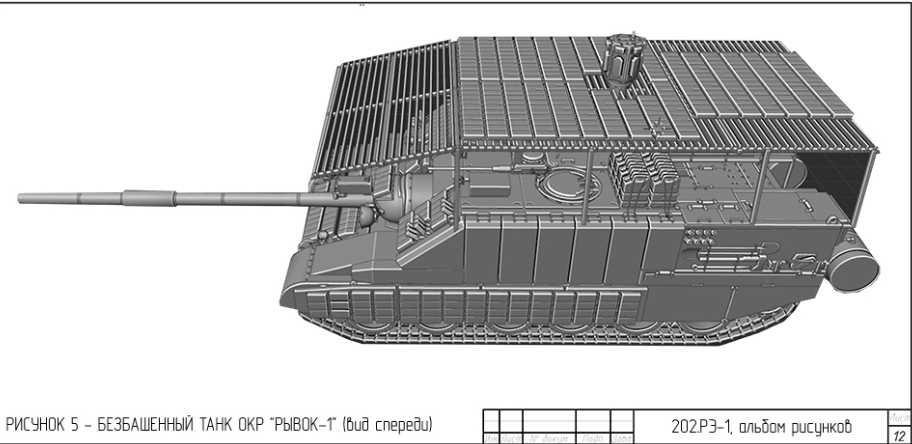
Not only are turretless tanks simpler and cheaper to manufacture, but their lower profile also makes them far more survivable.
Furthermore, the turret’s removal decreases the likelihood of an ammunition blowout.
It would be unsurprising if tank development continued in the same simplifying, cheapening direction.
The next piece subject for removal? Human crewmembers.
DOWNING STREET HOSTS INFLUENCERS in efforts to reach audiences in an increasingly fragmented media space. Around 70 to 90 influencers attended an event at 10 Downing Street in July, where Sir Keir Starmer was set to give a lecture.
The importance of capturing the increasingly wide demographic of individuals who exclusively get their news from social media (like Instagram and TikTok) and Video On Demand (like YouTube) is particularly demonstrated by the counter-intuitively high number of individuals over 75 who get their news from these sources.
While 75+ individuals still prefer the TV and radio, almost 54 percent of them claim to engage regularly with social media. This is contrasted with almost 94 percent of individuals under the age of 24.
Glory to Spain,
Dario
| SNEAK PEEK |
— The Lebanese disarmament of Hezbollah has begun
— The classified Durham Annex was released, displaying the seeds from which sprouted the American censorship-industrial complex.
— The United Kingdom manipulated Slovakian elections, according to a report by Declassified UK.
Good morning, subscribers!
Dario here.
Let’s dig right in. Hope you enjoy!
As usual, send tips to [email protected] and [email protected]
| THE BIG BLIND SPOT THIS WEEK |
LEBANESE CABINET VOTES FOR HEZBOLLAH DISARMAMENT in agreement with a U.S-backed plan to make the Lebanese Army the sole power with weapons in the country.
The disarmament of Hezbollah would be essential for restarting Lebanon’s fortunes, especially since Hezbollah’s empowerment runs contrary to Sunni investment in the country. Sunni investors, mainly the Kingdom of Saudi Arabia, pulled out in 2016 amid signs of increasing Iranian backing for Hezbollah.
Hezbollah’s disarmament by the end of the year would come hand-in-hand with guarantees of Israel’s cessation of military operations in the country’s south, according to parts of the American plan as communicated by official Lebanese sources.
Meanwhile, Hezbollah-aligned sources have called the decision a “march in humiliation” and a surrender of the country before Israel and the United States.
Shia-aligned politicians withdrew from the cabinet meeting in protest during these discussions, while pro and anti-Hezbollah protests broke out across the country.
It remains to be seen whether Hezbollah is weak enough to be disarmed by the end of the year. I suspect it will inversely correlate with how much investment the Saudi’s are willing to pour into the country’s military infrastructure.
Should it be successfully disarmed, the consequences would be highly symbolic. Not only would it herald the beginning of the end of the long-running internal turmoil in Lebanon, which has devastated the Middle East’s most beautiful country, since 1975.
The reconstruction of the Lebanese state is especially symbolic because Lebanon was the Middle East’s canary in the coal mine.
But that’s not all — the Beirut Blast epilogue: The second step that would prove the Lebanese have recovered their state would be a successful conclusion of the judicial investigation into the Beirut Blast of 2020, one of the largest non-nuclear explosions of all time.
The investigations have so far been mired in controversy, death threats, and unfinished research after more than half a decade since the ammonium nitrate explosion on August 4, 2020.
Especially because the Beirut Blast, properly understood, is the epitome of governmental incompetence: an unnecessary tragedy that likely happened as a direct result of the Lebanese government’s intervention.
Western blind spots: More importantly for us, stepping into the mysteries which continue to surround the tragedy of the Beirut Port highlights how a Western fascination with anything which smells of Russian-aligned scheming often detracts from our media’s ability to identify points of investigative salience.
Because there are only two points that really matter with the Beirut Blast. The first is why the stash of ammonium nitrate exploded on August 4, 2020. The second is why it ended up stuck at the Beirut Port in 2013 aboard the Rhosus ship, and was later taken from the sinking Rhosus and interned at Beirut Port’s Warehouse 12.
Mostly, I suspect, because the story of how the ammonium nitrate was purchased involved businessmen with ties to the Russian-backed Assad government. And that makes it an angle of editorial interest.
For instance, the shipowner, Cypriot Charalambos Manoli, was in debt to a Lebanese-owned bank named FBME, which had been accused of assisting Hezbollah and the Assad government. On the other hand, British shell company Savaro Ltd. shared corporate addresses with two other Assad-linked businesses in London.
This isn’t useless information. But it’s certainly not the most salient part of the Beirut explosion.
The first point of salience is that the explosion probably occurred because workers were welding shut a door in Warehouse 12, which housed the ammonium nitrate. But this wasn’t routine maintenance. It was the result of a memo that was circulated to the Lebanese Prime Minister’s office on July 14, only two weeks before the explosion. This was the first time the Lebanese executive was made aware of the ammonium nitrate. Crucially, the memo informed the executive that the door to the warehouse was damaged, leaving the explosive contents open to pilferers. That’s why the Lebanese government then ordered the door welded shut, and presumably caused the catastrophe.
It’s no coincidence that the ammonium nitrate sat in the warehouse without incident for almost ten years, only to explode once the Lebanese government attempted to fix it. That’s Lebanon in a nutshell. A country that works despite, not thanks to, its government.
The second point is how the ammonium nitrate ended up at the port. While this point is similarly shrouded in mystery, we know that the investigative angle should probably point towards a British surveying company called Spectrum Geo, which was acquired by a Norwegian-American company called TGS Global in 2019.
Spectrum Geo had ordered a Jordanian firm called Geophysical Services Centre (GSC) to organise the return of its seismic surveying equipment from Beirut to Jordan through the Suez. GSC hired Beirut-based Cogic Consultants to aid in the transfer. It was this crucial decision which led the Rhosus into Beirut’s port.
Either GSC or Cogic then made the bizarre decision to select the near-derelict Rhosus as the transport. It was bizarre for many reasons. The Rhosus is not a ship designed to transport equipment. And the former captain of the Rhosus claimed there was never enough space to onboard the heavy seismic equipment anyway. The decision was defended as the Rhosus was the cheapest option available.
These findings led some U.S. victims to launch a lawsuit against TGS Global for $250 million, holding the company responsible for bringing the ammonium nitrate to the Beirut port. After many years of procedural foot-dragging by TGS’s lawyers, the case is finally in pre-trial discovery.
The very long and detailed Wikipedia entry of the Beirut Blast, for instance, makes no mention of the letter to the Lebanese government or the involvement of Spectrum Geo, GCS, Cogic Consultants, or ICS. The OCCRP’s summary of the half-decade of investigations since the event, and most of its articles on the Beirut Blast, don’t list either of these findings, despite having posted a separate article summarising the case against TGS Global.
And despite the historic nature of the explosion, as one of the largest non-nuclear explosions in history, these angles have barely been scratched. For instance, GCS’s now-defunct website indicated their partnership with another British company, International Computer Systems (London) Limited.
The ICS Group’s website almost seems to be a compilation of red flags that typically indicate a front company, filled with paragraphs of generic corporate language combined with low-quality stock imagery. Interestingly, ICS also claim to offer services to police and intelligence agencies with a big-data analytics service.
Despite the evident salience of this angle, our limited searches online revealed that only Intelligence Online, an intelligence newsletter widely understood to be linked to the French external intelligence service DGSE, have written about the ICS Group and its links to the Beirut port explosion.
Investigations determined by headline potential are at the heart of this issue.
Even if such structures and wide-ranging connections are commonplace in trading dual-use materials like ammonium nitrate and in the shipping industry.
But as many of our Blind Spot readers know, the most interesting and shady aspects of the world rely on staying as dry, mundane and boring as possible.
And in today’s fierce competition for online eyeballs, everyone from conspiracy theorists to respected journals will happily sideline the salient but boring in favour of the seemingly scandalous but irrelevant.
A HYPOTHETICAL TRUMP-RUSSIA CONNECTION WAS ABUSED to turn a growing censorship-industrial apparatus loose on American citizens, as suggested by revelations in paperwork seized from the Department of Homeland Security called the “Durham Annex” last week.
These formerly classified documents were released after a request was lodged by Senate Judiciary Chairman Chuck Grassley. The original declassified portions of this so-called Durham Report were released in 2023, compiled by Trump Special Counsel John Durham. This Durham Annex contains purported 2016 emails showing close coordination between Hilary Clinton’s staff, NGOs, and the intelligence community.
One example that went viral was supposedly written by an individual called Leonard Bernardo, the regional Director of the Open Society Foundation for Eurasia. The email describes supposed attempts by parties allied with Clinton to smear Trump by association with Russia, and to manipulate the electorate by fabricating a false narrative of Russian electoral interference with American elections.
A dangerous legal pretext: Mike Benz, a controversial political influencer who went viral for his long-standing work on the dual-use nature of NGOs, argued these emails show how powers designed to counter Russian propaganda (2016-2019) were later turned inwards against U.S. citizens during the 2020 elections and the COVID crisis.
He believes these emails are fascinating because only four years after 2016, the Department of Homeland Security’s Cybersecurity and Infrastructure Security Agency (CISA) would legally brand tweets that questioned the integrity of mail-in voting as “cyberattacks” to “critical infrastructure”, which allowed the agency to censor and shape domestic conversations.
But their credibility remains in question as partisan media rushed to cite investigators’ reports to argue the emails are either authentic or fabricated.
I’d be surprised if they are fully legitimate. But it’s irrelevant anyway, because I don’t think this question matters.
Real or not, the emails demonstrate early knowledge of how CISA would later use cyberthreat pretexts to shape domestic opinion. This means they are as real as they need to be to discuss the core problem, even if they’re Russian fabrications: the empowerment of illegal actions by the American state against its citizens.
As we are fond of explaining, the state of exception is the legal mechanism by which the normative rule of law is suspended. This legitimizes illegal actions by state actors under emergency pretexts — the so-called prerogative state.
And they have a point. Almost 10 years after Russia-gate became a thing, nothing close to concrete or interesting has emerged about Trump’s connections to Russia.
Because while both sides argue about the whodunnit, the how remains unquestioned.
To those paying attention, the real story is of bureaucratic overreach, not political intervention in the direction of the intelligence community. Thus, it doesn’t matter if the emails are real or not. What matters are the very real powers gained by CISA to surveil American citizens as “cyberthreats” to “critical infrastructure” that only became public years after the fact.
This fosters the illusion that power abuse is partisan, not systemic.
In other words, that pseudo-legal bureaucratic overreach is a bug of the current system — and not a feature.
GHISLAINE MAXWELL WAS A SEASTEADING PIONEER, according to a long-form Substack piece by Jason Jorjani.
Jorjani posits that while Ghislaine Maxwell was originally involved with Jeffrey Epstein, she may have been unfairly portrayed as central to Epstein’s machinations despite Maxwell’s attempt to distance herself after Epstein’s first conviction.
More interestingly, Jorjani claimed that Maxwell’s interests lay in marine biology and creating an ambitious seasteading project, which could have operated outside any state’s legal boundaries.
THE UK INFLUENCED ELECTIONS IN SLOVAKIA by reportedly diverting approximately £10 million through a media agency to pay social media influencers to undermine Slovakia’s ruling Smer-SD party, according to Slovakian Prime Minister Roberto Fico. These allegations first surfaced in a British media outlet called Declassified UK, which published the results of their supposedly three-year-long investigation in mid-July 2025.
The media outlet claimed the action was carried out by the UK’s Foreign, Commonwealth and Development Office (FCDO), which paid a London-based media agency called Zinc Network to run an influencer campaign by identifying and recruiting influencers and political activists.
Declassified UK details that these influencers were obliged to sign legal contracts forbidding them from disclosing the government’s involvement, with Whitehall officials giving “feedback” on each video before the influencers could post them. Furthermore, the payment to Zinc Network was kept under wraps, contrary to usual practice for large British government contracts.
Fico has accused the U.K. of direct election interference and summoned the British ambassador to demand an explanation. The U.K. has “firmly rejected” these allegations through its spokeswoman at the Slovakian embassy, claiming the influencer campaign was only “aimed at encouraging young people to participate in the democratic process (…) regardless of their political affiliation or support”.
This conclusion was backed by Martin Williams, the British investigative journalist who found these payments, claiming the British effort was “not an explicit partisan campaign nor support for any particular party”.
Nevertheless, the Declassified investigation clearly displayed that efforts by the U.K.’s FCDO were strongly focused on countering supposed “Russian interference”, which would have unduly affected Fico’s party since Smer advocates for a middle-ground in the Ukraine-Russia conflict.
As we recounted last year:
“This law would require NGOs receiving more than 20 percent of their funding outside Georgia to register as foreign agents with the government.
Western media, NGOs and governments had joined together in denouncing this as a “Russian law” since a similar law drafted in Russia resulted in the banning and imprisonment of thousands of pro-democracy and pro-Western activists in Russia.”
In sum, this “Russian agents” bill was simply a tool for hunting down pro-democratic, pro-Western critics of the Russophile regime of Georgia.
To the surprise of exactly nobody, there were solid grounds for this law. The British government’s concealed use of NGOs to meddle with elections overseas is just one example.
“Unlike our ability to spot Russian foreign policy lurking behind supposedly non-partisan or independent Russian-aligned media, we in the West seem unable to do the same for ourselves.
Our ire isn’t levelled at the individuals in the U.K. secretly deploying influencers to illegally meddle in elections overseas: there are no rules in love and war.
Rather, it’s levelled at a media ecosystem which defaults to taking the moral high ground with little capacity to observe ourselves as anything other than “the good guys.”
As usual, we believe honesty in blatant displays of power is the best policy. The state was never a home for good actors. Those who climb to its top positions are usually dirty players. A point beautifully conveyed in The Godfather by Michael Corleone to Kay Adams:
That’s why I have such a soft spot for Trump. Unlike European officials, he doesn’t play a double game. He makes the implicit explicit by leaning into his reputation as a powerful, cunty, straight-talking asshole.
Will the real European statesmen please stand up?
JAPANESE PARTY DRAFTS RADICAL CONSTITUTIONAL PROPOSAL that would restore power to the Emperor, among other proposed modifications.
The party, Sanseito, is an ultra-right-wing party that is currently Japan’s third-most popular political formation. It was created in 2020 and advocates for more traditional conservative values.
The ambitious constitutional proposal would be nothing less than a total reversal of Japan’s Constitution of 1947, albeit an unpolished one which displays an absence of extensive legal expertise according to The Japan Times.
Most interestingly, the proposal would severely curtail the rights of foreigners to own homes and participate in Japan’s labor market.
RUSSIAN TANKS GO BACK IN TIME (or forwards, depending on your perspective), since Uralvagonzavod or UVZ — a leading tank manufacturer in Russia — has engineered a curious modification for the Russian T-90 main battle tank.
Not only are turretless tanks simpler and cheaper to manufacture, but their lower profile also makes them far more survivable.
Furthermore, the turret’s removal decreases the likelihood of an ammunition blowout.
It would be unsurprising if tank development continued in the same simplifying, cheapening direction.
The next piece subject for removal? Human crewmembers.
DOWNING STREET HOSTS INFLUENCERS in efforts to reach audiences in an increasingly fragmented media space. Around 70 to 90 influencers attended an event at 10 Downing Street in July, where Sir Keir Starmer was set to give a lecture.
The importance of capturing the increasingly wide demographic of individuals who exclusively get their news from social media (like Instagram and TikTok) and Video On Demand (like YouTube) is particularly demonstrated by the counter-intuitively high number of individuals over 75 who get their news from these sources.
While 75+ individuals still prefer the TV and radio, almost 54 percent of them claim to engage regularly with social media. This is contrasted with almost 94 percent of individuals under the age of 24.
Glory to Spain,
Dario
