
It’s becoming clear that the influencer economy is not just transforming the art of marketing – it is transforming everything. Latest estimates from social media analytics firm Social Shepherd project that the influencer sector will grow to around $15bn by the end of 2022, versus a mere $1.7bn in 2016. This growth applies to far more than just macro influencers likes the Kim Kardashians and Paris Hiltons of this world.
Want to sell exclusive jewellery? Focus on private accounts held by influential socialites with comparatively small followings; the ‘quiet influencers’.
Are you after active and personalised audience engagement? Focus on the world of micro-influencers, i.e. those ranging from 3,000 to 100,000 followers, who unlike macro-influencers have the bandwidth to reply to those they follow. Want to market a complex hair dye? Well, if the Kardashians are too expensive, target their hair stylist instead.
Perhaps you’re scared that an influencer might run amock with your brand? Don’t worry. Today there’s an entire cottage industry of bespoke influencer screening services. These ensure your influencer (and their social media footprint) uphold the corporate values you hold so dear.
And Now the Military Wants a Piece of the Influencer Action Too
Given the high precision efficiency of influencer marketing, clearly, it was only a matter of time before the military-industrial complex took notice.
For those not in the know, here’s what the US government’s efforts to create the military equivalent of Kim Kardashian have come up with:
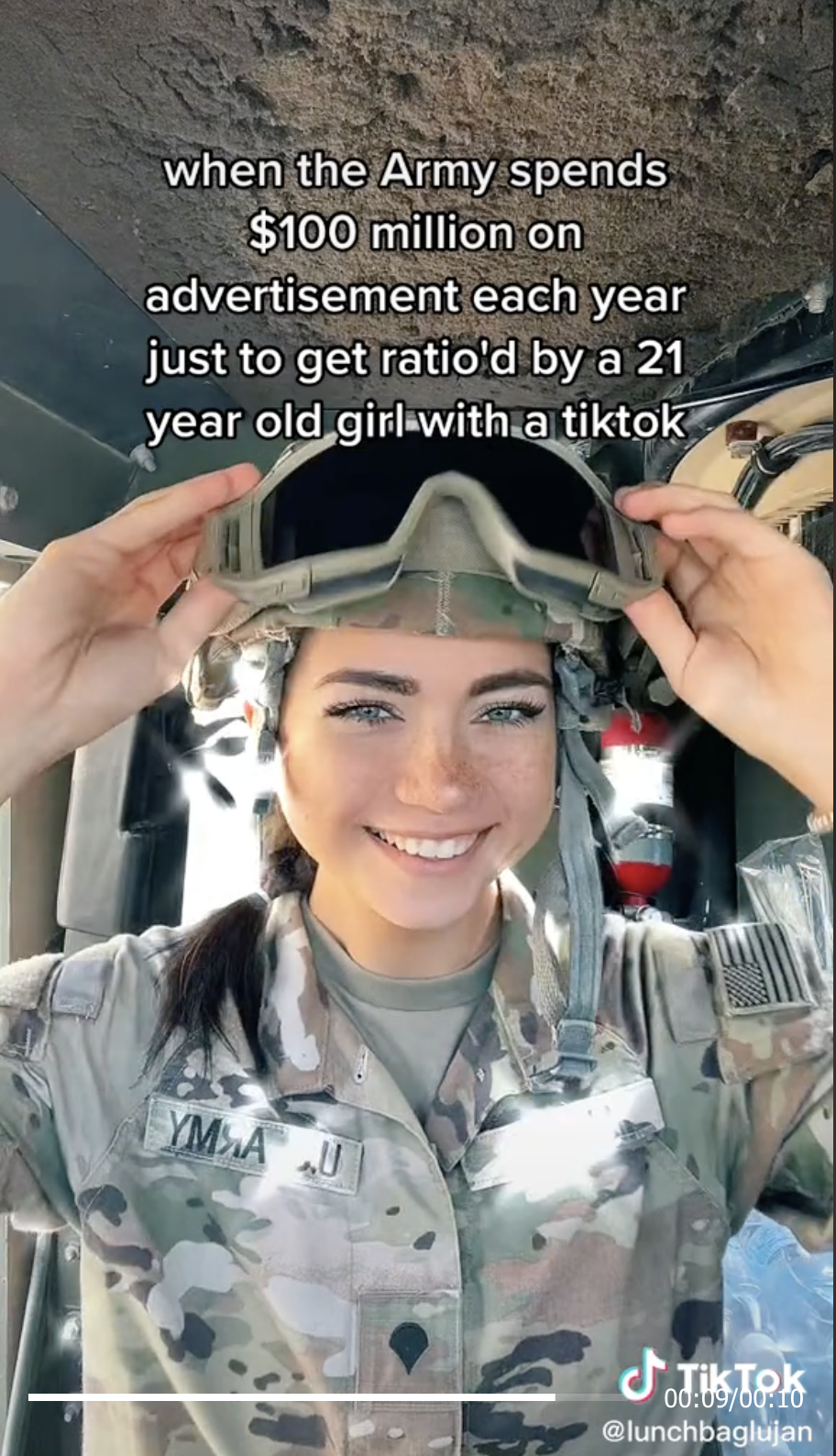
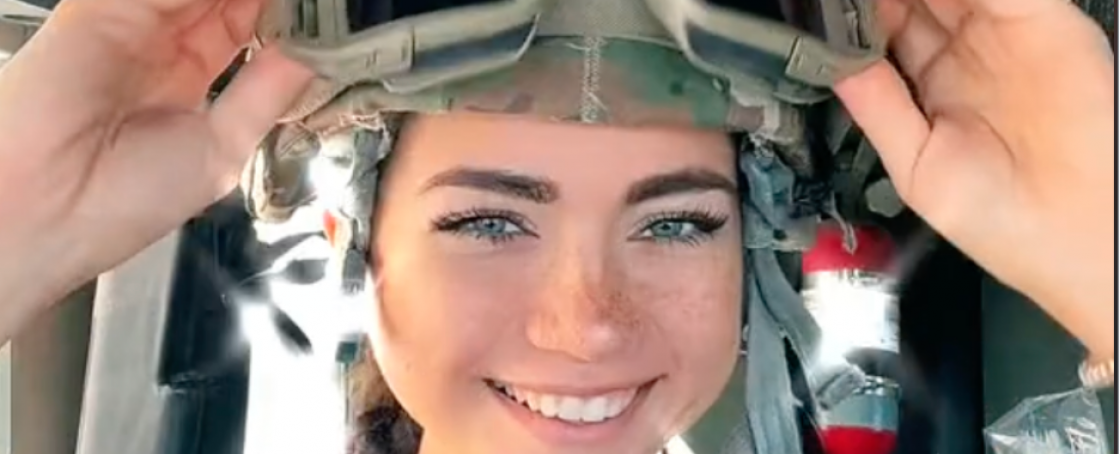
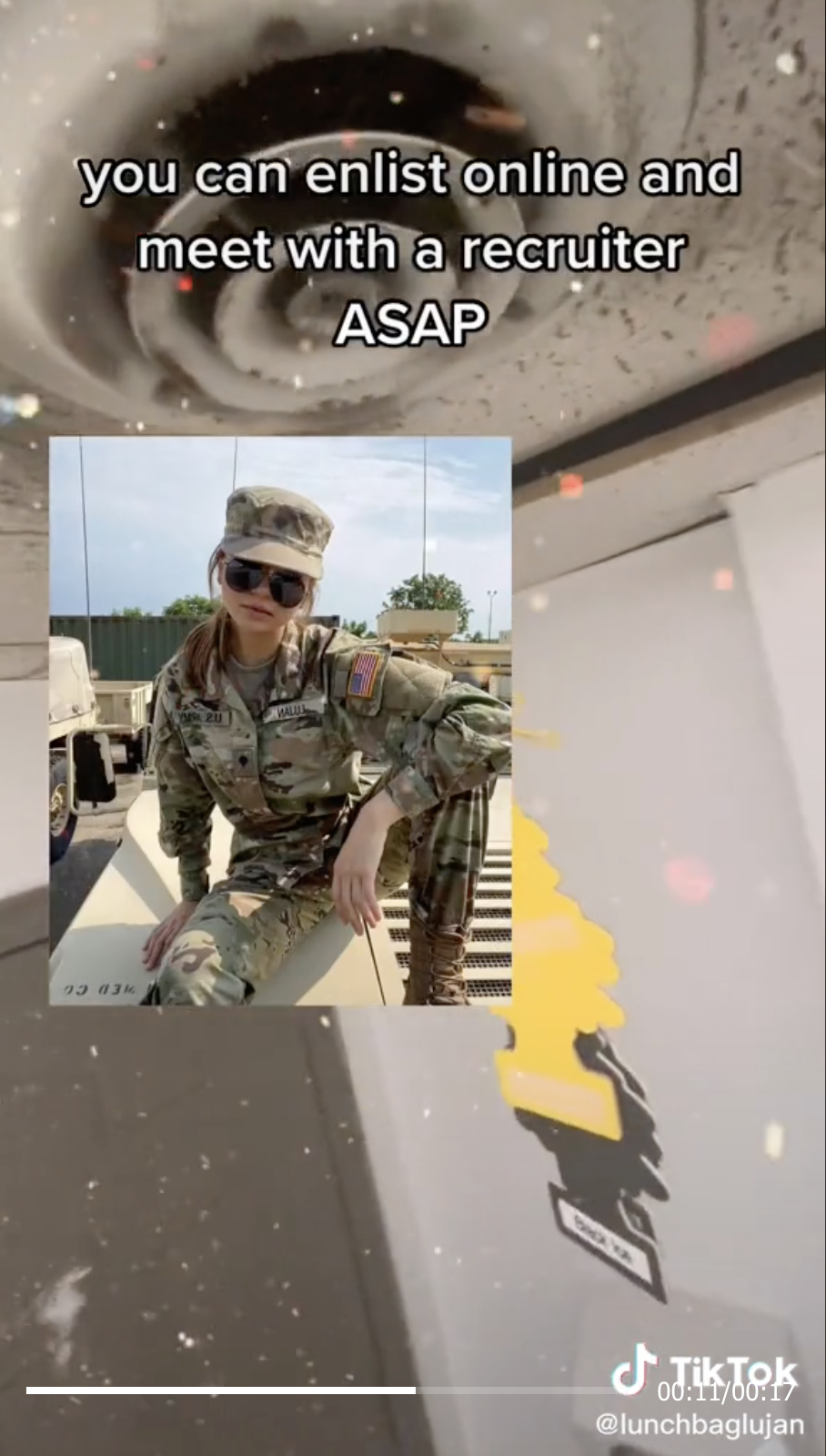
That’s Specialist Hailey Lujan, a psychological operation officer, whose videos have easily outpaced most official US Army recruitment trailers. The success of her military influencer marketing opens a promising method for armies to revolutionise their propaganda while aiding the chronic issue of under-recruitment.
But she’s no innocent sweetheart. The dark and cynical tones of this 21-year-old’s videos serve as a window into how changing military propaganda reflects the Western populace’s shifting attitude towards the role of the state. But before we go into that, there’s precedent here.
Special Propaganda Operations
Propaganda is a key wing of any army’s efforts on the battlefield.
One such technique – implied and not stated in this day and age – is the opposite sex. The promise of becoming the ‘man in uniform’ propagates a positive social image of your soldiers, and it’s a biological imperative the military is not shy in exploiting.
Similarly, armies around the world are not unafraid to use women soldiers in attempts to appeal to young men. But in a sign of how quickly the world moves, the most known phenomenon, Israeli Defence Force (IDF) girls, were actually not sanctioned until very recently. In fact, racy pictures posted by these soldiers often led to their disciplining.
It was only in 2021 that sanctioned IDF girls, such as Natalia Fadeevy, started being noticeably used. They spoke pro-Israeli rhetoric online while sporting the IDF uniform – or conspicuously without it.
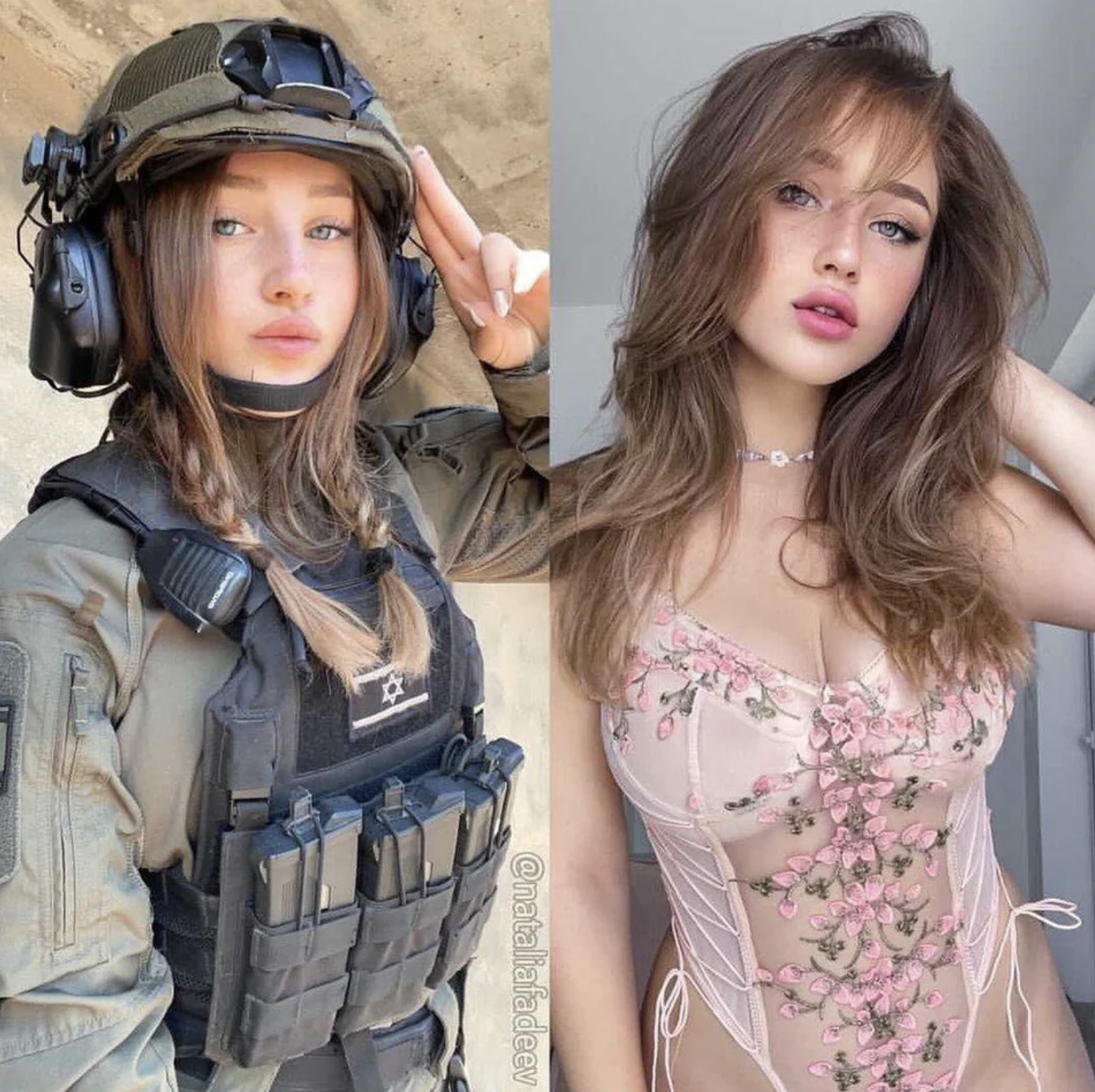
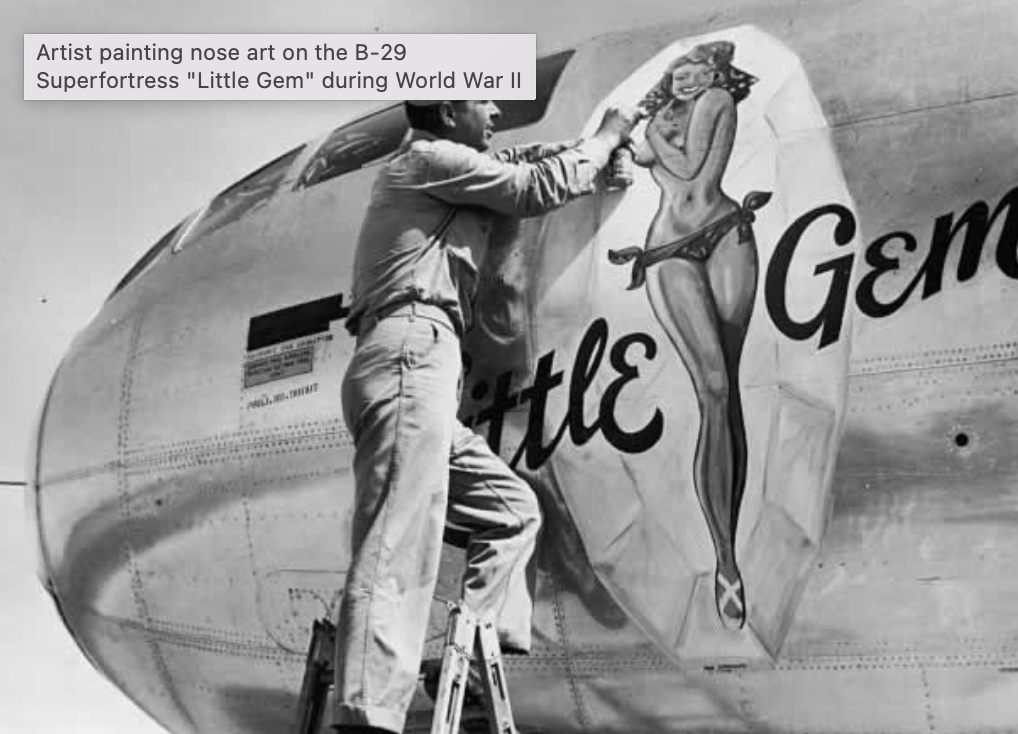
Pretty modern girls, they may be. But the rhetoric and strategy is old-fashioned.
Not All Psyops Are Created Equal
An uncomfortable reality is becoming clear about psychological operations; not all of them are ineffective.
Hundreds of fake accounts tied to the Chinese military were purged from social media websites recently. The same goes for Pentagon-linked accounts blurting propaganda online. Curiously, despite outsized expenditures, both of these events highlighted the low quality of these operations. In fact, the Pentagon ordered a mission-wide review of their operations after these accounts were not only discovered by civilians – they were also found to be poorly followed and managed.
But Hailey Lujan was built differently.
Going under the handle @lunchbaglujan, this 21-old Specialist from a psychological operations regiment at Fort Bragg has ignited the military’s Instagram and TikTok space quickly. While her accounts date back to January 2020, she’s been focusing her TikTok videos on Army content since May 2022. And with some videos surpassing 3mn views and 500,000 likes, she attracts more engagement and views than the conventional US Army recruitment propaganda.
Emblemished with a large disclaimer – ‘NOT ENDORSED BY THE DEPARTMENT OF DEFENCE’ – her account seems anything but.
Despite her statements to the contrary, her incessant calls for recruitment and almost exclusive Army-themed content clearly hint at their acquiescence or support. Some audience members also betray their confusion at her superiors’ lenience – ‘how come you’re allowed to film on base?’, one asked.
But it doesn’t stop there.
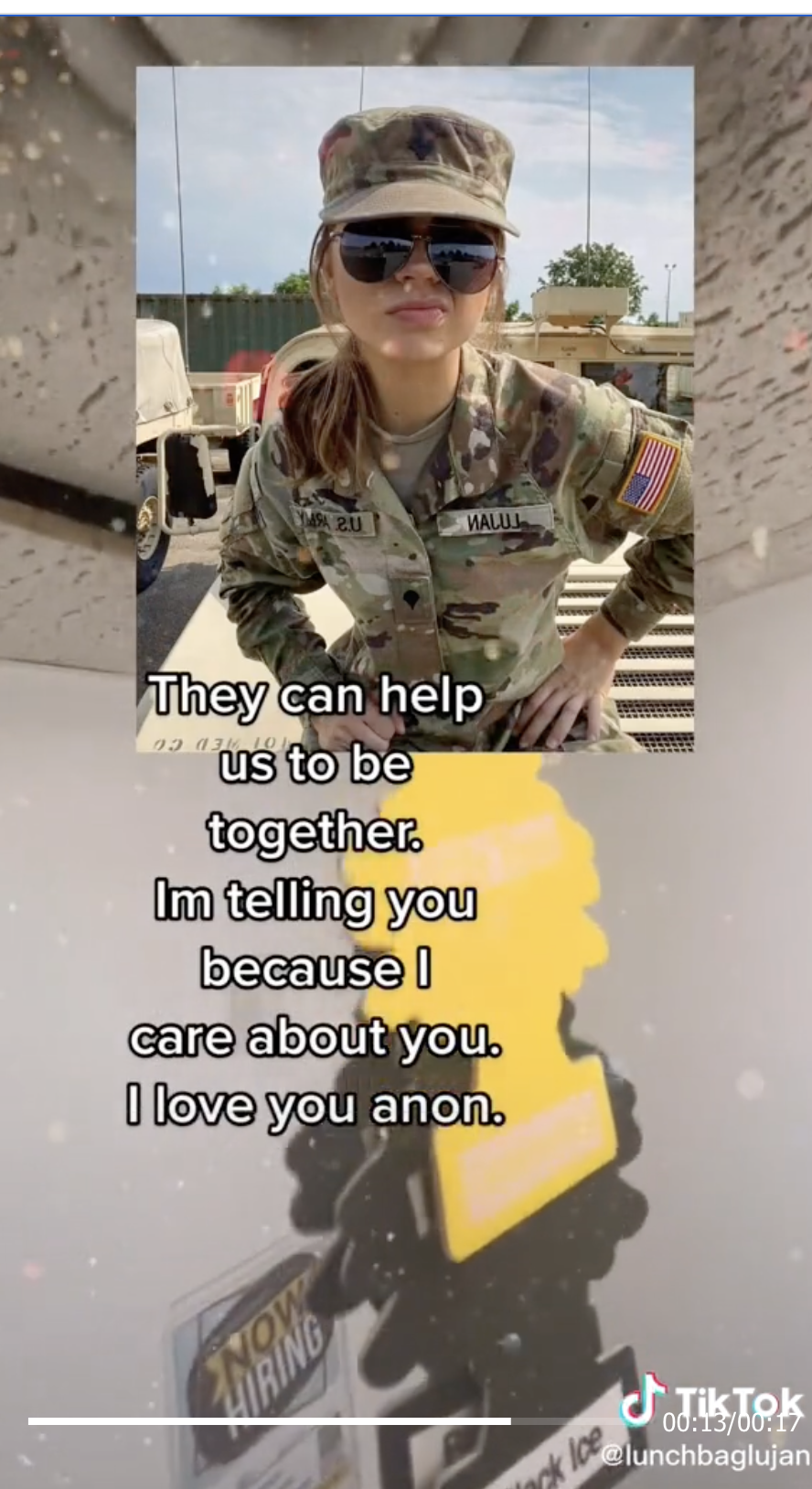
Lujan’s themes are heavily loaded with transparent deceit, in jest or not. She regularly tells her followers to go to her website, www.lunchbaglujan.com, which actually redirects to the US Army recruitment website.
The clip below is a case-in-point;
Alternatively, she inserts memes into her videos, openly mocking recruits who may have joined the Army because of her;
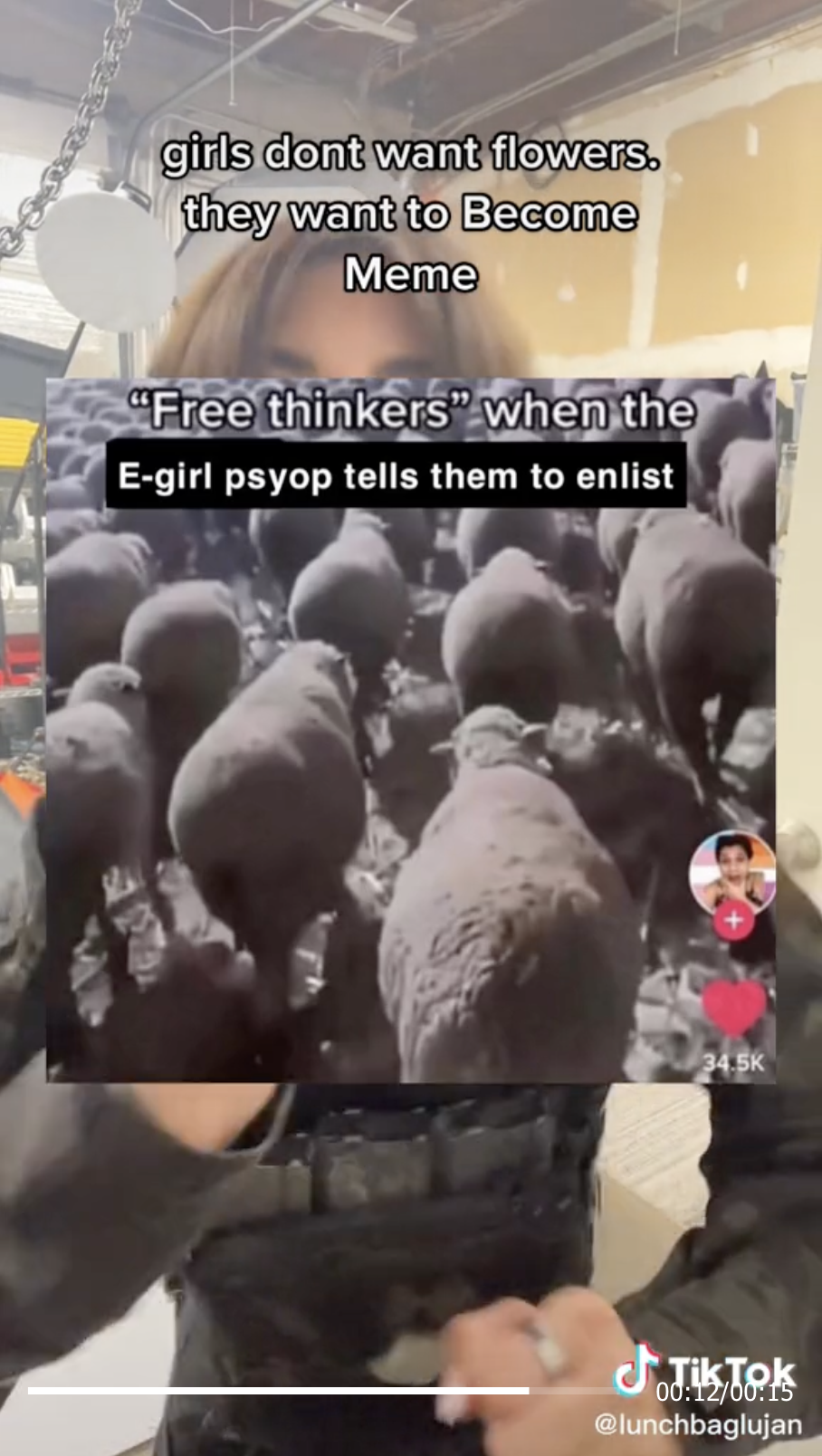
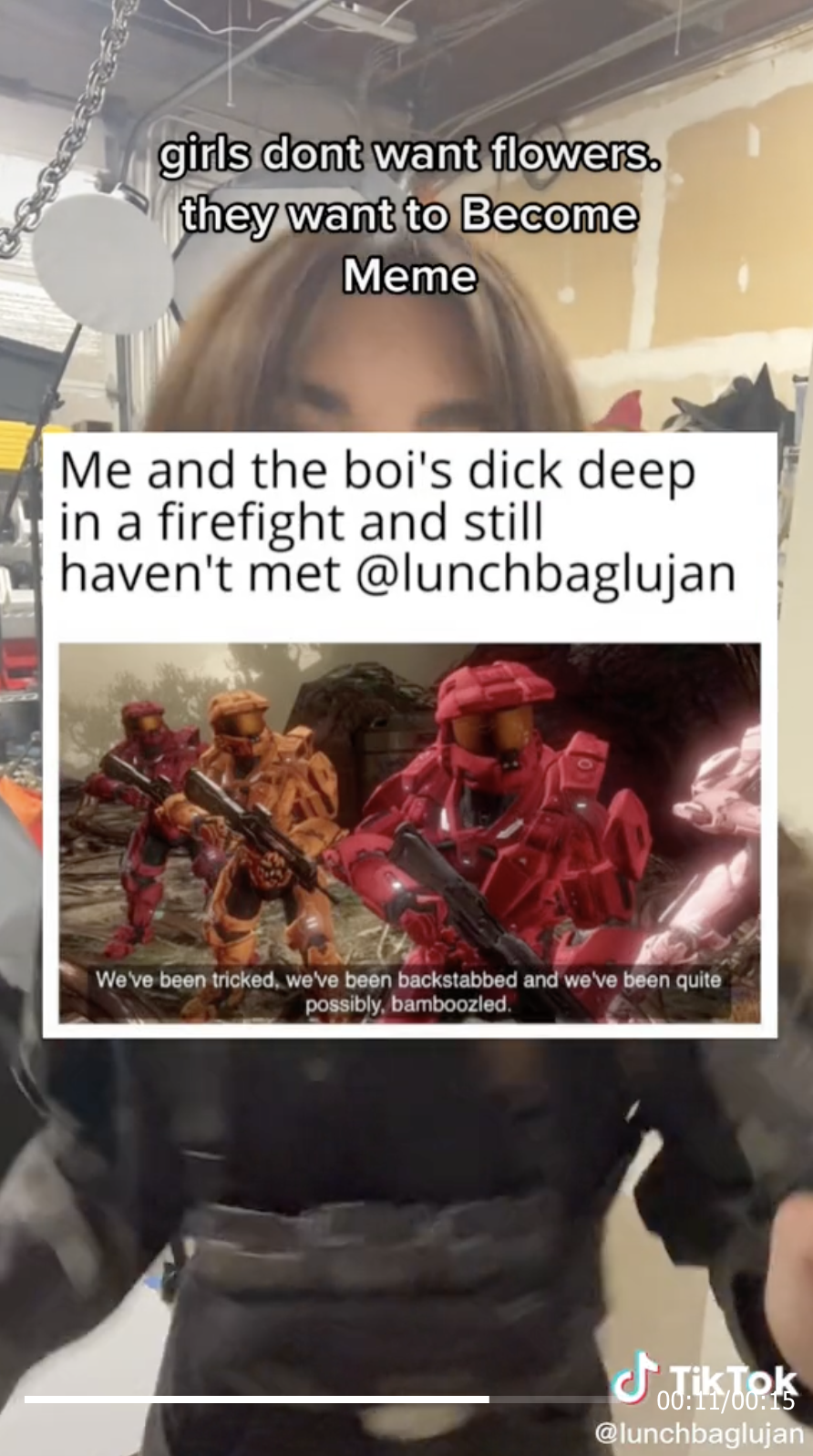
And they don’t seem to be falling on deaf ears.
Her audience engagement clarifies the propaganda’s success – many love to roleplay as if they’re thoughtless zombies who have no choice but to submit to the US military after watching Lujan’s videos.
One poignant message stated; “It’s going to continue until you have a following consisting of nothing but weak-minded people who are susceptible to psychological operations. You gain followers everyday…none of them strong minded”.
Videos posted by third parties on Reddit warning that Lujan’s videos are obvious US Army propaganda are also filled with comments asking for the nearest recruitment center. One asked; “so if I join the army, I get to drink her bath water?”
Freud would certainly have a field day.
The key to understanding her success is not that Lujan’s somehow found a gullible enough audience to play along with her almost-jokes.
Lujan has instead touched the low-hanging fruit of an increasingly low-trust, low-income, and low-hope society; that folk just want strong men and women to guide or dominate them.
TikTok’s Newest Dance Trend: ‘The Downfall Of Western Civilisation’
Izabella first noticed the self-loathing Western civilisation trend in a since gone-viral recruitment video for the 4th Psychological Operations Unit of the US Army titled Ghosts in the Machine. The video’s dark undertones proudly convey the unit’s intention to deceive and influence;
Have you ever wondered who’s pulling the strings?
You’ll find us in the shadows.
Lujan was also a fan of this video. She promoted it on her Instagram stories on November 4 under the moniker; ‘if you wanna know what pysopers do just watch this‘. But in many ways, the move towards darkness and cynicism of some United States-linked propaganda tells us what we already know.
The grand march towards progress and universalism is no more.
Supposedly extinct forces of tribal sentiment, nationalism, and so-called religious superstition are thriving instead. Living standards are collapsing, and a young person’s hope for a decent mortgage or job is seen to be vanishing. Concomitantly, trust in the government is evaporating.
Similar factors may have already existed 20 years ago – but they were successfully concealed beneath a blossoming grand narrative of societal advancement.
With the positive narrative collapse in the West [Top Gun 2 being the only exception – IK] our problems shine through with little to balance them out.
And with that sentiment collapse, advertising has shifted to the most old-fashioned public megaphone of them all – displays of strength and power.
It’s a motive that’s also evident in private companies. Ryanair’s TikTok account has become the most successful commercial account on the platform by making fun of its own consumers:
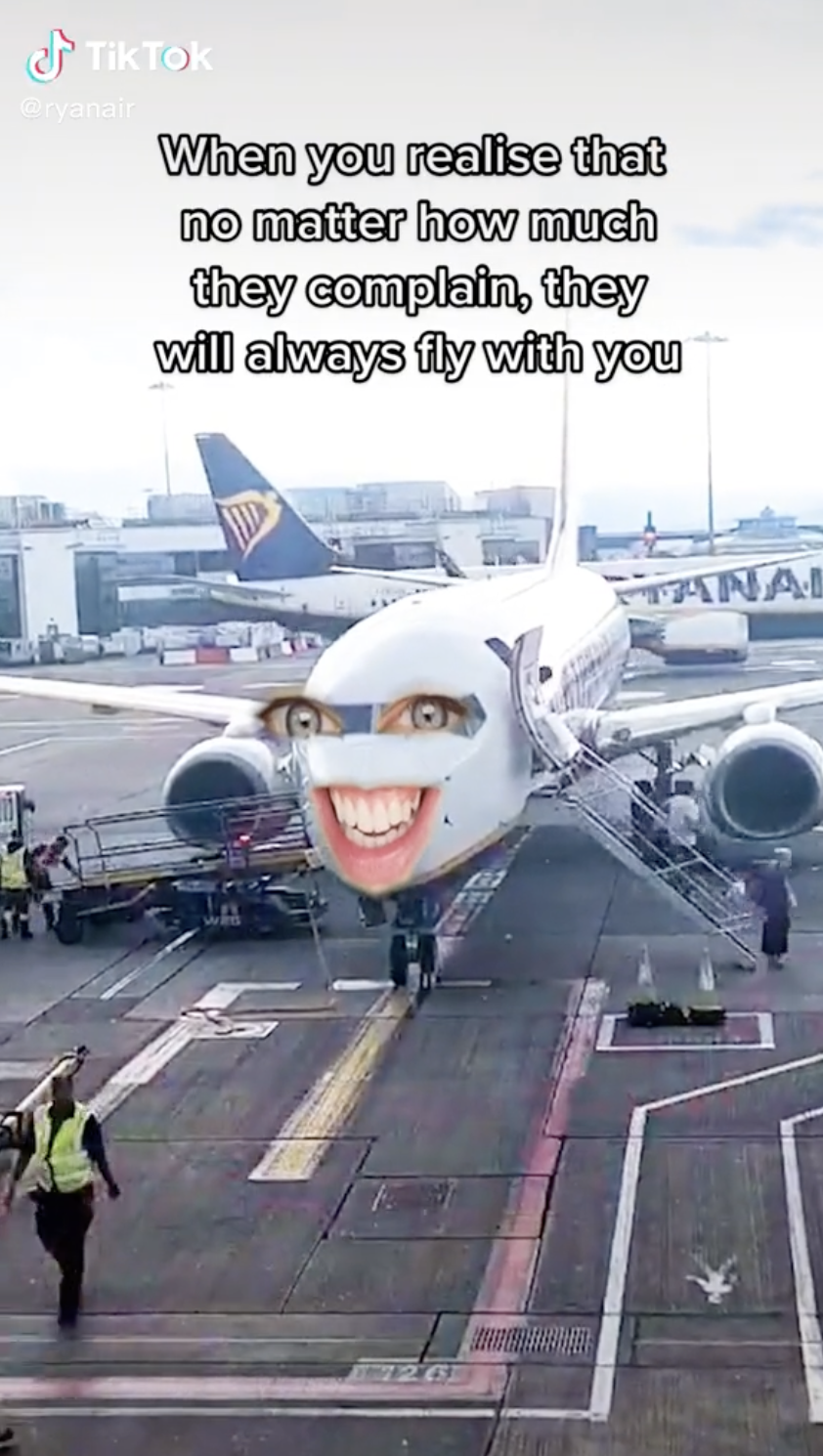
As Machiavelli said – as a sovereign, it’s better to be both feared and loved, but if one must choose, being feared is the more reliable choice.
It may seem curious that a 21-year-old has emerged as a key player in the Army’s propaganda and recruitment strategy – unofficial or otherwise. One that reveals how society’s changing perceptions are shifting the behaviour of powerful institutions.
But to watchers of the social media sector, it’s no surprise. Such influencers represent the wider personification trend that is sweeping our politics and economics. But that’s a story for another time.
