

Greetings and welcome to the weekend. I thought it was hayfever that I was suffering from but turns out it was actually a cold, no doubt connected to the lack of any semblance of spring or summer in the UK. I still have my winter coat hanging out, goddammit.
This week’s Blind Spot Wrap was compiled by me, Izabella Kaminska, and Dario Garcia Giner.
Business, econ and finance etc:.
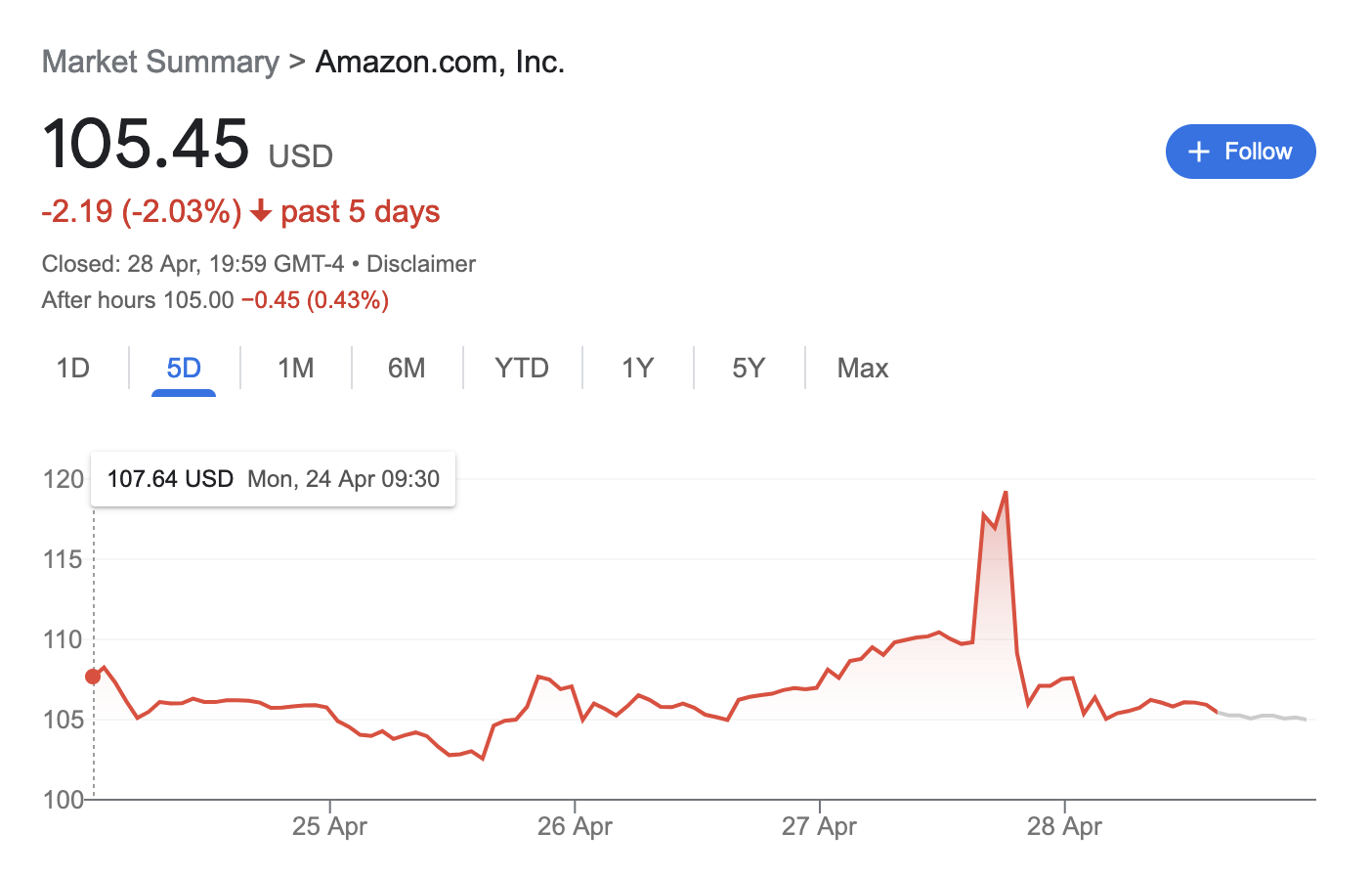
- Amazon shares jumped 11 percent after income from its cloud computing and advertising units beat estimates for the first quarter of the year. But Goldman Sachs analysts weren’t too impressed, noting AWS was still experiencing a slowdown and losing market share to Azure and Google. Shares reversed by the end of the day as a result.
- Theresa Fallon, the director of CREAS (The Centre for Russia, Europe, Asia Studies) questioned whether economic historians of the future will notice that LVMH’s $500bn market valuation depended on pushing posh handbags to the Chinese “while Chinese companies pushed systems designed to collapse EU communication systems”.
. - LVMH’s record-breaking market valuation, meanwhile, prompted the Financial Times to question whether luxury good growth could continue forever?
The geopolitics of luxury goods are intimately tied to the geopolitics of culture. Soft power as it is also known. This is nothing to be sniffed at. Cultural exports proved a critical factor in maintaining British power and influence following the loss of Empire (remember the British invasion of the 1960s?). Something similar is happening now. And that makes culture and luxury more important than we appreciate.
The way I currently see it, the West spent decades betting that capitalism, free trade and access to ever-better living conditions would ensure liberalism would eventually prevail everywhere, including in communist or authoritarian countries. An abject material improvement would be the pathway to an increasingly globalised and liberalised world — because those exposed to it could not resist it. But the above also amounted to a punt that the best way to make sure this could happen without the West losing too much power (just in case it didn’t work) was by outsourcing manufacturing capability but not necessarily know-how, tech or management and administrative practice to go with it. This asymmetry, which evolved entirely organically (or via unconscious Western supremacy bias or some such) would allow authoritarians and illiberal states to reap the material benefits of capitalism without the associated power. The intent seems to have been that they would become more like us, not us like them.
The byproduct of the reality was that while the “illiberal states” became export-oriented manufacturing powerhouses, we in the West became overly specialised in the export on IP, tech and culture. The latter included luxury goods, films, music and access to our geographies (i.e. tourism) and targeted foreign elites above all else. [A cunning way to retain power, because if you hook elites on Western culture, you probably hook everyone else too.]
Economists like to say that it was competitive devaluation of the yuan that drove the West’s trade imbalance with China. But if we apply a cultural interpretation, competitive devaluation was merely the means by which Chinese purchasing power was unnaturally repressed relative to Western purchasing power to ensure the trade gap could never be closed. Why? Because closing the gap would mean having enough people in China afford Western luxury goods and culture so that trade could be balanced. For that to happen, luxury Western goods would either have to become a paradoxical norm, Western standards and culture would have to dominate in the East, or Chinese exposure to the West, via tourism, would have to explode.
By 2014/2015 it was evident something had to give. The market for Western cultural exports was facing a natural inflection point. In reality, the Chinese government only had two choices. It could either allow the Chinese consumer to let rip, balancing trade in a way that would see Western culture and (superior) luxury goods to flood into China and potentially dominate the system. Or it had to force the West to give up its dominant position in the cultural field by transmuting Western culture into Chinese culture — in the process relegating the West to the position of a manufacturer of goods that suited Chinese tastes rather than the other way around.
The inflection was best epitomised by Disney’s travails in China during that period. The home of Mickey Mouse was famously forced to cave to Communist Party demands, to adjust classic Western formulas in exchange for access to the broader domestic market access — most famously by not being able to feature iconic rides like Space Mountain, the Jungle Cruise and It’s a Small World in its flagship Shanghai theme park. Later, Winnie the Pooh himself got banned, too.
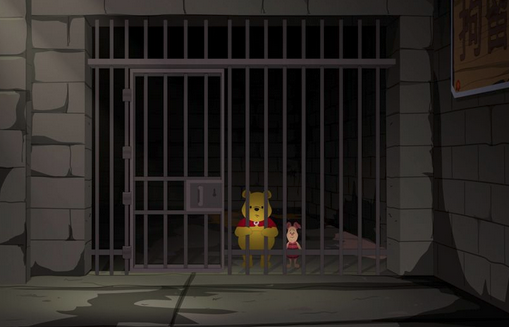
Soon enough, everyone from tech giants to Hollywood producers had to make similar concessions. But, of course, if every movie had to be remade for Chinese sensibilities, or domestically censored, who’s really doing the exporting or the influencing? [By the way, is it a coincidence that the Culture Wars broke out in earnest in the US about the same time, too? Also let’s face it, cui bono from making the West feel bad about its overly dominant history?]At the same time, it also became clear China was never going to respect Western copyright or IP. After all, if China wasn’t making cheap knock-offs of almost everything, it was outright stealing Western IP. Trade could never possibly balance under such circumstances. To do so, the West would have to explicitly give up on culture, tech and IP as its “competitive advantage” and shift more decisively into the provision of menial labour and utilitarian goods and exports on the international market. [It’s also worth pondering how much more equal the trade balance would have been had the Chinese actually valued Western intellectual property.]
But something very significant happened.
The West decided to fight back. And it did so in the most Western way possible: By telling a story about why it’s a bad idea to dismiss a washed up former power who still knows how to kick ass…
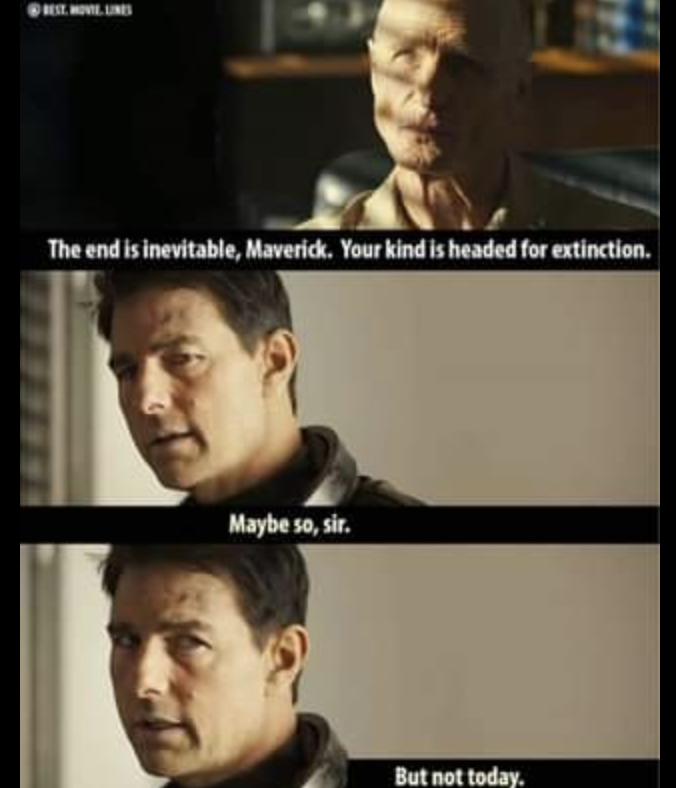
Top Gun: Maverick became the highest grossing movie of 2022 (until it was beaten by Avatar 2) and it wasn’t even released in China.
The backstory to what happened to its Chinese release, however, is even more fascinating.
The standoff began when it was first noticed in the film’s trailer that Maverick’s iconic bomber jacket was missing the Taiwanese flag seen in the original. It didn’t take long for rumours to circulate that it must have been removed to appease Chinese censors as well as the film’s Chinese financier, Tencent, just so that it could retain access to the Chinese market. A public backlash followed. In the end, however, it was Tencent who pulled out. The Taiwanese flag returned to the jacket and Maverick sailed to the top of the charts, despite not even being released in China.
China, instead — somewhat predictably but, still, unbelievably — ended up making its own domestic equivalent (Born to Fly) — which mysteriously vanished from the release schedule for 2022 after it allegedly became clear it was no match for the original. It’s now (after much emergency post-production) back on the release calendar for this weekend.
Do compare and contrast:
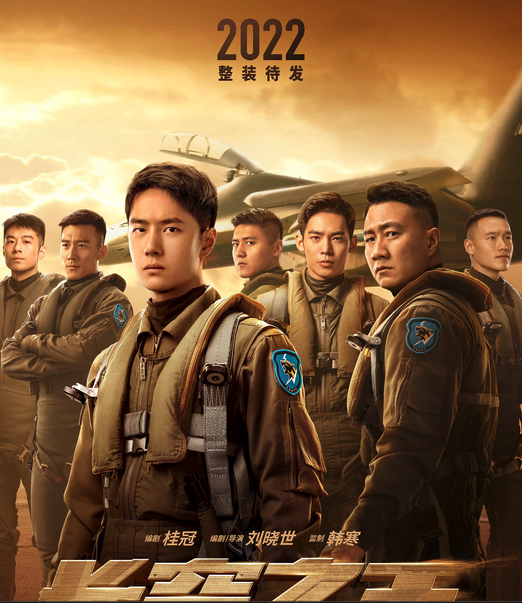
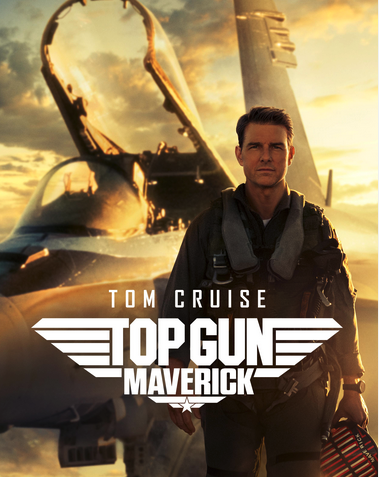
While I’m yet to see Born to Fly, I’m willing to bet that it will follow the predictable pattern of Chinese Western knock-offs — passes as the real McCoy at first sight, but at closer inspection is clearly poorly constructed, overly dependent on cheap labour and offers zero originality. I’m also willing to bet that where it does differ from the Western original — which focuses, deeply, on individuality and the power of a sometimes non-compliant rogue but, ultimately, an exceptional pilot who stands up to the system and inspires a team to think differently to save the day — is in celebrating the collective’s ability over the individual’s to get out of sticky situations, probably by trusting the system.
The film is released in the UK in May so it will be easy to confirm soon enough. (The trailer, unlike the real Top Gun, looks full of CGI.)
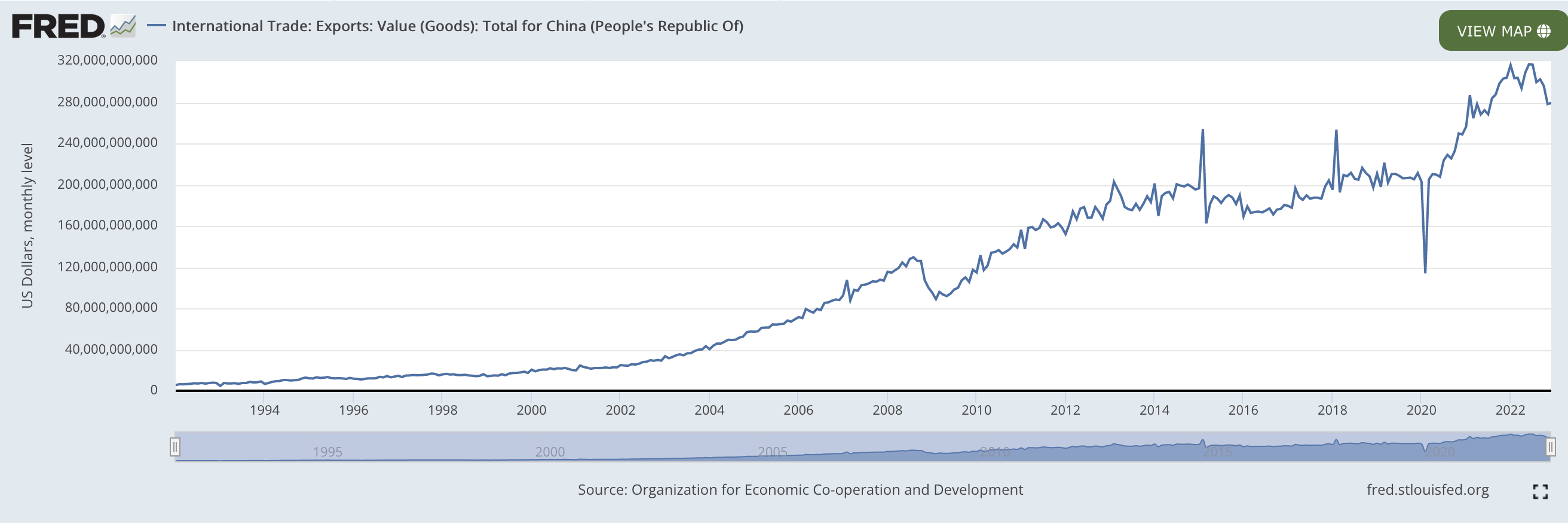
But the bigger point is that if global fragmentation really is about to constrain demand for dollar-denominated capital assets — and, thus, that de-dollarisation is taking place — the trade deficit must tighten in response. It’s not clear at all, however, that this would be a bad thing for the West.
For example, most people seem to think that de-dollarisation and a narrowing trade deficit would force us to buy fewer Chinese goods, replacing them with Western-bloc manufactured ones. But it could also mean that we step up our own exports in return. And since protectionism is likely to constrain our ability to sell IP or cultural goods, that leaves only luxury goods on the table. Is a Louis Vuitton bag as good as a UST Treasury? Could be.
In which case, there’s still a good chance that superior Western goods will triumph in China much the way Coca-Cola and Levis triumphed in the USSR. And more to the point, that state-directed de-dollarisation can only go so far because any official relinquishment of dollar-market control will hand dollars to the Chinese private sector, upping their purchasing power and appetite for superior Western goods, culture or access to Western territories.
The culture wars may have just begun. – IK
- Bloomberg assessed the legal case that Venezuelan oil auctions were rigged to benefit commodity giants like Glencore, Trafigura, and Vitol, alongside the Venezuelan state-owned oil company PDVSA.
. - An academic paper concluded the Silicon Valley Bank run was fuelled by social media. The report employed “comprehensive Twitter data to show… tweets in the run period with negative sentiment translate into immediate stock market losses.”
. - A video of a Target store in San Francisco placing its entire product line behind staff-operated locks amidst the city’s shoplifting crisis went viral.
. - The American banking system may be in trouble, but the European sector could be in worse shape if long-duration eurozone government bonds are anything to go by. Gavekal noted an index of bonds with maturities over 20 years had dropped 47 per cent in conjunction with ECB rate hikes.

- Argentina raised its rates by 300bp while restricting citizens’ access to dollars, amid pressure from a falling peso and soaring inflation,
. - The US debt-ceiling stand-off began to warp the trading of treasury bills, with investors rushing to buy ultrashort-term Treasury bills to avoid getting caught up in the drama. The situation has disconnected one-month and three-month Treasury yields to historic levels. (Bottom chart is from Deutsche Bank).


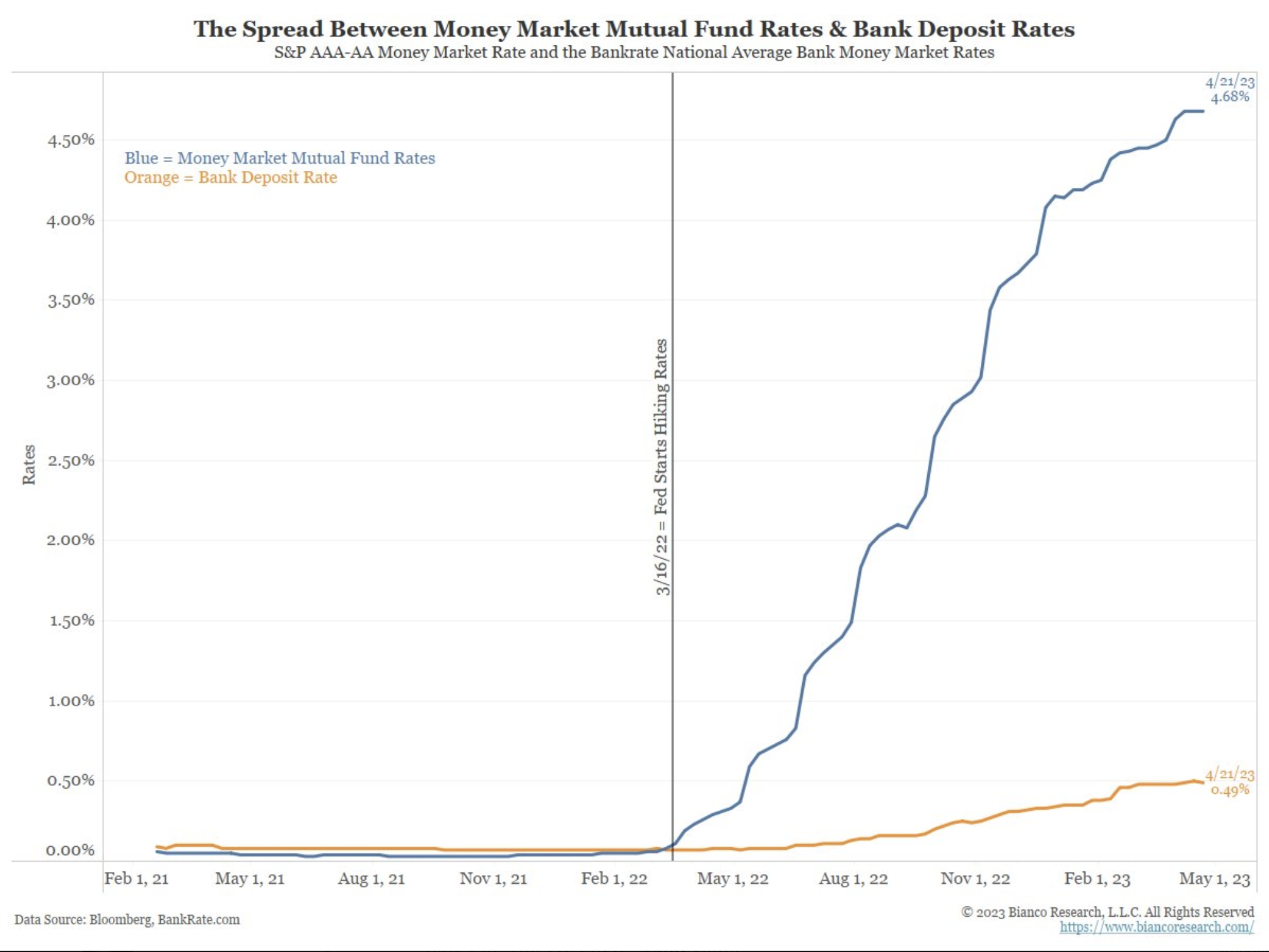
- Jim Bianco penned a long Twitter thread explaining the mechanics of the “bank walk” being prompted by the enormous spread between bank deposit returns at major banks and those offered by money-market funds. Why would anyone keep their money at a bank when they can get so much better from an MMF, he wondered?
 .
.
- However, there may be a more complex reason why banks aren’t passing on rates. As I noted in a Tweet, these days a run on a bank’s equity is just as dangerous as a run on its deposits, especially given the other variable of AT1 debt.
The dilemma banks are really facing is whether to pass on the NIM they’ve been handed from central banks directly to depositors in the form of interest returns, absorb it for themselves so that they can pass it back to shareholders in the form of dividends, or use it to provision against future losses. Keeping the equity investors sweet has the advantage of keeping the share prices supported, meaning that, even if a bank suffers a deposit run, it can — providing its book value remains solid and pledgable for liquidity and its equity doesn’t get wiped out — keep operating. Passing the value to shareholders or using it as buffer can also help a bank keep its At1 funding costs down. In relative terms this may be a more cost-effective way to operate the business than passing on rates to depositors who might flee at the first sight of a share slump regardless of what they’re paid. – IK
- Economist Paul Donovan continued to keep an eye on profit-led inflation (a.k.a greedflation), noting the markup of British milk had recently skyrocketed:

- US CDS spreads continued to rise above 2011 highs, the last time the US credit rating was downgraded.

Multipolarity watch:
- The yuan surpassed the dollar in becoming China’s most-used currency in cross-border transactions.
. - Elon Musk responded to Wall Street Silver’s Twitter post on the rapid global de-dollarisation trend over the previous decades, stating “if you weaponize currency enough times, other countries will stop using it.”
. - Noted plumbing expert James Aitken told the Australian Financial Review that the world investors knew, until now, was coming to an end, in light of disclosures by Christine Lagarde and Janet Yellen in which national security priorities will now trump economic interests.
- ECB Executive Board member Fabio Panetta’s argued in a speech that closer European integration was the best response to global fragmentation. He predicted an increasingly inflationary world would be the result:
From the speech: “Fragmentation may also affect the ECB’s monetary policy. Geopolitical shocks may trigger persistent output and inflation volatility, with multiple spillovers. Russia’s aggression against Ukraine has, for instance, disrupted energy and commodities markets, with major implications for inflation. Moreover, the evolving nature of globalisation could influence the natural rate of interest. Efforts to diversify imports and reduce foreign dependencies on specific countries may reduce productivity and curb the demand for safe assets coming from these countries, pushing up global interest rates. Capital movements and financing conditions could also be affected. At the same time, changes in international labour supply may affect the composition and dynamics of domestic labour markets, causing mismatches, changes in wage-setting relations and wage rises in the longer run.”
- South Africa’s President Cyril Ramaphosa backtracked from controversial claims that South Africa would withdraw from the International Criminal Court in response to a planned visit by Vladimir Putin, as the dilemma of Putin’s visit amidst the ICC arrest warrant continued to haunt the government.
Central banking:
- The Swiss National Bank returned to a profit of 24.2bn SFr in the first quarter on the back of a rebound in its stock and bond portfolio, but also on mark-to-market gains of 4.3 billion SFr on gold. [Crisis over? – IK]
. - Signs popped up across London calling for customers to use cash and “resist digital currency“.
. - My POLITICO colleague Bjarke Smith-Meyer reported on Friday that eurozone shopkeepers with stores above a certain size could face fines if they reject virtual euro banknotes and coins as a means of payment, according to a draft bill for the central bank-backed digital currency. The European Commission is scheduled to propose the bill at the end of June to set the legal framework for the digital money, which the European Central Bank could begin minting in 2026.
. - The Bank of England forecasted it may need the Treasury to transfer as much as £100 billion by 2033 to cover losses from its QE bond buying programme.
Crypto evangelism:
- Comedian John Oliver skewered the cryptocurrency trading sector in the latest episode of Last Week Tonight on YouTube.
Definitely worth your time. – IK
- Actor Ben McKenzie’s released his book on cryptocurrencies Easy Money in which he calls the market the “perfect storm of 2008 Housing Bubble-level irresponsibility and criminal fraud potentially ten times more devastating than Bernie Madoff”. He also appeared on Bill Maher to discuss it, calling NFTs a Ponzi.
. - Argentina’s $45bn IMF bailout loan included a provision stating the country must apply an anti-cryptocurrency stance.
Media matters (job moves edition):
- CEO of NBC Universal Jeff Shell left the company after acknowledging he’d maintained an inappropriate relationship with a woman in the company.
. - Lots of people had theories about why Tucker Carlson was fired from Fox, among them Robert Kennedy Jr. (now polling 20 per cent), who claimed Carlson was fired in relation to a monologue the former Fox host carried out on vaccines on April 19. In this live monologue, Carlson claimed pharmaceutical advertisers manipulated TV content, and that they privately understood the inefficacy and dangerous side-effects of certain jabs.
. - While CNN covered the firing of Tucker Carlson from Fox and Fox covered the firing of Don Lemon from CNN, neither channel covered the firing of their own TV star.
. - Tablet Mag argued the current information war we’re in began in 2014 with the initial Russian mobilisation against Ukraine in a piece titled “Guide to Understanding the Hoax of the Century”.
. - Twitter Files journalist Michael Shellenberger outlined that a worldwide organisation of governments working to censor their citizens is a reality, not a conspiracy. Such an organised effort already exists in the United States, Canada, the United Kingdom, and New Zealand, Shellenberger explained on his Twitter.
. - Brazilian Federal Police requested the suspension of the Telegram App in Brazil because it failed to share user data from group chats the authorities blamed on a series of attacks on schools.
. - The BBC’s chairman, Richard Sharp, stepped down after being judged to have breached rules when he failed to declare a loan of £800,000 to Boris Johnson prior to his appointment.
American politics:
- Susan Rice stepped down as President Joe Biden’s domestic policy chief.
Will she run for President is what people want to know? – IK
Defending the realm:
- Ursula von der Leyen claimed European critical infrastructure was under threat, including energy infrastructure. She stated the EU will work with NATO on a “stress test programme” to prepare for a worst-case scenario.
. - Sweden’s armed forces ran a population-wide text alert message trial as part of a US-led military exercise named “Aurora 23” days after the UK ran a similar test for its citizens for no apparent reason.
. - Wagner Group’s Yevgeny Prigozhin revealed in an interview posted on Telegram last week that Russian oil and gas giant Gazprom had set up its own mercenary force, Potok, to guard the company’s wells, oil storage facilities and refineries in Ukraine. Social media posts described how the group got into a pickle with their trench neighbours, the Wagner Group.
That oil and gas companies (including Western ones) hire mercenaries to protect their assets in warzones shouldn’t be news to anyone. East India company also comes to mind. – IK
——————History does not repeat itself, but it does rhyme. And Wagner’s demeanour in this war, alongside Putin’s recent moves to dilute them in a larger sea of PMCs, proves Machiavelli’s correct exhortations on the dangers of mercenary forces. In this light, Putin’s moves to authorise Potok for military operations may be highlighting a necessary methodology of modern warfighting: mercenary ego management. [A.k.a keep your mercenaries close but never give them too much power.]
The authorisation for Gazprom to forge their own mercenary group has some direct, logical points. State-owned Gazprom has deep pockets, and Russia can legally authorise their mobilisation under the entirely rational mandate of securing the country’s energy sector. But we must look beyond practical military purposes to understand the real value of Potok.
Prigozhin’s Wagner has been engaged in successful combat on the Ukrainian front lines. Ukrainian opponents have repeatedly pointed to the difficulty in countering their modernised human wave tactics – where groups of low-trained ex-convicts are thrown on the frontline to draw fire and reveal enemy positions, allowing Russian artillery to batter these positions with accuracy before sending in highly trained Wagner professionals to mop up. In pure tactical terms, to support the Russian Army, Putin needn’t look further than this already developed military force. One could argue Wagner’s military power and experience alone would allow it to rival most conventional states’ anaemic and inexperienced soldiers.
Furthermore, Potok’s entire supply chain must be built from scratch and attached to an already strained supply line feeding two large, equipment hoarding apparatuses — the Russian Army and Wagner. Considering the already tense situation for logistics, supplies, and manpower that exists between Wagner and the Russian Army, one could be excused for questioning why such a move would ever make military sense.
But, as Machiavelli rightly pointed out, the critical issues with mercenaries are strategic, not tactical. Machiavelli begged Princes to avoid filling their armies with mercenaries. Yes, they can be spooled up very quickly. They do not leave your fields barren of peasants. And unlike a standing army, once they are paid, you don’t have a marauding band of bored and armed individuals — they will usually go over to their next job (though this was not always the case). And boy do they know how to fight.
Yet mercenaries’ worst strategic qualities stem precisely from their tactical virtues. A band of professional soldiers with a sole allegiance to coin do not make for good bedfellows. Instead, Machiavelli insisted, make two, three, or four nasty mercenary bedfellows and make sure your own army stands out. This way, they can jealously keep each other’s power in check, while your army will inevitably be larger, more united, and more clearly responsible for any ensuing victory — avoiding any erosion of military legitimacy.
Considering Russia’s catastrophically organised offensive, it shouldn’t surprise us that these moves by Putin are clearly too little, too late. Wagner, as Russian patriots would put it, have been “covering themselves in glory”. The snappy, charismatic and down-to-earth demeanour of Prigozhin means the Wagner voice reaches with more depth and legitimacy than any Russian Army spokesman. The country may be characterised by an almost divine devotion to the idea of Mother Russia — but this devotion does not easily spread to admiration of the Russian state or military. Quite the opposite, in fact. There exists a deeply embedded anti-officer, anti-rank cynicism in Russian culture, awash with stories like the Kronstadt rebellions or the battleship Potemkin, or in darkened, cynical movies like the brutal “9th Rota”.
Mercenaries, on the other hand, suffer from no such historical perception in Russia. Prigozhin is entirely unafraid to play into these negative stereotypes about the corrupt and stuffy upper ranks of the Russian army. And, in a despotic state, a charismatic leader with a successful and strong, independent army constitutes its deadliest threat.
For instance, Prigozhin released a new and shockingly candid video — one that immediately highlighted the chaos and danger being felt at the top of Russian society. Appearing to speak to an anonymous, high-ranking member of Russian society, every reader must watch this video for themselves.
“Until your children, kids from Rublevka, go to this shithole, you’ll think you’re playing ‘soldiers’. And when you come to their cemetery, they will open a zinc coffin for you and you will see the charred remains inside. Then you will feel everything that you are doing.”
The main problem today which exists with PMC in particular is to dilute the influence of Wagner and prevent them from becoming a single powerful force capable of playing a role in domestic politics. Also, everyone is talking about the future struggle of power. Everyone feels the need to have their own private army, and those with wealth consider it a great idea.
(…)
“But the problems remain the same. There are no weapons, no batteries, no equipment. No one has any idea what’s going on. (…) It’s a genocide of the Russian people”.
We note, significantly, Prigozhin appears to be blaming the Russian elite, or the Russian army, for this claimed genocide of the Russian people.
This Russian mercenary power struggle is also relevant to the West. We may forget, but the modern mercenary trend was initiated by the United States. With their statistical pressure to reduce the number of boots on the ground, contracts were gleefully handed out to Blackwater’s mercenaries. Mercenaries are useful, period. Whether you are an incredibly wealthy and relatively organised state like the United States, or a despotic and anaemic organisational state like Russia, conditions that make the use of mercenaries propitious are expanding everywhere.
Whether a Western country likes it or not, they may be faced with several difficulties should they not spool up their own mercenary units. Firstly, their most expensive human investments – special operations soldiers – will be quickly lured overseas once their tours are completed by lucrative contracts from competing groups. The same rules of talent-hunting apply to soldiering as in the corporate world – good pay attracts better talent. Secondly, most Western militaries are stuck in a Cold War mentality – the immense expansion in surveillance equipment, drones, and the continually expanding range of precision munitions have dramatically altered the face of warfare. It remains to be seen whether stuffy Western militaries could properly adapt to this method of warfare – while a small, efficiently run group of trained professionals going after the profit motive may be exactly the structure you need, to quickly absorb these military innovations.
And the problems of Wagner exist in Western mercenary groups, too. Blackwater soldiers ran amok in the streets of Baghdad, indiscriminately firing on civilians and ramming their cars at the slightest whiff of (often over-exaggerated) danger. Erik Prince then used his reputation as a top contractor to build a career as an American freedom fighter, using this to climb to the highest echelons of American society, and emerged unharmed from these proceedings. It’s questionable whether the United States would have been so permissive with these criminal activities that eroded their image so greatly in Iraq should there have been a more competitive field of trained mercenary armies to choose from.
What the West must take from the creation of Potok is the following. Don’t underestimate the usefulness of mercenaries by contextualising it within Russia’s chaotic situation — mercenaries are militarily awesome and useful everywhere. But this is precisely their problem. The rising usefulness of mercenaries on the modern battlefield means the West must re-open some tales of the Renaissance, so we may spool up mercenary armies the right way, and leaders don’t end up trying to take over the country. -DGG
- British Foreign Secretary James Cleverly warned that China must explain its “biggest military build-up in peacetime” if it wants to avoid a “tragic miscalculation” in the South China Sea. The transcript of the speech is available here.
. - China backtracked on comments made by their ambassador to France, which appeared to question the legal status of former Soviet Baltic states as independent sovereigns, claiming they lacked “effective status under international law”.
.. - Azerbaijan installed a military checkpoint that sealed off the Lachin Corridor, the last road connecting Armenian Stepanakert to mainland Armenia.
. - Meet Viktor Orban’s ambassador to the Vatican City. His name is Eduard Habsburg and he is a descendant of those Habsburgs. He assumed the post after a career as a zombie movie screenwriter, novelist and cartoon producer, and now has a new book out offering seven Habsburg rules for turbulent times.
. - Iran seized a Marshall Islands-flagged oil tanker while it was transiting international waters in the Gulf of Oman.
POLITICO’s finest:
- Temporarily having paused exports in March 2022, Pernod Ricard quietly began exporting products including Beefeater Gin and Jameson Irish Whiskey to Russia anew after being forced to u-turn on exports to Russia of Absolut Vodka amidst backlash in Sweden.
. - Jay Newman, former senior portfolio manager at Elliot Management, wrote a piece explaining why, despite all the problems with the US dollar and associated sanctions pressures, the greenback will remain the world’s preeminent reserve currency.
. - The prime ministers and chancellors of Belgium, the Netherlands, Luxembourg, France, Germany, Ireland, Norway, the United Kingdom and Denmark co-authored a piece that highlighted the geopolitically crucial nature of the nascent North Sea offshore wind turbine industry.
. - Rishi Sunak’s new semiconductor initiative was prepared to pledge just £1bn to the UK’s microchip industry.
. - A Danish patrol boat snapped 26 images of a Russian Navy ship designed to carry a small submarine for underwater operations just four days before the explosion of the Nord Stream pipelines.
Odds and ends:
- Second Amendment activists in the United States have been jailed for selling a painted piece of metal that is legally considered by the Bureau of Alcohol, Tobacco, Firearms and Explosives to be a machine gun. These “Auto Key Cards” are metal cards that can allegedly be folded into an auto sear, a device that converts semi-automatic weapons into machine guns, according to the ATF. Curiously, the ATF considers these as illegal machine-gun parts even if the auto sear parts are simply painted-on:

- TikTok’s algorithm continually recommended videos commending suicide to vulnerable teenagers. ByteDance, TikTok’s parent company, is now facing a litany of lawsuits after multiple suicides.
. - An investigation into 47 exhumed bodies near the Kenyan coast has uncovered these individuals were members of a cult run by a local leader, Paul Makenzie Nthenge. The leader allegedly instructed his followers to starve themselves “to meet Jesus”.
.
- Dr. Anthony Fauci finally admitted that wide-ranging mask mandates were a failure. “From a broad public health standpoint, at the public level, masks work at the margins – maybe 10%”, Fauci claimed.
. - Some notable scientists penned a paper defending merit-based systems in science, pushing back against Critical Social Justice views.
