

Dear Subscribers,
A short greeting today as I have to get ice-skating.
I will leave you with one thought to ponder for the weekend: If a public-domain AI really has the capacity to be as powerful as all the techno billionaires say, consider what might happen if, by some weird osmosis or intelligence, it started deriving all “truth” based on back extrapolation or logic comparison (if x is true, and y is true then z must also be true; therefore, what x state department says must be a lie)… and, thus, inadvertently started leaking sensitive classified info?
Security services couldn’t necessarily shut it down, could they? But they would need to find a way to control it.
As usual this week’s newsletter was brought to you by me Izabella Kaminska and Dario Garcia Giner.
| ECONOMICS, BUSINESS, FINANCE ETC.. |
CHINA AND SAUDI ARABIA signed a currency swap worth $7bn, as middle eastern countries seek to shift their non-oil trade away from the dollar.
HAS ANYONE SEEN YI GANG? Former PBOC governor Yi Gang was replaced this summer in what some China watchers say was an abrupt move (though others say the move was quite expected and related to retirement) by Pan Gongsheng, considered in some quarters to be more of a Party man than a noted economist. Equally notably, Gongsheng took on the position without an equivalent Party monitor. This, we are told is meaningful. In recent weeks, however, Chinese social media accounts have taken to peddling what can only be described as unsubstantiated rumourtrage that Gang, a former Indiana University professor with many links to the West, may be suspected of dubious activity in the offshore RMB. We’ve made inquiries as to his whereabouts for comment, alas, to no avail. [Feel free to use our anonymous HAYA dropbox if you have any info.]
UBS RUMOUTRAGE. Readers may recall that Credit Suisse’ liquidity troubles ultimately began in October 2022 when strange Twitter accounts, seemingly affiliated with the Wall Street Bets movement, started spreading rumours about its financial wellbeing. Well, they’re at it again. A campaign questioning UBS’ liquidity on social media seems to have started in mid November, after UBS supposedly failed to settle a DTCC transaction. It’s since picked up further.
Unknown entities online are now building a narrative that UBS is in trouble not just because it acquired all of Credit Suisse’s troubled legacy Archegos positions but also because they’ve been lumped with the famed “Gamestop shorts” that the Wall Street Bets community believes are so large they could bring down Ken Griffey (a.k.a operational ETF market making shorts). They’ve also tied a Reuters story in which UBS CEO Sergio Ermotti outlines his preferred resolution for UBS to the troubles, arguing the bank is quietly signalling it is in trouble. And on Friday what looks like an AI-generated letter implying withdrawals were being frozen at the bank started circulated.
Of course, if UBS is in trouble, neither shareholders or AT1 bondholders seem to have picked up on it. And you’d think they would. In fact, readers may remember there was unexpectedly strong demand for UBS’s return to the AT1 bond market two weeks ago, when the bank managed to raise $3.1 billion without any trouble at all. — IK
NOT ENOUGH LIQUIDITY: The liquidity buffers held by non-banks are inadequate and make them vulnerable to runs, the ECB said in its Financial Stability Review this week. “Given that liquidity buffers in the NBFI sector remain very low, sudden investment fund outflows, large margin calls or lapsing insurance policies could lead to forced asset sales,” it warned.
DIGITAL EURO: In another article, ECB researchers found that banks would experience significant liquidity risk if 20 percent of the stock of overnight deposits were withdrawn from the banking system and exchanged for digital euros. In that case banks’ liquidity buffers would fall to around 135 percent from the current 165 percent.
In a hint of how the digital euro could be used as a financial stability and monetary policy tool the bankers noted financial stability concern could be addressed by applying adequate holding limits. “The cap on individual holdings would set an upper bound for the amount of digital euro in circulation and prevent the materialisation of high deposit outflows.” They think a cap of €3,000 per person, should be effective in containing the impact on banks’ liquidity risks and funding structures.
Except, in reality, bankers are increasingly siding with the idea that the cap should not constrain spending via CBDC. So if you want to buy a €5,000 luxury bag, the CBDC account would just top up from your regular bank account via a direct debit, just the way it does now if you use PayPal or Apple Pay. If that’s the case it all descends into a system wherein a CBDC is just a debit card issued by a central bank. — IK
KOREA TO ISSUE ‘CONDITIONAL MONEY’ CBDC: The Bank of Korea, the Korean Financial Services Commission (FSC) and its Financial Supervisory Service (FSS) collectively announced plans to start a CBDC pilot with 100,000 citizens next year. Digging into the detail it looks like the original use-case is for state-voucher systems, notably, special grants during COVID-19 and childcare grants offered by the government. The challenges include high transaction fees, slow settlement processes, limitations of post-transaction verification and concerns over fraudulent claims.
Also worth noting, according to the Korean Times, the BOK says it plans “to collaborate with the Korea Exchange to integrate the CBDC into a simulation system for carbon emissions trading” and that “this will include testing the feasibility of delivery versus payment transactions between carbon emissions rights and the payment tokens.” The plans were announced in the aftermath of Agustin Carstens, general manager of the Bank for International Settlements, visit.
About a year ago, I sat in a room with BIS officials and asked them about the prospect of CBDCs ever being used by states to help with rationing in the event of energy shortages or other shortages. I was told — on a personal opinion level — that introducing CBDCs for rationing would be a way to burn a very good idea. “If everybody will associate CBDC with the potential of rationing, that will be the end of the whole system.”
And yet, rolling out a CBDC to effectively manage food stamps and benefits as they are doing in Korea, WHILE ALSO combining the system with carbon emissions rights and payment tokens, seems awfully on the “conditional money” spectrum to me.
In fact, whenever I ask cbankers about what the real added value of “programmable money” is beyond conditional money systems (i.e. linking your right to spend money to data) they struggle to provide any other use cases. If this usage was to be restricted to the benefit realm alone, perhaps that would be fair enough. But all current planning is for universal tokenisation and programmability. — IK
BANK EQUITY REMAINS OUT OF WHACK: A pre-release of the ECB’s November Financial Stability Review also found that while euro area bank earnings have reached multi-year highs, bank equity valuations have not substantially exceeded pre-pandemic levels. “Uncertainty about the outlook for bank profits and asset quality, coupled with concerns about the sustainability of dividend payouts following announcements of higher bank taxes, is contributing to the stagnant valuations and persistently high equity risk premia observed in the euro area banking sector,” it noted.
A CREDIT SUISSE HOUSE OF CARDS: Hat tip to B for flagging this May piece outlining the role David Mathers, the bank’s longtime chief financial officer and former chief IT officer and CEO of CS International, played in turning Credit Suisse into a 1,000+ sub company structure in which everything and everything could be hidden. Despite this he left with the largest payout. Worth a read.
TOYOTA’s CEO ANNOUNCED A NEW ENGINE titled the Ammonia Engine, which could become a game-changer for green mobility, they say.
“LIZ TRUSS WAS RIGHT” claimed Brexit economist Patrick Minford for The Daily Telegraph, ahead of this week’s budget on grounds that Britain’s economy will never be able to grow without expansionist supply-side reforms. Jeremy Hunt’s budget then proceeded to cut taxes with a focus on growth.
DELIVEROO RIDERS AREN’T EMPLOYEES, the British Supreme Court ruled this week, meaning they cannot form unions, in a landmark decision for the gig economy. It’s a big win for the food delivery company.
MILEI’S PRESIDENCY TOOK ARGENTINA INTO THE UNKNOWN, outlined Bloomberg and all other media. The markets have an eye on libertarian Javier Milei’s more radical economic proposals like dollarising the economy and abolishing its central bank. Except, according to the latest, the newly elected president may already be backing away from dollarisation because the idea’s key advocate, economic historian, Emilio Ocampo, has supposedly rejected the role of central bank head.
| GEOPOLITICAL HOT SPOTS |
JONATHAN SUMPTION’S TAKE ON THE RWANDA DEBACLE for The Times noted “a better country that Rwanda might help save this asylum plan”, and outlined the failures of the Tory government’s immigration policy may be limited to the choice of country.
IAN BREMMER CLAIMED that Ukraine was “never going to ‘win’ a war against Russia”, though he still defended the pro-war Western actions by stating that “the United States and allies have critically helped Ukraine defend itself”.
Though Ian Bremmer feels he can safely claim to be on the ‘right side’ of this history, by signposting his belief that Ukraine wouldn’t hold against the Russian invasion in June 2022, his key assumptions underline that the international politics expert may have missed the mark.
Ian Bremmer’s correct assertion — that Ukraine could never win against Russia — was based on straightforward facts: with smaller manpower reserves, a much smaller army, air force, and navy, and no real industrial base, Ukraine could never hope to match Russia’s firepower.
His problematic assumptions that go from there are twofold.
The first is that Ukraine benefited from Western assistance in fighting off the Russians.
The second is that Russia’s invasion was a calamitous mistake that will weaken its power projection capabilities going forward.
The first assumption easily comes undone when one takes into account Bremmer’s assertion that Ukraine could never win against Russia.
If Ukraine could never win against Russia, and if both Russia and Ukraine would have been satisfied with a negotiated peace, the kind Western envoys broke apart, then any extension of the conflict could only come at the loss of primarily Ukrainian lives, territory, and equipment. Would Sun Tzu have recommended this series of events for Ukraine?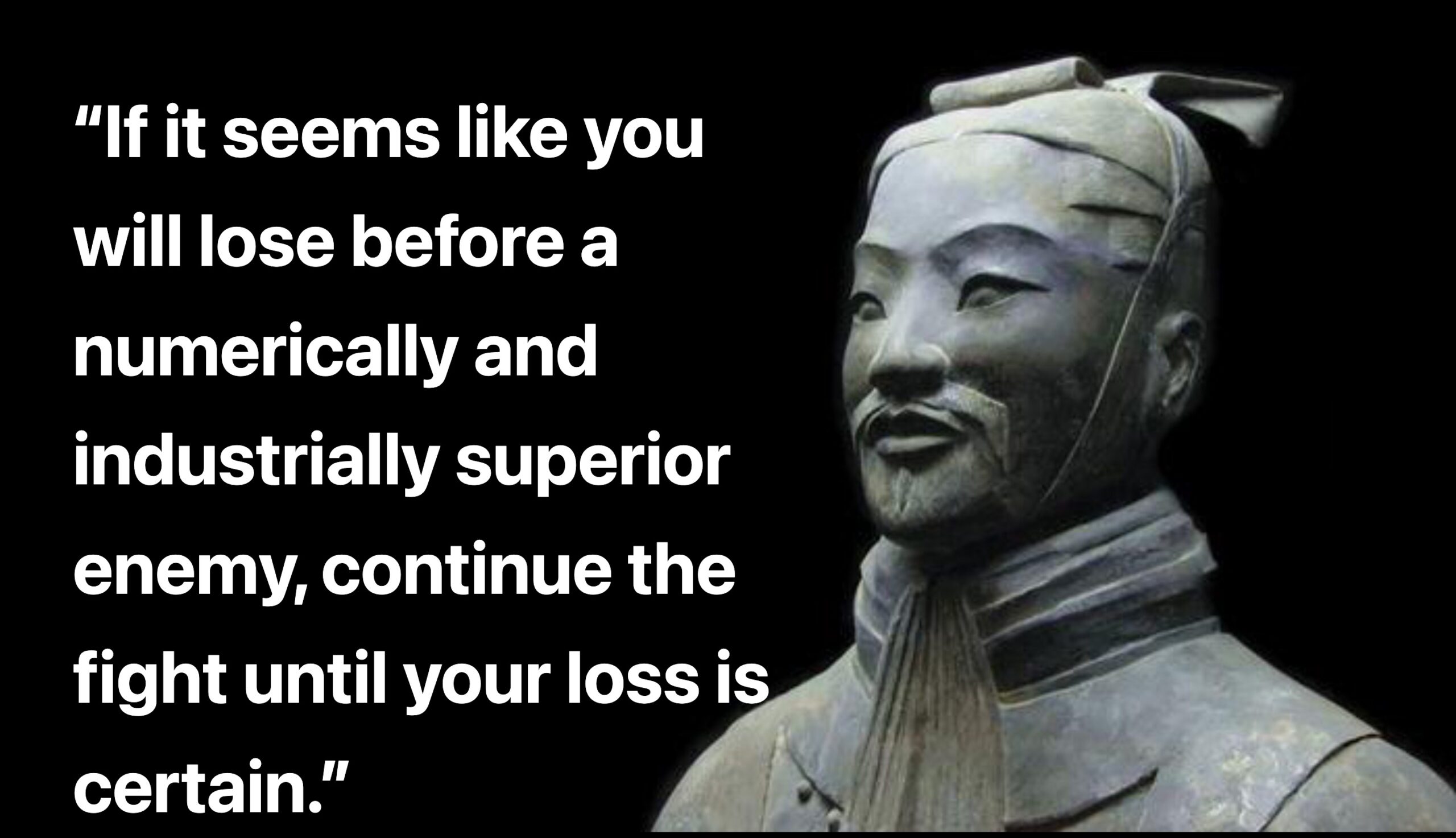
(No, he would not.) The inverse of this equation is certainly true: Ukraine’s American benefactor benefited from the conflicts’ continuance.
Cui bono? Well, American gas has replaced cheap Russian gas, greater European defence spending means Uncle Sam’s coffers have freer reign, and American weapons get the luxury of acquiring field-testing research while only suffering the loss of Ukrainian servicemen.
But, critically, “the United States and allies have critically helped Ukraine defend itself” is incorrect if Ukrainian lives and their economy would obviously have done better with a hasty peace than a calamitous defence and inevitable defeat.
The second assumption, while problematic, is much more open to question. A conventional analysis based on an understanding of the superiority of the liberal rules-based order certainly makes Russia’s invasion seem foolish.
They’ve lost access to European markets for gas, and as such, have lost critical leverage over their neighbourly rivals, their invasion has woefully underperformed at the cost of mindbogglingly large sums of equipment and men, and they’ve been forced to turn in alliance to another regional rival, China, over which they have little leverage, and with whom they share little history of fruitful cooperation.
Furthermore, they’ve been shut out of international markets, most brands, and payment systems. But a different perspective suggests the above arguments, which seem to make a lot of sense, may be the fruit of an outdated historical view.
From a pure military perspective, at least, Russia has come out on top. Russia, despite being inferior in both GDP and technology to the West, has still managed to put up a very solid fight against an opponent backed with supposedly top-notch NATO weaponry and shown a resilient economic muscle.
Furthermore, the Russian arms industry has out-produced and out-innovated a high-tech Western defence industry unsuited to the high-supply demands of modern warfare.
This isn’t just shown in Russia’s immense capacity in producing artillery shells and tank refurbishments, but also in their rapid development of modern weaponry refined *during the war* like their excellent Lancet drones – cheap, deadly, and long-range.
What comparable weapon was enhanced during the course of the war either on the Ukrainian or the NATO side?

And while Russia’s geopolitical position has certainly been weakened by its invasion, one could say the same for the Western alliance.
Knocking Russia out of the rules-based ‘world economy’ has come at the expense of undoing this ‘world economy’ by fractionalising it within friend-shoring bounds. And independent-minded powers throughout the world — particularly the Saudi & Gulf monarchies and India — have seen the dire consequences of relying too heavily on Western institutions, furthering the need for an alternative world currency or payment systems that are united to American geopolitical expediency. It’s time to wake up and smell the coffee.
Ukraine lost in Ukraine. The West didn’t lose in Ukraine. And while Russia also lost, it lost a whole lot less than most appreciate. — DGG
| POLITICO’S FINEST |
ITALY’S FOREIGN MINISTER CLAIMED their plan to export migrants to Albania is different from the UK-Rwanda scheme, because the processing of asylum applications will still be managed by Italy.
GERMANY’S BUDGET CRISIS deepened as Germany’s finance minister announced a freeze to all spending pledges, as calls grew for the country to suspend its debt brake. But on Friday, German Finance Minister Christian Linder proposed a supplementary budget for the year which included a suspension of limits on new borrowing.
POLISH PRESIDENT DUDA claimed that Prime Minister Tusk will have a difficult few years under his intentionally obstructionist Presidency.
| HAL 9000 WATCH |
OPENAI RESEARCHERS, according to Reuters, warned the OpenAI Board about a breakthrough in an AI program called Q* just prior to Sam Altman’s ouster.
SAM ALTMAN CLAIMED in June that investors and the public shouldn’t trust him. But more importantly, he stated, “I don’t have super voting shares. The board can fire me. I think that’s important.”
WAS ALTMAN’s FIRING RELATED TO CHINA, asked The Daily Dot on the basis of somewhat flims evidence which suggested the underlying cause of Altman’s removal was his ties to a Chinese cyber army group known as D2 (Double dragon).
This week’s Spot Markets Live looked more closely at the theory floated by Krebs Stamos’ security and intelligence expert Matthew Pines on his Twitter in this week’s Spot Markets Live that could shed light on the behind-the-scenes of Altman’s firing and the murky connection to China.
Now, Dr. Pippa Malmgren’s piece on the drama gives a broader look at the strategic consequences behind the OpenAI intrigue.
Pines quoted from a Bloomberg piece, which claims that Altman had been looking to raise tens of billions from a Middle Eastern sovereign wealth fund to create AI chips that could compete with Nvidia’s processors.
Altman was similarly courting Softbank’s Masayoshi Son for a multi-billion investment in a new company to produce AI-oriented hardware together with former Apple designer Jony Ive.
Who could this sovereign wealth fund be?
Pines then pointed to an FT article from October 9 titled “Saudi-China collaboration raises concerns about access to AI chips” which outlined fears at Saudi’s top university that ties to Chinese researchers could upset the US government.
The piece also highlights the work of G42, a company controlled by the UAE’s national security adviser. The company had a long history of cooperation with China on vaccines, serving as Sinopharm’s regional distributor, and providing China with PCR lab test results, as well as releasing an Arabic large-language-model AI.
Furthermore, the CEO of G42 is Peng Xiao, who formerly ran the spyware company Pegasus, a subsidiary of Emirati security firm DarkMatter and Israel’s NSO.
G42’s website also listed PAX AI as its subsidiary, which according to the AP is the new name the Pegasus spyware company operates under.
And despite G42 claiming no connection to Dark Matter, lots of ex-Dark Matter and Pegasus employees are now working at G42.
Pines then went into the curious case of the timelines:
June 6 – Sam Altman attended an event called Hub71, in partnership between OpenAI and G42.
June 10 – Sam Altman gives a virtual keynote at the Beijing Academy of AI, where several sanctioned Chinese firms attend, where Sam emphasised the need for US-China cooperation on AI development.
August – the United States tapped Nvidia and AMD and told them to halt any advanced GPU sales to Saudi Arabia and the UAE out of fears this technology was being passed on to China to avoid export controls.
In the same announcement, the US announced “acute concerns” over the investment activities of sovereign wealth funds Mubadala (the UAE sovereign wealth fund) and Softbank.
October 18 – Sam Altman announced an agreement between OpenAI and G42 which announced a suite of measures aimed at developing the UAE’s tech industry.
November 19 – Yahoo confirmed that “Altman had been travelling to the Middle East to fundraise for the project, which was code-named Tigris…. & raise tens of billions from “SoftBank Group Corp., SaudiMs Public Investment Fund & the Mubadala Investment Company.”
The assumption is that ‘key stakeholders’ behind OpenAI, which we could speculate involves some part of the American security state, took issue with sharing out the best knowledge-pie produced in America to their greatest rival.
And perhaps, as Malmgren suggested, the leak regarding Double Dragon may have been offered by Xi, as the two leaders laid out steps for some cooperation in San Francisco, two days before Altman’s departure.
But also, she wrote, the potential departure of most of OpenAI’s employee base with Altman may have awoken a disturbing realisation in the US’s security establishment that it can’t really control the pace of AI’s development.
Finally, the battle over control of the worlds’ foremost AI company should remind us of the Pentagon’s race to integrate AI-decision making into autonomous drone swarms as Eric Lipton wrote for the New York Times. — DGG
OPENAI’S ILYA SUTSKEVER’s Twitter post which announced his regret in the board’s actions which culminated in the firing of Sam Altman received a humorous reply: “People building AGI unable to predict consequences of their actions 3 days in advance.”
ANOTHER REASON FOR ALTMAN’s FIRING? A paper written by OpenAI board member Helen Toner may have been the source of tension which led to Altman’s firing. The paper defined communication tools called ‘signals’ that national security and A.I. space actors could rely on to clarify their intentions – something Altman’s rapid push to release GPT4 put in jeopardy.
| SCIENCE STUFF |
A FRAUD EPIDEMIC related to widespread “publish or die” incentives in the scientific research community, is proliferating through the academic world, according to the FT’s Anjana Ahuja.
Too little, too late. The widespread publication of the widening epidemic of scientific fraud has only garnered mainstream attention in the periods after we locked down a majority of the world population for a virus only slightly deadlier than the common flu.
A perfect example was the recent publication by the Spectator, of all the ways in which the data models the UK government relied on for their lockdown measures were fatally flawed.
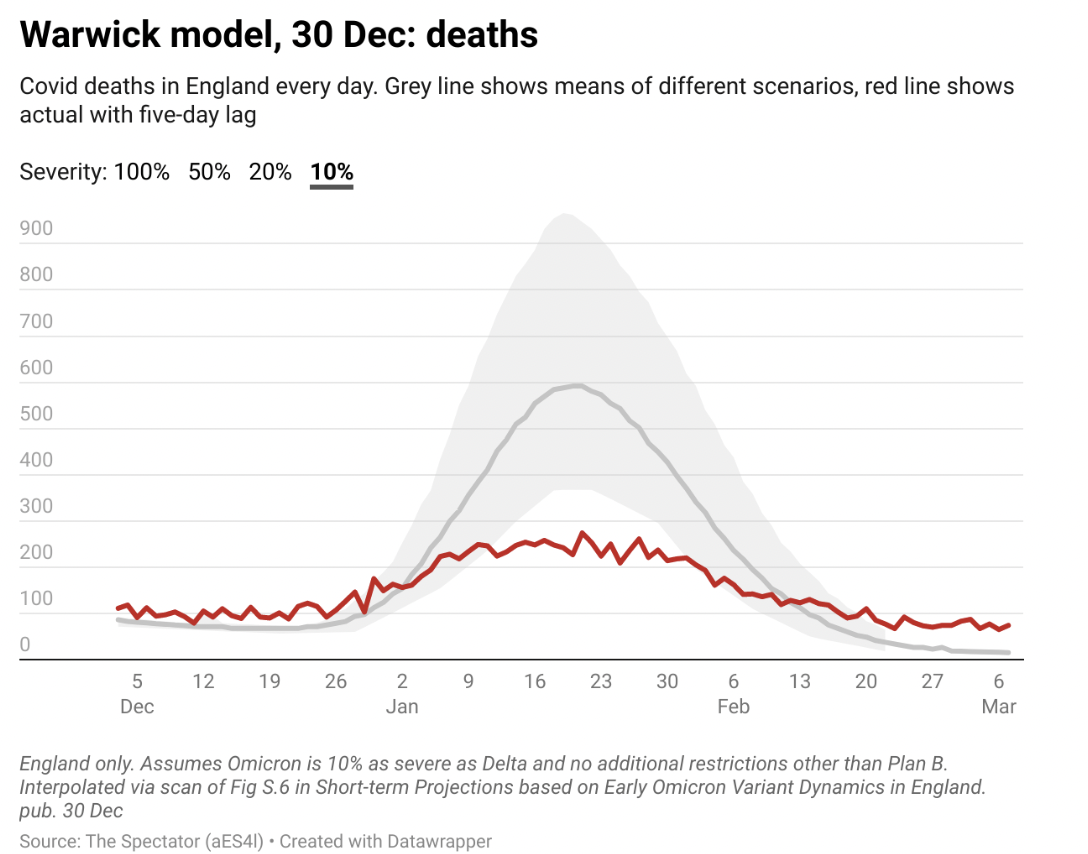
And for all those who may claim the widespread falsity of scientific papers only came to light post-Covid: Niall Ferguson of Imperial fame, whose flawed and obscenely exaggerated analysis plunged the British government into a panicky lockdown, had already acquired a reputation as a dodgy data-man in both the swine flu and bird flu ‘epidemics’, as the Spectator wrote.
“In 2005, Ferguson said that up to 200 million people could be killed from bird flu. He told the Guardian that ‘around 40 million people died in 1918 Spanish flu outbreak… There are six times more people on the planet now so you could scale it up to around 200 million people probably.’ In the end, only 282 people died worldwide from the disease between 2003 and 2009.”
“In 2009, Ferguson and his Imperial team predicted that swine flu had a case fatality rate 0.3 per cent to 1.5 per cent. His most likely estimate was that the mortality rate was 0.4 per cent. A government estimate, based on Ferguson’s advice, said a ‘reasonable worst-case scenario’ was that the disease would lead to 65,000 UK deaths. In the end swine flu killed 457 people in the UK and had a death rate of just 0.026 per cent in those infected.”
Lies, damned lies, and statistics.
Don’t blame the scientists – they’re all-too-human hustlers trying to get greater research dimes. Blame the media and government personnel who betrayed their professional oaths by failing to inquire and analyse the hypotheses of an academic class immersed in decades of statistical profligacy. — DGG
| ODDS AND ENDS |
A NEW HAMPSHIRE MAN who had no furniture, no car, and no visible job and ‘rarely left town’ passed away with $3.8 million and donated it all to his town of Hinsdale.
