
On September 30, a coup rocked Burkina Faso for the second time this year.
34-year-old Captain Ibrahim Traore took the reins of the country, stating the former military leader Paul-Henri Damiba was unable to cope with a surge of armed uprisings across the West African country. This followed Damiba’s own coup on January 24 against then-PM Roch Kabore after days of protests in the capital of Ouagadougou.
Jihadist violence and general insecurity in the Sahel, the region between the Sahara and central Africa, has now killed almost 5,500 people in Burkino Faso, Mali and Niger in 2022 to date.
The Ukrainian war may have relegated events in West Africa to the back pages, but it’s important to give them an airing. They speak to a critical Western blindspot; an inability to properly judge the nature of Western countries’ interests abroad – to the detriment of conflict-watchers and investors alike.
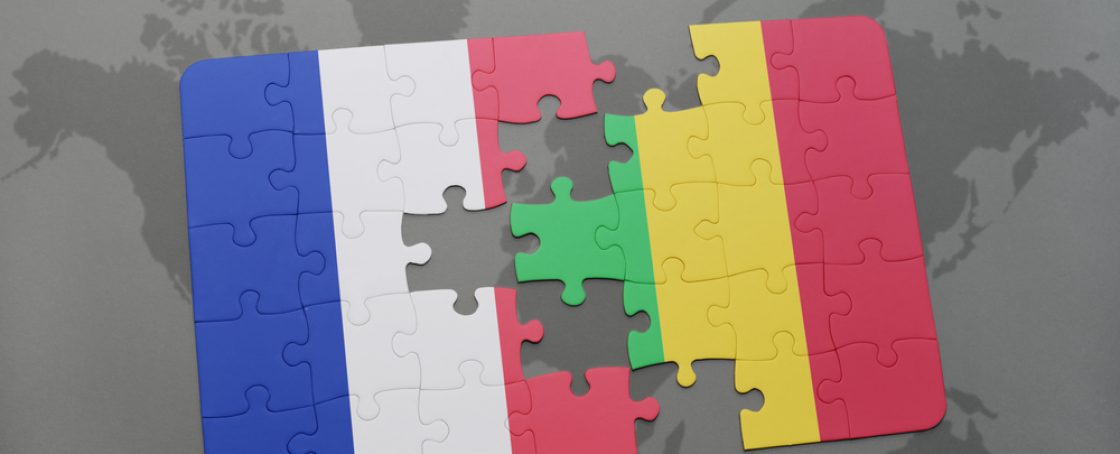
Take as an example a series of provocative claims from the Malian Interim Prime Minister Abdoulaye Maïga at the United Nations in September, which have since been overshadowed by recent events. These included an accusation from Maïga that France was supporting ‘forces of darkness’ in Mali and that France had illegally entered Malian territory on 50 occasions to provide weapons and intelligence to domestic terror groups.
The PM also highlighted the arrest of nearly 50 Ivorian soldiers in July. The Malians claim these may have been special forces who entered the country as traders and painters for the purposes of executing a coup.
Naturally, nobody should take a military dictatorship’s word at face value.
But ignoring the claims of a state that boasts broad anti-French popular support is also negligent — especially considering the history of ongoing Western neo-colonialism in the region.
Nor are the Malian Prime Ministers’ accusations entirely unfounded.
As it stands, Western media dismisses Malian claims of French proxy wars in the region in favour of a narrative that at best frames French activities as a good-willed but failing helping hand lent to a collapsing state – an intervention framed as a counter-terrorist-focused series of pacification and security measures.
At worst, the Western narrative simplifies Malian opposition to French intervention as a function of Russian political penetration in the region; particularly due to the entry of Wagner Group, a Russian-sponsored group of private military companies, to Mali and Burkina Faso.
France on its part has vigorously denied arming “jihadists”.
But there are complexities in this narrative that speak to the collective blind spot in discerning Western geopolitical interests, typically broad-brushed under labels of ‘counter-terrorism’ or ‘regional security’.
It is generally accepted that a flow of weapons and unemployed militants from Libya to the south (following the NATO-supported uprising there) helped to feed Malian uprisings in 2012 which contributed to the toppling of its government the same year.
These rebels primarily consisted of the Tuareg-led National Movement for the Liberation of Azawad, or MNLA, together with al-Qaeda affiliate Ansar Dine, that jointly declared the “Islamic Republic of Azawad” in May 2012.
The MNLA switched sides, however, and allied with France against their former jihadist partners during Operation Serval in 2013.
It is also worth noting that France was instrumental in establishing the Algiers Peace Agreement in June 2015, a now-failing agreement between the Malian central government and this sometimes-jihadist-aligned-but-not-really alliance of rebel groups in northern Mali.
The allegation of arming jihadists may be a stretch – but France has worked together with armed rebel groups that were once jihadist allies and which remain enemies of the Malian state.
France also effectively legitimised these rebels through the Algiers agreements.
As one local interviewed by a Sciences Po paper put it (my brackets):
These [foreign] troops are intended to help Mali recover its territorial integrity and sovereignty. Unfortunately, we are witnessing a situation where the presence of these troops has prevented Mali from re-establishing state authority in Kidal (the northern region in question), whereas it has done so in Gao and Timbuktu. Why is that the case? We are not naïve, the Tuareg rebellion of the National Movement for the Liberation of Azawad (MNLA) returned to Kidal in the wake of the troops that came to liberate us.
The French ‘Journal Du Dimanche‘ writes that this MNLA-French alliance was seen locally as France’s ‘original sin’ in the region, which has poisoned French-Malian relations ever since.
But perhaps the linguistic technicalities of the French denials matter more than many appreciate.
France may be correct in denying the arming of Islamic jihadist groups. And it is true that dozens of French soldiers have perished in the fight against Islamic radicalism in the Sahel.
However, the Malian Prime Minister in his UN address did not accuse France of arming jihadists but of arming terrorists, ‘forces of obscurity’ that he never explicitly names as Islamic fighters or jihadists.
Is it really a surprise that Mali’s government considers the northern secessionist fighters to be terrorists?
The facts bear out these claims – France has allied and defended the northern secessionists.
And as the saying goes – one man’s terrorist is another man’s freedom fighter.
UN Secretary-General Antonio Guterres, meanwhile, has also claimed alongside the Ivorian government that the detained Ivorian soldiers were part of a security and logistics contingent of the United Nations. However, it quietly acknowledged ‘dynsfunctions’ in the contract for the Ivorians.
Allegedly, these Ivorians were deployed to provide security to German UN ‘National Support Elements’ in the country’s south, far from the Ivorian contingent of the UN’s regional MINUSMA support unit in Mali’s north. Furthermore, the UN admits that MINUSMA was not informed of this contract between Germany and the Ivorians.
Despite guarantees to the contrary from the UN and France, it certainly sounds like the Malian PM is speaking some truth.
Cui Bono in the Sahel?
The conflict in Mali, as in the Sahel in general, is a jostle for power among several external and internal actors. The major Western representative in the region, France, is no harbinger of truth and reconciliation. Just like the Malian putschists are not legitimate representatives of the Malian people’s will.
A foundation of International Relations theory is that states are ‘billiard balls’ – near-identical rational actors that seek power.
Though Western geopolitical experts could agree (more or less) on this foundational aspect of IR theory, French interests in the region continue to be filed away as good-natured Western responsibility for regional counter-terrorism and security. But this sort of wishful thinking may only exist in well-heeled editorial rooms and think tanks.
A more realistic interpretation is that when a state chooses to intervene, it does so for its own interests. It’s true interests.
In the case of France in Mali these interests could be linked to the de-facto extension of European borders to the Sahel under several cooperation agreements with regional powers to stymie migration flows. Alternatively, they may be related to recent explorations, which suggest there could be oil and gas in the French-aligned, separatist-filled northern region of Mali. There are also untapped gold reserves to consider too.
This is no condemnation of France. It’s an understanding that the French state must operate in accordance with the interests of its stakeholders, just like the Malian government. In this context, inflated narratives about counter-terrorism or regional security serve to conceal real French interests.
Failing to honestly discern the interests of the French state leaves would-be investors, media, and regional stakeholders in an uninformed lurch. A lurch that can directly backfire on the policy itself.
As should be obvious, France is no disinterested counter-terror do-gooder.
In extreme cases, acting in accordance with your stakeholders can mean acting brutally. Many years ago a BBC documentary on Gladio opened with the line;
Deception is a state of mind and the mind of the state.
This secret network of NATO fascist paramilitaries orchestrated terrorist attacks on European soil while pretending to be communist guerillas. Discrediting communists, they guaranteed the continuance of anti-communist (and pro-NATO) forces in power. The network’s cover was blown after the Bologna bombing – where 85 civilians were killed by these NATO proxies.
The same logic of power must extend to French actions in Mali.
But Malian claims of victimhood are as self-serving and deceptive as France’s claim to further security in the region.
Intelligent Malian thinkers have presented balanced pieces arguing that while France does bomb the occasional civilian wedding and allies with armed separatist groups in Mali that engage in terrorist-like activities, it’s far too easy for Mali to blame exogenous reasons for its domestic troubles. We are talking about a military dictatorship, after all – one whose troops engage in more old-fashioned civilian massacres.
Failing to wield an informed, realpolitik-friendly line on Western interests in Mali also leaves a vacuum of truth. Instead of factual analysis, rumours and intrigue fill the aisle on the one (Malian) hand, and superficial, useless ‘do-gooder’ arguments fill the (French/Western) other.
These rumours, filling the streets of Bamako – and unopposed by a self-evidently false Western counter-narrative – have entrenched anti-French sentiment in the country, and allowed its rise to power.
Ironically, Western media’s failure to accurately inform on France’s true regional interests may have a direct causal relation to French policy failures in Mali.
And by extension of its inevitable destabilisation of the Sahel, to the failure of interested investors and potential stakeholders in the region. Not to mention the continued suffering of the Malian people.
Stay tuned for more.
